

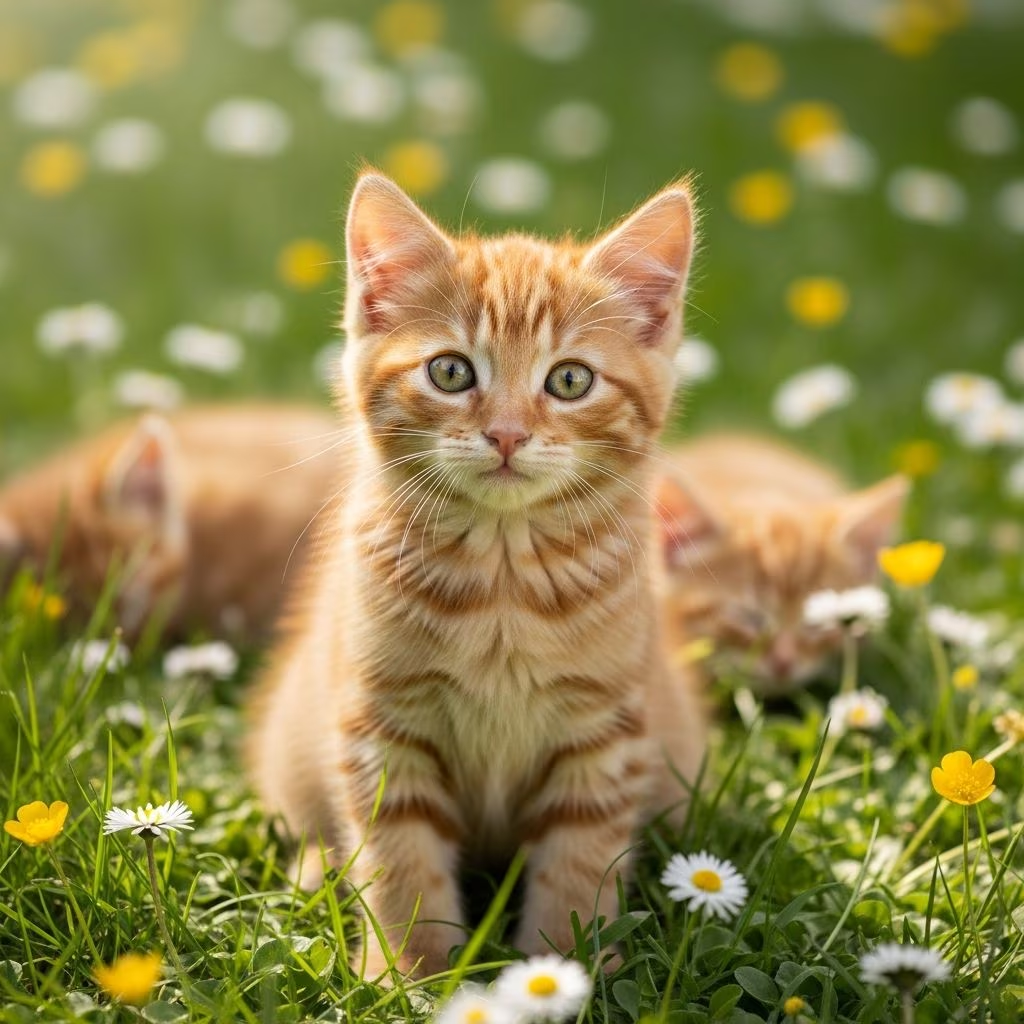
Kitten season refers to the annual period when unspayed female cats (queens) give birth in large numbers, overwhelming animal shelters and rescues with litters of kittens. This phenomenon peaks from spring through summer in the Northern Hemisphere, driven by cats’ natural breeding cycles triggered by increasing daylight.
Why Does Kitten Season Happen?
Cats are seasonally polyestrous breeders, meaning they experience multiple heat cycles during specific times of year influenced by photoperiod—longer daylight hours starting after the winter solstice on December 21. This signals the pituitary gland via the optic nerve to produce hormones that stimulate ovarian follicles, leading to estrus (heat).
Queens become receptive to mating, exhibiting vocal yowling, restlessness, and attraction to toms (male cats). Unlike spontaneous ovulators like dogs, domestic cats are induced ovulators: copulation triggers ovulation 30-50 hours later, ensuring high fertilization rates.
- Heat cycles recur every 2-3 weeks during breeding season until pregnancy occurs.
- Queens can mate with multiple toms, increasing genetic diversity in litters.
- Gestation lasts 61-63 days (about 9 weeks), with litters averaging 3-5 kittens (up to 9).
Post-birth, queens often return to heat before kittens wean at 8-9 weeks, enabling multiple litters per season.
When Is Kitten Season?
Timing varies by location and climate but follows seasonal patterns:
| Region | Breeding Start | Peak Births | Duration |
|---|---|---|---|
| Northern US/UK | Late Jan – Feb | April – July | Spring to early fall |
| Southern US | Dec – Jan | March – Aug | Extended, nearly year-round |
| Tropical (e.g., Hawaii) | Year-round | Continuous | No distinct season |
In the UK and northern regions, kitten season ramps up by mid-February, with births peaking May-July—termed the ‘kitten tsunami’ by shelters. By fall (September), cycles enter anestrus (dormancy) due to shortening days.
The Biology of Feline Reproduction
Domestic cats’ prolificacy stems from evolutionary adaptations for survival. Queens reach sexual maturity as early as 4-5 months, often before adoption age.
- First heat: 5-9 months, but young queens can breed by 4 months.
- Induced ovulation: Mating ruptures follicles, releasing eggs and estrogen surge ends heat.
- Postpartum fertility: Queens re-enter estrus 1-2 weeks after birth if not nursing heavily.
- Lifetime potential: One unspayed queen can produce 50-150 kittens over 10 years.
Ancient Egyptians revered cats as fertility symbols (goddess Bastet), reflecting their observed reproductive prowess.
Impact on Shelters and Communities
Kitten season strains resources: shelters see multiple litters daily, leading to overcrowding, euthanasia, and rehoming challenges. Tiny kittens require bottle-feeding, socialization, and medical care, overwhelming staff.
- May-July: Peak intake, called ‘kitten season crunch.’
- 80% of kittens may enter shelters if not fostered/adopted quickly.
- Feral/community cats exacerbate numbers; one queen’s offspring can yield 100+ cats in 2-3 years without intervention.
Warmer weather aids survival outdoors, but many kittens face starvation, disease, or predation.
How to Help During Kitten Season
Communities combat the crisis through targeted actions:
- Foster kittens: Provide temporary homes for weaning/socialization; summer is ideal for adoptions.
- Adopt, don’t shop: Shelters teem with kittens—perfect time for new family members.
- TNR (Trap-Neuter-Return): Sterilize ferals, vaccinate, ear-tip for identification, release.
- Volunteer: Assist with bottle-feeding, cleaning, events.
- Donate supplies: KMR formula, litter, blankets, food.
Spay and Neuter: The Ultimate Prevention
Spaying/neutering before first heat (ideally by 4-5 months) prevents reproduction entirely. Programs like ‘Fix by Five’ urge surgery by five months to halt accidental litters.
- Benefits: Reduces cancer risks, roaming, spraying, yowling; extends lifespan.
- Timing: Early spay avoids pregnancy; vets perform safely from 8 weeks.
- Community impact: Low-cost clinics curb overpopulation—e.g., one spayed queen prevents dozens of offspring.
Indoor lighting can disrupt cycles, mimicking year-round breeding; keep pet cats indoors and sterilized.
Frequently Asked Questions (FAQs)
What triggers kitten season?
Increasing daylight after winter solstice stimulates hormones, leading to heat cycles by late January.
How many kittens in a litter?
Average 3-5, but up to 9; queens can have 2-3 litters per season.
Can kitten season happen year-round?
Yes, in equatorial regions or with artificial light; northern areas have defined peaks.
Why spay early?
Kittens mature at 4 months; waiting risks first litter. Early spay is safe and preventive.
How can I prepare to foster?
Contact local shelters for training, supplies; focus on 8-week+ kittens needing socialization.
Conclusion: Act Now to End the Cycle
Kitten season highlights the urgent need for responsible pet ownership and community action. By spaying/neutering, fostering, and adopting, we can turn overwhelming numbers into loving homes, ensuring no kitten faces a shelter fate.
References
- What is Kitten Season? — Pet Health Network. 2023. https://www.pethealthnetwork.com/cat-health/cat-checkups-preventive-care/what-kitten-season
- The Queen’s Reproductive Cycle = Kitten Season — United Spay Alliance. 2024-01-15. https://www.unitedspayalliance.org/the-queens-reproductive-cycle-kitten-season/
- What Is Kitten Season? — Best Friends Animal Society. 2024. https://bestfriends.org/stories/features/what-kitten-season
- Kitten Season is Here: The Critical Role of “Fix by Five” — Spay Neuter Vets. 2024-05-20. https://www.spayneutervets.com/blog/kitten-season-is-here
- Why Summer Is the Best Time to Foster or Adopt a Kitten — The Animal Rescue Alliance. 2023. https://theanimalrescuealliance.org/why-summer-is-the-best-time-to-foster-or-adopt-a-kitten/
- Kitten Season — Peninsula Humane Society & SPCA. 2024. https://phs-spca.org/kitten-season/



