

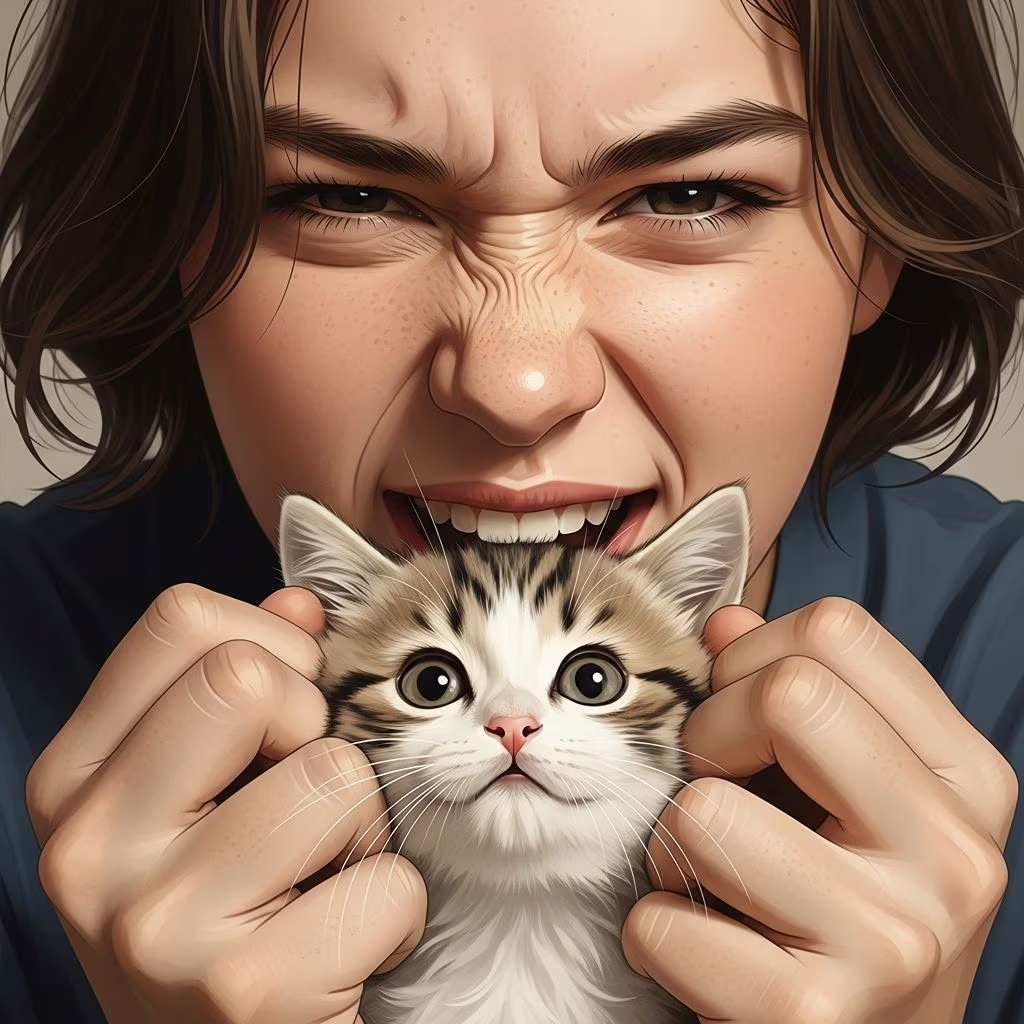
Have you ever seen a fluffy kitten or a wide-eyed puppy and felt an overwhelming urge to squeeze it tightly, pinch its cheeks, or even pretend to bite it? This paradoxical reaction—intense affection mixed with aggressive impulses—is known as **cute aggression**. Far from being harmful, it’s a common emotional response that affects about half of adults, helping us regulate overwhelming positive feelings triggered by adorable sights.
Cute aggression, sometimes called ‘playful aggression’ or ‘gigil’ in Tagalog, manifests as the desire to crush, squish, or nom on something irresistibly cute without any intent to cause damage. It’s especially prevalent around pets, babies, and baby animals, which evolutionarily trigger our caregiving instincts.
Why Do We Experience Cute Aggression?
The root of cute aggression lies in **emotional overload**. When we encounter something profoundly cute—like a stumbling puppy or a chubby-cheeked infant—our brain floods with positive emotions, releasing dopamine in reward centers. This ‘cuteness overload’ can feel so intense it’s physiologically overwhelming, prompting a counter-response to restore balance.
Psychologist Associate Professor Lisa A. Williams from UNSW explains: “Cute aggression seems to be a mechanism to manage the overload of positive feelings we get when we interact with something too cute for us to handle.” This dimorphous expression—feeling joy so strongly it elicits tears, laughter, or mock aggression—is the brain’s way of tamping down extremes.
- Overwhelm mediation: Studies show cuteness ratings predict cute aggression only when mediated by feeling overwhelmed by positivity.
- No hostility: Brain scans reveal activation in reward and emotion areas, not aggression centers, confirming it’s affectionate.
- Caretaking link: Those feeling strong urges to nurture also report more cute aggression, as it prevents incapacitation during caregiving.
The Science Behind Cute Aggression
Research operationalizes cute aggression through self-reports while viewing cute stimuli, like baby animal photos. A landmark 2015 study in Psychological Science by Aragón et al. found that viewing cute (but not neutral or funny) images led to verbal aggressive expressions, mediated by loss of control, and biased story completions toward aggression.
Neuroscience backs this: Event-related potentials (ERPs) show cute aggression ties to reward processing (RewP) and emotional salience (N200). Greater neural responses in these areas correlate with stronger urges, indicating it’s a regulatory valve for high-arousal positive states.
| Study | Key Finding | Source |
|---|---|---|
| Aragón et al. (2015) | Cuteness → Overwhelm → Cute aggression & caretaking | |
| Stavropoulos & Alba (2018) | Neural links to reward/emotion, not true aggression | |
| UNSW Study (2024) | Dimorphous expression for emotional balance |
Pet owners frequently report this with animals: the desire to ‘eat’ a sleepy cat or squeeze a wriggly dog stems from the same mechanism. It’s universal across cultures, though expressions vary (e.g., gigil in the Philippines).
Cute Aggression and the Brain
Cute features—large eyes, round faces, small noses (Kindchenschema)—evolved to elicit protection. Konrad Lorenz’s baby schema activates nurturing via the nucleus accumbens and orbitofrontal cortex. But excess triggers somatomotor cortex for mock-aggressive actions like clenching fists.
fMRI data shows heightened activity in reward (ventral striatum) and emotion (insula) regions during cute stimuli, strongest in high cute aggression reporters. This isn’t hostility; aggression centers like the amygdala remain subdued.
- **Reward surge:** Dopamine flood motivates care but risks overload.
- **Emotional salience:** Heightened awareness amplifies response.
- **Regulation:** Aggression impulse downregulates to enable functional caregiving.
Evolutionarily, freezing from cuteness near a needy infant could be disastrous; cute aggression snaps us back to action.
Evolutionary Roots of Cute Aggression
Cute aggression likely evolved to balance caregiving demands. Adorable offspring signal vulnerability, prompting dopamine-driven protection. Overload could impair action, so dimorphous aggression regulates it—like crying from joy.
In ancestral environments, responding to a cute baby animal or human infant required measured care, not paralysis. Modern pets hijack this: dogs and cats’ neotenous traits (retained juvenile features) trigger identical responses.
“To humans, cute things register as worthy of careful, caring behavior… But if overcome by cuteness, the brain brings us back—that’s where cute aggression comes in.” — A/Prof. Lisa Williams, UNSW
Is Cute Aggression Normal? Should You Worry?
Absolutely normal—50% of adults experience it, more in pet lovers. It’s not pathological; it indicates healthy emotional regulation, preventing extremes.
Distinguish from true aggression: cute aggression lacks harm intent and resolves quickly. If impulses persist without cuteness triggers or involve harm desires, consult a professional—though rare.
- Prevalent: Half of adults; higher in nurturing personalities.
- Healthy: Regulates emotions, linked to better caretaking.
- Pet-specific: Common with puppies/kittens due to baby-like features.
Cute Aggression with Pets and Babies
Pets amplify it: floppy-eared rabbits, tiny hamsters trigger intense urges. Owners say, “I want to squish my chiweenie!” Babies evoke pinching cheeks or mock bites—grandparents’ cheek squeezes exemplify it.
This bonds us closer, channeling affection safely. With pets, it encourages play, grooming—vital for welfare.
How to Handle Cute Aggression
Embrace it safely:
- Squeeze a stress ball while cooing.
- Verbalize: “You’re so cute I could eat you!”
- Channel into gentle pets or play.
- Mindfulness: Acknowledge the feeling, breathe.
For parents/pet owners, it enhances attachment without risk.
Frequently Asked Questions (FAQs)
Is cute aggression harmful?
No, it’s a harmless emotional regulator with no intent to hurt. It helps balance joy.
Why do I want to bite my puppy?
Cuteness overloads reward centers; biting urge counters it playfully.
Do all people feel cute aggression?
About 50% do, varying by personality and exposure to cute stimuli.
Can cute aggression affect parenting?
Positively—it correlates with caretaking instincts.
Is it linked to mental health issues?
No evidence; it’s a normal dimorphous expression.
References
- Cute aggression: why you might want to squash every adorable thing you see — UNSW Newsroom. 2024-02-21. https://www.unsw.edu.au/newsroom/news/2024/02/cute-aggression-why-you-might-want-to-squash-every-adorable-thing-you-see
- Understanding Neural Mechanisms of Cute Aggression — PMC/NIH (Stavropoulos & Alba). 2018-12-12. https://pmc.ncbi.nlm.nih.gov/articles/PMC6288201/
- Cute Aggression — All About Psychology (David Webb). 2023-10-15. https://allaboutpsychology.substack.com/p/cute-aggression



