

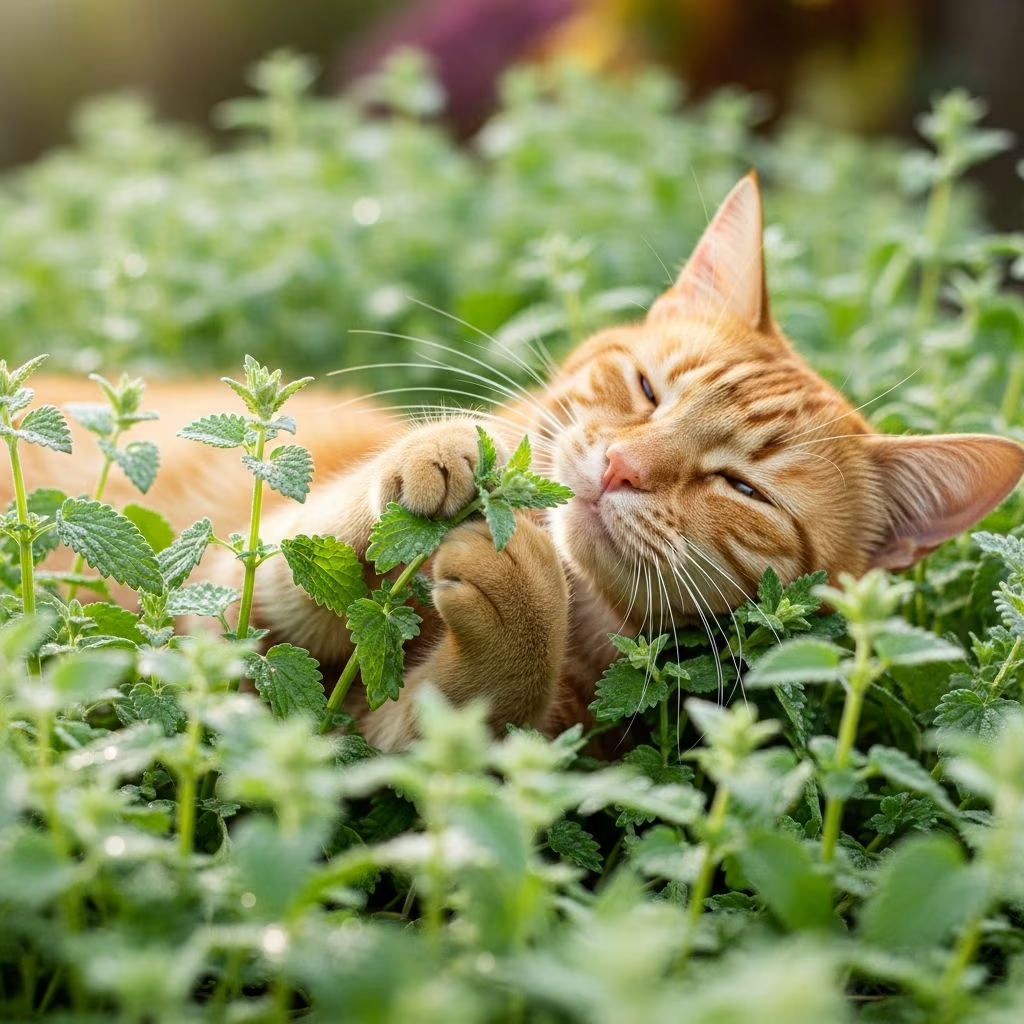
Catnip, scientifically known as Nepeta cataria, is a perennial herb in the mint family that has captivated cats for centuries. Native to Europe, Asia, and Africa, it has naturalized across North America and is prized for its potent essential oil, nepetalactone, which triggers unique behavioural responses in cats. This unassuming plant with grey-green foliage and white flowers blooming from late spring to autumn holds a mysterious allure for felines, mimicking pheromones and stimulating sensory receptors.
While humans have used catnip for teas and remedies, its fame stems from cats’ ecstatic reactions. About **60-70% of cats** exhibit a response, inherited genetically as a dominant trait, typically emerging around 6-8 weeks of age. Kittens under six months and some adults remain unaffected, highlighting individual variation. The effects are temporary, lasting 5-15 minutes, followed by a refractory period of 1-2 hours where cats become temporarily immune.
How does catnip affect cats?
Catnip’s impact hinges on delivery: sniffing versus eating. When cats sniff the plant or toys infused with it, nepetalactone binds to olfactory receptors in the nasal tissue, travelling via the vomeronasal organ (Jacobson’s organ) in the roof of the mouth to the brain’s emotional and behavioural centres. This mimics feline pheromones, eliciting euphoria akin to a female in heat – though both sexes react.
Sniffing effects (euphoric/hyperactive): Cats roll on the floor, rub their cheeks, purr loudly, vocalize (meowing, growling), leap playfully, chase imaginary prey, or display ‘zoomies’. Some show mild aggression like batting or stalking. These sessions foster exercise, stress relief, and mental stimulation.
Eating effects (sedative): Ingesting catnip flips the script, promoting calm. Cats may nibble leaves for digestion aid or relaxation, rolling contentedly or sleeping peacefully. This duality makes catnip versatile for enrichment.
| Method of Exposure | Primary Effects | Duration | Behaviours Observed |
|---|---|---|---|
| Sniffing | Hyperactive/Euphoric | 5-15 minutes | Rolling, rubbing, purring, jumping, vocalizing, play-chasing |
| Eating | Calming/Relaxing | Up to 30 minutes | Nibbling, grooming, sleeping, reduced anxiety |
Sensitivity varies: some cats frenzy wildly, others mellow subtly. Big cats like lions and tigers respond similarly, confirming evolutionary roots.
What is the active ingredient in catnip?
The star is nepetalactone, a volatile oil concentrated in leaves, stems, and seeds (highest in flowers). This terpenoid compound evaporates easily, explaining why fresh or dried catnip works best – potency fades over time. Concentrated in commercial sprays and toys, it targets olfactory epithelium receptors, bypassing taste buds for smell-driven highs.
Research shows nepetalactone structurally resembles cat pheromones, binding proteins that signal pleasure centres. Unlike synthetic drugs, it’s natural and non-addictive – cats habituate temporarily but regain sensitivity.
Is catnip safe for cats?
Yes, catnip is non-toxic and FDA-recognized as safe (GRAS). No evidence of addiction exists; overexposure leads to tolerance, not dependence. Supervise play to prevent overstimulation injuries, and limit sessions to avoid digestive upset from overeating (vomiting, diarrhea).
- Short-term risks: Rare hyperactivity-induced scratches or falls.
- Long-term: None documented; habituation reduces effects naturally.
- Special cases: Avoid with seizure-prone cats; consult vets for anxious felines.
Pregnant cats or kittens under 6 weeks? Minimal data, but moderation applies universally.
How to use catnip with cats
Incorporate catnip mindfully for maximum joy:
- Sprinkling: Dust on scratchers, beds, or carriers for scent-marking and calm (e.g., vet trips).
- Toys: Stuff socks, mice, or balls; refresh monthly as oils dissipate.
- Treats/Food: Baked-in biscuits for mellow effects; aids appetite in picky eaters.
- Garden: Plant catnip outdoors – cats harvest naturally, deterring pests.
- Spray: Mist perches for ongoing stimulation without mess.
Rotate items to prevent tolerance; store airtight in cool, dark places. Homemade recipes: Mix dried catnip with fabric scraps for DIY wands.
Catnip alternatives for cats
Not all cats dig catnip (30-40% immune). Try these:
- Silver vine (Actinidia polygama): Stronger for non-responders; Japanese import with actinidine.
- Cat thyme (Teucrium marum): Minty, euphoric alternative.
- Valerian root: Sedative scent for calm.
- Honeysuckle, Tatarian honeysuckle: Mild berry-like attractants.
Test small amounts; combine for variety (e.g., catnip-silver vine toys).
FAQs
Does catnip get cats high?
It induces euphoria via nepetalactone, mimicking pheromones – rolling, purring, hyper play ensue. Unlike true highs (e.g., drugs), no disorientation, vomiting, or wobbliness; purely sensory bliss lasting minutes.
Why do cats eat catnip?
For digestion and sedation. Post-sniff frenzy, nibbling calms; mild digestive aid without harm.
Is catnip addictive?
No – temporary immunity prevents compulsion. Cats self-regulate.
How long does a catnip high last?
5-15 minutes sniffing, longer if eaten; 1-2 hour cooldown.
Can kittens have catnip?
Reactions start at 6-8 weeks; use sparingly.
Do all cats respond to catnip?
About 60-70%; genetic, dominant trait.
References
- What Is Catnip? | Humane World for Animals — Humane World. Accessed 2026. https://www.humaneworld.org/en/resources/catnip-benefits-uses-for-cats
- What is Catnip? The Effects Catnip Has on Cats — Boulder Veterinary Hospital. Accessed 2026. https://bouldervet.com/blog/the-effects-catnip-has-on-cats/
- What Is Catnip and What Does It Do to Cats? — PetMD. Accessed 2026. https://www.petmd.com/cat/general-health/what-is-catnip
- How Catnip Takes Cats to their Happy Place — GoldBio. Accessed 2026. https://www.goldbio.com/blogs/articles/how-catnip-take-cats-to-their-happy-place
- Are catnip and treats like it safe for cats? — University of Melbourne Find an Expert. 2022-10-20. https://findanexpert.unimelb.edu.au/news/74658-are-catnip-and-treats-like-it-safe-for-cats%3F-here’s-how-they-affect-their-minds-and-moods
- What Does Catnip Do To Cats? — YouTube (Jaw-Dropping Facts). Accessed 2026. https://www.youtube.com/watch?v=yo7HoloZi-w



