

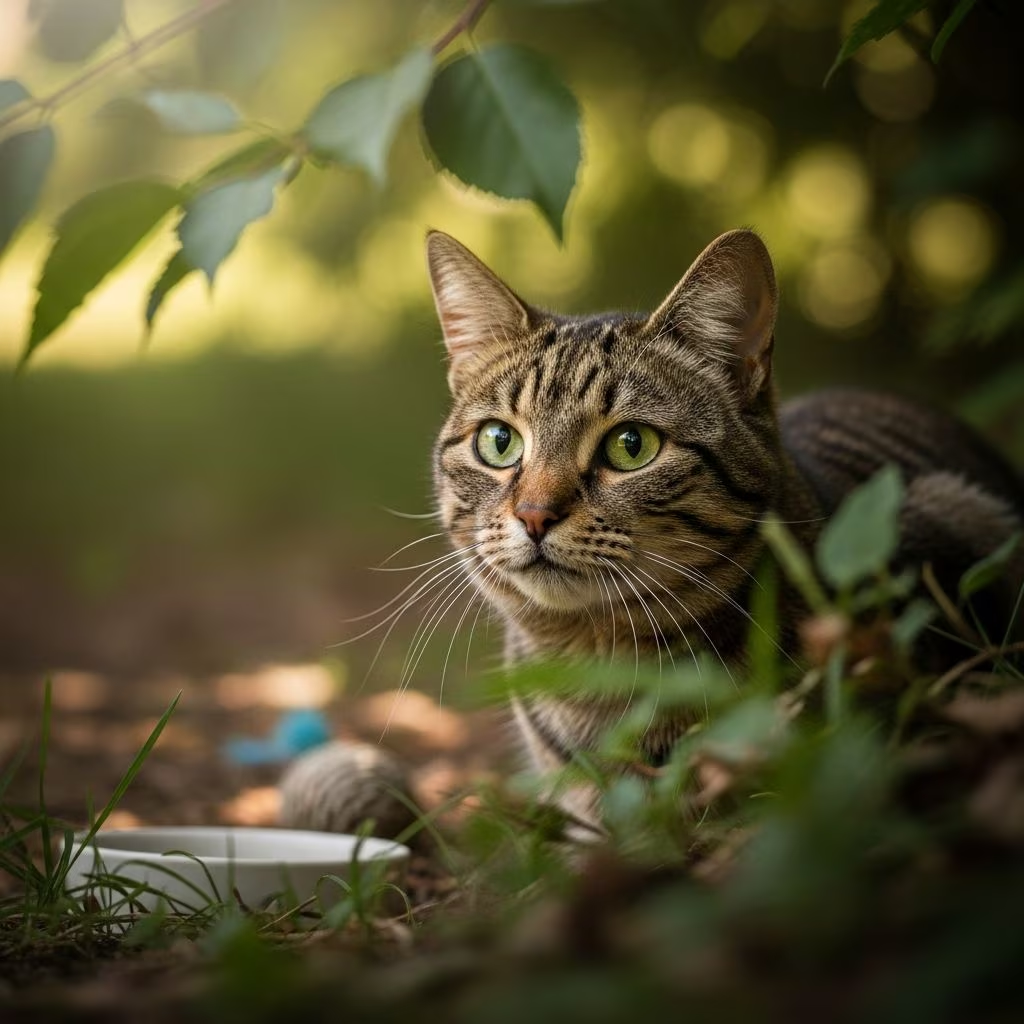
What Is a Semi-Feral Cat?
Semi-feral cats are felines born in the wild that have experienced positive interactions with humans at some point in their lives. These cats occupy a middle ground between completely feral cats and traditional stray cats. Unlike feral cats that avoid human contact entirely, semi-feral cats have developed a degree of familiarity with people that makes them somewhat more approachable, though they remain inherently wary and skittish. The key distinction is that semi-feral cats have had at least a few positive experiences with humans, which shapes their behavior and temperament differently from their fully feral counterparts.
Semi-feral cats are generally born outdoors without regular human contact during their early development, making them naturally shy and cautious. However, through various circumstances—whether receiving food from a kind person, shelter from someone’s porch, or other benign interactions—they have learned that humans are not necessarily a threat. This limited positive exposure distinguishes them from completely feral cats and opens the door to potential socialization and eventual domestication.
Understanding the Three Types of Cats: Stray, Feral, and Semi-Feral
To fully comprehend what semi-feral cats are, it’s essential to understand how they differ from both stray cats and completely feral cats. These three categories represent different levels of socialization and human contact, each with distinct behavioral characteristics.
Stray Cats
Stray cats are felines that once lived with humans but have become lost or were abandoned. Because they have experienced domestic life, stray cats retain a fundamental comfort level with people. They are significantly friendlier than both semi-feral and feral cats. Stray cats may approach humans, walk near houses and driveways, and even meow or vocalize to get attention. They often display body language typical of domestic cats, such as walking with their tails held upright—a universal sign of friendliness in felines.
Over time, however, stray cats can gradually adopt feral behaviors if they remain without human contact for extended periods. This transformation demonstrates that a cat’s socialization status exists on a spectrum rather than as a fixed state. The key characteristic of stray cats is their previous experience living alongside humans, which fundamentally shapes their comfort around people.
Feral Cats
Feral cats are born in the wild and have never had meaningful contact with humans, or their human interaction has diminished so significantly that they no longer feel comfortable around people. These cats are perfectly adapted to outdoor living and generally have no desire to interact with humans. Feral cats are not aggressive by nature; rather, they are fearful and will instinctively avoid human contact whenever possible.
Feral cats exhibit distinctive physical and behavioral traits that set them apart. They tend to have clean, well-maintained coats—a surprising trait that contrasts with the popular misconception that all feral cats are disheveled. Male feral cats, in particular, often display characteristics associated with intact males, including larger heads, thicker necks, muscular bodies, and visible scars from territorial disputes. Behaviorally, feral cats are nocturnal, remaining hidden during daylight hours and emerging primarily at night. They do not meow, purr, or vocalize in ways that domestic cats do, and they will not make eye contact with humans.
One important note: kittens born to feral cats can be socialized at an early age and successfully adopted into homes, but adult feral cats are rarely suitable candidates for domestication.
Semi-Feral Cats: The Middle Ground
Semi-feral cats represent the middle point on the socialization spectrum, displaying characteristics of both feral and domestic cats. Born in the wild like feral cats, semi-feral felines differ in that they have experienced at least some positive human interaction. This exposure fundamentally alters their behavior and their potential for future socialization.
Semi-feral cats are fairly social creatures despite their wild origins. They are wary of humans but noticeably less skittish than completely feral cats. A semi-feral cat might meow at a human, make eye contact, or allow a person to stand nearby without immediately fleeing. Some semi-feral cats will even accept treats from a person’s finger or tolerate brief petting sessions, depending on their individual temperament and past experiences. However, they remain fundamentally different from stray cats—they still possess strong wild instincts and will typically avoid prolonged or intense human interaction.
Key Differences Between Stray, Feral, and Semi-Feral Cats
| Characteristic | Stray Cats | Semi-Feral Cats | Feral Cats |
|---|---|---|---|
| Origin and Background | Previously lived with humans; lost or abandoned | Born in the wild with limited human contact | Born in the wild; never socialized to humans |
| Socialization to Humans | May approach people, houses, and vehicles | Tolerant of human presence; may approach cautiously | Will not approach; seeks hiding places |
| Body Language | Walks upright with tail raised; makes eye contact | Mix of behaviors; some eye contact; less confident posture | Crouches low; tail protective; avoids eye contact |
| Vocalization | Meows, purrs, and vocalizes to humans | May meow occasionally; limited vocalization | Silent; no meowing or purring |
| Activity Pattern | Visible during daytime; active when humans are present | Varies; may be active at different times | Primarily nocturnal; avoids daylight |
| Physical Appearance | May appear slightly disheveled | Generally clean and well-groomed | Clean coat; males show muscular development and scars |
| Touch Tolerance | Can eventually be touched; tolerates gentle contact | Some tolerate touch; others are untouchable | Cannot be touched even by regular caregivers |
| Food Behavior | Readily approaches food; may accept hand-feeding | May accept some treats; food-motivated | Will take food but avoids direct contact with provider |
Can Semi-Feral Cats Be Tamed?
Yes, semi-feral cats can be tamed, though the process requires significant time, patience, and consistent effort. The key to successful taming lies in understanding that semi-feral cats, despite their limited positive human experiences, are still fundamentally wild animals accustomed to independence and outdoor living. They will remain naturally skittish and cautious, and forcing interaction will only set back progress.
The Taming Process
Successfully taming a semi-feral cat involves a gradual approach that respects the animal’s cautious nature while consistently reinforcing positive human associations. Here are the fundamental principles:
- Establish routine and trust: Maintain consistent daily interactions at the same times and locations. This predictability helps semi-feral cats feel more secure and begin to anticipate human presence positively.
- Use food as motivation: Offer high-value treats and meals at regular intervals. Semi-feral cats are food-motivated, and the association between your presence and nourishment builds positive connections.
- Maintain physical distance initially: Sit or crouch at a distance that doesn’t frighten the cat. Allow the cat to approach you rather than pursuing the cat, which will trigger avoidance behavior.
- Introduce gentle touch gradually: Once a cat tolerates your nearby presence, begin offering treats from your fingers. Gentle petting may follow, but only if the cat initiates or permits it.
- Provide shelter and safety: Create a secure space where the cat can retreat. Semi-feral cats need to feel they have control over their environment and access to safe havens.
- Exercise patience with setbacks: Progress is rarely linear. Illness, frightening experiences, or environmental stress may cause temporary regression in a semi-feral cat’s behavior.
Important Considerations About Semi-Feral Cats as Pets
While semi-feral cats can become socialized and integrated into households, it’s crucial to understand what to expect. Semi-feral cats are not typically suited for households with young children, as their startle response and limited trust make them easily frightened by unpredictable behavior, loud noises, and sudden movements. Children may accidentally frighten the cat or, in their innocence, handle the animal too roughly, undoing months of careful socialization work.
Semi-feral cats generally thrive in multi-cat households. They typically love the company of other cats and often make excellent companion animals when paired with other felines. In fact, the presence of another cat may accelerate socialization by providing both comfort and a model for how to interact with their environment more confidently.
Adult semi-feral cats rarely become lap cats or enjoy the level of constant interaction that typical domestic cats do. However, with time and dedicated effort, many semi-feral cats eventually develop genuine affection for their human caregivers, becoming loyal and devoted companions despite their wild origins.
Characteristics and Behavioral Traits of Semi-Feral Cats
Understanding the specific characteristics of semi-feral cats helps set realistic expectations for anyone considering taking one into their home. Semi-feral cats exhibit a unique blend of feral and domestic traits that defines their behavior.
Social Behavior
Semi-feral cats are surprisingly social compared to completely feral cats. They may tolerate human presence near them, particularly when food is involved. Some semi-feral cats will respond to feeding routines, showing anticipation and even vocalization when they recognize the person providing food. However, this sociability has clear boundaries—semi-feral cats maintain emotional distance and do not seek out human interaction the way domesticated cats do.
Fear and Anxiety Response
Semi-feral cats are fearful rather than aggressive. This distinction is crucial, as it means they will rarely attack or bite unless they feel cornered with no escape route. A frightened semi-feral cat will attempt to flee rather than confront. Some semi-feral cats may hiss or growl to communicate anxiety, but this is a warning signal rather than an attack threat. They are simply expressing fear and asking for space.
Environmental Needs
Semi-feral cats require access to outdoor spaces or at minimum, windows and vertical spaces that allow them to observe their surroundings. This monitoring behavior stems from their wild instincts and their need to feel in control of their environment. Indoor semi-feral cats benefit enormously from cat trees, window perches, and multiple hiding spots where they can retreat and feel secure.
From Feral to Family: Success Stories
Countless semi-feral cats have successfully transitioned from outdoor life to becoming beloved household pets. While each cat’s journey is unique, successful transformations typically share common elements. The most successful transitions involve:
- Patience from human caretakers willing to work at the cat’s pace rather than imposing human timelines
- Consistent, non-threatening daily interaction
- Association of the human caretaker with positive experiences like food, shelter, and safety
- Appropriate household environments that respect the cat’s need for space and control
- Understanding that transformation is gradual and that “success” may look different for each cat
Frequently Asked Questions (FAQs)
Q: Is a semi-feral cat the same as a feral cat?
A: No. Feral cats have never had positive human contact and are typically fearful of all people. Semi-feral cats have experienced some positive human interaction, making them somewhat more approachable and capable of socialization, though they remain fundamentally wild.
Q: How long does it take to tame a semi-feral cat?
A: There is no fixed timeline. Some semi-feral cats show significant progress within weeks, while others require months or even years to develop genuine trust. Much depends on the individual cat’s prior experiences, personality, and the consistency of human effort.
Q: Can semi-feral cats live indoors permanently?
A: Yes, semi-feral cats can adapt to indoor living, though the transition requires careful management. They benefit from environments with vertical spaces, hiding spots, and gradual acclimation to indoor life.
Q: Are semi-feral cats aggressive?
A: Semi-feral cats are not inherently aggressive. They are fearful and will attempt to flee from threatening situations. Aggressive behavior, when it occurs, is a defensive response to perceived danger rather than a primary behavioral trait.
Q: Should I adopt a semi-feral cat if I have young children?
A: Semi-feral cats are generally not recommended for households with young children. Their startle response and limited trust make them easily frightened, and children’s unpredictability may prevent successful socialization and create a stressful environment for the cat.
Q: Can semi-feral cats be neutered or spayed?
A: Yes. Many animal welfare organizations include trap-neuter-return (TNR) programs that safely capture, neuter or spay, and return semi-feral cats. These procedures can also be performed on semi-feral cats being brought into homes, though veterinary consultation is advised on the best approach.
Final Thoughts
Semi-feral cats represent a unique opportunity in animal rescue and welfare. These cats, born wild but touched by human kindness, occupy a special place in the spectrum of feline socialization. Unlike completely feral cats, semi-feral cats have proven their capacity for positive human interaction, and unlike stray cats, they retain their wild independence and caution.
While taming a semi-feral cat demands patience, consistency, and realistic expectations, the rewards can be profound. Many semi-feral cats, given time and proper care, evolve into loyal, devoted companions. They may never become cuddly lap cats, but they can develop genuine affection for their caretakers and become treasured members of the household.
For those willing to undertake the commitment, semi-feral cats offer the unique gift of witnessing a wild creature gradually trust and bond with humans. This transformation, earned through patience rather than imposed through force, creates a relationship of remarkable depth and authenticity. Semi-feral cats remind us that socialization and trust are not binary states but rather a journey—one that, with the right approach, can lead to beautiful, lasting friendships.
References
- What Is a Semi-Feral Cat? Facts & Tips to Tame Them — Catster. 2024. https://www.catster.com/lifestyle/what-is-a-semi-feral-cat/
- Semi-Feral Cats — MetroWest Humane Society. https://metrowesthumanesociety.org/semi-feral/
- Feral and Stray Cats: An Important Difference — Alley Cat Allies. https://www.alleycat.org/resources/feral-and-stray-cats-an-important-difference/
- Feral and Stray Cats – An Important Difference — Ireland’s TNR Manual. http://tnrireland.ie/irish-animals/feral-cats/feral-and-stray-cats-an-important-difference/
- Semi-feral — Wikipedia. https://en.wikipedia.org/wiki/Semi-feral
- Understanding Feral, Semi-Feral, and Fearful Cats — Pet Sitting Cat Trainer. https://petsittingcattrainer.com/pandoras-pet-sitting/f/understanding-feral-semi-feral-and-fearful-cats



