

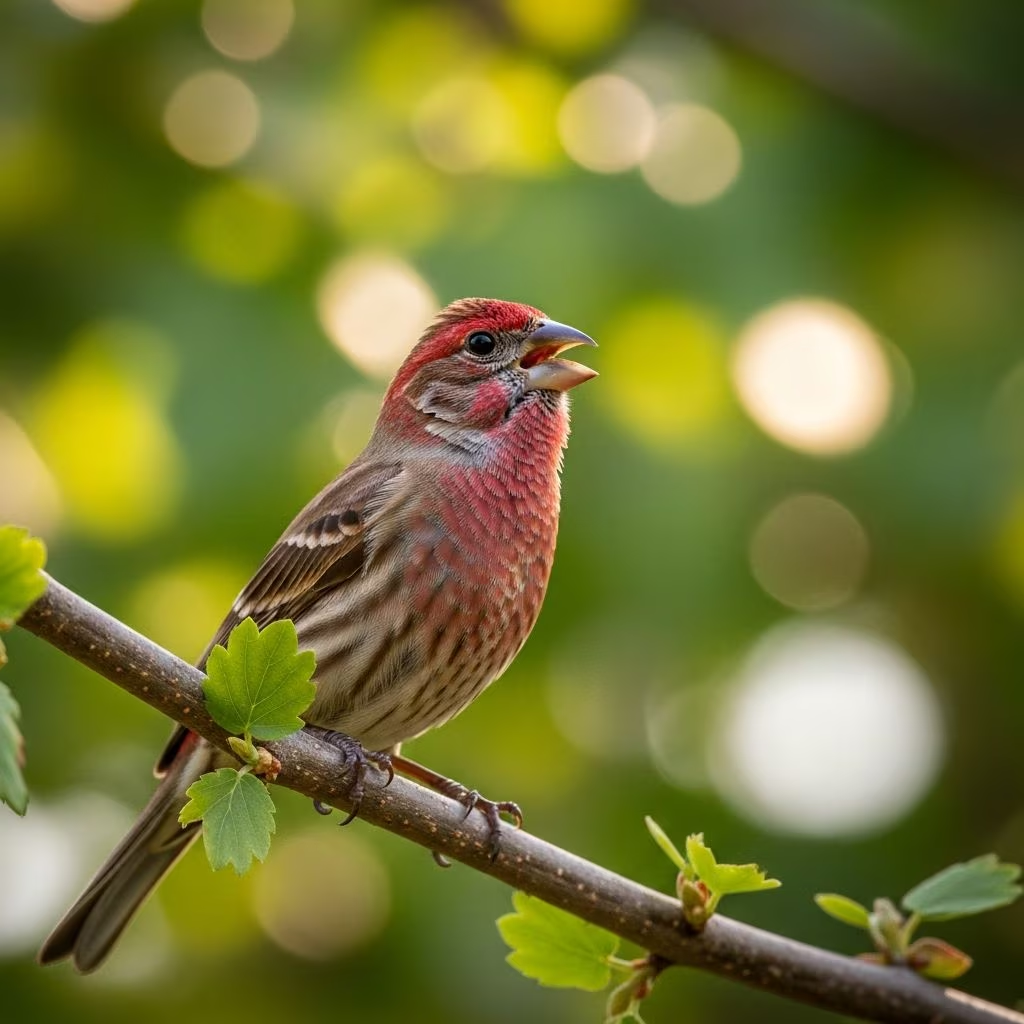
What Is a Finch? Learn About These Small Songbirds
Finches are small, compactly built songbirds that capture the attention of birdwatchers and nature enthusiasts worldwide. These fascinating creatures are characterized by their distinctive appearance, remarkable behaviors, and adaptability to various environments. Whether you spot a bright yellow American Goldfinch at your feeder or observe a charming House Finch perched on a tree branch, finches represent some of the most engaging and visually appealing birds in North America and beyond. Understanding what makes finches unique requires exploring their defining characteristics, diverse species, and ecological importance.
Defining Characteristics of Finches
Finches belong to the family Fringillidae and are recognized by several distinctive traits that set them apart from other songbirds. Their most defining feature is their specialized anatomy, which has evolved perfectly for their seed-based diet and forest-dwelling lifestyle.
The Signature Conical Beak
The most recognizable characteristic of a finch is its stout, conical beak. This triangular-shaped bill is wide at the base and tapers to a sharp point, creating a structure perfectly designed for crushing seed hulls. The beak’s unique shape allows finches to efficiently extract seeds from grasses, weeds, pine cones, and plant pods. Within the upper mandible, finches possess a groove where they can wedge seeds in place while their powerful jaw muscles crush the outer hull. This specialized feeding apparatus makes finches exceptional granivores—seed-eating specialists that thrive on diets consisting almost exclusively of seeds and berries throughout the year.
Size and Body Structure
Finches are small to medium-sized passerine birds, ranging in length from approximately 10 to 27 centimeters (3 to 10 inches). Their bodies are compactly built, featuring short necks and relatively large heads compared to their body size. This sturdy, efficient body design enables finches to maintain their energy levels in various climates, from temperate forests to arctic tundra. Their short legs are equipped with strong feet perfectly adapted for gripping branches while foraging. Many finch species feature notched or forked tails, which aid in maneuverability during flight and perching.
Distinctive Plumage Colors
Finch plumage displays remarkable variety among species. While some finches sport subdued, protective coloring with streaky brown or gray feathers—categories birders affectionately call “Little Brown Birds”—most finches display vibrant coloration. The most common hues include brilliant yellows, reds, oranges, and pinks. A smaller number of species feature blue or green patches, particularly among Latin American species such as Euphonias and Chlorophonias. Males often display brighter plumage than females, a characteristic known as sexual dimorphism. This colorful appearance serves multiple purposes, from attracting mates during breeding season to providing subtle camouflage in their natural habitats.
Behavioral Traits of Finches
Beyond their physical characteristics, finches exhibit fascinating behaviors that reflect their adaptation to diverse environments and lifestyles.
Foraging and Diet
Finches are among the most strictly vegetarian of all songbirds, with seeds, buds, fruits, and foliage comprising up to 97 percent of their diet year-round. Unlike many other bird species, finches rarely supplement their diet with insects, though nestlings unable to crack seeds are typically fed insects by their parents. Finches forage by clinging and climbing on branches in trees and shrubs or even small plants like thistles, rather than foraging on the ground. This arboreal feeding strategy protects them from ground predators while allowing access to the abundant seed sources found at various heights throughout their habitats.
Hardy Resilience
Finches demonstrate remarkable hardiness and adaptability to challenging climates. Their seed-based diet enables them to survive and thrive in cold environments where other bird species would struggle. The Common Redpoll exemplifies this hardiness, living year-round near the Arctic Circle. During extreme winters, these tiny birds exhibit extraordinary behavior by creating tunnels in the snow where they roost, providing insulation on subzero nights. You’ll observe finches year-round at feeders and in chattering flocks called a charm of finches, foraging in woodlands, grasslands, and urban areas alike.
Social Structures and Breeding
Finches typically form monogamous breeding pairs and exhibit strong social bonds. Many species demonstrate sexual dimorphism, with males displaying brighter plumage than females. Their nesting behavior includes constructing basket-shaped nests typically built in trees, occasionally in bushes, between rocks, or on similar substrates. Different finch species have evolved distinct life strategies corresponding with their environmental conditions. “Barbarian” finches travel in nomadic flocks, produce multiple broods annually, and display minimal sexual dimorphism—a strategy effective in challenging boreal environments. These social flocks create spectacular displays of coordinated flight and synchronized foraging behavior.
Flight Characteristics
Finches possess a distinctive bouncing flight pattern characteristic of most small passerine birds. This flight style alternates between bouts of rapid wing flapping and gliding on closed wings, creating an undulating aerial movement. Geographic variations in wing morphology reflect adaptation to local conditions—eastern House Finches have longer, pointer wings suited for long-distance migration and northern climates, while western finches possess shorter wings suited to year-round residency and local movements.
Common Finch Species in North America
North America hosts numerous finch species, each with unique characteristics and geographic distributions. Understanding common species helps in identification and appreciation of finch diversity.
House Finch
The House Finch (Haemorhous mexicanus) stands as the most adapted finch species to urban environments. Their range extends across most of the United States, including Hawaii, and into Mexico. Male House Finches display distinctive rosy-hued heads, breasts, and backs, with pale brown bodies streaked with sparrow-like markings. Females are brown-grey with similar streaked patterns. House Finches are small-bodied with fairly large beaks and somewhat long, flat heads. Their wings are short, making their tails appear relatively long by comparison.
American Goldfinch
The American Goldfinch (Spinus tristis) is among the most visually striking finch species, easily spotted with its canary yellow and black plumage. During spring breeding season, males are bright yellow with black foreheads and black, white-striped wings. Females display similar patterns but with less vibrant coloring and lack the glossy black forehead patch. In winter, both males and females transition to dull yellow or brown plumage. These tiny finches, measuring approximately 4.5 inches or 12 centimeters, are commonly found clinging to tube feeders throughout the continental United States.
Gray-Crowned Rosy Finch
Gray-Crowned Rosy Finches (Leucosticte tephrocotis) exhibit variable habits based on seasonal changes. They inhabit regions from Alaska and Canadian shorelines to high mountain slopes, deserts, and arctic tundra of western North America. In winter, these small finches may travel as far south as northern Arizona, though they typically remain in high elevations. These finches feature distinctive gray heads with black foreheads and chins, brown chests and backs, and striking pink coloring on their underbellies and wings.
Red Crossbill
Red Crossbills (Loxia curvirostra) possess the most unique bill shape of all North American finches. Their bills overlap with the top extending opposite from the bottom—a distinctive adaptation allowing them to pry open coniferous cone scales. With scales held open by their specialized beaks, they extract seeds using their long tongues. These medium-sized finches display beautiful russet-orange plumage and prefer mixed conifer forests in western United States and Canadian regions extending to Alaska.
Lesser Goldfinch
The striking black and gold Lesser Goldfinch makes its home in the desert southwest, displaying vibrant coloration and energetic behaviors. These finches adapt well to arid environments and are increasingly common at feeders throughout their range.
Pine Grosbeak
Hikers in pine forests of the mountain west may observe the beautiful Pine Grosbeak sitting placidly in the boughs. These larger finches display distinctive coloration and inhabit coniferous forest environments.
Adaptations and Evolution
Finch evolution demonstrates remarkable adaptive radiation—the process by which species diversify to fill various ecological niches. Research reveals that finches have evolved several distinct ways of life corresponding with different environments. Some suites of finch traits work well in strongly seasonal, harsh environments like the far north, while other traits prove beneficial in relatively benign equatorial jungles. The Hawaiian honeycreepers are famous examples of adaptive radiation, displaying an extraordinary range of bill shapes and sizes evolved from ancestral finch species. All true finches maintain consistent skeletal features, including 9 primary remiges and 12 rectrices, despite their remarkable plumage and behavioral diversity.
Finches as Songbirds
Finches earn their classification as songbirds through their vocal abilities. Most finch species sing well and several are commonly kept as cagebirds. The domesticated canary (Serinus canaria domestica) stands foremost among captive finch species, prized for its beautiful song and cheerful demeanor. The natural vocalizations of wild finches add auditory dimension to their visual appeal, creating multisensory birdwatching experiences.
Finches in Various Habitats
Finches occupy a great range of habitats worldwide, adapted to diverse environmental conditions. They are usually resident birds within their habitats, with many species not migrating seasonally. However, some species qualify as irruptive migrants, traveling in response to food availability and environmental conditions. These movements create opportunities for birdwatchers to observe unusual finch species outside their typical ranges. From boreal forests to tropical rainforests, from alpine meadows to urban gardens, finches demonstrate remarkable ecological flexibility.
Why Finches Matter
Beyond their aesthetic appeal and engaging behaviors, finches play important ecological roles. As seed-eating specialists, they influence plant reproduction and dispersal patterns across their habitats. Their presence indicates healthy ecosystems with abundant native plants. Finches also serve as indicators of environmental conditions and climate patterns, with range expansions and population fluctuations reflecting broader ecological changes. For humans, finches provide accessible opportunities for wildlife observation, education, and connection with nature, particularly in urban and suburban settings where they readily visit feeders and gardens.
Frequently Asked Questions (FAQs)
Q: What do finches eat?
A: Finches are strict seed-eaters, with seeds, buds, fruits, and foliage comprising up to 97 percent of their diet year-round. Their specialized conical beaks are perfectly designed for cracking open seed hulls.
Q: How can I identify a finch?
A: Finches are characterized by their stout, conical beaks, compact bodies, short necks, relatively large heads, and notched or forked tails. Most species display vibrant plumage in yellows, reds, or oranges, though some have subdued brown or gray coloring.
Q: What is the difference between male and female finches?
A: Many finch species display sexual dimorphism, with males featuring brighter, more vibrant plumage than females. For example, male House Finches have rosy-hued heads and breasts, while females are brown-grey. However, some species show minimal differences between sexes.
Q: Where do finches build their nests?
A: Finches construct basket-shaped nests typically in trees, occasionally in bushes, between rocks, or on similar substrates. Their nesting choices vary by species and local environmental conditions.
Q: Are finches good birds to keep as pets?
A: Some finch species, particularly domesticated canaries, are popular cagebirds prized for their beautiful songs and manageable care requirements. However, many wild finch species are protected by law and cannot be legally kept as pets.
Q: What makes finches hardy birds?
A: Finches demonstrate exceptional hardiness due to their seed-based diet, which provides sustained energy in cold climates. The Common Redpoll exemplifies this hardiness by living year-round in arctic regions, even creating snow tunnels for winter roosting.
Q: How do finches differ from other songbirds?
A: Finches are among the most vegetarian songbirds, with significantly different feeding strategies and anatomical adaptations than insect-eating species. Their specialized beaks and compact bodies reflect millions of years of evolution optimizing them for seed-eating.
References
- Finches in North America: A Complete Guide — Nest Box Live. 2025. https://nestboxlive.com/blog/finches-in-north-america-a-complete-guide/
- 10 Fun Facts about the House Finch — National Audubon Society. 2025. https://www.audubon.org/magazine/10-fun-facts-about-house-finch
- Finch: Characteristics, Species, & Facts — Britannica. 2025. https://www.britannica.com/animal/finch
- Finches – Fringillidae — The Science of Birds. 2025. https://www.scienceofbirds.com/blog/finches-fringillidae
- Finch — Wikipedia. 2025. https://en.wikipedia.org/wiki/Finch
- House Finch Identification — Cornell Lab of Ornithology. 2025. https://www.allaboutbirds.org/guide/House_Finch/id
- Meet the Finches: Common Traits of these Colorful Birds — Lyric Bird Food. 2025. https://www.lyricbirdfood.com/birding-hub/behavior/meet-the-finches-common-traits-of-these-colorful-birds/



