

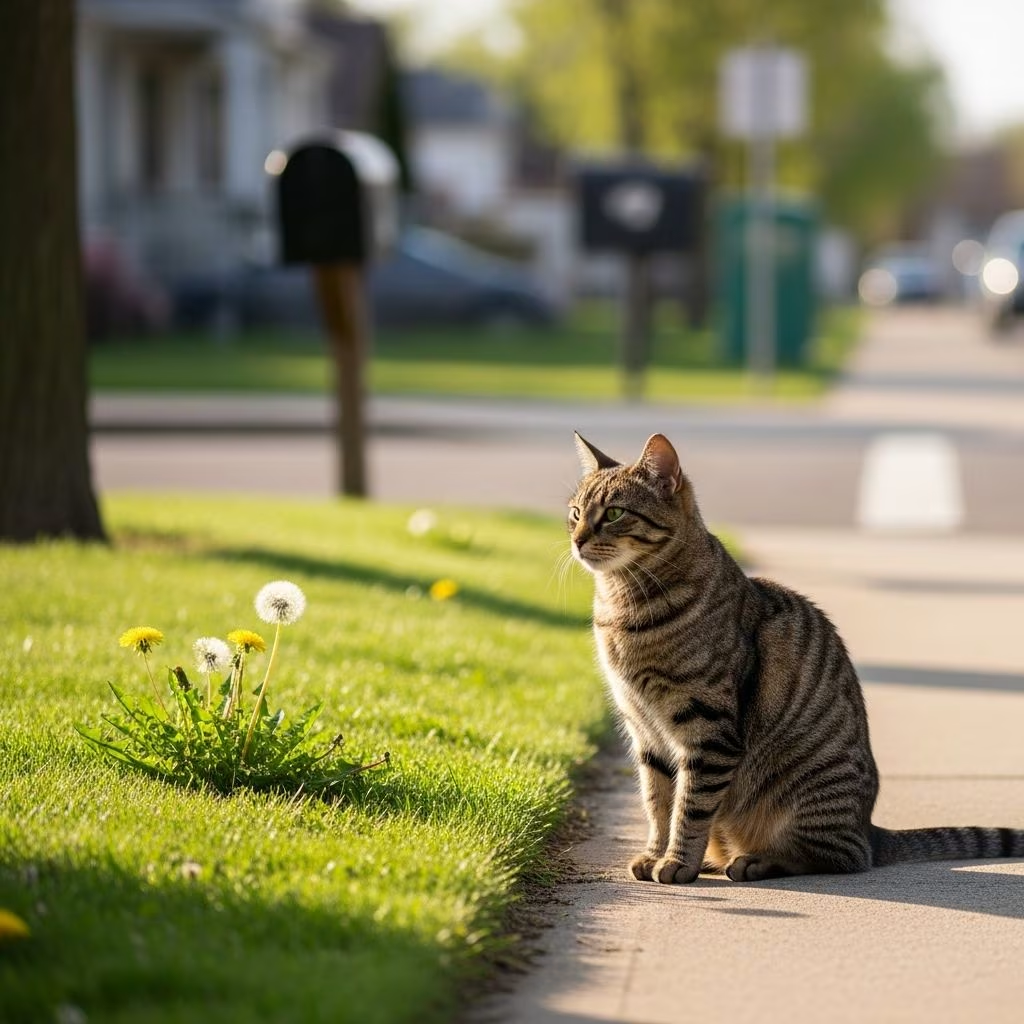
Community cats are unowned, free-roaming felines that live outdoors in neighborhoods, parks, and urban areas worldwide. These cats, part of the domestic species Felis catus, include both feral cats (unsocialized to humans) and strays (formerly socialized but lost or abandoned). Unlike owned pets, community cats thrive in outdoor environments, often forming colonies where they hunt, socialize with other cats, and rely on natural resources or caregiver support.
The term “community cat” serves as an umbrella definition for any outdoor cat without a formal home, emphasizing their role in the shared ecosystem rather than labeling them as pests or strays. They may receive food, water, and shelter from informal caregivers but remain independent.
Community Cats vs. Feral Cats vs. Stray Cats
Distinguishing between community cats, feral cats, and stray cats is crucial for humane management. While all are community cats, their socialization levels and behaviors differ significantly.
| Characteristic | Stray Cat | Feral/Community Cat |
|---|---|---|
| Socialization | Socialized to humans; may approach people, purr, or rub against legs | Unsociable; avoids human contact, fearful of people |
| Behavior | Seeks human homes (e.g., porches); responds to food sounds | Lives in colonies; hides from people, low to ground posture |
| Body Language | Tail up, eye contact, relaxed over time | Crouched, tail wrapped, no eye contact |
| Adaptability | Often adoptable with care | Unadaptable to indoor life; best managed via TNR |
Stray cats were once indoor pets that became lost or abandoned, retaining some human affinity but potentially feralizing without contact. Feral cats, born outdoors, lack socialization and prefer colony life.
What Does Socialized Mean?
A socialized cat enjoys human companionship, tolerating touch, indoor spaces, and household noises. Socialization occurs early in life, influenced by positive human interactions. Kittens from feral mothers can be socialized before 8 weeks, becoming adoptable pets.
Strays may initially show friendliness but lose it outdoors. Feral cats remain tense, ignoring toys or people, highlighting why assessing behavior—not appearance—is key.
Why Do Community Cats Have Tipped Ears?
Ear-tipping is a universal marker for sterilized community cats. Under anesthesia during spay/neuter surgery, the tip of one ear (usually the left) is surgically removed, healing quickly for lifelong visibility from afar.
This prevents repeated trapping and surgery, aiding caregivers, vets, and animal control in identifying fixed cats. It’s humane, safe, and essential for effective population control in hard-to-approach ferals.
- Procedure: Done only once, under full anesthesia.
- Benefits: Visible ID reduces stress and costs.
- Recognition: Standard in TNR programs globally.
Trap-Neuter-Return (TNR)
Trap-Neuter-Return (TNR) is the gold-standard, humane approach for community cats. Cats are humanely trapped, vetted (spayed/neutered, vaccinated, treated for issues), ear-tipped, and returned to their familiar territory.
TNR stabilizes populations, reduces nuisance behaviors like yowling or spraying, and improves health without shelter euthanasia. Studies show TNR outperforms removal, as new cats quickly repopulate areas (vacuum effect).
TNR Steps:
- Plan with local experts; use humane traps.
- Trap early morning/evening with smelly food.
- Vet care: alter, vaccinate, ear-tip.
- Recover 24-48 hours; release at site.
- Monitor colony; provide shelters/food.
Community Cat Caregivers
Caregivers feed, shelter, and monitor colonies without claiming ownership. They facilitate TNR, track health, and educate neighbors. Successful colonies are healthy, stable, and integrated.
- Daily feeding at set times to avoid dependency.
- Weatherproof shelters with straw bedding.
- Flea/worm control via accessible vets.
Benefits of Community Cats
These cats naturally control rodents, reducing disease vectors. TNR-managed colonies pose minimal nuisance and contribute ecologically.
Challenges and Myths
Myths label community cats as diseased threats, but vaccinated, TNR cats are healthy. Euthanasia fails; TNR succeeds long-term.
Frequently Asked Questions (FAQs)
What is a community cat?
A community cat is any unowned, outdoor-roaming cat, including ferals and strays, living independently or with caregiver support.
How do stray cats differ from feral cats?
Strays are socialized former pets seeking humans; ferals avoid people, born wild.
Why ear-tip community cats?
Ear-tipping signals sterilization, preventing repeat surgeries.
Is TNR effective?
Yes, TNR reduces populations humanely and stabilizes colonies.
Can feral kittens be socialized?
Yes, under 8 weeks, with patient handling.
Legal Considerations for Community Cats
Laws vary; many areas protect TNR cats as public resources. Check local ordinances for feeding/trapping rules.
Building a Community Cat Program
Partner with shelters for SNR/RTF. Educate via workshops. Track success with population logs.
References
- What is Community Cats? — El Paso Animal Services. 2023. https://elpasoanimalservices.org/resources/what-is-community-cats/
- Community cats — HumanePro by Humane World for Animals. 2024. https://humanepro.org/topics/community-cats
- Feral and Stray Cats: An Important Difference — Alley Cat Allies. 2023. https://www.alleycat.org/resources/feral-and-stray-cats-an-important-difference/
- Community Cat Program — MCPAWS Regional Animal Shelter. 2024. https://mcpaws.org/community-cat-program/
- Position Statement on Community Cats — ASPCA. 2023-05-01. https://www.aspca.org/about-us/aspca-policy-and-position-statements/position-statement-on-community-cats
- All About Community Cats — Alley Cat Allies. 2024. https://www.alleycat.org/resources/get-informed-discover-the-truth-about-feral-cats/



