

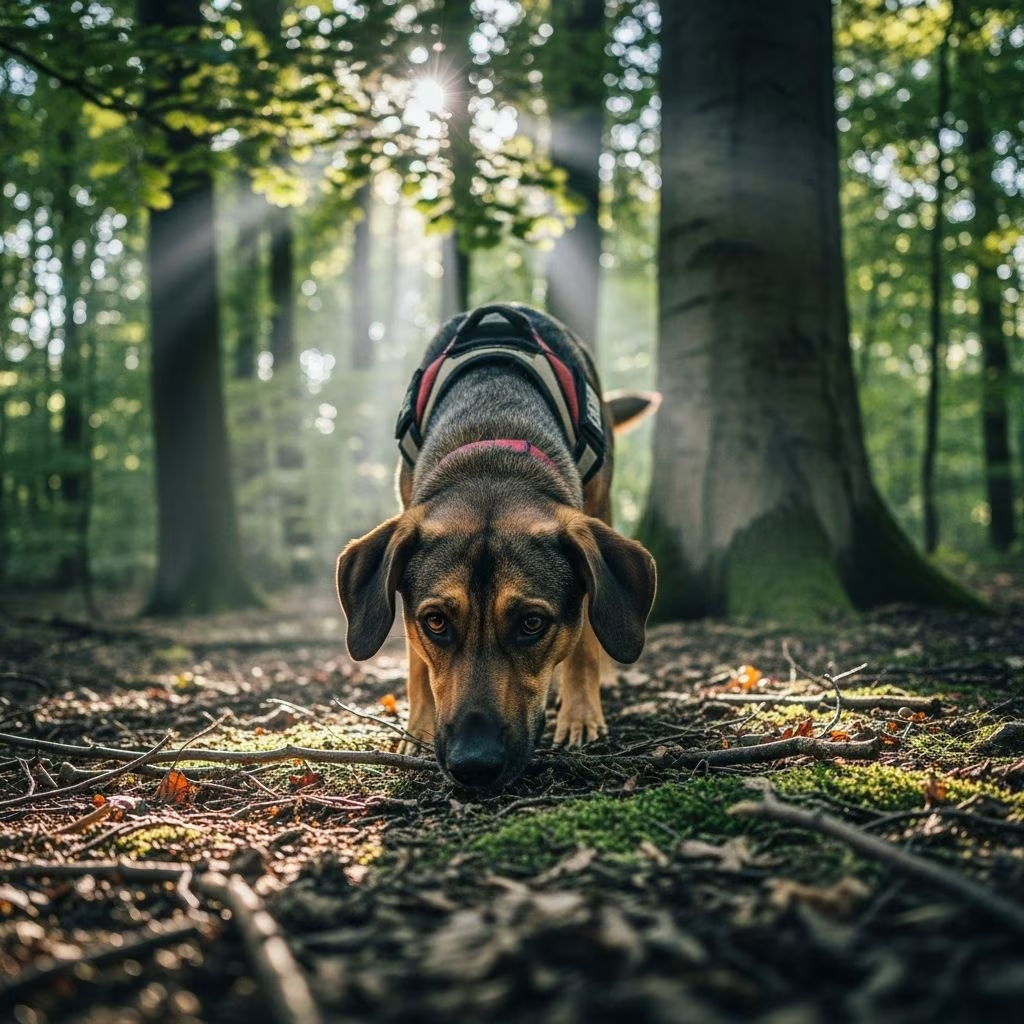
Cadaver dogs, also known as human remains detection (HRD) dogs, are specially trained canines that use their exceptional olfactory abilities to locate human decomposition scents, even in challenging environments like buried sites, underwater locations, or disaster zones. These dogs play a pivotal role in search and rescue operations, law enforcement investigations, and forensic work by detecting remains that humans might overlook.
How Do Cadaver Dogs Work?
Cadaver dogs detect the unique chemical compounds produced during human decomposition, such as cadaverine and putrescine, which are highly specific to human remains across various stages—from fresh to skeletal. Their sense of smell is up to 100,000 times more sensitive than humans’, allowing them to identify these scents from minute traces, even after remains have been buried, submerged, or concealed.
During a search, the dog systematically covers an area, air-scenting or ground-scenting to pick up odor plumes. Factors like wind direction, terrain, and environmental distractions influence their approach, but rigorous training ensures they discriminate human scents from animal remains, plants, or chemicals.
How Are Cadaver Dogs Trained?
Training cadaver dogs is a meticulous, multi-stage process that builds on their natural scenting prowess, typically starting when puppies are 18 months old and lasting from six weeks to several years depending on complexity. Handlers, who must understand forensics, decomposition rates, and field craft, partner closely with the dogs.
Key training methods include:
- Scent Imprinting: Dogs are introduced to real human remains or pseudo-scents mimicking decomposition (e.g., cadaverine), starting with small samples and progressing to complex hides.
- Alert Training: Dogs learn to signal finds via active (barking, scratching) or passive (sitting, lying down) responses, tailored to environments like water searches.
- Distraction Proofing: Exposure to competing odors (animal carcasses, food, chemicals) teaches discrimination.
- Variable Conditions: Training in diverse settings—forests, urban areas, water, varying weather—to simulate real scenarios.
- Obedience and Maintenance: Basic commands ensure control, with ongoing sessions to maintain proficiency.
- Certification: Blind searches and controlled tests through organizations verify reliability.
Modern methods emphasize positive reinforcement (treats, toys, praise) over outdated aversive techniques, yielding better performance and reliability. The handler-dog bond is crucial for interpreting subtle cues.
Cadaver Dog Alert Types
Cadaver dogs are trained to provide a trained final response (TFR) upon detection, categorized as:
| Alert Type | Description | Best Used In |
|---|---|---|
| Active Alert | Barking, scratching, or digging to aggressively indicate the find. | Land searches, crime scenes where precise location marking is needed. |
| Passive Alert | Sitting, lying down, or freezing quietly to pinpoint without disturbing evidence. | Water searches, sensitive archaeological sites, or ongoing live rescues. |
The choice depends on the operational environment; for instance, passive alerts prevent site contamination in forensic work.
Uses for Cadaver Dogs
Cadaver dogs serve in diverse, high-stakes scenarios where locating human remains provides closure, evidence, or recovery:
- Crime Scene Investigations: Pinpointing bodies, body parts, or blood evidence in murders, missing persons cases.
- Natural Disasters: Searching rubble from earthquakes, floods, hurricanes for victims.
- Historical and Archaeological Digs: Locating ancient remains without invasive excavation.
- Mass Fatality Incidents: Efficiently covering large areas post-accident or disaster.
- Water and Underwater Searches: Detecting submerged remains via surface odor detection.
Their speed, thoroughness, and ability to navigate inaccessible terrain make them indispensable.
Best Dog Breeds for Cadaver Work
While any motivated dog can succeed with proper training, certain breeds excel due to drive, scenting ability, and temperament:
- Labrador Retriever: Versatile, eager to please, excellent scent discrimination.
- German Shepherd: Intelligent, high drive, strong work ethic.
- Bloodhound: Legendary trailing nose, persistent.
- Belgian Malinois: Agile, intense focus for challenging terrains.
- Mixed Breeds: Often outperform purebreds in resilience and adaptability.
Selection prioritizes scent aptitude, play drive, and handler compatibility over breed alone.
Challenges Cadaver Dogs Face
Despite their prowess, cadaver dogs encounter obstacles:
- Environmental Interference: Wind, rain, or heat dilutes scents; urban clutter adds distractions.
- Decomposition Variables: Scent changes with time, soil type, temperature, scavengers.
- False Alerts: Rare but mitigated by proofing; animal remains or chemicals can confuse.
- Handler Errors: Subtle cues can influence dogs, hence blind testing.
- Emotional Toll: Repeated exposure to death requires mental health support for teams.
Success rates exceed 80-90% in controlled studies, far surpassing human methods.
Real-Life Examples of Cadaver Dogs in Action
These dogs have transformed investigations:
- In 2021, a Labrador named Moxie located remains in a Florida swamp after a hurricane, aiding victim identification.
- Post-9/11, HRD teams searched Ground Zero rubble for months, recovering over 1,500 victims.
- A German Shepherd named Trakr found the last survivor at the World Trade Center collapse.
- In cold cases, dogs like those from Black Hills K9 have resolved decades-old missing persons by scenting old burial sites.
These cases underscore their reliability in providing closure.
Frequently Asked Questions (FAQs)
Q: How accurate are cadaver dogs?
A: Highly accurate, with field studies showing 80-95% success rates in detecting remains, thanks to rigorous training and scent specificity.
Q: Can cadaver dogs detect remains underwater?
A: Yes, via surface odor plumes; specialized water HRD dogs use passive alerts.
Q: How long can cadaver dogs detect remains?
A: Years or even centuries for skeletal remains, as cadaverine persists.
Q: What is the difference between cadaver dogs and live-find SAR dogs?
A: Cadaver dogs focus solely on death scents; live-find dogs seek live humans by breath/scent, sometimes dual-trained.
Q: Can any dog become a cadaver dog?
A: Potentially, but high-drive breeds with strong noses and handler bonds are ideal; training reveals aptitude.
References
- What are Cadaver dogs — Peace River Search and Rescue, Inc. Accessed 2026. https://www.prsar.org/whatarecadaverdogs.html
- The Ultimate Guide to Cadaver Dogs — Black Hills K9. Accessed 2026. https://blackhillsk9.com/cadaver-dogs-guide/
- Understanding Cadaver Dogs — SJSU ScholarWorks (Themis Journal). 2019. https://scholarworks.sjsu.edu/cgi/viewcontent.cgi?article=1124&context=themis
- Human Remains Detection with Cadaver Dogs — Crime-Scene-Investigator.net. Accessed 2026. https://www.crime-scene-investigator.net/cadaverdogs.html
- Cadaver Dogs — Top Tier K9. Accessed 2026. https://www.toptierk9.com/single-post/cadaver-dogs
- How Cadaver Dogs Help Find Dead Bodies — American Kennel Club. 2023-10-20. https://www.akc.org/expert-advice/family-dog/cadaver-dogs-how-canine-noses-help-find-dead-bodies/
- SAR Dog Appendix B Cadaver — California Governors Office of Emergency Services (.gov). Accessed 2026. https://www.caloes.ca.gov/wp-content/uploads/Law-Enforcement/Documents/SAR-Dog-Appendix-B-Cadaver.pdf
- How to Select a Top Notch Human Remains Detection (HRD) Dog — Tactical Police K9 Training. Accessed 2026. https://tacticalpolicek9training.com/how-to-select-a-top-notch-hrd-dog/



