

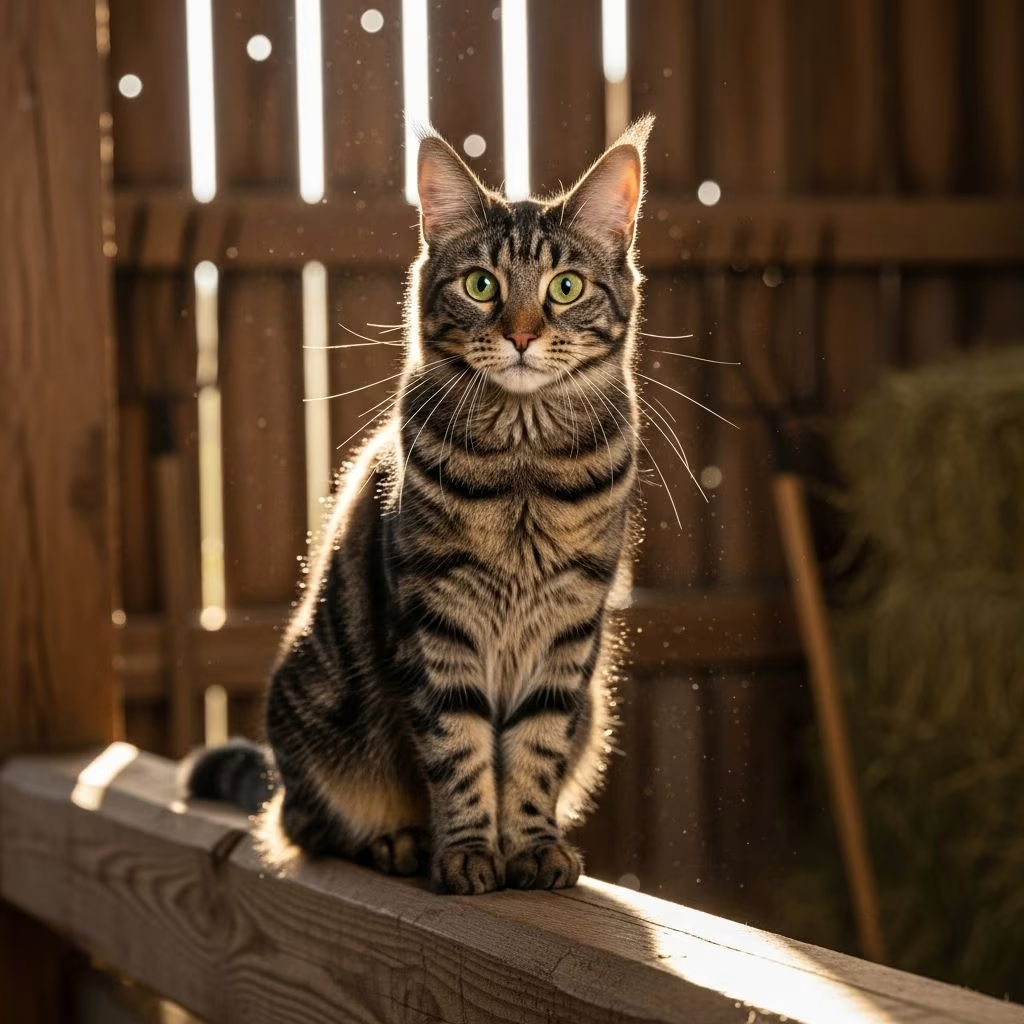
Barn cats, also known as farm cats or working cats, are domestic felines that live primarily outdoors on agricultural properties, barns, stables, or similar environments. These cats are typically feral or semi-feral, excelling at natural pest control by hunting rodents and other vermin that threaten stored food and structures. Unlike household pets, barn cats thrive in independent outdoor lifestyles, providing invaluable services to farm owners while requiring minimal interaction.
Barn Cat vs. House Cat: Key Differences
Distinguishing a barn cat from a house cat is crucial for their well-being. Barn cats are often feral-born or strays unsuited for indoor life, while house cats seek human companionship.
| Trait | Barn Cat | House Cat |
|---|---|---|
| Socialization | Not social; avoids people and other animals | Social; craves attention and interaction |
| Handling | Difficult to handle; stressed by touch or confinement | Comfortable with handling and petting |
| Hunting Instinct | Strong rodent hunter; independent | May play-hunt but prefers toys and play with humans |
| Environment Preference | Outdoor, open spaces; panics at closed doors | Indoor comfort; enjoys enclosed safe spaces |
| Interaction | Silent, avoids eye contact, low body position | Meows, makes eye contact, treat-motivated |
Barn cats exhibit traits like “airplane ears” (flat against head), hiding behaviors, and disinterest in toys, signaling their wild nature. House cats, conversely, tuck paws under, purr during caresses, and engage playfully.
Traits of a Barn Cat
Barn cats share distinct characteristics shaped by their feral or semi-feral heritage. They are usually mixed-breed domestics living outdoors, self-sustaining in colonies where females raise litters in barns. Key traits include:
- Independence: Prefers solitude, avoiding human contact unless for food.
- Hunting Prowess: Expert at catching mice, rats, and vermin, patrolling barns and fields daily.
- Fearful or Shy Demeanor: Low interaction; may hiss, growl, or flee from handling.
- Hardiness: Resilient to outdoor conditions but benefits from shelter, food, and vet care.
- Semi-Social Tolerance: Some tolerate people at a distance but not close contact.
These cats often stem from feral populations, born wild and unsocialized beyond kittenhood, making indoor life stressful.
How to Adopt a Barn Cat
Adopting barn cats typically comes from shelters or rescues via Barn Cat Programs, targeting unadoptable ferals or indoor-misfit cats. These programs ensure cats are sterilized (spayed/neutered), vaccinated, and healthy before placement.
- Contact Shelters/Rescues: Inquire about barn cat availability; they prioritize cats too wary for homes.
- Assessment: Facilities test for feral traits like silence, avoidance, and aggression to confirm suitability.
- Preparation: Provide a secure transition area like a large crate or room with food, water, litter, and hiding spots for 2-4 weeks.
- Release Protocol: Confine initially to acclimate, then allow supervised outdoor access; monitor escapes by sealing holes under 4 inches.
- Commitment: Agree to lifelong care: food, water, shelter, and annual vet checks.
Shelters like those running APA! Barn Cat Programs house cats in enriched outdoor enclosures pre-adoption, feeding enticing wet food to reduce stress.
Barn Cat Care Guide
Caring for barn cats balances their independence with essential support for health and productivity.
Shelter and Safety
Provide insulated shelters like straw-filled boxes or barn lofts, elevated to avoid floods and predators. Multiple hiding spots reduce stress.
Food and Water
Supplement hunting with daily kibble (24/7 access) and wet food; use enticing varieties for stressed cats. Fresh water stations prevent contamination.
Health and Veterinary Care
Essential: Spay/neuter to prevent overpopulation and roaming; rabies/FVRCP vaccines; flea/tick/deworming. Monitor for signs like limps, discharges, matted fur, or wounds needing vet attention. Annual check-ups catch issues early.
Enrichment and Socialization
Offer scratching posts, perches, and safe territories. Slow-blink to build trust; some may allow distant petting over time. Avoid forcing interaction.
Escape Prevention
Seal gaps; use humane traps if escaped. Confined settling-in periods help bond cats to the property.
Pros and Cons of Barn Cats
| Pros | Cons |
|---|---|
| Effective, chemical-free pest control saves costs on poisons/rodenticides | Requires daily feeding/watering commitment |
| Self-sustaining colonies if managed (TNR: Trap-Neuter-Return) | Potential health risks from weather, predators, fights |
| Ideal for unadoptable cats, reducing shelter euthanasia | Legal/insurance issues on some properties |
| Low-maintenance companionship for farms | Inbreeding risks in closed colonies |
| Enhances farm ecosystem balance | Initial acclimation challenges/escapes |
Barn cats excel where rodenticides pose risks to livestock or wildlife, offering humane, efficient control.
Frequently Asked Questions (FAQs)
What is a barn cat exactly?
A barn cat is a feral or semi-feral domestic cat living outdoors on farms, hunting pests like rodents while provided shelter, food, and care.
Can any cat become a barn cat?
No; only unsocialized ferals, shy cats, or those with litter issues suit barn life. Social house cats suffer indoors.
Do barn cats need to be spayed/neutered?
Yes, mandatory to control populations, reduce roaming/disease, and promote health.
How do I know if my cat is a barn cat?
Observe traits: avoids people, hunts avidly, stressed in confinement vs. social/playful indoor preferences.
What if my barn cat escapes?
Seal holes immediately; use food bait and humane traps. Prevent with proper initial confinement.
Are barn cats good with other animals?
They often avoid other cats/animals but tolerate in colonies; supervise with livestock initially.
How much does a barn cat cost to care for?
Low: $5-10/week food, plus annual vet (~$100-200/cat) for vaccines/deworming.
Conclusion
Barn cats offer a symbiotic farm partnership: pest control for shelter and sustenance. With proper adoption, care, and commitment, they thrive, benefiting properties ecologically and economically.
References
- Is My Cat a Barn Cat or a House Cat? — Horse Illustrated. 2023. https://www.horseillustrated.com/is-my-cat-a-barn-cat-or-a-house-cat/
- Farm cat — Wikipedia. 2024-01-10. https://en.wikipedia.org/wiki/Farm_cat
- Barn Cat 101 Handbook — Maddie’s Fund / APA!. Undated (accessed 2024). https://www.maddiesfund.org/assets/documents/Institute/APA!%20Barn%20Cat%20Handbook.pdf
- All About Barn Cats — Richmond Animal League. 2024. https://www.ral.org/posts/barncats
- Barn Cat – TEST — Routt County Humane Society. 2024. https://routthumane.org/barn-cat-test/?id=56530502
- What is a “barn cat?” — Humane World for Animals. 2023. https://www.humaneworld.org/en/all-animals/what-barn-cat



