

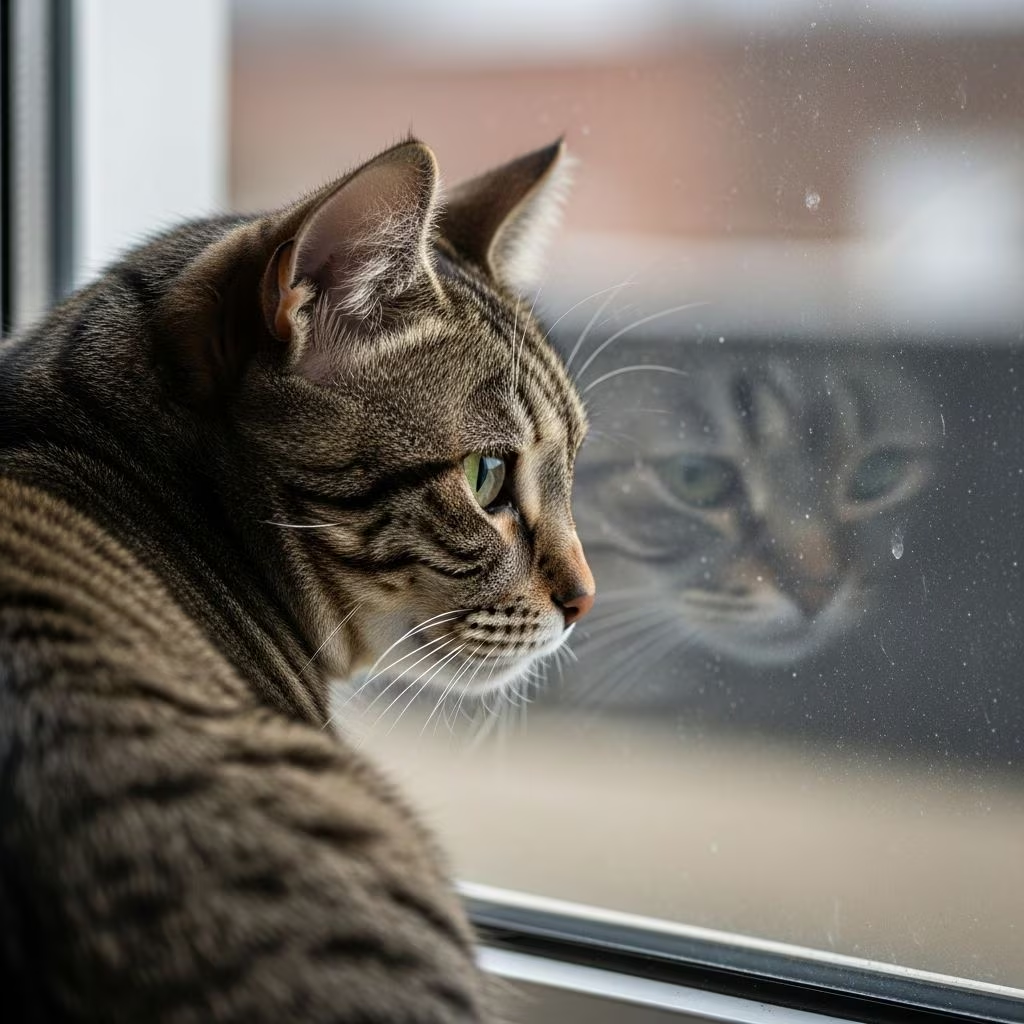
Cats are natural hunters whose instincts drive them to stalk, pounce, and chase. When denied regular playtime, these unmet needs lead to frustration, behavioral issues, and potential health problems. Research shows play is crucial for cat welfare, with absent play linked to distress behaviors and lower quality of life scores.
Why Play Matters for Cats
Play fulfills a cat’s predatory instincts in a safe indoor environment, providing physical exercise and mental stimulation. Without it, cats become bored, leading to stress that manifests in unwanted behaviors. Experts note that insufficient play is a primary cause of calls to feline behaviorists, as it underlies most destructive actions.
Studies confirm that play variety and frequency correlate with higher quality of life (QOL) and stronger cat-guardian bonds. Cats engaging in more games show better welfare outcomes, while limited play options lead to habituation and boredom. Indoor cats, in particular, rely on human-initiated play to mimic hunting, preventing obesity and stress-related illnesses.
11 Signs Your Cat Isn’t Getting Enough Play
Recognizing the signals of play deprivation is key to addressing it early. Here are common indicators observed by behavior specialists:
- Excessive biting or chewing: Cats gnaw on cardboard, plastics, or even hands due to pent-up energy and boredom.
- Stalking and pouncing on people: Redirected hunting instincts turn family members into ‘prey,’ resulting in play aggression.
- Zoomies or frantic running: Bursts of high-energy sprints signal overflowing vitality needing an outlet.
- Excessive vocalization: Meowing, yowling, or chirping increases as attention-seeking escalates.
- Destructive scratching or chewing: Furniture and household items become targets for frustration release.
- Inappropriate elimination: Urinating outside the litter box stems from stress-induced anxiety.
- Counter surfing or forbidden climbing: Bored cats explore off-limits areas seeking stimulation.
- Repetitive behaviors: Pacing, staring, or fixating on objects indicates time-filling attempts.
- Increased sleeping or lethargy: Withdrawal masks underlying restlessness.
- Aggression toward other pets: Frustrated energy redirects to housemates.
- Attention-seeking at odd hours: Nighttime wake-ups demand interaction.
Behavioral Changes When Play Is Withheld
Guardians report distinct shifts when play sessions lapse. A study found increased attention-seeking like vocalizations and destructiveness, or conversely, reclusive hiding, both signaling distress. Frustration from unmet hunting drives leads to negative affective states, impacting well-being.
Some cats amplify engagement, rubbing excessively or demanding pets, while others retreat, avoiding interaction. These dichotomies highlight individual responses but universally point to welfare decline without play. Destructive acts, like shredding curtains, often cluster as stress indicators, though not always tied directly to play in all cases.
Health Impacts of Insufficient Play
Beyond behavior, play scarcity contributes to physical health woes. Lack of activity promotes obesity, weakening hearts and joints. Stress hormones elevate, suppressing immunity and causing cystitis or skin issues.
| Health Risk | Cause from No Play | Consequences |
|---|---|---|
| Obesity | Sedentary lifestyle | Diabetes, arthritis, reduced lifespan |
| Stress-related illnesses | Chronic boredom/anxiety | Urinary problems, GI upset, weakened immunity |
| Muscle atrophy | No physical exertion | Mobility issues, injury risk |
| Mental health decline | Unstimulated brain | Depression-like symptoms, cognitive dullness |
Indoor exclusivity heightens these risks, but enriched play boosts QOL significantly.
Why Cats Stop Playing and Seek Alternatives
Sometimes cats disengage from offered play due to health issues like pain from arthritis, dental problems, or thyroid disease, warranting a vet check. Environmental stressors—new pets, moves, or routine changes—induce anxiety, curtailing play drive.
Depression or aging naturally reduces energy, but distinguishing from play neglect is vital. When uninterested, cats improvise with unsafe objects: plastic bags, cords, or plants, risking ingestion or injury.
How Much Play Do Cats Need?
Optimal play totals 15-30 minutes twice daily, mimicking hunting cycles. Multiple short sessions outperform one long one, sustaining engagement without fatigue. Kittens demand more (up to 60 minutes), seniors less, but consistency matters.
Variety prevents habituation: rotate toys weekly. Track sessions; if signs persist, increase duration or intensity.
Best Toys and Games for Cats
- Wand toys: Feathers or strings on poles simulate prey flight.
- Laser pointers: Endless chase, end with ‘catchable’ toy.
- Interactive balls: Battery-free rollers for solo hunts.
- Tunnels and boxes: Ambush playgrounds.
- Treat puzzles: Mental foraging challenges.
Supervise to avoid ingestion hazards. Independent play options like kickers complement human sessions.
DIY Play Solutions
Budget-friendly: crinkle paper balls, cardboard chasers, or sock mice with catnip. Create obstacle courses from boxes. Window perches offer bird-watching ‘hunts.’ Rotate items to maintain novelty.
Encouraging Reluctant Cats to Play
Start slow with enticing scents like catnip or valerian. Play during peak energy times (dawn/dusk). Use praise post-session with meals to associate fun with reward. Patience rebuilds interest; consult pros for persistent issues.
Building a Strong Cat-Guardian Bond Through Play
Mutual initiation of play fosters closeness. Playful guardians report tighter relationships; cats with varied games score higher on bond metrics. It disrupts routines, combating human boredom too.
Frequently Asked Questions (FAQs)
Why is my adult cat less playful?
Adults play less overtly but need stimulation. Health checks rule out pain; add variety to reignite instincts.
Can too much play harm my cat?
Overexertion risks injury in obese cats; monitor breathing, stop if panting. Balance with rest.
What if my cat ignores toys?
They’re habituated—retire items, introduce motion-based lures. Solo play encourages independence.
Does play reduce aggression?
Yes, it channels energy, cutting frustration-based attacks.
How to play with multiple cats?
Separate sessions prevent resource guarding; group hunts build harmony.
Conclusion: Play for a Lifetime of Cat Happiness
Prioritizing play prevents a cascade of issues, enhancing welfare and joy. Commit daily; your cat’s purring pursuit will reward you manifold.
References
- Cats just want to have fun: Associations between play and welfare in cats — Clarke, N., et al. 2024-03-15. https://pmc.ncbi.nlm.nih.gov/articles/PMC10936385/
- Go Play on Your Own: Independent Play for Cats — Feline Engineering. 2023-01-01. https://felineengineering.com/blog/independent-play-for-cats/
- 11 Signs Your Cat Is Not Getting Enough Playtime — Kinship. 2024-05-20. https://www.kinship.com/cat-behavior/signs-your-cat-is-not-getting-enough-playtime
- Why Won’t My Cat Play? Understanding Feline Behavior — UAH Pet. 2023-11-10. https://www.uahpet.com/blogs/post/why-wont-my-cat-play-understanding-feline-behavior
- Reduced Play in Cats — Petsvetcheck. 2024-02-28. https://petsvetcheck.de/en/symptoms/cat/reduced-play/



