

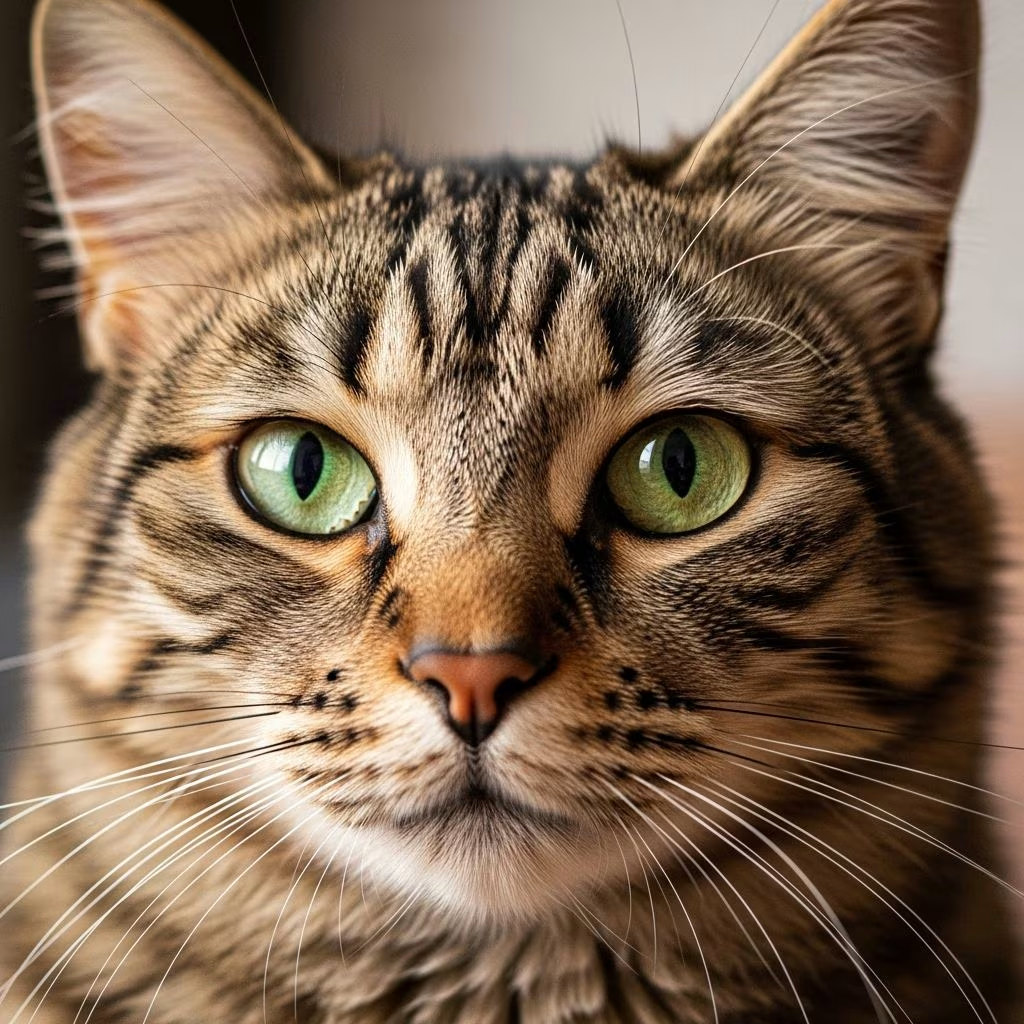
Cats experience a range of emotions including joy, fear, anger, and affection, supported by their ability to recognize both conspecific and human emotional signals through visual, auditory, and olfactory cues. Recent studies reveal cats integrate these signals to modulate behavior, challenging the myth of cats as aloof pets.
Table of Contents
- Introduction
- Happy Cats
- Sad Cats
- Angry Cats
- Scared Cats
- Loving Cats
- Do Cats Understand Our Emotions?
- Frequently Asked Questions
Introduction
For centuries, cats have been shrouded in mystery, often portrayed as independent creatures indifferent to human emotions. However, scientific research paints a different picture: cats feel a spectrum of emotions and possess sophisticated socio-cognitive abilities to perceive emotions in both their feline peers and humans. Emotions in cats manifest through facial expressions, vocalizations, body language, and physiological responses, influencing their welfare and relationships.
A landmark study published in Animals demonstrated that cats cross-modally match emotional vocalizations with facial expressions, looking longer at congruent stimuli for cat hisses, purrs, and human happiness or anger voices. Cats showed heightened stress behaviors to negative emotions like hisses and anger, indicating functional understanding. This integration of multi-sensory cues underscores cats’ emotional intelligence.
Domestic cats (Felis catus) form strong bonds with owners, akin to human infants, relying on us for security. Understanding their emotional world enhances bonding and prevents behavioral issues. This article delves into key cat emotions—happiness, sadness, anger, fear, and love—while exploring how cats perceive human feelings via sight, sound, and even scent.
Happy Cats
Happy cats exhibit unmistakable signs of contentment and joy, often through relaxed body postures and playful behaviors. Purring is a hallmark, typically associated with pleasure during petting or nursing, though it can also signal self-soothing in stress. Slow blinking, kneading (or ‘making biscuits’), and exposed belly indicate trust and happiness.
Research confirms cats discriminate positive emotions. In cross-modal tests, cats matched human happiness vocalizations with smiling faces, spending more time gazing at them. They displayed fewer stress behaviors to happiness cues compared to anger, suggesting perception of it as non-threatening. Facial analysis of 53 cats revealed nearly 300 expressions, many signaling friendly intent like ear positions forward and whiskers relaxed.
To foster happiness, provide environmental enrichment: scratching posts, interactive toys, and high perches mimic natural behaviors. Regular play sessions release endorphins, promoting positive emotions. A study on olfactory cues found cats remain relaxed to neutral scents but show moderate responses to happiness odors, hinting multimodal cues enhance positive recognition.
Sad Cats
Sadness in cats appears as withdrawal, reduced appetite, and excessive vocalizing, often triggered by loss of a companion or environmental changes. Unlike overt crying, feline sadness is subtle: lethargy, hiding, and over-grooming signal emotional distress.
While direct studies on cat sadness are limited, behavioral observations link it to grief. Cats mourning deceased companions show appetite loss and searching behaviors for days or weeks. Physiological markers like elevated cortisol correlate with prolonged stress, akin to human depression symptoms.
Human perception influences our response: contextual cues like indoor settings lead to higher ratings of cat sadness in images, per a survey study. Cat owners rate emotions more positively, emphasizing empathy’s role. Support sad cats with routine stability, pheromone diffusers, and gentle interaction to rebuild security.
Angry Cats
Anger in cats signals via aggressive postures: arched back, piloerection, hissing, and swatting. Triggers include territory invasion or overstimulation during petting. Unlike human rage, cat anger is defensive, aimed at threat removal.
Cats robustly recognize anger cross-modally, matching human angry voices to frowning faces and showing increased stress—ears back, tail twitching. Vocalizations like hisses convey high-arousal negative valence, prompting avoidance in other cats. In cat cafes, hostile expressions (e.g., nose wrinkling, mouth corners back) dominate conflicts.
De-escalate anger by providing space, using calming aids like Feliway, and identifying stressors. Training via positive reinforcement reduces aggression, improving household harmony.
Scared Cats
Fear elicits freeze, flee, or fight responses: dilated pupils, crouched posture, and flattened ears. Common fears include loud noises, strangers, or veterinary visits. Chronic fear leads to anxiety disorders.
Olfactory studies reveal cats detect human fear scents from sweat, exhibiting severe stress—retreating, ears flattened—more than to neutral or physical stress odors. Right nostril use (linked to brain’s emotional hemisphere) predominates, confirming visceral fear response. Visual-auditory matching shows similar aversion to negative cues.
Mitigate fear through desensitization: gradual exposure to triggers with rewards. Safe spaces and consistent routines build resilience. Vets recommend anxiety wraps for acute episodes.
Loving Cats
Love manifests in affection: head-butts (bunting), allorubbing, and following owners. Slow blinks mimic human smiles, fostering bonds. Cats select humans as attachment figures, preferring them over food in tests.
Social bonding drives love; cats mirror human happiness with reduced stress to positive signals. Facial repertoire includes affiliative expressions during play. Scent plays a role, though less distinctly for positives.
Reciprocate love with play, treats, and respect for boundaries. This strengthens the human-cat dyad, vital for welfare.
Do Cats Understand Our Emotions?
Yes, cats comprehend human emotions multimodally. They match voices to faces for anger/happiness, react to fear scents with stress, and adjust behavior accordingly. Unlike dogs, cats rely heavily on olfaction; right hemisphere processes intense emotions.
Limitations: Happiness via scent alone may require visual/auditory support. Contextual biases affect human readings of cats. Over 276 facial expressions aid cat-cat communication.
| Modality | Emotions Recognized | Cat Response |
|---|---|---|
| Visual-Auditory | Anger, Happiness (human); Hiss, Purr (cat) | Matching gaze, stress to negatives |
| Olfactory | Fear, Happiness, Stress | Severe stress to fear; nostril asymmetry |
| Facial (cat-cat) | Hostile/Friendly | 276 expressions |
These abilities evolved from social felids, enhancing domestication. Owners should express calmly to avoid feline stress.
Frequently Asked Questions (FAQs)
Can cats feel happiness?
Yes, through purring, slow blinks, and play; they match human happiness cues with low stress.
Do cats get sad?
Sadness shows as withdrawal and appetite loss, often from loss or change.
How do cats show anger?
Via hissing, swatting, and arched backs; they recognize human anger.
Are cats scared of human fear?
Strongly—fear scents trigger retreat and stress.
Do cats love their owners?
Affection via bunting and attachment proves yes.
Can cats smell emotions?
Yes, especially fear, altering nostril use and behavior.
How many cat facial expressions exist?
Nearly 300, for social signaling.
References
- Emotion Recognition in Cats — Nacmias M, et al. 2020-07-24. https://pmc.ncbi.nlm.nih.gov/articles/PMC7401521/
- Cats and human emotions: A stronger bond than we thought? — Noldus. 2023. https://noldus.com/blog/cats-react-to-human-emotional-scents
- Research Shows Cats Have Nearly 300 Facial Expressions — Humintell. 2023-11. https://www.humintell.com/2023/11/research-shows-cats-have-nearly-300-facial-expressions/
- Contextual Cues Influence Human Perception of Cat Emotion — Taylor & Francis. 2025. https://www.tandfonline.com/doi/full/10.1080/08927936.2025.2578074



