

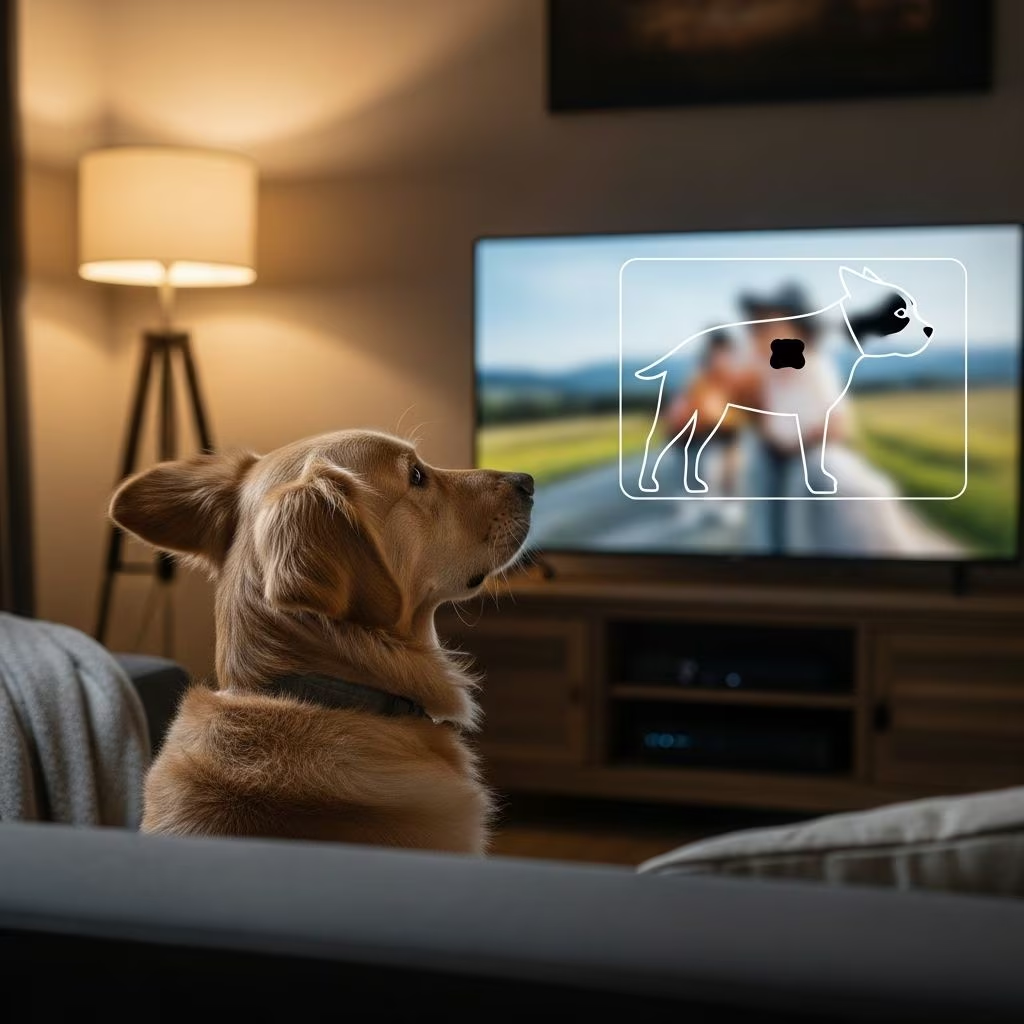
What Dogs See When Watching Television
Have you ever noticed your dog staring intently at the television screen, seemingly mesmerized by what’s happening on display? Many dog owners wonder what their pets actually perceive when watching TV. The answer is more complex and fascinating than a simple yes or no—dogs don’t see television the same way humans do, yet they process and understand what they’re watching in meaningful ways.
How Dog Vision Differs From Human Vision
Color perception is one of the most significant differences between how dogs and humans see the world, including television content. Unlike humans, who have trichromatic vision and can see the full spectrum of colors including reds and greens, dogs have dichromatic vision. This means dogs see the world primarily in shades of blue, yellow, and brown. What appears as a vibrant red ball to you looks more like a brownish or yellowish object to your dog.
Another crucial difference involves frame rate perception. Dogs’ eyes register visual information more quickly than human eyes do, making them more sensitive to flicker rates. Older television sets with slower frame rates may appear to dogs as if they’re watching a flickering film from the 1920s rather than the smooth, continuous images humans perceive. Modern televisions with higher refresh rates provide a more natural viewing experience for dogs.
Despite these visual limitations, dogs can still recognize and identify images on television. A 2013 study published in the journal Animal Cognition demonstrated that dogs could identify images of other dogs shown on TV, confirming that they process 2D television images similarly to how they understand the three-dimensional world around them.
Do Dogs Actually Watch Television?
The evidence is clear: dogs do watch television, and most of them do so actively. Research from Auburn University revealed that an impressive 88.3% of dogs actively watch television content. This isn’t passive observation—these dogs actively respond to what they’re seeing and hearing on screen, exhibiting specific behaviors that indicate genuine engagement with the material.
The key finding from this groundbreaking research is that dogs aren’t simply staring randomly at screens; instead, they demonstrate sophisticated viewing habits and clear preferences about what they watch. Rather than mindlessly consuming whatever programming is on, canines show distinct preferences based on content type and display personality-driven viewing behaviors that mirror human television consumption patterns.
Three Distinct Dog Television Viewing Patterns
Research has identified that dogs fall into distinct viewing categories based on how they respond to different types of content. Understanding these patterns can help owners better comprehend their dog’s behavior when watching television.
Animal-Focused Viewers
Dogs show heightened interest in programs featuring other animals. This category accounts for approximately 24.5% of viewing behavior variance and encompasses dogs that react enthusiastically to content featuring other dogs, household pets like cats, and wild animals. These animal-focused viewers are most engaged when they see movement from other creatures on screen. Whether it’s a nature documentary showing wildlife or a program with other dogs, these viewers track the action intently and often respond with excitement or curiosity.
Anticipatory Followers
The second viewing pattern involves dogs that track moving objects across the television screen. These anticipatory followers watch objects moving across the display and often exhibit behaviors suggesting they believe the objects are real. Dogs in this category may attempt to chase a tennis ball rolling across the screen or peer behind the television searching for a disappeared squirrel, genuinely believing the on-screen action represents real-world events. Movement itself acts as a strong motivator for screen attention in dogs.
Cautious Non-Animal Reactors
The third viewing pattern accounts for approximately 17.8% of variance and involves dogs that react cautiously to non-animal content. These dogs respond more strongly to human-centered programming and inanimate objects. They may react to sounds like doorbells, car horns, or human voices appearing on television. Dogs with higher anxiety levels are particularly likely to fall into this category, showing stronger reactions to these types of content.
How Personality Shapes Television Viewing Habits
One of the most revealing aspects of dog television research is the connection between a dog’s personality and their viewing preferences. Just as humans might prefer different genres based on their temperament, dogs show personality-based viewing patterns.
Excitable Dogs
Highly excitable dogs demonstrate significantly more following behaviors when watching television. These dogs are more likely to track movement across the screen, attempt to chase on-screen objects, and display heightened engagement with action-based content. Their excitability makes them more prone to mistaking television content for real-world encounters, leading to behaviors like jumping at the screen or searching behind the TV for disappeared animals.
Anxious Dogs
Dogs with anxious or fearful temperaments show stronger reactions to non-animal content, particularly responding to sounds like doorbells, car horns, or human voices. These dogs may bark excessively at certain television sounds or display signs of distress when exposed to particular types of programming. Understanding these personality connections proves valuable for dog owners dealing with pets who bark excessively at television programming.
Personality Versus Demographics
Interestingly, factors like age, sex, breed group, or previous TV exposure had little impact on viewing preferences. This suggests that television watching behavior may be more innate than learned, driven primarily by individual personality traits rather than demographic characteristics.
What Content Do Dogs Prefer?
Research consistently shows that dogs have clear content preferences when it comes to television programming. Dogs respond most enthusiastically to content featuring other animals. Videos featuring dogs and other animals generate the highest engagement levels, with dogs showing sustained interest and active viewing behaviors.
Movement is a strong motivator for screen attention in dogs. Whether the movement comes from animals, rolling objects, or other dynamic visual elements, dogs are drawn to action-based content. Additionally, researchers found that dogs prefer real animals over cartoon representations, indicating a preference for naturalistic depictions.
The sensory domain through which content is presented matters less than the content type itself. Dogs show no significant difference between processing visual versus auditory information; whether seeing a cat on screen or hearing a meow through speakers, dogs categorize experiences by content type rather than how they received the information.
Television as Enrichment and Training Tool
Understanding dog television viewing habits opens new possibilities for animal welfare and training applications. Television can provide dogs with enriching, meaningful experiences. The mental stimulation from watching engaging content can serve as valuable enrichment, particularly useful for shelter environments where dogs benefit from additional mental engagement.
For dog owners dealing with problematic TV-related behaviors—such as excessive barking or destructive attempts to “catch” on-screen animals—personality insights can inform training approaches. An anxious dog might benefit from gradual exposure to trigger sounds in a controlled manner, while an overly excitable dog might need redirection exercises or scheduled viewing times with appropriate content.
These insights also contribute to broader animal cognition studies. Scientists frequently use 2D visual materials in experiments with dogs, and these findings validate such approaches. If dogs process television images as meaningful representations of real objects, laboratory studies using screens may more accurately reflect how dogs perceive their actual environment.
Optimizing Television Experience for Your Dog
Based on research findings, dog owners can take several steps to optimize their pet’s television viewing experience:
- Choose appropriate content: Select programming featuring animals or movement-based content if your dog enjoys television
- Consider your dog’s personality: Match content to your dog’s temperament—exciting content for calm dogs, soothing content for anxious dogs
- Use modern televisions: Newer TVs with higher refresh rates provide smoother images that dogs perceive more naturally
- Monitor viewing time: Most dogs interact with video content for short periods, so limited viewing sessions are typically appropriate
- Manage problematic behaviors: Use training techniques tailored to your dog’s personality when TV-related behaviors become problematic
- Create positive associations: Use television time as part of enrichment routines to provide mental stimulation
Frequently Asked Questions
Q: Can dogs see television clearly?
A: Dogs can see television content and recognize images on screens, including identifying other dogs in images. However, their color vision is limited to blues, yellows, and browns, and older TVs may appear flickery to them due to their faster frame rate perception compared to humans.
Q: What percentage of dogs actually watch television?
A: According to Auburn University research, 88.3% of dogs actively watch television content and respond to what they’re viewing.
Q: Why do some dogs bark at the television?
A: Dogs that bark at television are often responding to specific content types. Anxious dogs tend to bark more at non-animal content like human voices, doorbells, or car horns, while excitable dogs may react to moving objects or animals on screen.
Q: Is watching television good for dogs?
A: Television can provide valuable mental enrichment and stimulation for dogs, making it beneficial as part of a broader enrichment strategy. However, it should be balanced with physical exercise and other forms of engagement.
Q: Do dogs have favorite shows?
A: Yes, dogs demonstrate clear content preferences. They show the strongest preference for programs featuring animals and content with movement, suggesting they do indeed have favorite types of programming.
Q: How should I handle excessive barking at television?
A: Understanding your dog’s personality is key. For anxious dogs, gradual exposure to trigger sounds in a controlled manner helps, while excitable dogs benefit from redirection exercises and scheduled viewing times with appropriate content.
Q: Does my dog’s breed affect how they watch television?
A: Research indicates that breed has little impact on television viewing preferences. Instead, individual personality traits like excitability and anxiety levels are the primary factors determining how dogs interact with television content.
References
- Dogs Have Distinct Preferences About What’s On TV, Study Shows — Auburn University/Study Finds. 2024. https://studyfinds.org/dogs-watching-tv-habits/
- Characterizing TV viewing habits in companion dogs — PubMed/Scientific Reports. 2025-01-15. https://pubmed.ncbi.nlm.nih.gov/40676046/
- The Surprising Science Behind Dog TV — Christopher Todd. 2024. https://www.christophertodd.com/do-dogs-watch-tv/
- How watching TV can help ophthalmologists assess canine visual stimulants — University of Wisconsin School of Veterinary Medicine/DVM360. 2024. https://www.dvm360.com/view/how-watching-tv-can-help-ophthalmologists-assess-canine-visual-stimulants
- What can TV viewing tell us about dogs’ vision? — Mills et al./British Veterinary Association. 2024. https://bvajournals.onlinelibrary.wiley.com/doi/10.1002/vetr.3915



