

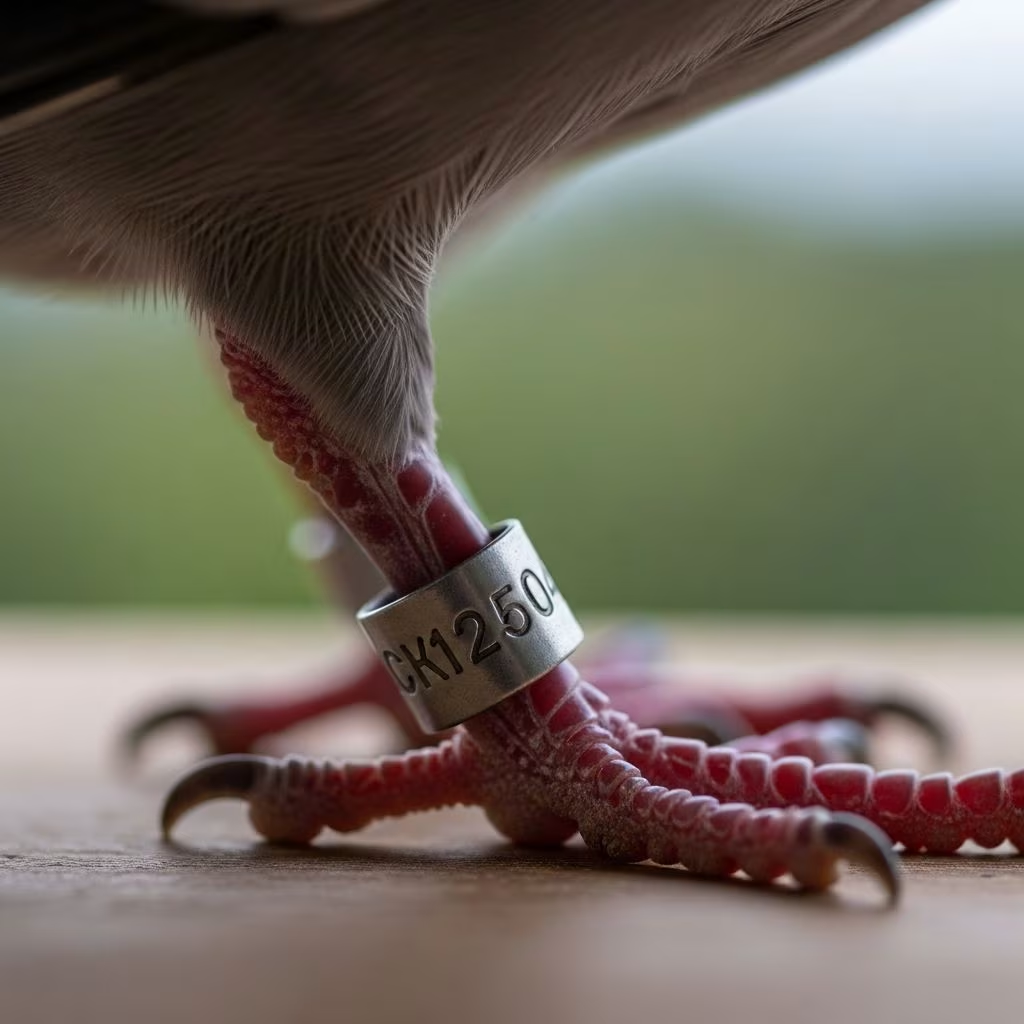
What Does the Info on the Leg Band Mean?
A leg band is used for identification by the breeder. There is no uniform standard for what information a breeder places on the band unless that band was purchased from a member of a bird society, such as the International Parrotlet Society. However, most breeders do include the state on the band, as well as the year the chick was hatched, an identification number and the initials of the breeder or aviary where the chick was hatched.
Understanding the markings on your bird’s leg band can provide valuable insights into its origin, breeding history, and background. Whether you’ve recently adopted a pet bird or are curious about the small metal ring on your feathered friend’s leg, decoding this information can help you learn more about where your bird came from and who raised it.
The Purpose of Leg Bands
Leg bands serve as a form of permanent identification for captive-bred birds. The practice of banding birds began in North America over a couple of hundred years ago, initially used by field researchers to track populations of wild migratory birds and local flocks. Today, breeders apply leg bands to help identify and track their birds, monitor which birds are designated for sale, and manage genetics to ensure certain birds are not bred together.
These small rings are typically applied by bird breeders within the first week of hatching, when the bird’s foot is still small enough to fit through the hole. As the bird grows, the leg band becomes a permanent fixture and cannot be removed unless it is cut off. In small birds such as parakeets, canaries, and finches, the bands may be composed of either aluminum or plastic. In medium and large pet birds, the bands are typically composed of aluminum or steel.
Types of Leg Bands
There are several types of leg bands used in the bird industry, each serving different purposes and indicating different aspects of a bird’s history.
Closed Leg Bands
Closed leg bands are solid, unbroken rings that indicate a bird has been captive bred. These bands are slid onto the small leg of a hatchling and become a permanent fixture once the bird has reached maturity. Closed leg bands are placed on a baby bird’s leg when they are a few weeks old, and in most cases the band is randomly placed on the right or left leg and are not an indication of sex.
Open Leg Bands
Open bands are rounded split rings that are placed on the leg of an adult bird. An open band indicates that a bird was at one point detained in an importation station. A bird with an open band was either brought into the country as a wild caught bird prior to the importation ban, or was transported as a pet from another country and stayed in the importation station during a period of quarantine.
Colored Bands
Some breeders use colored bands in addition to or instead of numbered aluminum bands. The use of different colors is not standardized and are used for different purposes by the breeder or organizations sponsoring the bands. Colored bands make it possible for researchers to tell individual birds apart by sight without having to recapture them and read the aluminum band number. Each individual bird will typically get a unique combination of colored plastic bands, such as a red band over a green band on one leg, and a purple band over the aluminum one on the other.
Understanding Leg Band Markings
While there is no universal standard for leg band information within the breeding community, most breeders include several key pieces of information on their bands. Learning to decode these markings can help you understand more about your bird’s background.
Common Information Found on Leg Bands
Most breeders include the following information on their leg bands:
- State Code: Two letters that indicate the state from which the bird or facility originated. This helps identify where the bird was bred or raised.
- Year: Some breeders put the year on their bands to help them keep records on hatches. It is not unusual for a band to not have a State code.
- Identification Number: This number is assigned by the breeder and assists them in determining which bird is wearing the leg band. This helps track individual birds within a breeding program.
- Breeder Initials: The initials or abbreviation of the breeder or aviary where the chick was hatched.
USDA Band Information
A USDA band will always carry the letter USDA followed by 2 or 3 letters that identify the state, and city if more than one station exists in that state. It will be followed by 3 or 4 identifying numbers, for example: USDAM 1234. This traces back to a station in Miami.
Quarantine Band Information
A quarantine band from a privately owned station will always have three letters followed by three numbers, such as CRO 123. The first letter indicates the state is California, the second letter IDs the station and the third letter and the following three numbers identify the bird.
How to Read Your Bird’s Leg Band
Reading your bird’s leg band requires careful observation and attention to detail. If your bird is wearing colored leg bands, you should note the colors and their placement. When reading colored band combinations, the colors are read from the left leg first, top to bottom, followed by the right leg, top to bottom.
If your bird has a metal band, you may need to use a magnifying glass or binoculars to read the small numbers and letters clearly. Write down all the information exactly as it appears on the band, including any letters, numbers, and the order in which they are arranged. This information can help you research your bird’s breeder and potentially connect with others who have birds from the same breeding program.
Limitations and Variations
It’s important to understand that because there are so many leg bands on so many birds for so many different reasons, each should bear markings that make them distinguishable from all others. However, the system for standardizing this information is not yet universal within the breeding community.
Early in the leg band’s history, a system began to develop using numbers and letters that revealed information about the wearer’s origins. However, not all breeders follow the same conventions, and some may use their own custom codes that only they can interpret. If you cannot find information about your bird’s specific band, try contacting bird societies or aviculture organizations that may be able to help you decode the information.
Potential Health Concerns With Leg Bands
While leg bands are primarily identification tools, it’s important to be aware that they can sometimes pose health risks to birds. The band can get caught on toys or cages and cause sprains, abrasions, cuts, dislocations and breaks. If your bird is injured on the leg that the band is on and there is swelling, the band can cause circulation issues, making the original injury much more serious and making removal of the band more difficult.
Additionally, if the band is not sized correctly or not applied correctly, it can rub and cause irritation or even impede movement, leading to more permanent injuries to the joint near the leg band. In some cases, a bird can swallow a band that has been broken, particularly with open bands. If you notice any signs of discomfort, swelling, or injury around your bird’s leg band, consult with an avian veterinarian immediately.
Finding More Information About Your Bird’s Band
If you’re trying to learn more about your bird’s specific leg band information, there are several resources available. Bird societies such as the American Federation of Aviculture (AFA) maintain records and can sometimes help identify breeders based on band codes. Additionally, online bird forums and communities can be helpful resources for decoding custom breeder bands.
Many bird breeders are passionate about their work and are often happy to share information about birds they have raised. If you can identify your bird’s breeder from the band information, reaching out to them directly may provide you with valuable information about your bird’s genetics, health history, and behavioral traits.
Frequently Asked Questions (FAQs)
Q: Can I remove my bird’s leg band?
A: Closed leg bands cannot be removed without cutting them off, as they are permanently applied when the bird is young. If you need to remove a band due to health concerns, you should consult with an avian veterinarian who can safely remove it with specialized tools.
Q: What does a closed leg band indicate?
A: A closed leg band indicates that your bird is captive bred. These bands are applied to baby birds within the first few weeks of life and become permanent as the bird grows.
Q: What does an open leg band mean?
A: An open leg band indicates that your bird was detained in an importation station at some point. This means the bird was either brought into the country as a wild caught bird before the importation ban, or was transported as a pet from another country.
Q: Is there a universal standard for all leg bands?
A: No, there is no uniform standard for what information a breeder places on a band unless that band was purchased from a member of a bird society such as the International Parrotlet Society. Different breeders use different coding systems and may include varying information.
Q: What if my bird’s band is damaged or causing injury?
A: If your bird’s band is damaged, causing irritation, or appears to be restricting circulation, you should contact an avian veterinarian immediately. They can safely assess the situation and remove the band if necessary.
Q: How can I research my bird’s breeder using the leg band information?
A: Start by documenting all the information on the band exactly as it appears. Then contact bird societies, aviculture organizations, or search online bird breeding databases. If you can identify the breeder abbreviation or initials, try reaching out to them directly through their website or contact information.
Q: Why do some birds have colored bands instead of metal bands?
A: Colored bands are used because they allow researchers and breeders to identify individual birds by sight without having to recapture them. Different color combinations can represent different individual birds or may indicate specific characteristics such as breeding status or genetic information.
References
- Reading Your Bird’s Leg Band — BirdTricks. Accessed November 2025. https://birdtricksstore.com/blogs/birdtricks-blog/reading-your-bird-s-leg-band
- What Does The Info On The Leg Band Mean? — Chewy. Accessed November 2025. https://www.chewy.com/education/bird/general/what-does-the-info-on-the-leg-band-mean
- Leg Bands and Identification for Birds — VCA Animal Hospitals. Accessed November 2025. https://vcahospitals.com/know-your-pet/leg-bands-and-identification
- About Bird Leg Bands — American Federation of Aviculture. 2018. https://afabirds.org/2018_WordPress/about-afa-bird-leg-bands/
- What Is Bird Banding? — National Zoo & Conservation Biology Institute. Accessed November 2025. https://nationalzoo.si.edu/migratory-birds/what-bird-banding



