

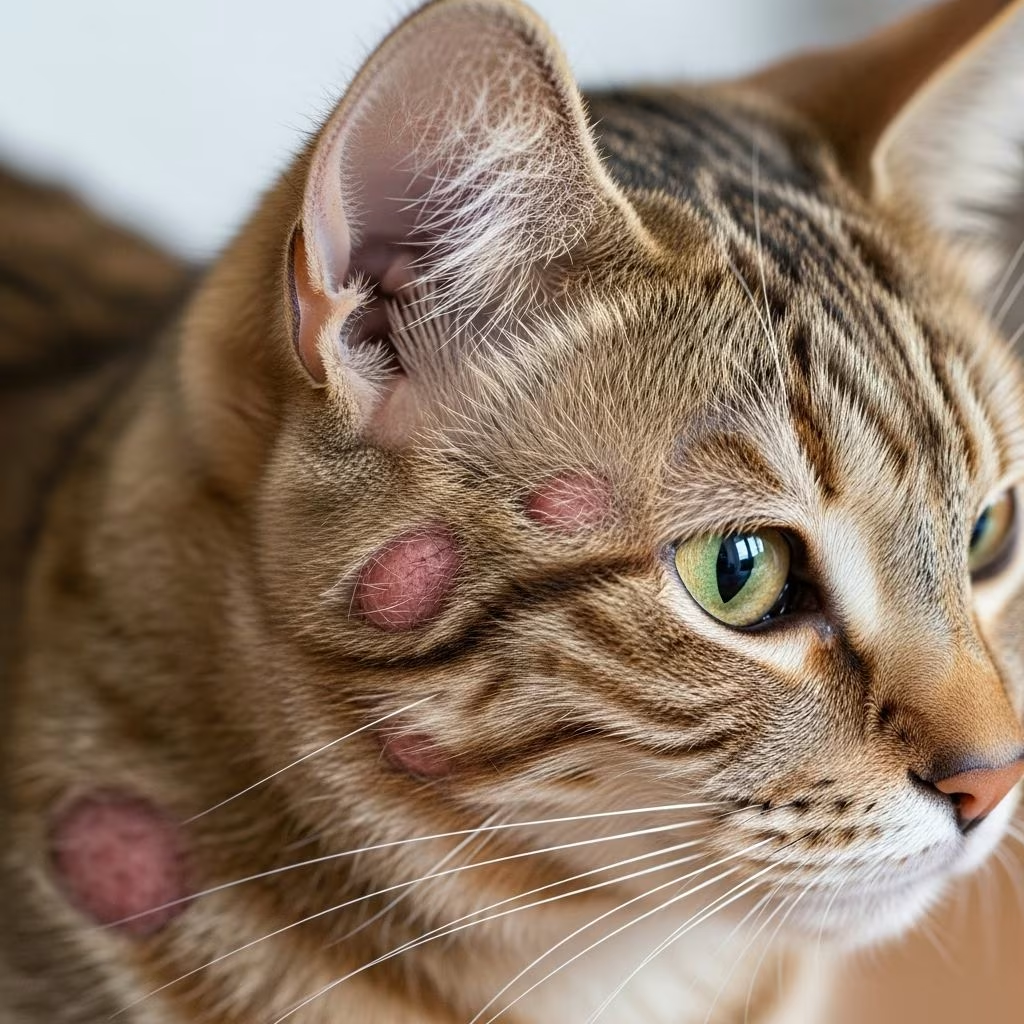
Ringworm in cats is a highly contagious fungal infection caused by dermatophytes, not a worm, affecting the skin, hair, and nails. It commonly presents as **circular patches of hair loss** with red, scaly skin underneath, often on the head, ears, limbs, or trunk. Early detection is crucial as it spreads easily to other pets and humans.
What Is Ringworm in Cats?
Ringworm, medically known as dermatophytosis, is a superficial fungal infection thriving on keratin in a cat’s skin, hair, and claws. The primary culprits are fungi like Microsporum canis, which accounts for most cases in cats. Despite its name, it has no relation to intestinal worms; the ‘ring’ refers to the classic circular lesions in many species.
This infection is particularly common in kittens, long-haired breeds, and cats with compromised immune systems, such as those with FIV or FeLV. Asymptomatic carriers—cats showing no signs—can still spread spores through shed fur or environmental contamination, making it a zoonotic disease transmissible to humans.
Symptoms of Ringworm in Cats
Symptoms vary in severity and appearance, but **patchy, circular hair loss** is the hallmark sign, revealing inflamed, scaly skin beneath. Affected areas often look red, crusty, or flaky, with broken, stubbly hairs around the edges giving a ‘cigarette ash’ dandruff effect deep in the coat.
- Circular alopecia: Round bald spots, typically 1-2 cm, on head, ears, chest, front legs, or back.
- Scaly or crusty skin: Red, inflamed patches that may ooze or form raised granulomas in severe cases.
- Broken, brittle hair: Hairs snap easily, leading to stubby regrowth.
- Excessive grooming/itching: Cats scratch or lick furiously, worsening lesions and risking secondary bacterial infections.
- Nail changes: Rough, pitted claws with scaly bases that may deform; rare but telling.
- Dull coat or hyperpigmentation: Overall poor fur quality or darkened skin in chronic cases.
Long-haired cats may show subtle signs like dandruff-like scaling without obvious bald spots, while short-haired ones display dramatic lesions. Kittens often have widespread involvement.
Where Does Ringworm Appear on Cats?
Lesions favor the **head (face, ears)**, **chest**, **front legs**, and **back ridge**, but can spread body-wide in advanced infections. Nail bed involvement signals deeper infection.
How Is Ringworm Diagnosed in Cats?
Veterinarians diagnose via physical exam spotting classic lesions, followed by confirmatory tests. A **Wood’s lamp** reveals fluorescent glow in some M. canis cases, but it’s not fully reliable.
Definitive diagnosis uses:
- Fungal culture: Gold standard; hair/skin samples grow fungus in 7-21 days.
- DTM plate: Detects dermatophytes via color change.
- Microscopy/PCR: Quick identification of spores or DNA.
- Hair pluck exam: Reveals ectothrix spores around shafts.
Rule out mimics like allergies, mites, or bacterial pyoderma via biopsy if needed.
Treatment for Ringworm in Cats
Treatment combines **topical and systemic antifungals**, environmental decontamination, and isolation. Recovery takes 4-6 weeks with compliance.
| Method | Examples | Duration/Notes |
|---|---|---|
| Topical | Lime sulfur dips (weekly), Miconazole/Chlorhexidine shampoos | Clips fur from lesions; safe for kittens. |
| Oral | Itraconazole, Fluconazole, Terbinafine | Daily for 4-8 weeks; monitor liver function. |
| Environmental | Bleach (1:10), vacuuming, discard contaminated items | Spores survive months; treat whole household. |
Severe cases may need hospitalization. Follow-up cultures confirm cure.
Is Ringworm in Cats Contagious?
Highly contagious via **direct contact** (touching infected cat) or **indirect** (fomites like bedding, grooming tools). Spores persist in environment for 18+ months.
- To other cats/dogs: Rapid spread in multi-pet homes.
- To humans: Especially immunocompromised, children, elderly; wash hands post-handling.
Can Humans Get Ringworm from Cats?
Yes, **zoonotic transmission** occurs through skin contact with lesions or spores. Human symptoms: itchy, ring-shaped red rashes, scalp alopecia, or nail thickening.
Prevent by isolating infected cats, wearing gloves, and disinfecting. Human cases resolve with OTC antifungals like clotrimazole, but see a doctor.
Preventing Ringworm in Cats
Prevention focuses on hygiene and prompt action:
- Vaccinate high-risk cats (limited efficacy).
- Quarantine new cats for 2-3 weeks.
- Regular grooming/vet checks spot early signs.
- Clean environment: Vacuum daily, launder bedding in hot water.
- Avoid overcrowding in shelters/catteries.
Ringworm in Kittens vs. Adult Cats
Kittens suffer more severely with generalized lesions due to immature immunity; mortality risk if untreated. Adults, especially longhairs, often asymptomatic carriers.
Common Myths About Cat Ringworm
- Myth: Only dirty cats get it. Fact: Stress, age, immunity matter more.
- Myth: It goes away alone. Fact: Rarely; risks spread/complications.
- Myth: Shaving cures it. Fact: Aids treatment but needs meds.
Frequently Asked Questions (FAQs)
What does ringworm look like on a cat?
A round hairless area with red, rashy, scaly center; patchy alopecia on head/trunk, broken hairs.
Is cat ringworm itchy?
Yes, causes excessive scratching/grooming; may lead to self-trauma.
How long is ringworm contagious in cats?
Until two negative cultures; typically 3-4 weeks on treatment.
Can ringworm kill cats?
Rarely directly, but secondary infections/sepsis in kittens/immunosuppressed.
How to clean house from cat ringworm?
Vacuum daily, bleach hard surfaces, wash fabrics hot, discard porous items.
References
- Ringworm in Cats: Signs, Symptoms, Treatment — UrgentVet. 2023. https://urgentvet.com/ringworm-in-cats-signs-symptoms-treatment/
- 9 Signs That Your Cat Has Ringworm in Webster, TX — Advanced Petcare of Clearlake. 2023. https://advancedpetcareofclearlake.com/blog/cat-ringworm/
- Ringworm in Cats — PetMD. 2024-01-15. https://www.petmd.com/cat/conditions/skin/ringworm-in-cats
- Ringworm in Cats — Blue Cross. 2023. https://www.bluecross.org.uk/advice/cat/health-and-injuries/ringworm-in-cats
- How to Tell if a Cat has Ringworm — Lincolnway Veterinary Clinic. 2023. https://lincolnwayvet.com/blog/ringworm-in-cats/
- Ringworm in Cats — South Seattle Veterinary Hospital. 2023. https://www.southseattlevet.com/signs-your-cat-needs-emergency-treatment-for-ringworm
- Ringworm and Pets — California Department of Public Health (CDPH). 2024. https://www.cdph.ca.gov/Programs/CID/DCDC/Pages/Ringworm.aspx



