

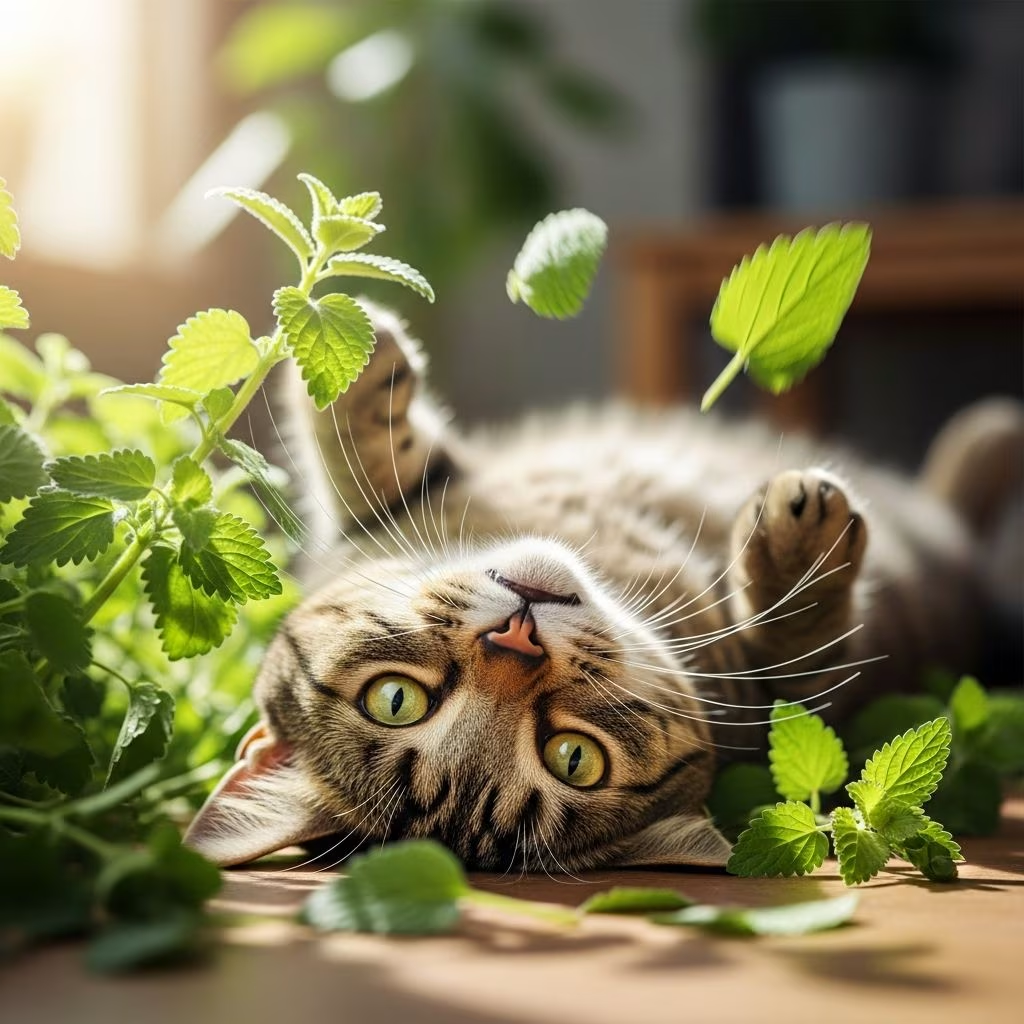
Catnip, scientifically known as Nepeta cataria, has fascinated cat owners for generations with its ability to send felines into bouts of apparent bliss. When cats encounter catnip, they often exhibit dramatic behaviors like rolling, rubbing, purring, and hyperactive zooming, lasting 5-15 minutes. This reaction stems from nepetalactone, a volatile oil in the plant’s leaves and stems that binds to receptors in a cat’s nose, triggering brain responses similar to opioids.
Far from a mere toy, catnip offers enrichment, stress relief, and even practical benefits like mosquito repulsion. Approximately 60-80% of cats respond positively, with sensitivity being genetic and often emerging around 6-8 weeks of age. Kittens under six months and seniors may show little interest, and the effect wanes after repeated exposure until a reset period of about two hours passes. This article delves into the science, behaviors, safety, and alternatives, helping you maximize catnip’s fun for your pet.
What Is Catnip?
Catnip is a perennial herb in the mint family, native to Europe, Asia, and parts of Africa, now widespread in North America. Growing up to three feet tall with heart-shaped leaves and white-purple flowers, it thrives in sunny, well-drained spots. Humans have cultivated it for centuries for teas, salads, and remedies, valuing its calming properties for digestion and headaches.
For cats, the magic lies in nepetalactone, produced via a unique biosynthetic pathway involving enzymes that create this iridoid terpene. Researchers at the John Innes Centre decoded how catnip synthesizes nepetalactone through an unusual chain of chemical reactions, opening doors to synthetic applications in medicine. The compound evaporates easily, so fresh or dried catnip works best when sniffed, not just touched.
How Does Catnip Affect Cats?
Upon sniffing catnip, nepetalactone enters the cat’s nostrils and binds to olfactory receptors, traveling via the vomeronasal organ (Jacobson’s organ) in the mouth’s roof to the brain. This activates the olfactory bulb and higher centers, mimicking opioid effects by boosting beta-endorphins—the ‘happiness hormone’. Cats experience euphoria without the disorientation of true hallucinogens; no vomiting or wobbling occurs.
Effects peak in 5-10 minutes and fade after 15-30, varying by individual. Some cats become hyperactive, darting and pouncing; others relax into purring contentment. This duality arises because nepetalactone stimulates pleasure centers while also sedating via muscle relaxation. Big cats like lions and leopards react similarly, confirming an evolutionary trait.
Catnip Response Behaviors
- Rolling and Rubbing: Cats flip onto backs, writhing to transfer nepetalactone onto fur, also marking territory with facial glands.
- Zoomies and Play: Sudden bursts of energy, chasing imaginary prey, mimicking hunting instincts.
- Purring and Drooling: Signs of bliss; excessive saliva from head-rubbing stimulation.
- Head Shaking and Kicking: Wavelike skin ripples from muscle contractions; hind legs ‘bicycle’ against the plant.
- Vocalizing: Meowing, chirping, or yowling more than usual.
These last until tolerance builds; spacing sessions prevents habituation.
Why Do Cats Like Catnip?
The affinity likely evolved as an insect deterrent. Nepetalactone repels mosquitoes as effectively as DEET, halving bites in lab tests on cats’ heads. Wild felines rubbing plants self-apply natural repellent while enjoying the opioid high, a dual benefit shaping this behavior across species from domestics to jaguars.
| Behavior | Duration | Opioid Link | Mosquito Benefit |
|---|---|---|---|
| Rubbing/Head-butting | 2-5 min | Endorphin spike | Transfers repellent to fur |
| Hyperactivity | 5-15 min | Pleasure centers | Indirect protection |
| Relaxation | 10-30 min | Sedative effect | Skin coated during roll |
Not All Cats React to Catnip
Genetic factors determine sensitivity; about 30-40% of cats ignore it entirely, a trait passed maternally. If unresponsive, try alternatives.
- Silver Vine (Actinidia polygama): Contains nepetalactol, even stronger; 70% of catnip non-responders react.
- Valerian Root: Similar actinidine compound elicits rolling and play.
- Tatarian Honeysuckle: Iridoids trigger euphoria safely.
A study of 100 cats found 71% non-catnip responders loved silver vine, with 24% reacting to all four plants.
Is Catnip Safe for Cats?
Yes, in moderation. Sniffing poses no risks; eating small amounts aids digestion as a mild antidiarrheal. Overindulgence (large quantities) may cause vomiting or diarrhea. Avoid daily use to prevent tolerance. Opioid blockers halt responses, confirming safety—no addiction or withdrawal. Veterinarians endorse it for anxiety relief during alone time or vet visits.
Forms of Catnip for Cats
- Dried Loose: Sprinkle on scratchers; potent but messy.
- Toys: Stuffed mice or balls; refresh monthly.
- Sprays/Oils: Targeted application without waste.
- Growing Plants: Indoor pots for fresh supply; harvest leaves.
- Treats/Infusions: Baked in or soaked for mild edible effects.
Store airtight in cool, dark places to preserve nepetalactone.
Catnip Benefits Beyond Fun
- Enrichment: Combats boredom, ideal for indoor cats.
- Anxiety Reduction: Eases separation stress.
- Appetite Stimulant: For picky eaters or ill cats.
- Pain Relief: Endorphin boost helps mild discomfort.
- Mosquito Protection: Natural repellent application.
Frequently Asked Questions (FAQs)
Does catnip make cats high?
Catnip induces euphoria via opioid-like endorphin release, causing playful or chill highs without true intoxication—no disorientation or illness.
Can cats eat catnip?
Yes, safely in small amounts; it soothes digestion but excess may upset stomachs.
How long does a catnip high last?
Typically 5-15 minutes sniffing, up to 30 for effects; resets in 1-2 hours.
Why doesn’t my cat react to catnip?
30-40% lack the gene; try silver vine or valerian—most respond to alternatives.
Is catnip addictive?
No; no withdrawal or dependency, just temporary tolerance.
Do kittens respond to catnip?
Usually not until 6-8 weeks; maturity needed.
Can big cats have catnip?
Yes—leopards, lions, jaguars react strongly.
References
- How catnip makes nepetalactone — John Innes Centre. 2023-07-12. https://www.jic.ac.uk/press-release/how-catnip-makes-nepetalactone/
- Why cats are crazy for catnip — Science (AAAS). 2020-12-09. https://www.science.org/content/article/why-cats-are-crazy-catnip
- Feline Fine: The Benefits of Catnip — Texas A&M College of Veterinary Medicine. 2023-05-15. https://vetmed.tamu.edu/news/pet-talk/feline-fine-the-benefits-of-catnip/
- What Is Catnip and What Does It Do to Cats? — PetMD (Dr. Heather Hoffmann, DVM). 2024-02-20. https://www.petmd.com/cat/general-health/what-is-catnip
- Catnip: Its uses and effects, past and present — PMC / NIH (Hart et al.). 2006-02-01. https://pmc.ncbi.nlm.nih.gov/articles/PMC1480656/



