
What Do Turtles Eat? Complete Nutrition Guide
Learn what turtles eat, from pellets and vegetables to live food and supplements for optimal health.
What Do Turtles Eat?
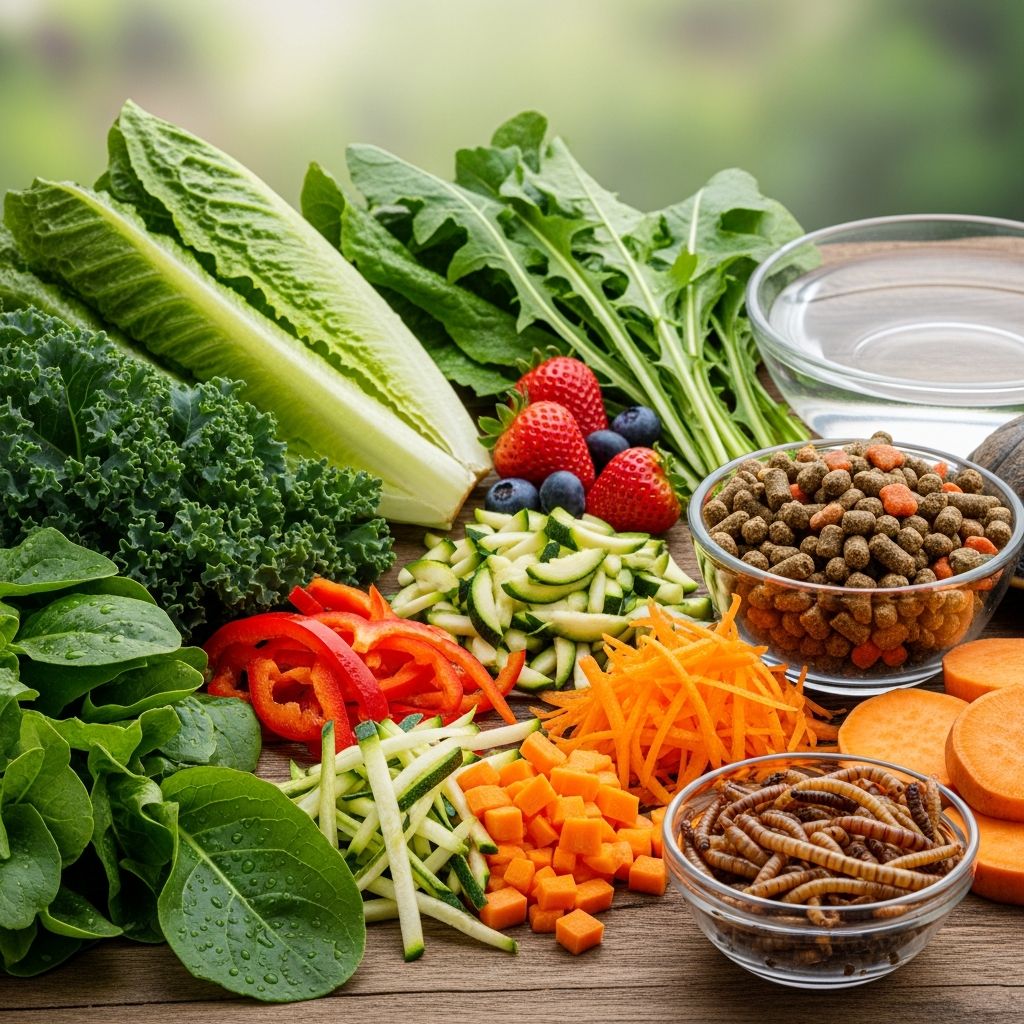
Turtles should eat commercially available turtle pellets, which include required protein for their health, in addition to live food and a variety of vegetables. Turtles can even enjoy the occasional fruit or treat! Each individual turtle’s diet should be thoroughly considered and researched based on the natural diet of the species and in coordination with a reptile veterinarian.
Understanding the nutritional needs of your turtle is essential for maintaining its health and longevity. The diet of a pet turtle varies depending on the species, age, and individual preferences, but most common pet turtles thrive on a balanced combination of plant-based and animal-based foods.
Understanding Turtle Diet Types
Not all turtles have the same dietary requirements. Understanding your specific turtle species is crucial for providing appropriate nutrition.
Omnivorous Turtles
Most semiaquatic and aquatic turtles, such as red-eared sliders, painted turtles, and pond turtles, are omnivores. This means they eat a combination of animal protein and vegetables. Omnivorous turtles should eat a mixture of multiple commercially produced turtle pellets, along with approved vegetables and plant matter.
Carnivorous Turtles
Some aquatic turtles are primarily carnivorous, such as the softshell turtle. Foods that make up their diet generally include fish and insects. These species require a diet with higher protein content and minimal plant material.
Herbivorous Turtles
All tortoises, or land turtles, are primarily herbivores. They mostly eat foods like leafy greens and other vegetables, grasses, plants, flowers, and fruits. Herbivorous turtles require a diet that is almost entirely plant-based.
What To Feed Turtles
Commercial Turtle Pellets
Many companies offer commercially available pellets for turtles. These diets are nutritionally complete and can meet the nutritional needs including vitamins, minerals, and micronutrients for aquatic turtles. It could be beneficial to rotate different brands of pellets, so your turtle is exposed to multiple varieties to determine which they prefer. High-quality pellets from trusted brands will offer complete nutrition for your turtle to stay healthy as a juvenile or adult.
Vegetables for Turtles
Vegetables are often overlooked as part of turtle food, but they should make up most of an adult omnivorous turtle’s diet. Offer a wide variety of dark, leafy greens in addition to other vegetables. A turtle should never eat the same vegetables their entire life, as this can lead to nutritional deficiencies or other diseases. Instead, offer two to three types of greens each feeding and one to two other veggies.
Highly nutritious vegetable sources for turtles include:
- Collard greens
- Mustard greens
- Dandelion greens
- Kale
- Romaine lettuce
- Swiss chard
- Watercress
- Endive
- Bok choy
- Escarole
- Spinach
- Duckweed
- Shredded carrots and carrot tops
- Squash
- Green beans
- Broccoli
- Aquatic plants sold at aquarium stores (ensure they are specifically sold for aquatic pets)
Live Food Sources
Live feeder fish are a source of nutrition for turtles and can help stimulate your turtle’s natural behaviors. Turtles can also eat insects such as mealworms and waxworms. Live food options provide not only nutrition but also mental enrichment and physical activity for your pet turtle. Common live food sources include small feeder guppies, various insects, earthworms, and other appropriately-sized live prey.
Fruits and Treats
Turtles can enjoy fruits as occasional treats. However, because fruit contains sugar and water and isn’t particularly nutritious for turtles to eat, they should be given only as treats, making up no more than 10-15 percent of the total volume of their diet. Common fruits that turtles can enjoy include banana, melon, apples, and berries.
Proper Diet Ratios for Adult Turtles
The nutritional balance is critical for your turtle’s health. Different turtle types require different ratios of foods.
| Diet Component | Omnivorous Turtles | Carnivorous Turtles |
|---|---|---|
| Plant Material | More than 50% | About 10-20% |
| Commercial Pellets | Around 25% | Around 50% |
| Live Animal Protein | Around 25% | Around 30-40% |
These ratios ensure that your turtle receives the appropriate balance of nutrients. Half of your turtle’s diet should be fresh, dark, leafy greens such as collards, dandelions, and kale. Animal protein should not exceed 25 percent of your turtle’s diet for omnivorous species. A high-quality commercial feed should make up the rest of your turtle’s diet.
How Often to Feed Turtles
Feeding frequency varies depending on your turtle’s age and species.
Adult Turtle Feeding Schedule
Adult turtles should be offered food every two to three days. Adult turtles should only be fed once every two to three days or so; daily feeding will cause them to become overweight. Aquatic turtles can and should eat pellet turtle food once a day. Vegetables do not need to be given daily but should be given 3-4 times a week. Insects and feeder fish should only be given to your turtle once a week.
Juvenile Turtle Feeding Schedule
Juveniles (less than 2 years) typically eat daily as they are growing. Baby turtles can eat the same foods as adult turtles. The only difference is that, like all young animals that are in the phase of growing, they’re typically going to need more protein, vitamins, and minerals. You can ensure your hatchling or young turtle is getting adequate nutrition by choosing a life stage-appropriate pellet and feeding them more frequently (i.e., daily instead of about three times a week).
Treat Frequency
Turtles, like most animals, enjoy treats from time to time. Treats can be offered once weekly. Treats should never make up more than 5 percent of their overall diet. Commercially available aquatic turtle treats are appropriate options for occasional snacks.
Turtle Supplements
Beyond food, your turtle requires essential supplements to maintain optimal health.
Calcium Supplementation
Adult turtles should also receive a calcium supplement added to their diet once or twice a week. Calcium is essential for healthy bones and shells! Supplemental calcium can be provided using products specifically formulated for turtles or reptiles. A calcium block for your turtle to nibble on is another effective way to provide this essential mineral.
Vitamin Supplementation
Adult turtles should receive a vitamin supplement sprinkled on their diet two to three times a week. There are many brands of supplements available—make sure to use one labeled for turtles or reptiles. Talk to your veterinarian to determine which brand most appropriately meets your turtle’s needs.
Important Supplementation Warnings
It’s important to note that too many vitamins (i.e., giving a high-quality pellet and a supplement) can be toxic—and even fatal—to turtles. It’s always best to consult your vet before introducing any new foods or supplements into your turtle’s diet to learn if they’re suitable options based on your pet’s individual needs. If you’re feeding a homemade diet, it’s recommended to give your turtle a balanced, complete vitamin supplement that includes calcium.
Feeding Best Practices
Proper feeding techniques go beyond just providing the right foods.
Feeding Container Use
For just about everything other than placing live fish in the water, you should feed your turtle in a container that is separate from its living and swimming spaces. This will make it so that you don’t have to clean the habitat after every feeding. Turtles are messy eaters, and using a separate feeding container helps maintain a clean environment.
Diet Variety
You’ll want to vary your turtle’s diet even if it prefers eating only one type of food. This is important for supplying your turtle with all of the vitamins and nutrients it needs to live a healthy and happy life. Rotating vegetables every one to two weeks and offering different pellet brands helps ensure comprehensive nutrition.
Species-Specific Considerations
Each individual turtle’s diet should be thoroughly considered and researched based on the natural diet of the species and in coordination with a reptile veterinarian. Different species have evolved to thrive on different food sources, and replicating their natural diet as closely as possible promotes better health and longevity.
Frequently Asked Questions (FAQs)
Q: What should I feed my baby turtle?
A: Baby turtles can eat the same foods as adult turtles, but they require more protein, vitamins, and minerals due to their growth phase. Feed them daily using life stage-appropriate pellets, along with vegetables and live food.
Q: Can turtles eat fruits?
A: Yes, turtles can eat fruits, but only as occasional treats. Fruits should comprise no more than 10-15% of their diet due to high sugar content. Good options include banana, melon, apples, and berries.
Q: How much should I feed my turtle?
A: The amount depends on your turtle’s species and age. Generally, offer an amount of food that your turtle can consume within 5-15 minutes. Adult omnivorous turtles should receive more than 50% plant material, around 25% pellets, and around 25% live animal protein.
Q: What vegetables are best for turtles?
A: Dark, leafy greens are the best vegetable options for turtles. Top choices include collard greens, mustard greens, dandelion greens, kale, romaine lettuce, and Swiss chard. Rotate vegetables regularly to ensure proper nutrition.
Q: Can turtles eat dog food?
A: Low-fat dog food can be given to turtles as part of their protein intake, but it should not be the primary protein source. Variety in protein sources is important for balanced nutrition.
Q: How often should I supplement my turtle’s diet?
A: Adult turtles should receive calcium supplements once or twice a week and vitamin supplements two to three times a week. However, consult your veterinarian before starting any supplementation regimen to avoid toxicity.
Q: What’s the difference between turtle food and tortoise food?
A: Aquatic turtles are typically omnivores and require a balance of plant and animal protein. Tortoises are herbivores and require primarily plant-based diets. Always choose species-appropriate food.
Q: Can overfeeding make my turtle sick?
A: Yes, overfeeding can lead to obesity and health issues. Adult turtles should be fed every two to three days, not daily. Follow feeding guidelines based on your turtle’s age and species to maintain proper weight.
References
- What Do Turtles Eat? — PetMD. 2025. https://www.petmd.com/reptile/nutrition/what-do-turtles-eat
- 9 Common Mistakes Made by Turtle Parents and How To Avoid Them — PetMD. 2025. https://www.petmd.com/reptile/general-health/common-mistakes-made-turtle-parents-and-how-avoid-them
- What Do Turtles Eat? A Guide To Feeding Your Pet Turtle — Chewy. 2025. https://www.chewy.com/education/reptile-and-amphibian/turtle-and-tortoise/what-do-turtles-eat
- Painted Turtle – Chrysemys picta — PetMD. 2025. https://www.petmd.com/reptile/species/painted-turtle
- What Should I Feed My Pet Turtle or Tortoise? — PetSmart. 2025. https://www.petsmart.com/learning-center/reptile-care/what-should-i-feed-my-new-turtle-or-tortoise/A0082.html
Similar Articles








Read full bio of medha deb


