
Fleas On Dogs: 6 Signs To Spot Infestation Early
Learn to identify fleas on your dog: appearance, behavior, and signs of infestation.
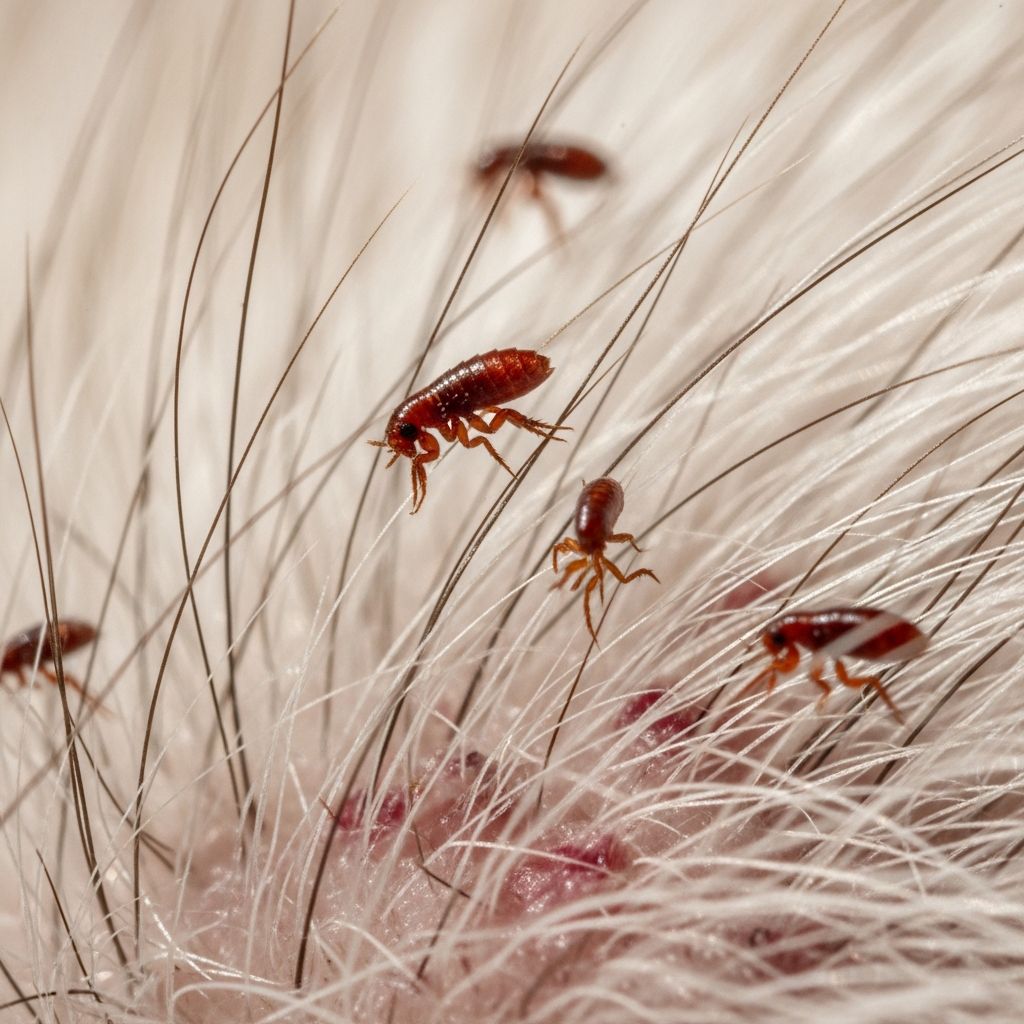
What Do Fleas Look Like on Dogs?
Fleas are small parasitic insects that feed on the blood of dogs and other animals. Understanding what fleas look like is essential for pet owners who want to detect infestations early and prevent serious health complications. Identifying fleas on your dog requires knowledge of their physical characteristics, their life cycle stages, and the signs they leave behind on your pet’s skin and fur. Early detection can make treatment significantly easier and help prevent your dog from experiencing discomfort and potential health issues.
Understanding Flea Appearance
Adult fleas are tiny, dark-colored parasites that are incredibly small, making them difficult to spot with the naked eye. These insects typically measure between 1 to 3 millimeters in length, which is roughly the size of a grain of rice or a small sesame seed. Their bodies are flattened from side to side, allowing them to navigate easily through your dog’s fur and close to the skin where they can feed on blood.
The color of adult fleas is typically reddish-brown or dark brown, particularly after they have fed on your dog’s blood. Before feeding, they may appear slightly lighter in color. Their legs are long and powerful, designed specifically for jumping great distances—fleas can jump up to 200 times their own body length, which is one reason they spread so easily between hosts and throughout your home.
Fleas have specialized mouthparts adapted for piercing skin and sucking blood. These piercing-sucking mouthparts are distinct from other small parasites and insects you might find on your dog, making them a key identifying feature when examined closely or under magnification.
Identifying Fleas at Different Life Stages
The flea life cycle consists of four distinct stages: egg, larva, pupa, and adult. Each stage has different characteristics, and understanding what fleas look like at each stage can help you recognize an infestation more comprehensively.
Flea Eggs: Flea eggs are nearly invisible to the naked eye and are one of the most challenging stages to identify. These eggs are oval-shaped, white or cream-colored, and extremely small—often less than 0.5 millimeters in length. They are laid on your dog’s skin and fall into the fur, carpet, bedding, and other areas where your dog rests. Because they’re so small and numerous during an infestation, flea eggs are difficult to spot without magnification. Females can lay hundreds of eggs daily, which is why infestations spread so rapidly.
Flea Larvae: Flea larvae are also very small but slightly larger than eggs, measuring about 2 to 5 millimeters in length. They appear as tiny worm-like creatures that are white or cream-colored with a brownish head. Larvae are mobile and actively search for food in the environment, feeding on organic matter and flea feces in carpets, bedding, and outdoor areas. They avoid light and typically hide in dark, humid locations.
Flea Pupae: The pupal stage is enclosed in a cocoon that can remain dormant in your home for weeks or even months. These cocoons are difficult to see and can be a significant reason why flea infestations persist even after treatment. The cocoon protects the developing flea from insecticides and environmental conditions.
Adult Fleas: Adult fleas are the stage most commonly observed on dogs and are the ones responsible for the itching and biting that bothers your pet. They are the most visible stage and the primary target of most flea treatments.
Signs and Symptoms of Flea Infestation
While spotting actual fleas can be challenging due to their small size and rapid movement, there are several observable signs that indicate your dog has fleas. These symptoms can help you identify an infestation even if you haven’t directly seen the parasites.
Excessive Itching and Scratching: The most obvious sign of fleas is persistent itching and scratching. Your dog may scratch, bite, or lick their skin excessively, particularly in areas like the tail base, hindquarters, neck, and ears. This itching is caused by the flea’s saliva and the irritation from bites.
Hair Loss: Continuous scratching and biting can lead to hair loss, creating bald patches on your dog’s coat. The hair loss may be localized to areas where fleas are most active or spread across larger areas if the infestation is severe.
Flea Dirt: One of the most reliable indicators of fleas is the presence of flea dirt, which appears as tiny black specks resembling coffee grounds or black pepper on your dog’s skin and fur. This is actually flea feces composed of digested blood. You can confirm flea dirt by placing these specks on a white paper towel and dampening them slightly—if they turn reddish-brown, it’s confirmation of flea feces from blood meals.
Tiny Red Bumps: Dogs with fleas often develop small red bumps or welts on their skin where fleas have bitten. These can appear throughout your dog’s body but are especially noticeable in areas where fur is thin or less dense.
Skin Inflammation and Crusting: In cases of flea allergy dermatitis, dogs may develop more severe skin reactions, including crusting, scabbing, and overall skin inflammation. Some dogs are allergic to proteins in flea saliva, causing hypersensitivity reactions even from a single flea bite.
Behavioral Changes: Beyond physical symptoms, infested dogs may display behavioral changes such as restlessness, irritability, or difficulty sleeping due to the constant discomfort from itching.
How Quickly Fleas Reproduce
Understanding the speed at which fleas reproduce emphasizes the importance of early detection. When fleas get onto your dog, within 24 to 48 hours they can bite to obtain a blood meal, mate, and begin laying eggs. This rapid reproduction cycle means that a small infestation can quickly become a major problem if not addressed promptly. The entire flea life cycle averages about three weeks, though the pupal stage can remain dormant in your environment for months, ready to emerge when conditions are favorable.
Detection Methods
The most effective way to check your dog for fleas is using a fine-toothed metal flea comb. This specialized tool helps separate the fur and capture fleas and flea dirt. Dr. Morgan recommends checking your dog up to three times per day for flea activity if you suspect an infestation. For dogs with thick or matted fur, running your fingers through their coat may be the easiest way to check for fleas and flea dirt. Even for dogs current on flea prevention, regular checks are important as early detection can prevent full-blown infestations.
Distinguishing Fleas From Other Parasites and Insects
Because fleas are so small, it’s easy to confuse them with other parasites or insects. Ticks, for example, are often larger and have eight legs rather than six. Lice are also possible but appear different under examination. Mites cause mange, another skin condition with different symptoms. If you’re uncertain whether your dog has fleas or another parasite, consult your veterinarian who can perform a definitive diagnosis.
Why Early Detection Matters
Identifying fleas early prevents complications such as flea allergy dermatitis, secondary skin infections, and anemia in severe cases. Dogs that scratch excessively may develop hot spots—red, irritated, and infected patches of skin. In extreme cases, fleas can cause weight loss, pale gums, and lethargy. Young dogs and puppies are particularly vulnerable to severe flea infestations. If you suspect your puppy has a flea problem or exhibits concerning symptoms, take them to a veterinarian immediately for proper diagnosis and age-appropriate treatment.
Prevention and Treatment Considerations
Once you’ve identified fleas on your dog, treatment should begin promptly. Your veterinarian can recommend the safest and most effective flea treatment based on your dog’s age, breed, health history, and lifestyle. Treatment options include oral medications, topical solutions, and preventive collars. Some treatments kill more than 99% of fleas within 8 hours and provide protection for one month or longer.
Beyond treating your dog, you must also treat your home environment. Vacuum all floors, furniture, and upholstered items thoroughly, disposing of vacuum bags immediately. Wash all pet bedding in hot water and dry on high heat. For severe infestations, you may need to use flea sprays formulated for carpets and furniture, always ensuring any products used are safe for people and pets.
Frequently Asked Questions About Fleas on Dogs
Q: How can I tell the difference between flea dirt and regular dirt on my dog’s coat?
A: Flea dirt appears as tiny black specks resembling coffee grounds or black pepper. To confirm it’s flea feces, place the specks on a white paper towel and dampen them slightly. If they turn reddish-brown (the color of digested blood), it confirms flea activity on your dog.
Q: Can I see fleas with my naked eye?
A: While adult fleas are visible to the naked eye, they are only 1 to 3 millimeters long and move quickly through the fur. A fine-toothed flea comb is the most effective tool for detecting and removing them. Other life stages, particularly eggs and larvae, are nearly impossible to see without magnification.
Q: What does flea allergy dermatitis look like on dogs?
A: Flea allergy dermatitis appears as severe skin inflammation, hair loss, crusting, scabbing, and sometimes hot spots (red, irritated patches). This is a hypersensitivity reaction to proteins in flea saliva and can occur even from a single flea bite in sensitive dogs.
Q: How fast can a flea infestation develop?
A: Flea infestations can develop very quickly. Within 24 to 48 hours of initial exposure, fleas can bite, feed, mate, and begin laying eggs. This rapid reproduction is why early detection and treatment are crucial.
Q: Where on my dog’s body are fleas most likely to be found?
A: Fleas tend to concentrate in areas with thinner fur and closer proximity to skin, including the tail base, hindquarters, neck, ears, and belly. However, during heavy infestations, they can be found across your dog’s entire body.
Q: Should I check my dog for fleas even if they’re on flea prevention?
A: Yes, regular checks are important even for dogs current on flea prevention. Early detection can prevent infestations from developing and allows you to catch any breakthrough cases quickly.
References
- How To Get Rid of Fleas on Dogs — PetMD. 2024. https://www.petmd.com/dog/general-health/how-to-handle-fleas-on-dogs
- Flea Allergy Dermatitis in Dogs: Everything a Pet Parent Needs to Know — PetMD. 2024. https://www.petmd.com/dog/conditions/skin/flea-allergy-dermatitis-dogs-everything-pet-parent-needs-know
- How To Find, Treat, and Prevent Fleas on Puppies — PetMD. 2024. https://www.petmd.com/dog/parasites/how-find-treat-and-prevent-fleas-puppies
- How Do Dogs Get Fleas? — PetMD. 2024. https://www.petmd.com/dog/general-health/how-do-dogs-get-fleas
- How To Choose the Safest Flea Treatment for Your Dog — PetMD. 2024. https://www.petmd.com/dog/general-health/how-choose-safest-flea-treatment-your-dog
Similar Articles








Read full bio of Sneha Tete




