

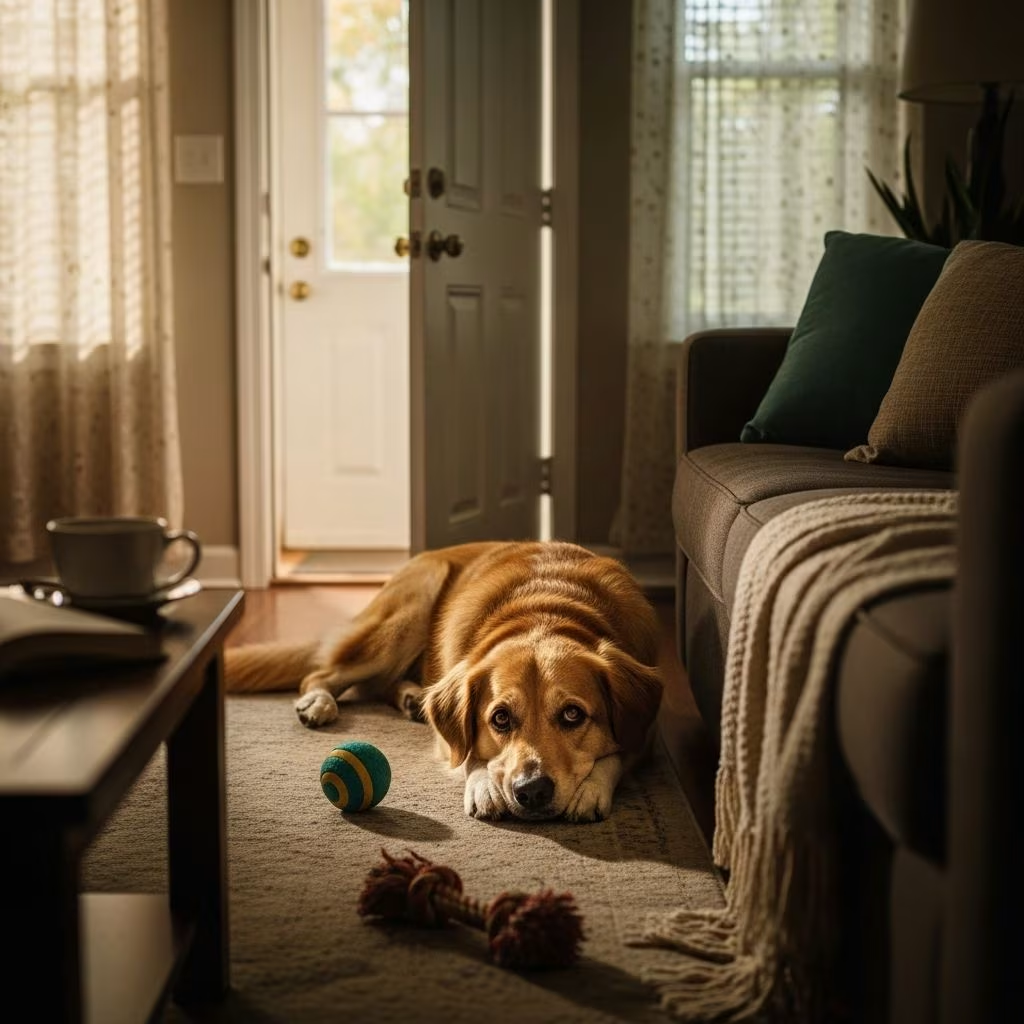
Dogs exhibit a range of behaviors when left alone, from calm relaxation to signs of separation anxiety like barking, destruction, and pacing. Understanding these patterns helps pet owners address distress and promote well-being.
Do Dogs Get Sad When Left Alone?
Many dogs experience distress when separated from their owners, often manifesting as separation anxiety rather than simple sadness. This condition triggers when dogs become upset due to separation from attached guardians, leading to disruptive behaviors. Unlike normal boredom or juvenile mischief, true separation anxiety involves specific distress signals that occur primarily when alone.
Dogs with separation anxiety may appear anxious or depressed before departure, follow owners closely, or show excessive attachment at home. Upon return, they often display frantic greetings as if reunited after years. Research shows affected dogs engage in unwanted behaviors like vocalization and destruction, contrasting with passive, inactive normal dogs.
Normal Dog Behavior When Home Alone
Healthy dogs without separation issues typically relax when alone, sleeping or resting passively. Puppies may show initial anxiety post-adoption, but this decreases quickly. They do not exhibit distress unless bored, in which case behaviors occur even with owners present and lack anxiety cues.
- Sleeping or lounging in familiar spots.
- Occasional mild exploration without destruction.
- No vocalization, pacing, or elimination unless routine needs arise.
Boredom-driven dogs seek stimulation but appear calm, not panicked.
Signs of Separation Anxiety in Dogs
Separation anxiety is common, with dogs showing behaviors within minutes of owners leaving. These persist and focus on escape or distress relief, often causing self-injury.
Urinating and Defecating
Dogs may soil indoors despite house training, but only when alone—not in owners’ presence. This stems from acute stress, not spite.
Barking and Howling
Persistent vocalization starts soon after departure, unrelated to external triggers. It’s a call to reunite, potentially disturbing neighbors.
Chewing, Digging, and Destruction
Dogs target doors, windows, or objects near exits, chewing frames or digging at thresholds. This risks broken teeth, injured paws, and household damage, absent when owners are home.
Escaping
Extreme efforts to break out, like clawing through barriers, indicate panic. Self-injury is common around confinement areas.
Pacing
Repetitive walking in fixed patterns, circles, or lines wears paths in floors or yards. Occurs solely during absences.
Coprophagia
Some eat their feces when alone, a stress response not seen with owners present.
Pre-departure cues include agitation at leaving routines, shadowing, or blocking exits. Post-return, overexcitement confirms the issue.
Separation Anxiety vs. Other Issues
| Behavior | Separation Anxiety | Boredom/Juvenile |
|---|---|---|
| Timing | Only when alone | Anytime, even with owner |
| Anxiety Signs | Drooling, panting, pacing before leave | Calm or playful |
| Target of Destruction | Exit points, self-injury risk | Random toys/objects |
| Vocalization | Persistent barking/howling | Occasional, not distress-based |
Unlike house soiling from poor training or destruction from teething, anxiety behaviors link to departure distress. Bored dogs lack pre-leave anxiety.
Causes of Separation Anxiety in Dogs
Triggers include life changes like moves, new schedules, or household shifts. Rescue dogs or those punished for alone time are prone. Over-attachment from inconsistent routines exacerbates it. Sudden scares when alone, like noises, can condition fear.
- Recent adoption or rehoming.
- Owner schedule changes.
- Loss of companion animals/humans.
- Punishment reinforcing fear.
How to Prevent Separation Anxiety in Dogs
Build independence early through gradual alone time. Avoid dramatic departures/greetings to prevent reinforcement.
- Practice short absences from puppyhood, extending slowly.
- Provide toys/puzzles for mental stimulation.
- Maintain calm routines around leaving.
- Crate train positively if needed.
Desensitize to departure cues: pick up keys, open doors without leaving, rewarding calm.
Treatment for Dogs with Separation Anxiety
Counterconditioning and desensitization are primary, progressing gradually. Never punish, as it worsens stress.
- Short Absences: Step out briefly, return before distress, reward calm.
- Extend Time: Increase duration only when no signs appear; backtrack if needed.
- Enrich Environment: Use frozen Kongs, puzzle feeders to associate alone time positively.
- Medication: Vet-prescribed for severe cases, alongside behavior mod.
- Professional Help: Trainers or behaviorists for tailored plans.
Progress varies; severe cases may need weeks/months. Monitor via cameras.
Can You Leave Dogs Alone with Separation Anxiety?
With management, yes—but not for long initially. Use daycare, dog walkers, or cameras for monitoring. Independence training allows safe solo time eventually.
FAQs
Do all dogs get separation anxiety?
No, many relax alone. Anxiety affects those with strong attachments or trauma, showing specific distress behaviors.
How long can you leave a dog alone?
Puppies: 1-2 hours max. Adults: 4-6 hours with breaks. Anxious dogs need shorter, trained durations.
Is separation anxiety curable?
Manageable with consistent training; full resolution possible but requires ongoing prevention.
Should I get another dog for company?
Not always; it may not resolve root issues and adds variables. Train individually first.
What if my dog destroys things when alone?
Assess for anxiety vs. boredom. Use cameras, then apply desensitization.
This comprehensive guide empowers owners to decode alone-time behaviors, fostering confident, happy dogs. Early intervention prevents escalation.
References
- Separation Anxiety | ASPCA — ASPCA. 2023. https://www.aspca.org/pet-care/dog-care/common-dog-behavior-issues/separation-anxiety
- Canine separation anxiety: strategies for treatment and management — PMC (PubMed Central). 2020-09-01. https://pmc.ncbi.nlm.nih.gov/articles/PMC7521022/
- Separation Anxiety in Dogs — Wadena County Humane Society. 2023. https://wadenacountyhumanesociety.org/separation-anxiety-in-dogs/
- Separation Anxiety in Dogs: Causes, Symptoms, and Treatment — Northwoods Veterinary Hospital. 2023. https://northwoodsvet.com/separation-anxiety-in-dogs-causes-symptoms-and-treatment-in-north-charleston-sc/
- Leaving your dog home alone (a guilt-free guide) — Animal Humane Society. 2023. https://www.animalhumanesociety.org/resource/leaving-your-dog-home-alone-guilt-free-guide



