

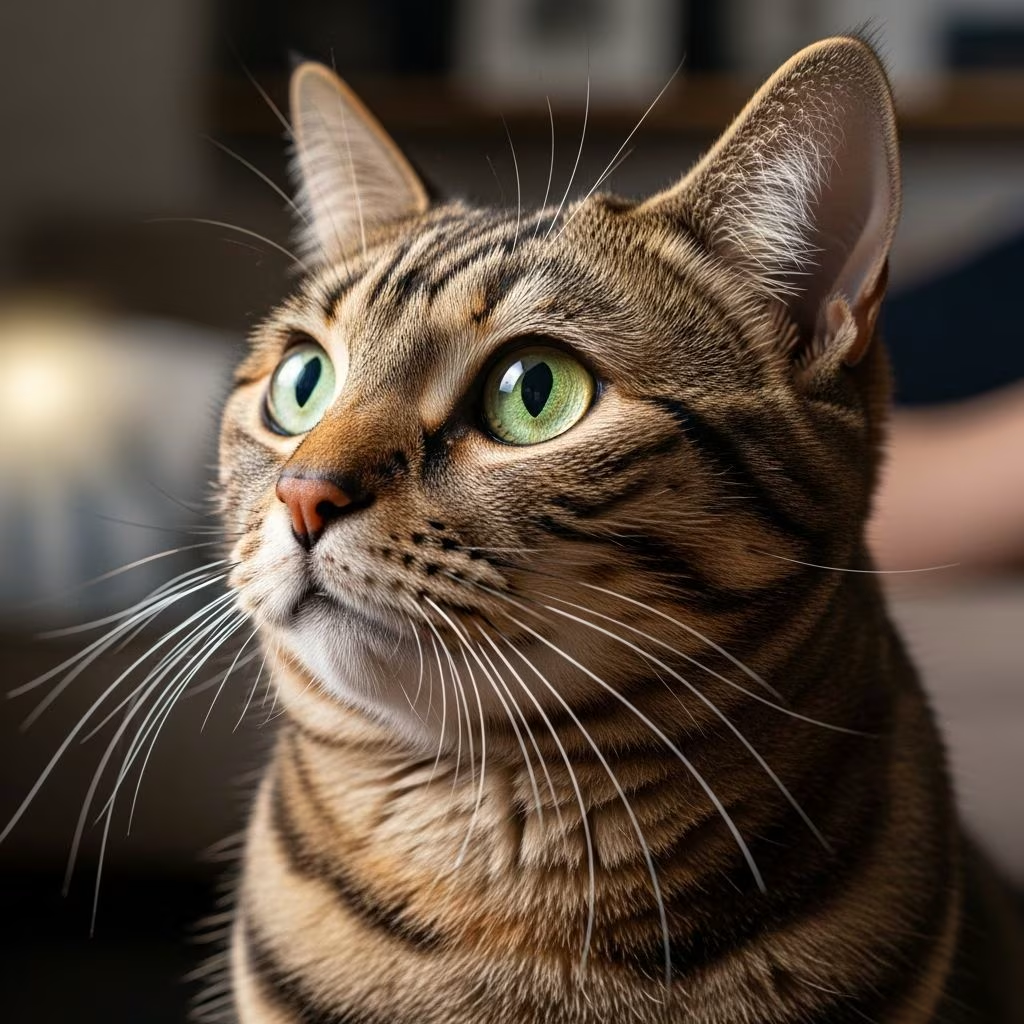
What Do Cats Think of Humans? Understanding Feline Perception
For centuries, cat owners have wondered what their feline companions are thinking. Cats have a reputation for being aloof and independent, but scientific research reveals a more nuanced picture of how cats perceive and interact with humans. Understanding what your cat thinks about you requires examining the complex social dynamics between felines and their owners through the lens of behavioral science.
The Science of Cat-Human Interactions
Recent quantitative observational studies have provided remarkable insights into the mechanics of social interactions between domestic cats and their owners. Researchers have discovered that compliance with a partner’s wishes is positively correlated between cats and humans across various household dynamics. This suggests that cats are far more attuned to human behavior than previously believed.
One of the most significant findings involves how cats and humans initiate interactions with each other. In a comprehensive study observing 158 cat-owning households over three consecutive days, researchers tracked which partner—the cat or the person—initiated social contact and how successful those attempts were. The results were surprising: while humans frequently attempted to initiate interactions, it was the cat that ultimately determined the duration and quality of the interaction. The more successful a person was at initiating contact, the shorter the total interaction time with their cat, indicating that cats retain control over their social engagement.
How Cats Perceive Different People
Cats do not inherently prefer one gender or age group of people; rather, the different ways in which people interact with cats cause cats to react differently. When presented with the same cat, men, women, and children exhibited distinctly different behaviors that shaped how the cat responded.
In observational studies, men tended to remain seated while women and girls moved down to the floor, positioning themselves at the cat’s eye level. Children, particularly boys, attempted to approach cats immediately, which typically resulted in the cats fleeing, even when those cats were well-socialized. Women and girls spoke to cats more frequently, and cats vocalized more often in response to female voices than to male voices. This demonstrates that cats adjust their behavior based on how humans approach and communicate with them.
Key behavioral differences by gender and age:
- Men tend to remain seated and less vocal with cats
- Women and girls position themselves at cat level and speak more frequently
- Children may approach too quickly, causing avoidance responses
- Cats vocalize more with female voices
The Role of Early Socialization
A cat’s early experiences with humans significantly influence its later behavior and attitudes toward people. According to behavioral research, a cat that is well-socialized to humans during kittenhood requires many negative experiences with other people before becoming wary of human contact. Conversely, it takes very few positive experiences with a new owner for a well-socialized kitten to become friendly and trusting. This early socialization period is crucial in determining a cat’s lifelong perception of humans.
The strength of a cat’s bond with its owner can be measured in concrete ways. When cats with strong relationships to their owners—more than 65% of both kittens and adult cats studied—were separated from their owners in an unfamiliar environment, they quickly overcame the stress of being alone and easily reunited with their owners afterward. This attachment pattern mirrors secure attachment behaviors seen in other species.
Can Cats Recognize Human Emotions?
One of the most remarkable discoveries in cat behavior research is that cats can recognize and respond to human emotions across multiple sensory channels. Cats are sensitive to human emotional cues conveyed through posture, vocal patterns, and even scent.
Visual and Vocal Emotional Recognition
Research has demonstrated that cats are particularly sensitive to the emotions expressed by their owners. When cats and their owners were shown objects designed to evoke either positive or negative emotional responses, cats mirrored their owner’s emotional state 79% of the time. If an owner showed enthusiasm and curiosity about an object, the cat became more curious as well. Conversely, when an owner displayed negative emotions, the cat responded with circumspection and caution.
Additionally, cats are capable of cross-modally matching pictures of emotional faces with their related vocalizations in both other cats and humans, especially for high-intensity emotions. This suggests that cats develop a general mental representation of their social partners’ emotional states.
Olfactory Emotional Detection
Perhaps even more surprising, cats can detect human emotions through scent. In an experiment conducted by researchers from the University of Bari Aldo Modo in Italy, cats were exposed to sweat odors collected from men in different emotional states: fear, happiness, physical stress, and neutral. The cats’ behaviors changed significantly based on the emotional odors presented, particularly fear-related scents. When exposed to fear odors, cats exhibited more severe stress-related behaviors compared to neutral odors.
Cats use their left and right nostrils strategically when processing emotional information. They rely more on their right nostril when displaying severe stress behaviors in response to fear and physical stress odors, since the right nostril connects to the brain hemisphere responsible for processing arousal and intense emotions. Conversely, cats use their left nostril more frequently when displaying relaxed behaviors, activating the hemisphere that regulates positive and pro-social behaviors.
Preferred Areas for Physical Affection
Cats have clear preferences about where and how they like to be touched. Research shows that cats strongly prefer being stroked on their head region and will modify their postures to promote access to these preferred areas. Some cats even lead their owners to specific locations in the home where they want to be petted. Both handler familiarity and the body region being stroked significantly influence whether a cat displays negative behavioral responses.
Understanding these preferences is key to positive interactions with cats. When owners respect a cat’s boundaries and touch preferences, interactions are more likely to be pleasant and strengthen the human-cat bond.
How Cats Affect Human Moods
The influence of cats on human emotions is not one-directional. Research demonstrates that interactions with cats reduce measurable negative moods in humans, including anxiety, depression, and introversion. The mere presence of a cat in the household has this beneficial effect, but direct interaction amplifies the mood improvement.
Interestingly, depressed owners tend to initiate fewer interactions with their cats, but when the cat approaches the depressed owner, that person typically accepts the interaction, which positively affects their mood. Cats also adjust their behavior in response to human depression when close to the person, vocalizing more frequently and performing head and flank-rubbing behaviors more often. This suggests that cats intuitively respond to their owner’s emotional distress.
The mood-enhancing effect of cats differs between genders, with more mood subscales affected in women than in men, and women showing stronger effects overall. Importantly, research indicates that a cat’s effect on alleviating negative moods is comparable to the effect of a human partner.
Distance Regulation and Physical Closeness
How cats and humans regulate physical distance between them reveals important aspects of the relationship. In observational studies of distance regulation, human partners were generally more active than cats in reducing distance and approaching. However, when cats initiated close contact, those bouts of staying near each other lasted longer than when humans initiated closeness.
The quality of distance regulation also varies based on the age of the human partner. Adults showed higher reciprocity in distance regulation with their cats, indicating better “meshing” or coordination of close contact compared to households with children and juveniles. This suggests that cats may be more selective about physical proximity with younger humans who may be less predictable in their behavior.
Do Cats Love Their Owners?
Perhaps the most important question for cat owners is whether their feline companions actually love them. Research challenges the stereotype of cats as indifferent pets. Studies reveal that cats love humans as much as dogs do; they simply express this affection less openly. When given the choice between their owner and an unfamiliar person, cats with strong bonds to their owners consistently prefer their owner’s company.
While cats may not show affection with the same enthusiasm as dogs, their love manifests through subtle behaviors: maintaining eye contact, slow blinks, head bunting, rubbing against their owner’s legs, and vocalizing in response to their owner’s presence. These are deliberate communication attempts that demonstrate genuine attachment and emotional connection.
Frequently Asked Questions
Q: How can I tell if my cat loves me?
A: Cats show love through subtle behaviors including slow blinks, head rubbing, vocalizing when you arrive home, bringing you objects, sitting near you while you work, and maintaining eye contact. Research shows that cats with strong bonds to their owners actively choose to spend time near them.
Q: Why does my cat ignore me sometimes?
A: Cats determine the duration and quality of their interactions with humans. This is normal feline behavior and doesn’t indicate a lack of affection. Cats simply regulate their own social engagement and may need alone time. Respecting their boundaries actually strengthens your relationship.
Q: Can cats understand human emotions?
A: Yes, cats can recognize human emotions through visual cues, vocal patterns, and even scent. Research shows they mirror their owner’s emotions approximately 79% of the time and adjust their behavior based on whether their owner appears anxious, happy, or depressed.
Q: Does my cat’s gender affect how it relates to me?
A: Cats themselves do not inherently prefer one gender, but they respond differently to how different genders interact with them. Men, women, and children approach cats differently, causing cats to react differently. For example, cats vocalize more with women and girls who speak to them more frequently.
Q: What if my cat was not socialized well as a kitten?
A: While early socialization is important, cats can still form positive bonds later in life. However, well-socialized kittens require many negative experiences before becoming wary of people, while poorly socialized cats may take longer to trust. The quality of your interactions now can positively influence your cat’s perception of you.
Q: Why does my cat sometimes react with stress to my emotions?
A: Cats can detect emotional states through scent and other cues. If you’re experiencing fear or intense stress, your cat may pick up on these signals through your body odor and respond with stress behaviors of their own. This is a sign of emotional attunement, not a reflection on you.
References
- The Mechanics of Social Interactions Between Cats and Their Owners — National Center for Biotechnology Information (NCBI). PMC8044293. https://pmc.ncbi.nlm.nih.gov/articles/PMC8044293/
- Cats and human emotions: A stronger bond than we thought? – Noldus — Noldus Information Technology. 2023. https://noldus.com/blog/cats-react-to-human-emotional-scents
- Cats and science: three studies to explain their behaviour — Oasy Pet Food. https://www.oasy.com/en/pet-news/useful-tips/studies-to-understand-cats-behaviour



