

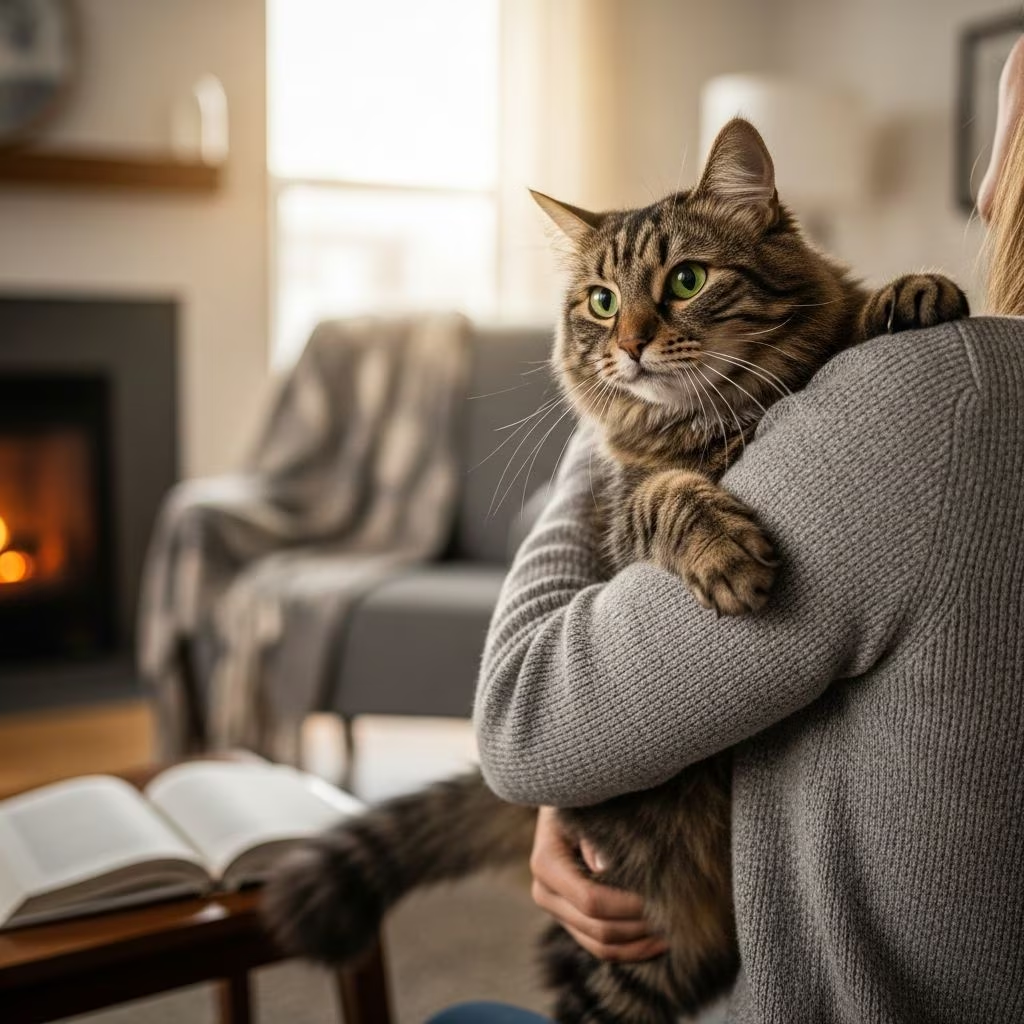
Cats are enigmatic creatures whose affection styles differ markedly from dogs, often leaving owners puzzled about whether their feline companions enjoy hugs. While many cat parents instinctively reach for a squeeze, research reveals that most cats view hugs as restrictive rather than reassuring, preferring alternative expressions of love that respect their independence. This article delves into feline body language, the science of oxytocin bonding, breed differences, and practical tips to foster genuine connection without forcing physical closeness.
Do Cats Like Hugs?
The short answer is no—most cats do not like hugs in the human sense. Unlike dogs, who often interpret embraces as pack reinforcement, cats are descendants of solitary hunters with a strong need for autonomy. Forced hugging can trigger stress responses, elevating cortisol levels and eroding trust over time. A 2025 study monitoring oxytocin in cat-owner interactions found that coerced cuddles caused hormone drops in avoidant and anxious cats, while voluntary contact boosted it significantly. Owners report warmer bonds when allowing cats to initiate touch, aligning with observational data showing cats prefer brief, targeted petting over prolonged restraint.
Individual variation plays a role: securely attached cats who choose lap-sitting show oxytocin surges, but even they may tolerate rather than relish full hugs. Indoor cats, compensating for limited environments, initiate more human contact but still favor head rubs over encircling arms. Understanding this helps prevent behavioral issues like scratching or hiding, promoting a harmonious home.
Cat Body Language: Signs Your Cat Hates Hugs
Decoding feline signals is crucial to avoid misinterpreting tolerance as enjoyment. Cats communicate discomfort subtly to avoid confrontation, but ignoring these cues risks escalating to aggression. Key indicators include:
- Ears flattening backward: A classic alarm signal, often paired with dilated pupils, signaling fear or irritation.
- Tail thrashing or puffing: Rapid side-to-side swishing indicates annoyance; a bottle-brush tail means high stress.
- Low crouching or freezing: The cat tenses rigidly, enduring the hug rather than relaxing into it.
- Whiskers fanning out stiffly: Forward-pointing whiskers show alertness to escape routes.
- Vocal protests: Hissing, growling, or meowing plaintively are direct pleas to stop.
These signs stem from evolutionary instincts: cats feel trapped when limbs are pinned, mimicking predator restraint. A PMC review of observational studies notes cats modify postures to access preferred stroking zones like the head, rejecting unwanted handling. Repeatedly ignoring signals can condition cats to avoid all contact, damaging the relationship.
Cat Body Language: Signs Your Cat Likes Hugs (Rare but Possible)
Though uncommon, some cats genuinely enjoy limited hugging. Look for these positive cues:
- Slow blinking: Known as a ‘cat kiss,’ this signals trust and relaxation—reciprocate to deepen bonds.
- Soft purring with kneading: Deep, rumbling purrs (20-140 Hz) indicate contentment; kneading mimics kitten nursing.
- Head-butting (bunting): Cats rub scent glands to mark you as family, often preceding voluntary cuddles.
- Tail curling around you: A gentle wrap shows affiliation, unlike aggressive lashing.
- Leaning in or exposing belly: Relaxed flops invite petting, though belly exposure is often a trust test—proceed cautiously.
Securely attached cats display these during owner-initiated play or petting, with oxytocin rising proportionally to interaction time. Japanese research confirms brief, gentle sessions elevate owner oxytocin too, reducing stress hormones.
Why Don’t Cats Like Hugs? The Science Behind It
Biologically, cats’ aversion roots in their solitary ancestry versus dogs’ pack evolution. Oxytocin, the ‘love hormone,’ surges in mutual interactions but plummets under duress. A 2025 home study measured saliva oxytocin during 15-minute sessions: voluntary cuddling spiked levels in both parties, but forced holds dropped it in stressed cats.
Additionally, cats’ flexible spines and agility prioritize escape over embrace endurance. Unlike humans, where hugs compress the chest reassuringly, cats perceive it as immobilizing. Cortisol spikes from stress impair health, explaining why hugging correlates with lower blood pressure only when consensual. Observational data shows cats initiate higher interaction proportions in bonded pairs, emphasizing consent.
How to Hug a Cat Properly (Without Stressing Them Out)
To mimic safe contact, adopt these techniques:
- Approach sideways: Avoid direct stares; use slow blinks to signal non-threat.
- Pet preferred zones: Focus on cheeks, chin, and base of ears—avoid belly or tail base unless invited.
- Keep sessions brief: 3-5 minutes max, letting the cat dictate end by walking away.
- Use supportive holds: Cradle under chest with legs dangling free, never squeezing.
- Respect escapes: If they squirm, release immediately to build trust.
Studies show such ‘goal-meshed’ interactions increase total contact time, with cats leading humans to favorite spots. Pair with toys or treats for positive associations.
Breeds That Like Hugs the Most
| Breed | Hug Tolerance | Key Traits |
|---|---|---|
| Ragdoll | High | Goes limp when picked up; bred for cuddling. |
| Russian Blue | High | Affectionate, loyal lap cats. |
| Maine Coon | Medium-High | Gentle giants who enjoy family time. |
| Burmese | Medium-High | Playful, dog-like sociability. |
| Siamese | Medium | Vocal and clingy but needs space. |
These breeds, selectively bred for companionship, show higher oxytocin responses to handling. Even they benefit from consent-based affection.
Alternatives to Hugging: What Cats Really Love
Cats crave these over hugs:
- Interactive play: 15 minutes daily with wand toys boosts endorphins.
- Grooming sessions: Brush to distribute scents, mimicking social licking.
- Parallel lounging: Sit nearby without touch; purring calms both.
- Treat puzzles: Mental stimulation strengthens emotional ties.
- Slow blinks and chat: Vocal tones elevate oxytocin without restraint.
Research links these to mood enhancement, with cats alleviating owner depression comparably to humans.
Do Cats Hug Each Other?
Felines rarely ‘hug’; affection involves allorubbing, grooming, and allo-marking. Mothers cradle kittens briefly, but adults maintain distance, reinforcing independence. Human hugs mimic none of this, explaining discomfort.
Frequently Asked Questions (FAQs)
Why does my cat tolerate hugs but not enjoy them?
Cats often endure for rapport but show subtle stress; watch for ear twitches or tail flicks.
Can I train my cat to like hugs?
Yes, via gradual desensitization with rewards, but full enjoyment is rare—focus on preferred touches.
What if my cat attacks during hugs?
This signals overload; cease immediately and rebuild trust through play, consulting a behaviorist if persistent.
Are some cats naturally cuddly?
Socialization before 7 weeks and secure attachments foster cuddliness; breeds like Ragdolls excel.
Does hugging reduce my stress even if the cat dislikes it?
Only if mutual; forced contact stresses both, negating benefits.
References
- Studies Reveal The Best Ways to Chemically Bond With Your Cat — ScienceAlert. 2025-02. https://www.sciencealert.com/studies-reveal-the-best-ways-to-chemically-bond-with-your-cat
- The Mechanics of Social Interactions Between Cats and Their Owners — PMC (NCBI). 2021-04-12. https://pmc.ncbi.nlm.nih.gov/articles/PMC8044293/
- Owning a Cat Will Change Your Brain. Here’s How. — Live Science. 2025. https://www.livescience.com/health/mind/owning-a-cat-will-change-your-brain-heres-how
- 5 Purrfect Reasons to Hug Your Cat — Clermont Animal Hospital. 2020-05-15. https://www.clermontanimal.net/2020/05/15/greater-cincinnati-vet-reasons-to-hug-cat/
- Benefits of Hugging Your Cat — Richmond Veterinary Clinic. N/A. https://rvetclinic.com/hugging-your-cat/



