

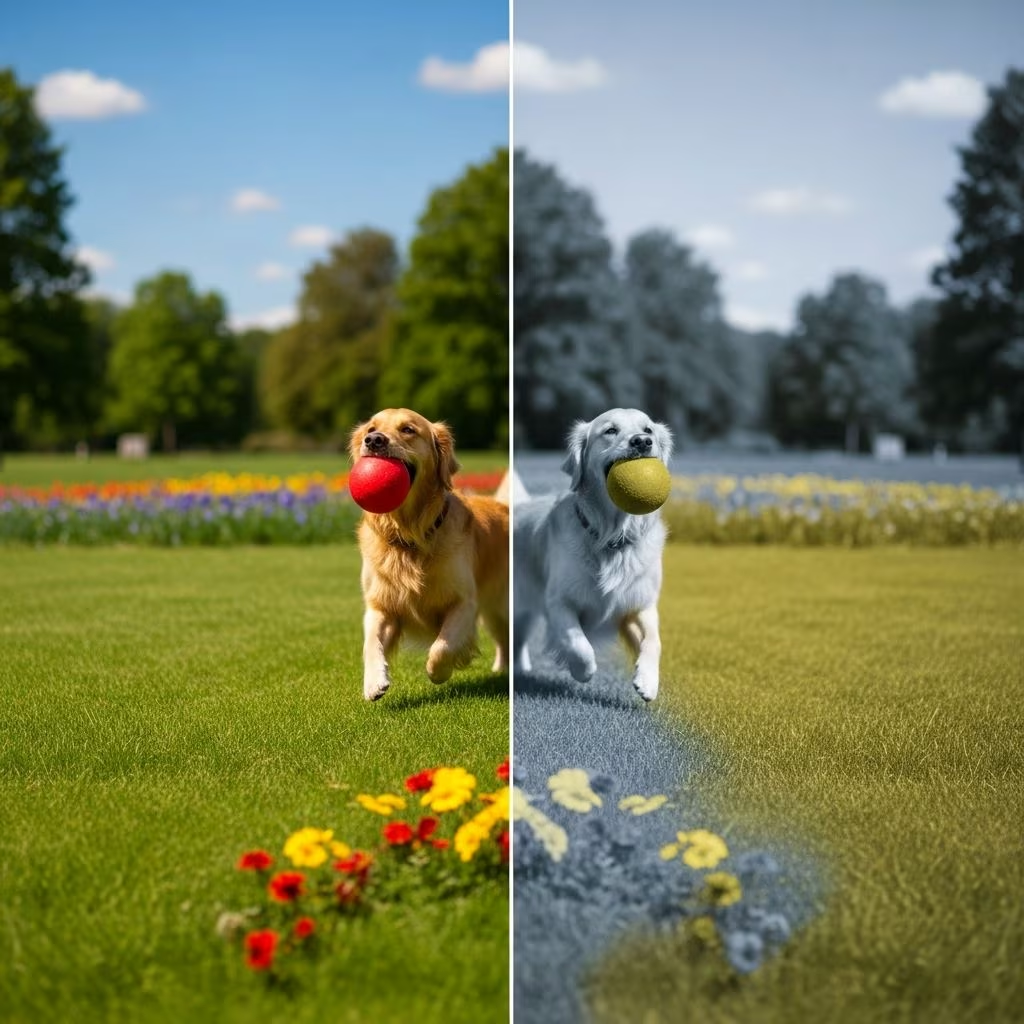
Dogs possess dichromatic colour vision, distinguishing primarily between blues and yellows while perceiving reds and greens as muted shades similar to human red-green colour blindness.
How Do Dogs See Colour?
Human eyes contain three types of cone cells sensitive to red, green, and blue light wavelengths, enabling trichromatic vision and perception of a wide colour spectrum. Dogs, however, have only two cone types: one sensitive to short wavelengths (blue-violet, around 429 nm) and another to medium-long wavelengths (yellow, around 555 nm). This dichromatic system means dogs cannot differentiate red from green; both appear as shades of yellow, brown, or gray depending on brightness and context.
Scientific studies confirm dogs’ retinal structure supports this limited colour perception. Visual-evoked potential and immunohistochemical analyses reveal two discrete cone subtypes, lacking the red-specific cones found in humans. Dogs excel in other visual areas: their retinas have more rod cells for superior low-light and motion detection, plus a tapetum lucidum layer that reflects light back through the retina for enhanced night vision.
The Dog Colour Spectrum
Dogs see a world dominated by blues and yellows. Here’s a breakdown:
- Blues: Vividly perceived; dogs distinguish blue from gray effectively.
- Yellows: Clearly visible, including shades that appear as yellow to dogs even if orange to humans.
- Reds and Greens: Indistinguishable; reds look brownish-gray, greens yellowish.
- Purples: Often appear blue or gray.
- Whites, Blacks, Grays: Detected via brightness, though less acutely than humans.
Behavioural experiments, like modified Ishihara tests adapted for dogs, show they respond similarly to red-green blind humans, fixating longer on stimuli where colours blend for dichromats. Recent research using food-rewarded discrimination confirms colour cues outweigh brightness for dogs under natural light.
Dogs vs. Human Colour Vision
| Colour | Humans See | Dogs See |
|---|---|---|
| Red | Bright red | Dark gray/brown |
| Green | Vivid green | Yellow/mustard |
| Blue | Bright blue | Bright blue |
| Yellow | Bright yellow | Bright yellow |
| Purple | Purple | Blue/gray |
| Orange | Orange | Yellow/gray |
This table illustrates key differences, grounded in cone sensitivity data. Dogs’ visual acuity is 4-8 times poorer than humans’, but motion sensitivity surpasses ours.
Can Dogs See in the Dark?
Yes, exceptionally well. Dogs have 4-8 times more rod cells than cones, optimized for dim light. The tapetum lucidum boosts sensitivity by reflecting light, causing the ‘glow’ in flash photos. While colour perception fades in low light, they detect movement and shapes far better than humans.
How Dogs’ Vision Evolved
Canine vision evolved for hunting and survival. Ancestral wolves prioritized motion detection and night vision over colour richness, as prey like deer blend into foliage—irrelevant when reds/greens confuse similarly. Selective breeding refined traits: herding breeds emphasize acuity, scent hounds low-light prowess.
Do All Dogs See the Same?
Generally yes, as all dogs share the two-cone system. Breed variations affect acuity or field of view, not colour palette. Puppies develop full vision by 8 weeks; seniors may experience cataracts dimming colours.
Practical Implications for Dog Owners
Understanding canine vision enhances daily life:
- Toys and Training: Use blue, yellow, or white toys; avoid red (appears gray against grass).
- Visibility: Bright blues stand out; red leashes may blend.
- Home Environment: Blue/yellow feeders aid visibility for seniors.
- Health Checks: Vision changes signal issues like cataracts.
Studies show dogs select colour-matched toys over brightness alone, confirming practical colour use.
Testing Your Dog’s Colour Vision
Observe reactions to coloured objects or use apps simulating dog vision. Professional vets assess via menace response or electroretinography.
Frequently Asked Questions
Are dogs fully colourblind?
No, dogs see blues and yellows but confuse reds/greens like red-green blind humans.
What colour is best for dog toys?
Blue or yellow; they pop against backgrounds.
Can dogs see TV?
Limited; fast motion flickers, colours muted. High-refresh screens help.
Do dogs dream in colour?
Brain processes suggest yes, in their spectrum.
Why do dogs chase red lasers?
Motion, not colour; lasers appear as moving dots.
Can old dogs go blind to colour?
Aging affects brightness more, but cones degrade.
This comprehensive view, drawn from neurobiological and behavioural research, dispels myths: dogs see a vibrant—if limited—colour world optimised for their predatory heritage.
References
- Are dogs red–green colour blind? — PMC – PubMed Central. 2017-11-08. https://pmc.ncbi.nlm.nih.gov/articles/PMC5717654/
- Are Dogs Really Colorblind? — PetMD. 2023-01-15. https://www.petmd.com/dog/general-health/are-dogs-really-colorblind
- Can Dogs See Color? — American Kennel Club. 2024-05-20. https://www.akc.org/expert-advice/health/can-dogs-see-color/
- How do dogs see the world? — BBC Science Focus Magazine. 2023-07-12. https://www.sciencefocus.com/nature/how-do-dogs-see-the-world
- Do Dogs See Color? — VCA Animal Hospitals. 2024-02-28. https://vcahospitals.com/know-your-pet/do-dogs-see-color
- Are Dogs Color Blind? — EnChroma. 2023-11-05. https://enchroma.com/blogs/beyond-color/are-dogs-color-blind



