

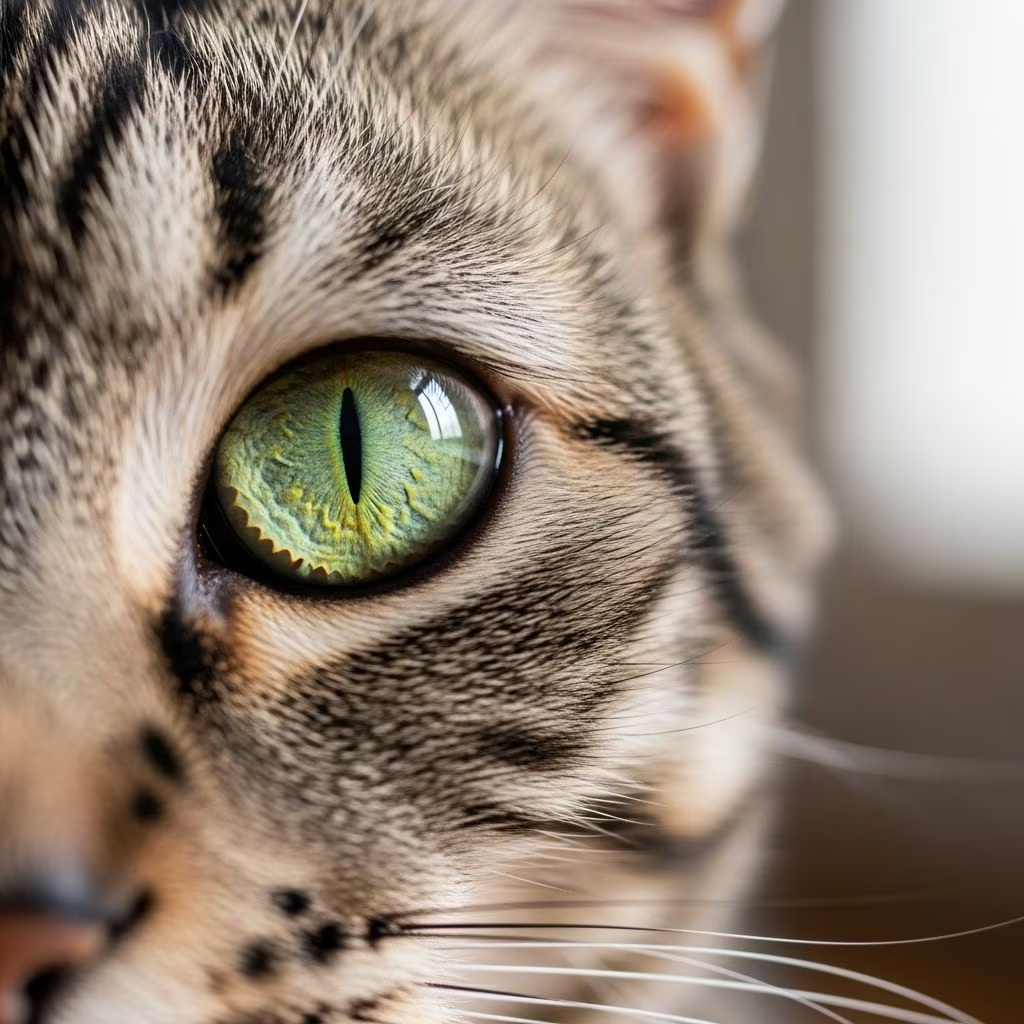
Cats possess dichromatic vision, primarily perceiving blues and greens vividly while reds and oranges appear muted or grayish to them. This limited color palette stems from having two types of cone cells in their retinas, unlike humans’ three, making their world less vibrant but optimized for motion detection and low-light conditions.
How Do Cats See Color?
Cat vision relies on specialized cells in the retina: rods for low-light sensitivity and motion, and cones for color discrimination. Cats have fewer cones—specifically two types sensitive to blue-violet (around 460 nm) and yellow-green (around 560 nm) wavelengths—resulting in dichromatic vision with a neutral point near 505 nm where colors blend indistinguishably. Humans, with trichromatic vision from red-, green-, and blue-sensitive cones, see a broader spectrum.
This setup prioritizes survival: more rods (6-8 times humans’) enhance night vision, allowing cats to spot prey in twilight. Studies confirm cats discriminate blues and greens well but confuse reds, oranges, and purples, often perceiving them as yellows, grays, or blues.
The Colors Cats Can See Best
Cats excel at distinguishing **blue** shades, especially blue-violet hues, which appear vibrant and clear. **Green** follows, though less intensely, forming the core of their color world. Some evidence suggests **yellow** visibility, but it’s muted compared to blues.
- Blue: Strongest perception; cats easily detect and differentiate shades.
- Green: Visible but pastel-like; aids in spotting foliage or prey.
- Yellow: Detectable in some contexts, blending with greens.
Reds, oranges, pinks, and purples fare poorly: reds may look greenish or gray, oranges dull yellows, and purples bluish.
Cat Vision vs. Human Vision
Cats’ eyesight trades color richness for other strengths. Their visual acuity is about 20/100 to 20/200 (vs. humans’ 20/20), but they detect motion at lower speeds and see better in dim light—up to 6-8 times superior at night.
| Aspect | Cat Vision | Human Vision |
|---|---|---|
| Color Cones | 2 (blue, yellow-green) | 3 (red, green, blue) |
| Colors Seen | Blues/greens best; reds muted/gray | Full spectrum |
| Low-Light Vision | Excellent (more rods, tapetum lucidum) | Moderate |
| Acuity | Lower (1/6 human detail) | High |
| Motion Detection | Superior (faster flicker fusion) | Good |
The tapetum lucidum—a reflective layer behind the retina—amplifies faint light, causing eyeshine. Cats also have wider fields of view (200° vs. 180°) but narrower focus.
Are Cats Colorblind?
No, cats are not fully colorblind; the myth arose from early assumptions due to fewer cones. They exhibit partial color vision akin to human red-green colorblindness (deuteranopia), with a neutral point at 505 nm confirmed in behavioral tests where cats failed to distinguish certain monochromes. Their world is washed-out pastels, not grayscale, emphasizing brightness and contrast over hue.
Why Cats’ Vision Is the Way It Is
Evolutionary pressures shaped feline eyes for hunting: crepuscular (dawn/dusk) activity favored rods over cones. Domestic cats retain wild ancestors’ traits, prioritizing prey tracking in low light over colorful discrimination. Higher rod-to-cone ratios (1:1 vs. humans’ 20:1 cones) boost sensitivity but limit color.
What Colors Seem to Fascinate Cats Most?
Cats respond strongly to **blues and yellows** in toys, as these pop in their vision. Red laser pointers work via motion/brightness, not color. Observations show preferences for blue-violet and yellow-green objects, explaining toy choices.
- Blue toys: Highly engaging for chasing.
- Yellow/green: Stimulating for play.
- Avoid reds: Appear dull, reducing interest.
Choosing Toys and Enrichment for Your Cat
Opt for **blue, green, or yellow toys** to maximize visual appeal. Combine with feathers, strings for motion, mimicking prey. Rotate items to prevent boredom; consider UV-reactive toys, as cats may see ultraviolet (debated). Safe, durable options enhance bonding and health.
Environmental tips:
- Use blue lighting for calm spaces.
- Yellow feeders for better visibility.
- Motion-activated toys for instinctual play.
Frequently Asked Questions
Are cats colorblind?
No, cats see some colors like blue and green but not as vividly as humans; they’re dichromatic, not monochromatic.
What colors can cats see?
Primarily blues and greens, with yellows; reds/oranges appear gray or muted.
Can cats see red?
Cats struggle with red, perceiving it as green, gray, or brown due to lacking red-sensitive cones.
Do cats see better in the dark?
Yes, thanks to more rods and tapetum lucidum, cats’ night vision is 6-8 times better than humans’.
Why do cats like certain toys?
Toys in blue/yellow stand out; motion matters more than color.
Enhancing Your Cat’s Visual World
Understanding feline vision informs better care. Place food in yellow bowls for visibility, use blue scratching posts, and provide dim-lit perches for night prowls. Training with color-specific cues (blue for treats) leverages their strengths. Regular vet checks ensure eye health, as conditions like cataracts impair vision.
Research evolves: while cone studies date back, recent behavioral confirmations solidify dichromacy. Future tech like vision simulators lets owners ‘see’ through cat eyes, fostering empathy.
References
- Decoding the Colors in a Cat’s World: Understanding Feline Vision — Pullnscoop. 2023. https://www.pullnscoop.com/blogs/blogs/decoding-the-colors-in-a-cats-world-understanding-feline-vision
- Cat Vision Explained: What Colors Can Cats Actually See? — Neakasa. 2023. https://neakasa.com/blogs/all/what-colors-can-cats-see
- Know What Colors Cats Can See: Understanding Feline Color Vision — Michupet. 2023. https://michupet.com/blogs/guide/what-colors-can-cats-see
- Can cats see colour? — Cats Protection. 2023-10-01. https://www.cats.org.uk/cats-blog/can-cats-see-colour
- Cat Eyes: A Fascinating Look at Feline Vision — Fulton County Vet Clinic. 2023. https://fultoncountyvetclinic.com/blog/cat-eyes/
- Neutral point testing of color vision in the domestic cat — PubMed/NCBI (peer-reviewed). 2016-10-07. https://pubmed.ncbi.nlm.nih.gov/27720709/
- How Does a Cat’s Vision Differ from a Human’s? — The Refined Feline. 2023. https://www.therefinedfeline.com/how-does-a-cats-vision-differ-from-a-humans/



