

What Are Puppy Mills and Why Are They Bad?
When you purchase a puppy from a pet store or online seller, there’s a significant chance that dog came from a puppy mill. These large-scale commercial breeding operations prioritize profit over the well-being of animals, creating environments where dogs suffer both physically and emotionally. Puppy mills represent one of the most concerning aspects of the pet trade industry, yet many people remain unaware of their existence or the devastating impact they have on thousands of dogs every year.
A puppy mill is fundamentally a factory farm for dogs—a breeding facility where profit takes absolute priority over the health, comfort, and welfare of the animals. These operations produce puppies in massive quantities for the retail pet trade, often supplying pet stores, online sellers, and classified ad platforms. Understanding what puppy mills are and why they’re harmful is essential for anyone considering bringing a dog into their home and for those passionate about animal welfare.
Understanding Puppy Mills: Definition and Operation
Puppy mills are typically large commercial breeding facilities that churn out puppies of various breeds or breed mixes at rapid rates. However, not all puppy mills operate in large facilities; some run out of farms or other properties, making them harder to identify and regulate. What unites all puppy mills is their fundamental approach: they view dogs as commodities rather than living beings with intrinsic value and emotional needs.
These breeding operations prioritize volume over quality and welfare. Female dogs are bred continuously, often with each heat cycle, without adequate time between litters for recovery. This relentless breeding schedule exhausts the mother dogs physically and psychologically. When female dogs can no longer produce puppies, they face a grim fate: they are typically auctioned off to other mills, abandoned, or euthanized.
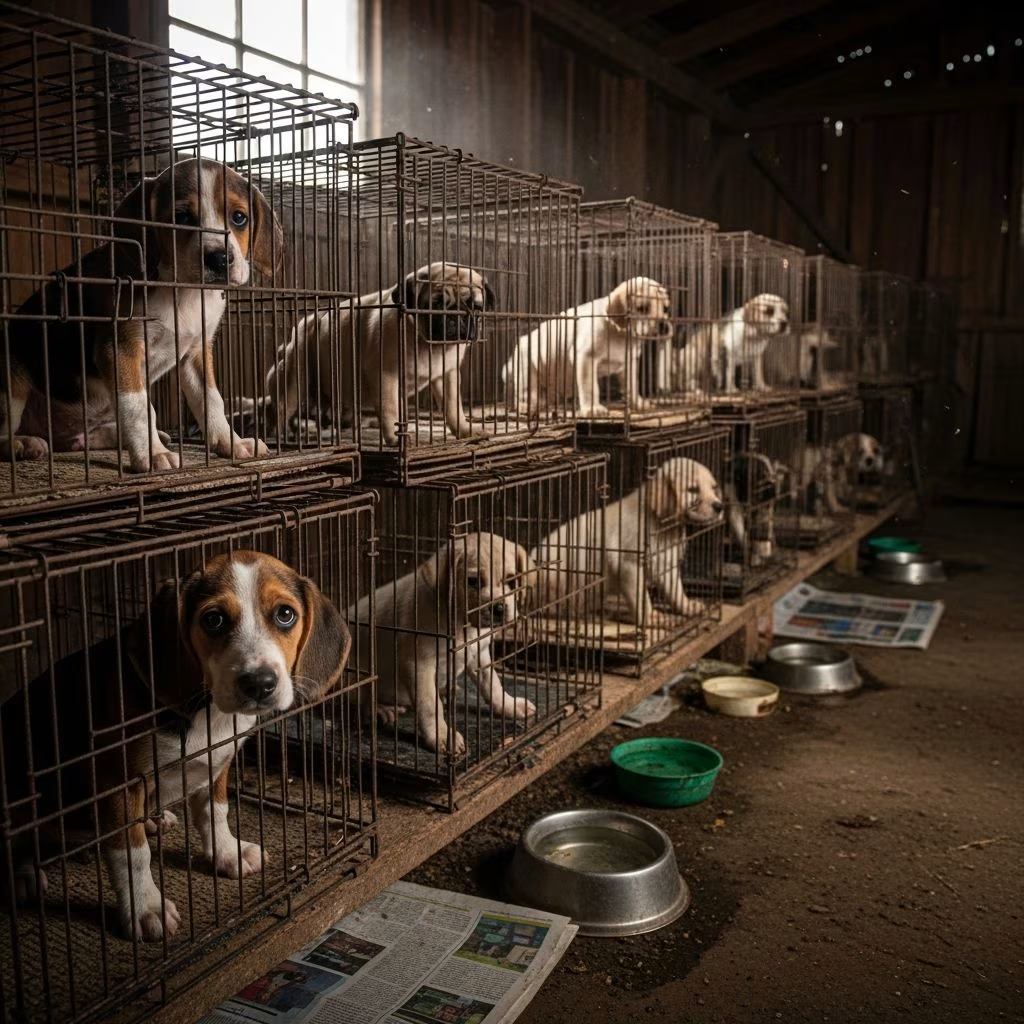
The conditions within puppy mills vary, but they consistently fall far short of acceptable standards. Dogs may be housed in small cages made of wood and wire mesh, tractor-trailer cabs, or simply chained to trees where they spend every day in the same small patch of dirt, exposed to all weather conditions. These facilities lack proper bedding, protection from extreme temperatures, adequate food and water, and veterinary care. The primary goal is to maximize profit by minimizing operational costs, which means spending as little as possible on animal care.
Health Consequences for Puppy Mill Dogs
Dogs and puppies produced in puppy mills face severe and often lifelong health consequences. These animals do not receive adequate preventative veterinary care, proper socialization, or adequate nutrition, all of which can lead to chronic health issues that persist throughout their lives.
One of the most significant problems is the complete absence of genetic and health testing. Responsible breeders conduct thorough health screenings before breeding to ensure they’re not passing on hereditary conditions. Puppy mills, however, ignore genetic deficiencies entirely. This negligence results in genetically-based conditions being passed down from generation to generation, including:
- Hip and elbow dysplasia
- Heart defects
- Eye defects and blindness
- Cryptorchidism (undescended testicles)
- Demodicosis (mange)
- Bone development problems
The breeding females themselves are particularly vulnerable to health problems. They are typically undernourished and receive minimal medical care while being bred repeatedly without recovery time between litters. This constant stress on their bodies leads to premature aging and deterioration. Undercover investigations have revealed dogs with crusty, oozing eyes, severe ear infections, mange covering their skin in red scabs, and abscessed feet from wire flooring—conditions that are ignored or inadequately treated.
Puppies are usually prematurely weaned from their mothers, which causes emotional trauma to both the puppies and the mother dog. Additionally, sick or injured dogs are often left to suffer endlessly or simply left to die because they never receive veterinary care. The poor nutrition and weakened immune systems common in puppy mills make these dogs prone to injury and disease throughout their lives.
Many puppies born with obvious deformities are left untended or, in some cases, used for breeding anyway, perpetuating genetic problems. Puppies from mills often arrive at their new homes already suffering from serious illnesses that can be very costly to treat and may result in shorter lifespans or require ongoing medical care.
Behavioral and Psychological Impact
Beyond physical health concerns, puppy mill dogs suffer serious and often permanent behavioral and psychological damage. Research has consistently demonstrated that both breeding dogs and puppies from puppy mills show significantly higher rates of extreme fear, phobias, compulsive behaviors, and decreased energy and trainability.
Early life experiences and learning are integral to lifelong behavioral development in dogs. When puppies are born and grow up in a puppy mill environment, they lack regular human socialization during critical developmental periods. This deprivation causes:
- Fear and anxiety around people
- Human-directed aggression
- Extreme fearfulness of new situations and environments
- Compulsive and obsessive behaviors
- Learned helplessness and emotional shutdown
Without exposure to a variety of normal environments and experiences, puppies from mills are easily overwhelmed when they transition to a new home. Activities that most dogs experience without issue—walking on grass, visiting a groomer, going to the veterinarian, or hearing household sounds—can trigger severe anxiety or fear responses in mill puppies.
One particularly difficult issue is potty training. Because puppy mill puppies are raised in small, unsanitary cages where they are forced to soil where they sleep and eat, learning to use a designated potty area becomes extremely difficult or sometimes impossible. This behavior pattern, established early in life, often persists into adulthood despite an owner’s best efforts at training and behavior modification.
Adult dogs rescued from puppy mill breeding situations are often so psychologically damaged that they require intensive and lifelong commitment to training and behavior modification. Many have never learned how to live in a normal home environment. They may struggle with basic social skills, fear-based aggression, and an inability to adjust to family life. Dogs rescued from these conditions often display signs of extreme despair, such as circling frantically in small spaces and pacing ceaselessly, behaviors developed as coping mechanisms in their previous confinement.
Identifying a Puppy Mill: Red Flags to Watch For
When searching for a puppy, it’s essential to recognize warning signs that indicate a breeder operates like a puppy mill. Responsible breeders are transparent about their operations and genuinely care about where their puppies go. In contrast, puppy mills exhibit numerous red flags:
Facility and Access Issues
- You cannot see the home or kennel where the puppy was raised
- You cannot meet the parents of the puppy
- The breeder refuses to allow visits or provide videos of the facility
- The breeder only conducts business online or over the phone
Breeding and Availability Issues
- The breeder has multiple breeds or breed mixes available from their kennel, especially “exotic” or in-demand breed mixes
- The breeder seems to always have puppies available year-round
- They offer puppies at younger than 8 weeks old
- Pricing seems unusually cheap for that breed or, conversely, suspiciously expensive
Documentation and Medical Care Issues
- There is no puppy contract or minimal paperwork required to purchase
- There are no veterinary records or health exams
- Vaccines are not given by a veterinarian; the breeder vaccinates puppies themselves
- No genetic health testing documentation is provided
- The breeder cannot provide references or health guarantees
Responsible breeders, by contrast, are happy to meet you in person, show you where the puppy was born and raised, introduce you to the parents, provide complete health records and genetic testing results, and require a contract that includes provisions for the puppy’s welfare.
The Broader Impact of Puppy Mills
The existence and proliferation of puppy mills has far-reaching consequences that extend beyond the individual animals being bred. Millions of dogs die in animal shelters every year, yet puppy mills continue operating and supplying pet stores and online platforms with animals. This directly perpetuates a cycle where shelter animals go without homes while people unknowingly purchase from unethical sources.
Many puppy mills operate with USDA licenses, which permits them to sell to pet stores. However, while USDA licensing mandates a series of requirements for facility operation, enforcement is severely lacking due to insufficient support personnel. Facilities continue violating standards with little to no consequences, and the standards themselves are often inadequate to ensure humane treatment.
The pet trade industry remains largely shadowy and unregulated in many areas, allowing these operations to continue operating behind the scenes, hidden from public view. This lack of transparency enables the cycle of abuse and exploitation to continue unchecked.
What You Can Do
Stopping puppy mills requires action at both individual and systemic levels. As a consumer, you have significant power to reduce demand for mill-produced puppies:
- Adopt from shelters and rescue organizations instead of purchasing puppies
- If you choose to purchase a puppy, research breeders thoroughly and visit their facilities in person
- Ask for health testing documentation and references from veterinarians
- Report suspected puppy mills to local authorities and animal welfare organizations
- Educate others about the problems associated with puppy mills
- Support legislation aimed at regulating and shutting down inhumane breeding operations
By making informed choices about where you obtain a dog and supporting ethical breeding practices, you help reduce demand for puppy mill puppies and, ultimately, decrease the incentive for these operations to continue.
Frequently Asked Questions
Q: How many puppy mills operate in the United States?
A: While exact numbers are difficult to determine due to lack of regulation and the hidden nature of many operations, thousands of puppy mills are estimated to exist across the country, producing hundreds of thousands of puppies annually.
Q: Are all pet store puppies from puppy mills?
A: The vast majority of puppies sold in pet stores come from puppy mills or similar large-scale breeding operations. Responsible breeders rarely sell through pet stores and typically have waiting lists of interested families.
Q: Can a puppy mill dog ever live a normal life?
A: With patience, dedication, and professional help, many puppy mill dogs can improve significantly. However, the extent of recovery depends on individual circumstances. Some may always have anxiety or behavioral challenges, requiring ongoing management and support.
Q: What should I do if I suspect a puppy mill in my area?
A: Report it to your local animal control agency, the USDA (if the facility has a license), and animal welfare organizations. Provide specific information about location and observed conditions to help authorities investigate.
Q: How can I tell if a breeder is responsible?
A: Responsible breeders welcome visits to their facilities, provide health testing documentation, require contracts, offer lifetime support for their dogs, breed selectively to improve the breed, and typically have a waiting list rather than constant availability.
Q: Do puppy mill dogs always have health problems?
A: While not every puppy mill dog will develop health problems, the probability is significantly higher compared to puppies from responsible breeders. Many mill puppies arrive at their new homes already dealing with health or behavioral issues.
References
- How to Identify a Puppy Mill — Zoetis Petcare. 2024. https://www.zoetispetcare.com/blog/article/how-identify-puppy-mill
- Puppy Mills — PETA. https://www.peta.org/issues/animal-companion-issues/pet-trade/puppy-mills/
- What is a Puppy Mill? — Animal Legal & Historical Center. https://www.animallaw.info/article/what-puppy-mill
- Puppy Mill Information — New Rattitude. https://newrattitude.org/resources/puppy-mill-information/
- What Is a Puppy Mill? — Best Friends Animal Society. https://bestfriends.org/advocacy/ending-puppy-mills/what-puppy-mill
- Puppy Mills: How to Spot Unethical Breeding — Barkio. https://barkio.com/en/blog/article/puppy-mills/
- Stopping Puppy Mills — Humane World for Animals. https://www.humaneworld.org/en/issue/stopping-puppy-mills



