

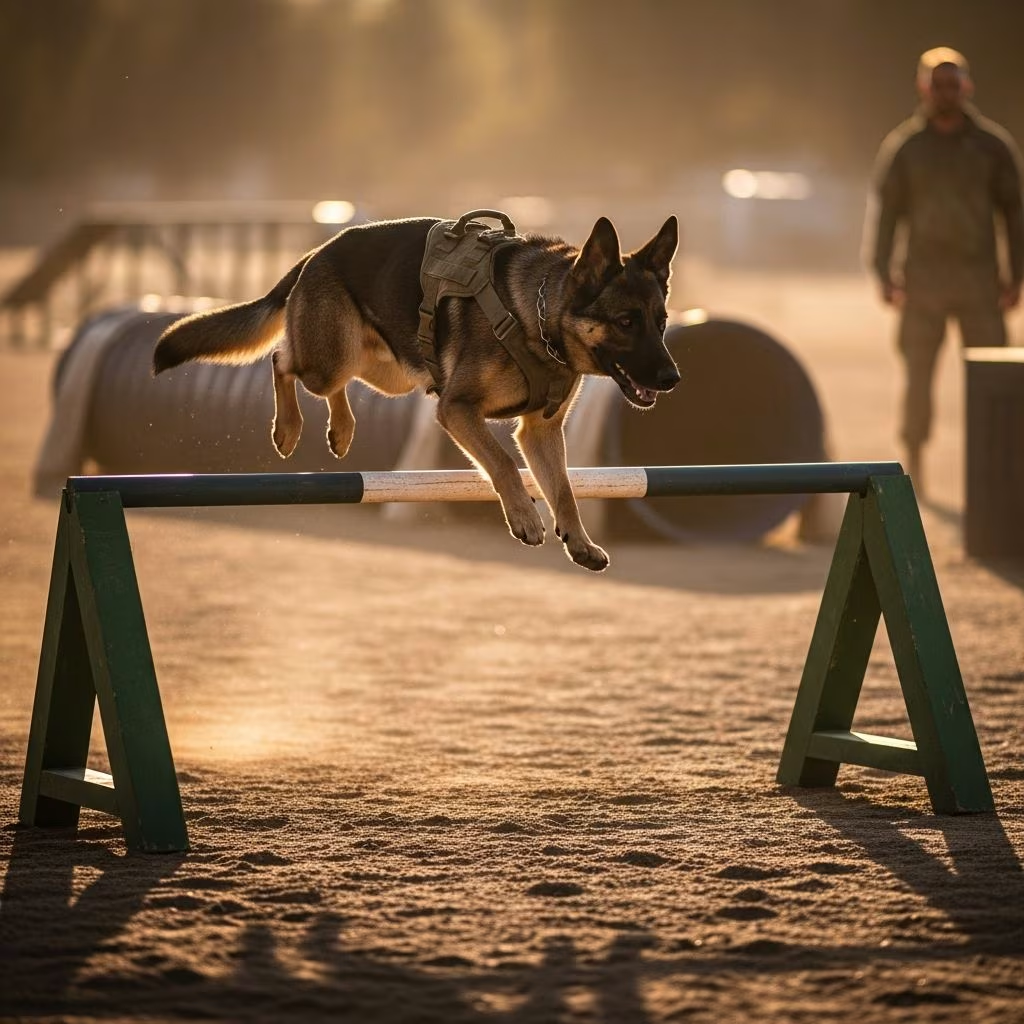
What Are Military Working Dogs: Roles and Training
Military working dogs (MWDs) represent one of the most dedicated and skilled members of the armed forces. These specially trained canines have served alongside military personnel for centuries, providing invaluable support in combat zones, base security, and humanitarian missions. Unlike ordinary pets, military working dogs undergo rigorous training programs and are treated as essential team members within military operations. Today, approximately 2,500 military working dogs serve in the U.S. armed forces, with about 700 stationed overseas, demonstrating the critical importance of these four-legged soldiers to national defense and security operations.
A Brief History of Military Working Dogs
The history of military working dogs extends back thousands of years. The earliest recorded use of canines in combat dates to around 600 BC, when the Egyptians, Greeks, and Romans deployed dogs in battlefield situations. However, the United States has utilized military dogs more extensively and effectively than any other military in history.
Although dogs have worked alongside soldiers since the American Civil War, their official recognition came much later. The formal chapter of American military dog service began during World War I, when an American Pit Bull Terrier named Stubby became the first dog to serve in the military on record. Stubby was smuggled to Europe by a soldier and participated in 17 battles, alerting U.S. soldiers to gas attacks and even identifying a German spy disguised as an American soldier. His exceptional service earned him the rank of Sergeant with the 102nd Infantry Regiment, making him the only dog ever given the rank of sergeant.
The official establishment of the U.S. military dog program occurred on March 13, 1942, when the U.S. Army launched its War Dog Program during World War II. This groundbreaking initiative was made possible through Dogs for Defense, a civilian organization that recruited and trained family pets for military service. Following the attack on Pearl Harbor, Dogs for Defense recruited dogs from American families to serve in the U.S. Army, Navy, and Coast Guard. Over 10,000 dogs were trained during World War II, with many donated by patriotic citizens.
Breed Selection and Characteristics
During World War II, military working dogs came from as many as 30 different breeds. However, the selection was eventually narrowed down to specific breeds known for their intelligence, loyalty, and physical capabilities. The original breeds included German Shepherds, Belgian Sheep Dogs, Doberman Pinschers, Farm Collies with short coats, and Giant Schnauzers. The Doberman Pinscher became particularly iconic, eventually becoming the official dog of the U.S. Marine Corps during their operations in the Pacific theatre from 1943 to 1945.
Modern military working dogs are typically selected from German Shepherds, Dutch Shepherds, and Belgian Malinois breeds because of their aggressiveness, intellect, loyalty, and athletic ability. These breeds possess the physical and mental attributes necessary for demanding military roles. Exceptions to standard breed selection include Retrievers, which are utilized for odor detection due to their superior olfactory capabilities, and Alaskan Malamutes and Huskies, which are trained for arctic duty and deployment as sled dogs.
Primary Roles and Responsibilities
Military working dogs perform a diverse array of specialized functions that have evolved significantly since their earliest deployment. Early war dogs during World War II were trained for sentry duty, scouting, message delivery, and mine detection. These skills quickly proved their value in protecting U.S. forces in harsh combat conditions.
In modern times, military working dogs have expanded their roles dramatically. The most common duties performed by MWDs include:
- Explosive Detection: Dogs use their highly sensitive olfactory systems to detect explosives, protecting military personnel and civilians from threats.
- Search and Rescue: MWDs locate missing personnel, injured soldiers, and civilians in disaster zones and combat areas.
- Patrol Operations: Dogs accompany military units on patrol missions, detecting threats and providing early warning systems.
- Drug Detection: Military dogs identify illegal narcotics in various environments.
- Personnel Tracking: Dogs pursue and apprehend suspects or locate specific individuals.
- Attack and Apprehension: Trained to engage threats when necessary and capture suspects.
- Psychological Support: Post-traumatic stress support for military veterans experiencing mental health challenges.
These specialized roles represent a dramatic evolution from their historical functions. During World War I, dogs served as “mercy dogs,” locating wounded soldiers on battlefields and alerting handlers by retrieving pieces of clothing or displaying specific signals. This compassionate role demonstrated the versatility and intelligence of military working dogs beyond combat applications.
Military Working Dog Training Programs
The professionalism of modern military working dogs stems from comprehensive and rigorous training programs. Since 1958, the 341st Training Squadron at Lackland Air Force Base in San Antonio, Texas has been responsible for training military working dogs for the U.S. armed forces. This specialized facility represents the centerpiece of American military dog training and continues to produce highly skilled canines.
The training process is demanding and requires several months of intensive preparation. Dogs must learn to respond to commands in high-stress environments, recognize threats, and perform their assigned tasks with precision. The 341st Training Squadron oversees all aspects of military working dog programs, including breeding programs designed to develop dogs with ideal temperamental and physical characteristics for military service.
The success of military working dogs in Vietnam led to the establishment of the Air Force Security Police Dog Training School in 1967 at Lackland Air Force Base. Throughout the following four decades, the program evolved into the current configuration involving the Air Force Security Forces Center, Army Veterinary Corps, and the 341st Training Squadron working collaboratively to ensure all aspects of military working dog care, training, and deployment are handled professionally.
Vietnam and Modern Deployment History
Military working dogs have participated in every major conflict since World War II, including Korea, Vietnam, Iraq, and Afghanistan. In Vietnam, the program proved particularly successful. The Air Force initially deployed 40 handler-and-dog teams at Lackland Air Force Base in 1965 for a four-month test period in Vietnam. These teams were positioned on perimeter areas in front of machine gun towers and bunkers, where they successfully detected intruders and triggered rapid reinforcement deployments.
The test program’s success led to immediate expansion. The Air Force began shipping dog teams to all bases in Vietnam and Thailand, recognizing the tactical advantage these animals provided. The success of these teams, combined with their proven effectiveness in U.S. law enforcement agencies, demonstrated the broad applicability of military working dog programs beyond combat situations.
Modern Military Working Dog Operations
Today, military working dogs remain a vital part of the armed forces in the United States and around the world. Unlike earlier eras when dogs were often treated as expendable resources, modern MWDs are recognized as valuable and respected military assets—truly soldiers on four legs. Their contributions extend across multiple military branches, including the Army, Navy, Air Force, Marine Corps, and Coast Guard.
The approximately 2,500 military working dogs currently in service represent investments in training, care, and specialized equipment that rival or exceed investments in many military personnel roles. These dogs receive proper veterinary care, appropriate nutrition, and comfortable living conditions when not actively deployed. Many military working dogs develop deep bonds with their handlers, and several are eventually retired to live with their handlers or in suitable civilian homes.
One of the most decorated war dogs in history was Chips, a mixed-breed dog who served during World War II. His legacy, along with thousands of other MWDs throughout history, demonstrates the profound impact these animals have had on military operations and the lives of service members.
Evolution of Roles and Expansion of Duties
The roles of military working dogs have continuously evolved to meet changing military needs and tactical requirements. In 1977, canines were officially referred to in Field Manual 19-35 as “military police working dogs,” reflecting their expanded responsibilities in law enforcement and security operations. The naming convention reflected growing recognition of their specialized functions within military structures.
Recent decades have seen military working dogs increasingly involved in mental health support roles for veterans. These dogs are trained to recognize symptoms of post-traumatic stress disorder and provide comfort to affected service members. This humanitarian application of military dog training demonstrates the versatility and emotional intelligence of these remarkable animals beyond their traditional combat support functions.
Frequently Asked Questions
Q: When did the U.S. military officially recognize military working dogs?
A: The U.S. military officially recognized military working dogs on March 13, 1942, with the establishment of the War Dog Program during World War II, though dogs had served military forces informally since the Civil War.
Q: What breeds are most commonly used as military working dogs today?
A: German Shepherds, Dutch Shepherds, and Belgian Malinois are the most common breeds used in military working dog programs due to their intelligence, loyalty, aggressiveness, and athletic abilities. Retrievers are used for odor detection, while Alaskan Malamutes and Huskies serve in arctic operations.
Q: How many military working dogs are currently in service?
A: Approximately 2,500 military working dogs serve in the U.S. armed forces, with about 700 stationed overseas in active deployment situations.
Q: Where are military working dogs trained?
A: Since 1958, the 341st Training Squadron at Lackland Air Force Base in San Antonio, Texas has been responsible for training military working dogs for the U.S. armed forces and oversees all military working dog programs, including breeding initiatives.
Q: What are the primary roles of military working dogs?
A: Modern military working dogs perform various specialized tasks including explosive detection, search and rescue operations, patrol duties, drug detection, personnel tracking, attack and apprehension, and psychological support for veterans with post-traumatic stress disorder.
Q: Who was the most famous military working dog?
A: Stubby, an American Pit Bull Terrier, was the most famous early military working dog, earning the rank of Sergeant after serving in 17 battles during World War I. Chips was the most decorated war dog during World War II.
Q: Are military working dogs treated differently than other military personnel?
A: Yes, modern military working dogs are treated as valued military assets with proper veterinary care, appropriate nutrition, comfortable living conditions, and often develop lasting bonds with their handlers.
References
- Military Working Dogs: A Legacy of Service and Sacrifice — Soldiers’ Angels. 2024. https://soldiersangels.org/military-working-dogs/
- K9 Veterans Day: A History of Military Working Dogs — Newberry Animal Hospital. 2024. https://www.newberryanimalhospital.com/post/k9-veterans-day-a-history-of-military-working-dogs
- Dogs in Warfare — Wikipedia. 2024. https://en.wikipedia.org/wiki/Dogs_in_warfare
- History of the Military Working Dog — Fallen Heroes Fund. 2024. https://www.fallenheroesfund.org/history-of-the-military-working-dog
- What Do Military Working Dogs Do? — American Kennel Club. 2024. https://www.akc.org/expert-advice/news/what-are-military-working-dogs/
- Military Working Dogs: Guardians of the Night — U.S. Army. 2021. https://www.army.mil/article/56965/military_working_dogs_guardians_of_the_night
- A History of Military Working Dogs (MWDs) — Hawaii Army Museum Society. 2024. https://www.hiarmymuseumsoc.org/articles/a-history-of-military-working-dogs-mwds
- Chapter 2: Military Working Dog History — U.S. Department of Defense, Medical Education and Training Campus. 2024. https://medcoeckapwstorprd01.blob.core.usgovcloudapi.net/pfw-images/dbimages/Vet%202.pdf



