

What Are Cat Paws Made Of? A Complete Anatomical Guide
Cat paws are one of the most fascinating and functional features of feline anatomy. These remarkable structures represent a perfect combination of strength, sensitivity, and versatility that allows cats to be exceptional hunters, climbers, and acrobats. Understanding what cat paws are made of and how they function can help you better appreciate your feline companion and care for their health. Let’s dive into the intricate anatomy of these remarkable little structures.
The Basic Structure of Cat Paws
Cats have a unique paw structure that differs significantly from human hands and feet, yet shares surprising anatomical similarities beneath the surface. Each front paw contains five toes, while each back paw has four toes. This arrangement provides cats with specialized capabilities for their specific functions.
The five toes on the front paws include four main walking toes and one specialized digit called the dewclaw, located higher up on the leg. The dewclaw functions more like a thumb, playing a crucial role in gripping objects, climbing, and hunting. The back paws, with their four toes, are perfectly designed for power, agility, and maintaining the graceful, silent movement that cats are famous for.
Paw Pads: The Foundation of Cat Feet
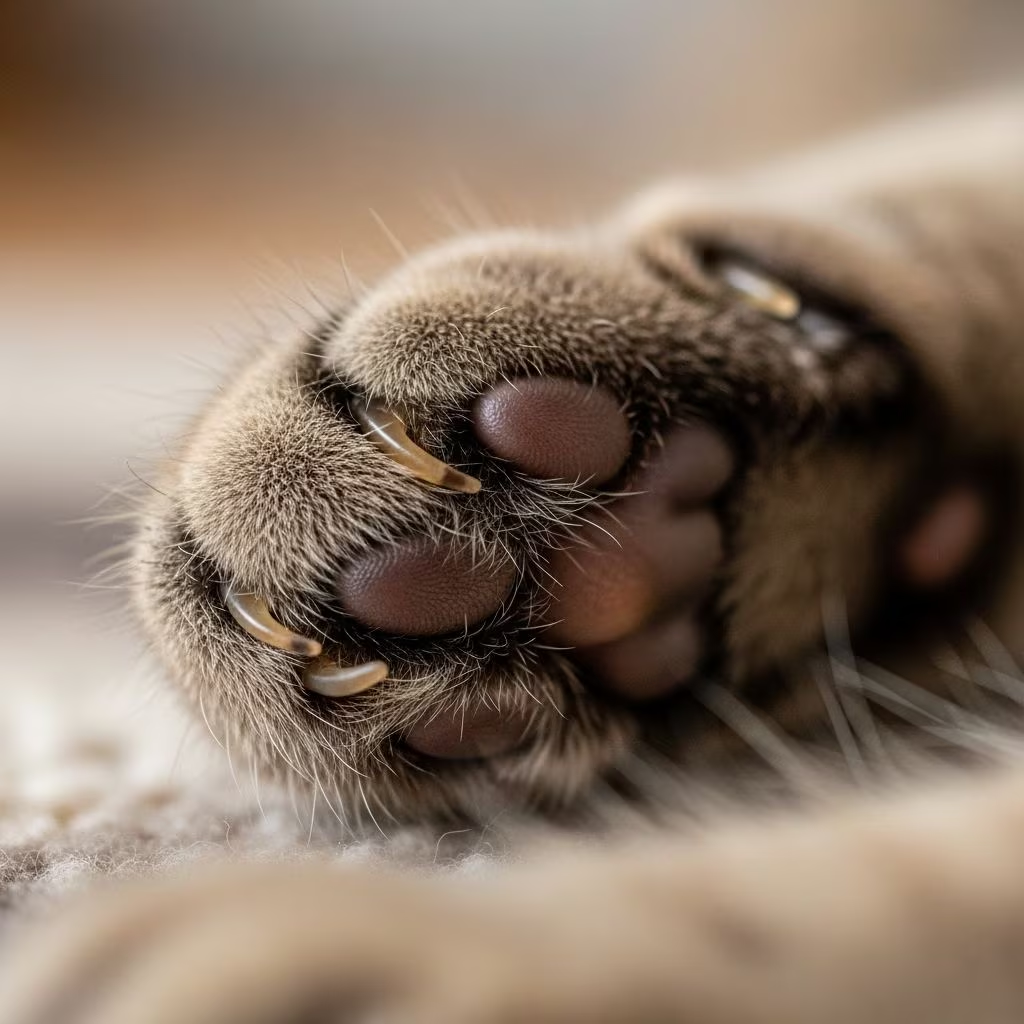
The paw pads, often affectionately called “toe beans,” are among the most important components of cat paws. These soft, cushioned structures are far more complex than they appear on the surface.
Composition of Paw Pads
Paw pads are composed of adipose tissue, a specialized type of fat tissue that provides cushioning and shock absorption. This fatty tissue is bound together by collagen, a strong connective tissue that provides structural support and elasticity. The entire pad is covered with thick, tough skin that offers protection while maintaining sensitivity.
Each paw pad functions like a fluid-filled sac, containing blood vessels, nerves, and scent glands. This unique composition allows paw pads to serve multiple purposes simultaneously: they absorb impact, provide traction, regulate temperature, and communicate through scent marking.
Types of Paw Pads
Cats have different types of paw pads on their front and back feet:
- Metacarpal Pad (Front Paws): The larger central pad on the front feet that bears the most weight during walking and running.
- Metatarsal Pad (Back Paws): The larger central pad on the back feet, similarly designed for weight-bearing and propulsion.
- Digital Pads: The smaller pads associated with each individual toe, providing additional traction and sensitivity.
- Carpal Pad (Front Paws): A small specialized pad located further up on the front leg, used primarily during certain movements and climbing.
The Skeletal Structure of Cat Paws
Beneath the soft exterior of paw pads lies an intricate skeletal system. Cat paws contain bones that are remarkably similar in structure to human hands and feet, though they have evolved for different purposes.
Bone Arrangement
The cat’s paw skeleton includes various small bones (carpals, metacarpals, metatarsals, and phalanges) that work together to provide flexibility and strength. These bones are arranged to allow for an exceptional range of motion. The distal phalanges—the terminal bones at the tips of the toes—have evolved into structures that support the claws, giving them added strength and functionality.
Unique Anatomical Features
One remarkable feature of cat paw anatomy is the presence of free-floating clavicle bones (collarbones) that attach the forelimbs to the shoulders. Unlike humans, where clavicles are rigidly connected, cats’ free-floating clavicles allow them to compress and manipulate their shoulder width. This adaptation enables cats to squeeze through spaces narrower than their body width and contributes to their incredible flexibility during climbing and hunting.
Cat Claws: Structure and Function
Cat claws are one of the most distinctive features of feline paws, serving essential functions in hunting, climbing, and defense. Understanding their structure explains why cats rely on them so heavily.
Claw Composition
Cat claws have two main components: an outer layer of keratin (the same material that forms human fingernails) and a bony core structure beneath. The keratin coating provides a sharp, protective exterior, while the underlying bone core gives the claw strength and rigidity. This combination creates an incredibly effective tool for gripping, climbing, and hunting.
Claw Retraction Mechanism
Unlike dogs, cats can retract their claws into sheaths of skin. This remarkable adaptation keeps claws sharp by protecting them from wear and tear during daily activities. When cats extend their claws, specialized muscles and tendons pull the phalanges, causing the claws to emerge. This retraction ability also allows cats to move silently, as their claws don’t click against surfaces like dog claws do.
Muscles and Tendons: The Movement System
The paws don’t function in isolation; they’re connected to an intricate system of muscles and tendons that give cats their remarkable agility and control. These soft tissue structures allow for the incredible range of motion that characterizes feline movement.
Flexor and Extensor Muscles
The forearm contains flexor muscles that pull the paw inward and extensor muscles that stretch the paw outward. These muscles work in coordinated pairs to produce the precise movements cats need for hunting, climbing, and landing safely from falls. The tendons that connect these muscles to the bones transmit the force necessary for these movements.
Paw Dexterity
The front paws are particularly dexterous, with exceptional control over individual toes. This allows cats to grasp objects with precision, manipulate prey during hunting, and perform complex climbing maneuvers. The back paws, while less dexterous, are optimized for power and propulsion, providing the explosive force needed for jumping and sprinting.
Sensory Functions of Cat Paws
Cat paws are far more than just physical tools; they’re sophisticated sensory organs that provide crucial information about the environment.
Nerve Endings and Sensitivity
Paw pads are packed with nerve endings that make them extremely sensitive to touch, temperature, and texture. This sensitivity allows cats to feel the slightest vibrations, detect temperature changes, and assess surfaces before walking on them. This sensory feedback is essential for a cat’s balance and coordination.
Scent Glands
Each paw pad contains scent glands that release pheromones when a cat walks or kneads. These chemical signals serve multiple purposes: marking territory, communicating with other cats, and creating a sense of familiarity with their environment. When your cat kneads you with their paws, they’re actually marking you as part of their family through these scent glands.
Unique Pad Patterns
Like human fingerprints, each cat’s paw pad pattern is unique. These distinctive patterns can sometimes be used to identify individual cats, highlighting the personalized nature of feline paw anatomy.
Front Paws: The Primary Tools
The front paws are arguably the most important and versatile parts of a cat’s anatomy. With five toes per paw, they serve as the primary means of interaction with the world.
Functions of Front Paws
- Hunting: Front paws are essential for stalking, batting at prey, and holding prey during capture.
- Climbing: The dewclaw and sharp claws make front paws ideal for scaling trees and other vertical surfaces.
- Grooming: Cats use their front paws to wash their faces and bodies with remarkable precision.
- Interaction: Through kneading, batting, and other movements, front paws facilitate interaction with humans and other animals.
- Balance and Landing: Front paws help distribute impact when jumping from heights and contribute significantly to balance.
The Dewclaw Advantage
The dewclaw on each front paw acts like an opposable thumb, giving cats a grasping ability that other animals lack. This unique feature is particularly useful during climbing, where the dewclaw can hook onto branches or other climbing surfaces, providing additional grip and security.
Back Paws: Power and Propulsion
While the front paws are tools of precision, the back paws are engines of power. With four toes per foot, they’re optimized for strength and explosive movement.
Functions of Back Paws
- Jumping: The back paws provide the propulsive force that allows cats to jump several times their body length.
- Running: Back paws generate the forward momentum needed for sprinting and rapid acceleration.
- Balance: Back paws play a crucial role in maintaining equilibrium during movement and when perching on narrow surfaces.
- Kicking: During play or defense, back paws can deliver powerful kicks using their muscular force.
Specialized Design
The back paw structure is more streamlined than the front, with less individual toe control but greater power generation capacity. This specialization reflects their primary purpose: providing the powerful, coordinated propulsion that characterizes feline movement and athleticism.
How Cat Paws Enable Extraordinary Abilities
The remarkable construction of cat paws directly enables several extraordinary feline abilities that seem almost superhuman.
Jumping and Landing
Cat paws, particularly the back paws combined with a flexible spine, allow cats to jump with incredible accuracy and land safely from remarkable heights. The paw pads absorb impact, while the flexible joints distribute force throughout the limb, protecting bones and joints from injury. This is why cats can jump from high places without suffering injuries.
Silent Movement
The soft paw pads and retractable claws allow cats to move almost silently. Unlike dogs, whose claws click against hard surfaces, cats’ retracted claws don’t make noise, combined with the sound-dampening properties of their paw pads.
Precision Hunting
The sensitivity and dexterity of front paws, combined with the retractable claws and powerful grip from the dewclaw, make cats perfectly adapted hunters. They can feel subtle movements, adjust their grip instantly, and deliver strikes with remarkable precision.
Health and Care Considerations for Cat Paws
Understanding what cat paws are made of helps explain why proper care is essential for your feline’s health and comfort.
Common Paw Issues
Because paws are so complex and heavily used, they’re susceptible to various problems including cuts, infections, claw overgrowth, and pad injuries. Regular inspection of your cat’s paws can help identify issues early.
Claw Maintenance
While cats naturally maintain their claws through scratching, some cats may need assistance. Regular nail trimming can prevent overgrowth and related pain. Providing appropriate scratching surfaces supports natural claw maintenance and health.
Pad Protection
Paw pads can suffer from burns, cuts, and irritation. Protecting cats from extreme temperatures and rough surfaces helps maintain pad health. If you notice limping, excessive licking, or discharge from paws, consult a veterinarian.
Frequently Asked Questions (FAQs)
Q: Why are cat paw pads different colors?
A: Paw pad color is determined by melanin pigmentation in the skin. Pink, brown, black, or spotted patterns can all be normal and typically match a cat’s overall coloring or genetics. The color doesn’t affect function.
Q: Do cat paws sweat?
A: Unlike human feet, cat paw pads don’t produce sweat for thermoregulation. The moisture sometimes seen on paws is typically due to stress, temperature regulation through other means, or medical issues. Cats primarily regulate temperature through panting and their skin.
Q: How often should I trim my cat’s claws?
A: Most indoor cats need their claws trimmed every 2-4 weeks, depending on growth rate and individual factors. Outdoor cats typically self-maintain through natural scratching. Consult your veterinarian if you’re unsure about the proper trimming schedule for your cat.
Q: What does it mean when my cat kneads with their paws?
A: Kneading is a sign of contentment and affection. Cats knead by pushing their paws alternately in and out, and this behavior releases pheromones from scent glands in their paw pads, marking you as part of their family and territory.
Q: Can cats really land on their feet?
A: Cats have an exceptional righting reflex that allows them to reorient their body mid-fall, landing on their feet with better position. However, falls from extreme heights can still cause injury, and this ability shouldn’t be taken for granted. Prevention is always better than relying on a cat’s landing skills.
Q: Why do some cats have extra toes?
A: Some cats are polydactyl, meaning they have more than the typical number of toes. This genetic trait is harmless and doesn’t affect the cat’s quality of life. Famous polydactyl cats include those at Hemingway’s house in Key West, Florida.
References
- Cat Paw Pads: Vet-Verified Anatomy & Functions Explained — Catster. 2024. https://www.catster.com/lifestyle/cat-paw-pads-anatomy/
- Cat anatomy — Wikipedia. https://en.wikipedia.org/wiki/Cat_anatomy
- Skeletal structure of human versus cat hand — 3D Anatomy Studios. https://3danatomystudios.com/portfolio/skeletal-structure-of-human-versus-cat-hand/
- The Ultimate Guide to Your Cat’s Paws — The Comforted Kitty. 2024. https://comfortedkitty.com/understanding-cat-paws-guide/
- Cat Paw Anatomy: A Closer Look at Paw Structure — Toe Beans. https://www.toe-beans.com/blogs/pet-blog/cat-paw-anatomy-structure



