

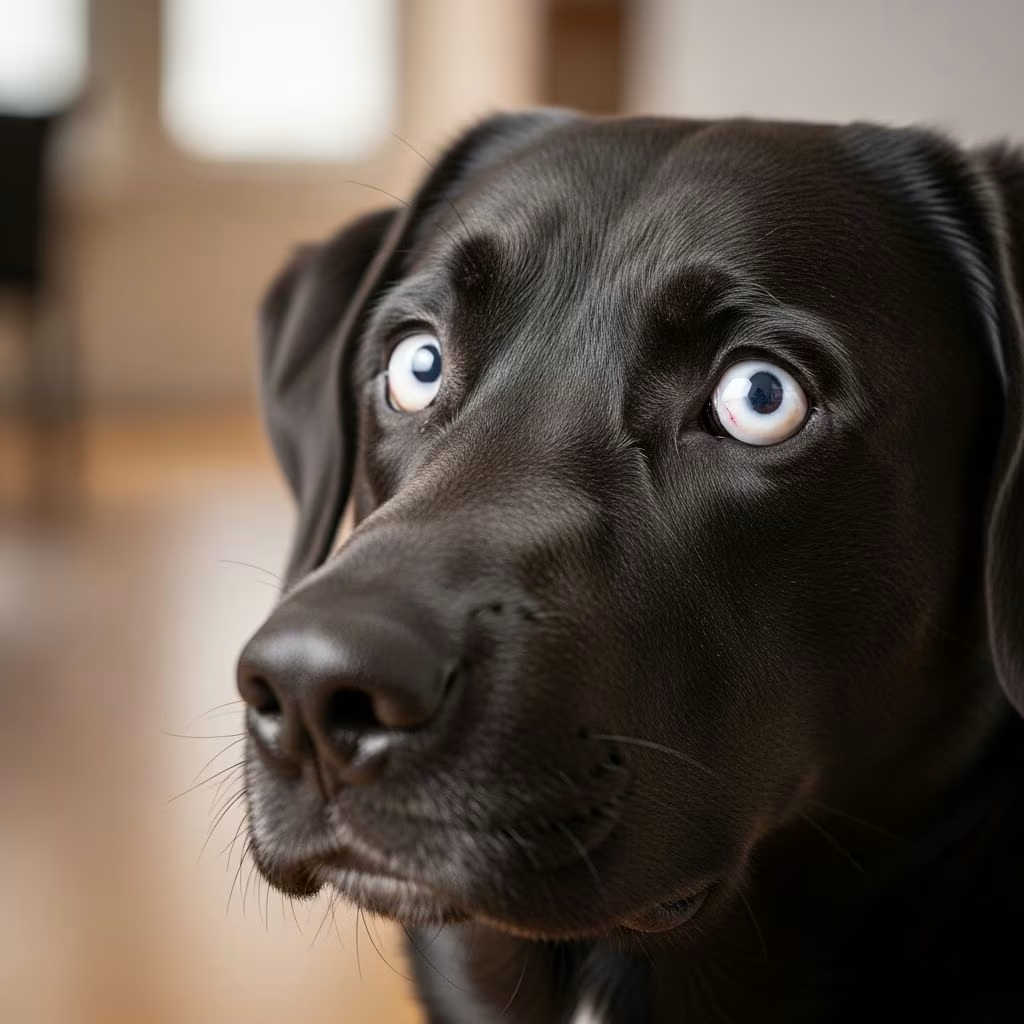
What Is Whale Eye in Dogs?
Whale eye is a subtle but significant canine body language signal where the whites of a dog’s eyes (the sclera) become more visible than usual. Also referred to as half-moon eye or dorsal gaze, this expression occurs when dogs move their eyes while keeping their head relatively still, allowing the white portion of the eye to show around the edges of the iris and pupil.
Dogs communicate through their entire bodies, and the eyes are particularly expressive windows into their emotional state. Soft, relaxed eyes indicate a calm and happy dog, while whale eye typically signals worry, stress, fear, or anxiety. Unlike a direct hard stare—which can be a threat—whale eye is a more subtle indicator that something is making your dog uncomfortable.
Understanding this expression is crucial for responsible dog ownership. Whale eye can be an early warning sign that intervention is needed before a situation escalates into aggression or panic. Many dog bites occur precisely because owners fail to recognize these subtle signals that a dog is reaching its stress threshold.
Common Causes of Whale Eye in Dogs
Whale eye doesn’t have a single cause—similar to a wagging tail, which can mean different things depending on context, whale eye can indicate various situations. Understanding the underlying cause requires examining the complete picture of your dog’s behavior and environment.
Emotional Triggers
- Fear and anxiety: The most common cause of whale eye is fear or anxiety in response to an unfamiliar person, animal, or situation
- Stress and distress: Dogs may show whale eye when overstimulated, overwhelmed, or in a stressful environment
- Territorial or aggressive behavior: Dogs guarding resources or displaying territorial tendencies may exhibit whale eye alongside other warning signals
Physical and Health-Related Causes
- Pain or discomfort: An underlying health issue, such as neck pain or head discomfort, can trigger whale eye
- Medical conditions: Certain neurological issues or eye conditions may cause persistent whale eye
Breed-Specific Considerations
It’s important to note that some dog breeds naturally display what appears to be whale eye due to their anatomy. Brachycephalic (flat-faced) breeds, including pugs and French bulldogs, have large, bulging eyes that may naturally appear similar to the whale eye expression, even when the dog is calm. If your breed is predisposed to this appearance, observe other body language signals to determine if your dog is actually stressed.
Associated Body Language Signs
Whale eye is rarely the only signal a dog displays when uncomfortable. To accurately interpret what your dog is communicating, it’s essential to observe the entire dog and their environment. Dogs who are anxious, fearful, distressed, or aggressive typically exhibit multiple warning signs simultaneously.
Physical Indicators of Stress
| Body Signal | What It Means |
|---|---|
| Rigid, tense body posturing | The dog is braced for potential threat or conflict |
| Dilated pupils | Fear response; increased alertness |
| Clenched or tense jaw | Tension and readiness to bite if necessary |
| Growling or showing teeth | Warning signals escalating toward aggression |
| Heavy panting or rapid breathing | Stress response; elevated heart rate |
| Lip licking | Anxiety or appeasement attempt |
| Raised hair (hackles) | Fear or aggression response; heightened arousal |
| Head low or angled to the side | Submission, uncertainty, or attempt to appear less threatening |
| Slow movement or reluctance to move | Fear or pain; uncertainty about what will happen next |
| Tail between legs or low, tense wagging | Fear, anxiety, or loss of confidence |
| Ears pinned back | Fear, anxiety, or submission |
The Importance of Context
It’s worth noting that whale eye can occasionally appear during play without indicating distress. Some dogs display whale eye in playful contexts—such as when rolling on their back soliciting play, or during friendly wrestling sessions—while otherwise appearing relaxed. In these situations, the dog’s overall body language is loose, and they show no other stress signals. However, when whale eye appears outside of play contexts, it’s almost always a sign that something is wrong.
Why Recognizing Whale Eye Matters
Whale eye is an early warning system that a dog is uncomfortable and potentially unsafe to approach. Many incidents involving dog bites occur because owners or unfamiliar people fail to recognize these subtle signals. Professional animal behaviorists emphasize that dogs rarely bite without warning—they always communicate their discomfort first.
By learning to spot whale eye and its accompanying signals, you can:
- Prevent escalation of fear or aggression
- Protect yourself, your family, and other animals from injury
- Identify underlying health issues that may require veterinary attention
- Build a stronger, more trusting relationship with your dog
- Create a safer environment for everyone in your household
How to Respond When Your Dog Shows Whale Eye
If you notice whale eye in your dog, your immediate response is critical. The goal is to de-escalate the situation and remove the source of stress without creating additional anxiety.
Immediate Actions
- Stay calm: Dogs are highly attuned to human emotions. If you become anxious or alarmed, your dog will sense this and become more stressed
- Identify the trigger: Look around for what might be causing discomfort—another animal, a person, a loud noise, or a specific situation
- Remove the trigger safely: If possible, move the stressful stimulus away from your dog or move your dog away from the stimulus
- Never approach a fearful dog: Avoid forcing interaction or attempting to comfort an anxious dog in an aggressive manner. Give them space to decompress
Behavioral Strategies
- Avoid direct eye contact: Maintain a soft gaze rather than a hard stare, which can be perceived as threatening
- Move slowly: Sudden movements can startle a stressed dog and escalate the situation
- Show you’re not a threat: Keep your body relaxed, turn slightly sideways, and use a calm, quiet voice
- Allow distance: Respect your dog’s need for personal space; don’t force physical contact
Preventing Fear and Anxiety in Dogs
While recognizing whale eye is important for immediate safety, prevention through early socialization and training is the best long-term strategy. Dogs that grow up with positive experiences, proper training, and strong bonds with their owners are significantly less likely to develop chronic fear and anxiety.
Building Trust and Confidence
- Socialize early: Expose puppies to a variety of people, animals, environments, and experiences in a positive, controlled manner
- Positive reinforcement training: Use rewards-based training methods to build confidence and strengthen your bond
- Consistent leadership: Provide clear boundaries and expectations so your dog understands what to expect
- Safe spaces: Create areas where your dog can retreat when overwhelmed or stressed
- Regular exercise: Physical activity reduces anxiety and promotes overall well-being
- Predictable routines: Dogs thrive on consistency; maintain regular schedules for feeding, walks, and play
Whale Eye in Specific Situations
Understanding context helps you determine whether whale eye represents genuine distress or normal canine communication:
Resource Guarding
Dogs displaying whale eye while hunched over a toy or food dish are communicating fear of losing their valued possession. They may appear to be actively guarding but are actually anxious about the item being taken away. Never approach dogs in this state, as they may bite to protect their resource.
Interactions with Babies and Small Children
If your dog displays whale eye when a baby or small child approaches or touches them, this is a clear signal of discomfort. Even if the dog is tolerating the interaction, they are experiencing stress and may bite if the situation continues. Immediately separate the child from the dog to prevent a potential incident.
Multi-Dog Interactions
A dog showing whale eye when another dog approaches is communicating fear or uncertainty about the interaction. This is especially common in dogs with limited socialization or negative past experiences with other canines. Separate the dogs and avoid forcing interaction.
Frequently Asked Questions
Q: Is whale eye always a sign of aggression?
A: No. While whale eye can occasionally accompany aggressive behavior, it more commonly indicates fear, anxiety, or stress. Look at the entire dog’s body language to determine whether aggression or fear is the primary emotion.
Q: Can whale eye be caused by a medical condition?
A: Yes. Pain, discomfort, or underlying health issues can trigger whale eye. If your dog suddenly develops persistent whale eye without an obvious environmental cause, consult your veterinarian to rule out medical problems.
Q: My dog shows whale eye during play. Is this normal?
A: Yes, some dogs display whale eye while playing, especially during playful wrestling or when rolling on their backs. As long as the dog’s overall body language is relaxed and loose, and there are no other stress signals, this is typically normal play behavior.
Q: What should I do if someone else’s dog shows whale eye toward me?
A: Move away slowly without making direct eye contact. Do not attempt to pet the dog or reach toward it. Alert the dog’s owner that their dog appears uncomfortable.
Q: Can I train my dog not to show whale eye?
A: You can’t suppress this natural signal, but you can address the underlying fear or anxiety through positive reinforcement training, gradual desensitization, and building confidence. Working with a certified professional dog trainer or animal behaviorist is recommended.
References
- What is Whale Eye? Understanding Your Dog’s Body Language — Native Pet. Accessed January 2026. https://nativepet.com/blogs/health/dog-whale-eye
- Canine Body Language – The Eyes — Canine Coaching. Accessed January 2026. https://www.caninecoaching.com/canine-body-language-the-eyes/
- Whale Eye. Nothing to Do with Whales — Patricia McConnell. Accessed January 2026. https://www.patriciamcconnell.com/theotherendoftheleash/whale-eye-nothing-to-do-with-whales/



