

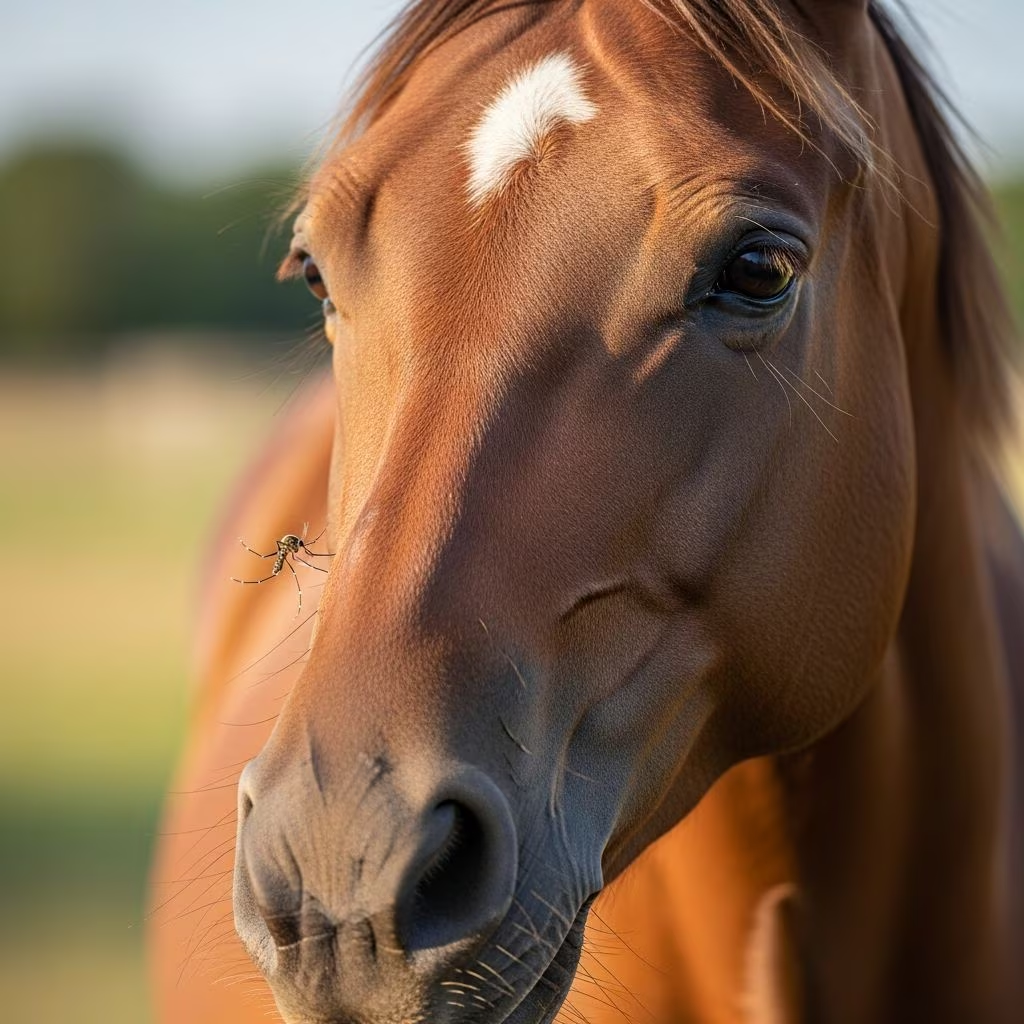
West Nile virus (WNV) poses a significant neurological threat to horses, transmitted primarily through mosquito bites. This flavivirus targets the central nervous system, leading to encephalitis or encephalomyelitis in affected equines. Understanding its transmission, clinical manifestations, management strategies, and preventive measures is crucial for horse owners, especially in endemic regions.
The Nature and Transmission of West Nile Virus
WNV cycles between birds as primary hosts and mosquitoes as vectors. Horses and humans serve as dead-end hosts, meaning they do not produce enough virus to sustain transmission to new mosquitoes. Infection occurs when an infected mosquito feeds on the horse, with peak risk during late summer and early fall when mosquito populations surge.
Factors amplifying outbreaks include stagnant water sources breeding mosquitoes, warm temperatures, and migration of infected birds. Horses in open pastures or near wetlands face higher exposure. Unlike some equine diseases, WNV does not spread directly between horses or from horse to human, emphasizing mosquito control as the cornerstone of prevention.
Recognizing Early Warning Signs
Clinical signs emerge 3-12 days post-infection, starting subtly before progressing to severe neurological deficits. Not all infected horses show symptoms; approximately 10-20% develop clinical disease, with severity varying by age, health status, and viral strain.
- Fever: Initial rectal temperature spikes to 101.5-103°F (38.6-39.5°C), often the first detectable sign.
- Lethargy and Appetite Loss: Horses appear depressed, reluctant to eat, or move.
- Mild Stiffness: Subtle lameness or discomfort in limbs.
Progression to Neurological Involvement
By days 2-5, neuroinvasive signs dominate, signaling an emergency. Owners should monitor daily for these red flags:
| Stage | Days Post-Onset | Key Signs | Home Monitoring Tips |
|---|---|---|---|
| Early Systemic | 0-2 | Fever, lethargy, inappetence | Take rectal temp twice daily; note behavior changes |
| Neurologic Onset | 2-5 | Ataxia, muscle twitching, hyperesthesia | Observe gait on straight lines; check for facial asymmetry |
| Severe | 5+ | Recumbency, seizures, dysphagia | Call vet immediately; prevent falls with padding |
Muscle fasciculations often affect the muzzle, neck, or shoulders. Ataxia manifests as hindlimb weakness, wide-based stance, or toe-dragging. Cranial nerve deficits include lip droop, ear flop, or swallowing difficulties. Hyperesthesia causes exaggerated responses to touch or sound.
Diagnostic Approaches for Confirmation
Veterinary diagnosis combines history, clinical exam, and lab tests. Paired serum samples test for IgM antibodies or rising IgG titers, confirming recent infection. PCR on cerebrospinal fluid detects viral RNA in acute cases. Differential diagnoses include equine herpesvirus myeloencephalopathy, rabies, or toxoplasmosis, necessitating comprehensive testing.
Early detection improves outcomes; owners should report fever persisting >24 hours or any neurologic changes during mosquito season.
Supportive Treatment Protocols
No antiviral cures WNV; therapy focuses on symptom palliation, inflammation control, and complication prevention. Most cases manage on-farm, with hospitalization for severe ataxia or recumbency.
- Anti-inflammatories: NSAIDs like flunixin meglumine (Banamine) reduce fever, pain, and tremors. Corticosteroids used cautiously for spinal cord involvement.
- Fluid Therapy: IV or oral electrolytes combat dehydration from poor intake.
- Sedation: Acepromazine calms hyperesthetic horses.
- Supportive Aids: Slings, helmets, padded stalls prevent injuries.
Feeding adapts to dysphagia: soaked mashes at ground level, frequent small meals to avoid aspiration.
Recovery Phases and Timeline
Recovery spans weeks to months, guided by serial neurologic exams.
- Stabilization (Weeks 1-2): Stall rest, vital monitoring, deep bedding.
- Rehabilitation (Weeks 2-6): Graduated hand-walking on even ground, increasing duration if steady.
- Return to Work (1-6 Months): Full recovery for mild cases; monitor for residuals like gait deficits.
Survival exceeds 70% for non-recumbent horses; recumbency drops odds to ~33% case fatality. Older equines fare worse.
Vaccination: The Primary Defense
Approved WNV vaccines (e.g., recombinant or inactivated) confer strong protection when administered per label. Primary series: two doses 3-6 weeks apart, booster annually before mosquito season. Foals require maternal antibody timing considerations.
Vaccinate all horses in endemic areas, prioritizing unvaccinated adults and young stock. Efficacy nears 90% against clinical disease.
Prevention Strategies Beyond Vaccination
Integrated pest management slashes risk:
- Dump standing water weekly from buckets, tires, ditches.
- Use EPA-approved repellents (permethrin-based) daily, reapply post-rain.
- Stable horses dusk/dawn; install screens/fans.
- Mow tall grass; treat pastures if needed.
Regional surveillance via USDA/APHIS informs outbreak risks.
Prognosis and Long-Term Considerations
Mild cases resolve fully in 2-6 weeks; severe ones may yield chronic ataxia, behavior changes, or reduced performance. Recovered horses gain immunity but warrant monitoring. Euthanasia considers quality of life in non-responders.
Frequently Asked Questions (FAQs)
Can humans transmit WNV to horses?
No, WNV requires mosquito vectors; direct transmission absent.
Is WNV seasonal?
Yes, peaking July-October in temperate zones.
What if my horse shows mild fever only?
Monitor closely; isolate and consult vet, as progression possible.
Are foals at higher risk?
Unvaccinated young horses are vulnerable; vaccinate post-maternal antibodies.
Does plasma therapy work?
Experimental; limited evidence supports routine use.
References
- West Nile Virus in Horses: Symptoms, Treatment, Vaccination, and Prevention — Horse Education Online. 2023. https://www.horseeducationonline.com/post/west-nile-virus-in-horses-symptoms-treatment-vaccination-and-prevention
- West Nile Virus in Horses — Mad Barn. 2024. https://madbarn.com/west-nile-virus-in-horses/
- Understanding West Nile Virus in Horses: Causes, Symptoms, and Prevention — Southeast Houston Equine Hospital. 2023. https://www.sehtx.com/understanding-west-nile-virus-in-horses-causes-symptoms-and-prevention/
- West Nile Virus in Horses — Veterinary Health Center, Kansas State University. 2024. https://www.ksvhc.org/services/equine/internal-medicine/west-nile.html
- Vaccination and Control Methods of West Nile Virus — PMC (PubMed Central, peer-reviewed). 2024-05-15. https://pmc.ncbi.nlm.nih.gov/articles/PMC11125624/
- West Nile Virus — UC Davis School of Veterinary Medicine (official .edu). 2025. https://ceh.vetmed.ucdavis.edu/health-topics/west-nile-virus



