
West Nile Virus In Birds: Guide For Poultry, Wildlife, And Vets
Understanding WNV transmission, susceptibility, and disease management in birds
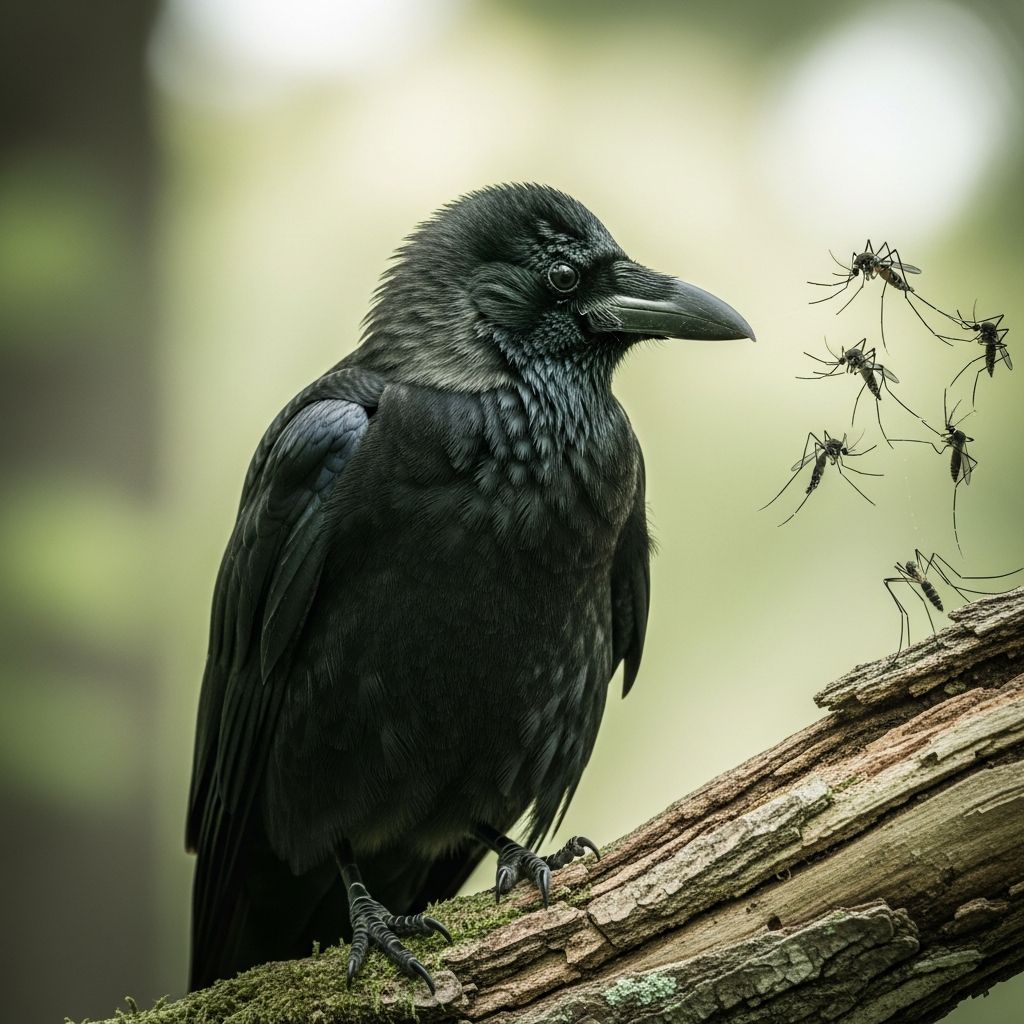
West Nile Virus (WNV) emerged as a significant health concern for both wild and domesticated bird populations following its introduction to North America in the late 1990s. Originally documented in Africa, Asia, and the Middle East, the virus has since established itself across numerous regions, affecting a diverse range of avian species with varying degrees of severity. Understanding the epidemiology, transmission mechanisms, and species-specific responses to WNV infection is essential for poultry producers, wildlife managers, and veterinarians tasked with monitoring and managing avian health.
Epidemiology and Geographic Distribution of West Nile Virus
West Nile Virus first appeared in the United States around 1999, initially detected on the East Coast before gradually spreading westward to states including Kansas and beyond. The geographic expansion of WNV has created a persistent public health and animal health challenge, requiring ongoing surveillance and management efforts. The virus circulates through a complex cycle involving avian hosts and mosquito vectors, with seasonal patterns influenced by mosquito populations and bird migration.
The establishment of WNV in North America led researchers to implement surveillance programs utilizing sentinel bird populations. Chickens proved particularly valuable for these monitoring efforts due to their affordability, manageability, and responsiveness to infection without becoming severely ill or serving as amplification sources for the virus.
Transmission Pathways and Mosquito Vectors
The primary transmission route for West Nile Virus involves infected mosquitoes transmitting the pathogen to birds through blood meals. Mosquitoes themselves become infected when they feed on viremic birds, creating a continuous cycle of transmission. The virus is not transmitted directly from bird to bird through contact, nor does evidence support direct transmission from infected birds to humans.
Infected mosquitoes represent the sole documented mechanism of WNV transmission to avian hosts. Understanding mosquito ecology, seasonal activity patterns, and geographic distribution remains critical for implementing effective prevention strategies, particularly for outdoor poultry operations and free-ranging birds.
Species-Specific Susceptibility and Clinical Responses
Highly Susceptible Species
Certain bird species demonstrate marked susceptibility to West Nile Virus, experiencing severe disease and mortality. American crows and blue jays represent the most notably vulnerable species, frequently succumbing to infection following acute clinical disease. These Passeriformes develop high peak viremia levels early in infection, typically peaking at 2-3 days post-infection, and exhibit rapid progression to fatal disease. The severity in these species correlates with specific viral genetic characteristics, particularly genetic substitutions associated with increased virulence.
Raptors and owls also demonstrate significant susceptibility to WNV infection, although their disease progression typically extends longer than observed in crows and jays. These species experience delayed peak viremia, occurring at 7-8 days post-infection, and may develop long-term complications including permanent vision loss, feather abnormalities, and neurological sequelae persisting for years after initial infection.
Moderately Susceptible Species
Waterfowl including ducks and geese occupy an intermediate position in susceptibility hierarchy. These species can become infected and occasionally die from WNV, though their disease severity generally remains lower than observed in crows or raptors. The association between waterfowl and aquatic habitats creates unique challenges for reducing their exposure, as these environments support substantial mosquito populations throughout transmission seasons.
Resistant Species
Domesticated chickens and turkeys demonstrate remarkable resistance to clinical WNV disease. Although laboratory inoculation studies have successfully established infection in these species, naturally infected birds typically remain asymptomatic or exhibit only minimal clinical signs. When infection does occur in chickens, viral detection in blood remains limited, with peak viremia occurring 4-6 days post-infection, and viral clearance typically complete by day 10. This resistance profile makes chickens and turkeys unlikely to serve as significant amplification sources for mosquito infection.
Pathological Manifestations and Disease Progression
Viral Kinetics and Tissue Distribution
West Nile Virus demonstrates broad cellular and tissue tropism across avian hosts. The virus can be detected in blood as early as one day post-infection in highly susceptible species, though detection may be delayed in naturally resistant species or following oral infection. Viral antigen distributes widely throughout infected birds’ tissues, including the central nervous system, heart, kidney, spleen, and liver.
The duration of viremia varies substantially among species, persisting in blood for 6-7 days in geese and passerines, extending to 10 days in turkeys, and potentially remaining detectable up to 14 days in raptors. Mean peak viremia levels correlate directly with disease severity, with higher viremia titers associated with fatal outcomes.
Neurological Manifestations
When clinical disease develops in susceptible avian species, neurological symptoms predominate, reflecting the virus’s neuroinvasiveness and capacity to cause inflammation of neural tissues. Common neurological signs include abnormal head posture, wobbly gait, inability to stand, staggering, tremors, and incoordination. Vision impairment and blindness develop frequently in raptors and owls infected with WNV, sometimes persisting as long-term sequelae affecting quality of life and longevity.
The development and severity of neurological signs depend upon multiple factors including viral strain virulence, host immune competence, age, nutritional status, and concurrent health challenges.
Gross and Microscopic Pathology
Pathological examination findings vary considerably depending on disease duration and host response. Highly susceptible species that die rapidly may demonstrate minimal macroscopic lesions at necropsy, while birds surviving longer develop pronounced pathological changes. Common findings include emaciation, dehydration, multiorgan hemorrhages, petechiae, tissue congestion, organomegaly, and pallor. Raptors may develop cerebral atrophy and softening of brain tissue.
Microscopic examination consistently reveals pathological changes predominantly affecting the central nervous system, heart, kidneys, spleen, and liver. Lymphocyte and macrophage infiltration, cellular degeneration, necrosis, and hemorrhages characterize the histological response to viral infection.
Viral Factors Influencing Pathogenesis
West Nile Virus exists in multiple lineages and strains, with genetic variation directly influencing virulence and pathogenic potential. Specific genetic substitutions, particularly a proline substitution at position 249 in the nonstructural protein NS3, have been associated with increased virulence in American crows and other susceptible species. This substitution has been detected in both North American lineage 1 strains and European lineage 2 strains causing significant disease outbreaks.
Glycosylation patterns in the viral envelope protein also influence virulence, with certain glycosylation patterns associated with increased peripheral viremia and neuroinvasiveness. The combination of host factors and viral genetics ultimately determines disease outcome in individual infected birds.
Management and Prevention Strategies
Mosquito Control and Environmental Management
The most effective approach to preventing WNV infection in poultry involves minimizing mosquito contact through environmental management. Removing standing water sources, maintaining drainage systems, and eliminating mosquito breeding habitats reduce vector populations around poultry facilities. Screening ventilation openings and enclosing outdoor housing during peak mosquito activity periods provides physical barriers to mosquito access.
For pet birds, fine mesh screening offers effective protection against mosquito contact, providing a safer alternative to insecticidal treatments that may pose toxicity risks to many bird species.
Vaccination and Immune Development
Currently, no commercially approved vaccines for West Nile Virus exist for poultry or other avian species. However, research demonstrates that birds naturally infected with WNV develop robust antibody responses, with chickens and turkeys producing detectable antibodies within 5-7 days of infection. This innate immune capacity provides hope for future vaccine development, though practical applications remain unavailable at present.
Flock Health Management
Maintaining overall flock health through appropriate nutrition, stress reduction, and disease prevention measures enhances birds’ capacity to resist or rapidly overcome WNV infection. Sick or nutritionally compromised birds show increased susceptibility to severe disease outcomes compared to healthy cohorts. Vaccination programs addressing other poultry pathogens indirectly support WNV resistance by maintaining general immune competence.
Food Safety Considerations
Properly cooked poultry meat and eggs from infected chickens present no food safety risk for human consumers. The virus does not appear in eggs from infected hens, and thorough cooking eliminates any potential viral contamination in meat. Standard food safety practices including proper storage temperatures and cooking procedures provide additional protection against foodborne pathogens.
Hunters consuming wild game birds should apply standard food safety practices including thorough cleaning of game, appropriate refrigeration, and complete cooking to eliminate potential foodborne pathogens, though WNV transmission risk through properly prepared game remains negligible.
Research Considerations and Future Directions
Understanding species-specific pathogenesis and viral factors influencing disease progression remains an active area of research. Long-term effects in survivor populations, particularly raptors that may experience neurological relapse years after initial infection, suggest lasting impacts on avian health and population dynamics. The role of environmental factors, concurrent infections, and nutritional status in determining disease outcomes requires continued investigation to optimize management and conservation strategies.
Monitoring wild bird populations for WNV through active surveillance and passive reporting of clinical cases provides epidemiological data supporting public health efforts while informing wildlife management decisions.
Frequently Asked Questions
Can I contract West Nile Virus from my infected poultry?
No. Direct transmission from infected birds to humans does not occur. Only infected mosquitoes transmit the virus to people, and not all mosquitoes carry the virus. Even when housed together, infected and uninfected chickens do not transmit the virus to each other.
Will my backyard flock become infected with West Nile Virus?
Backyard flocks face infection risk proportional to their mosquito exposure. Indoor housing eliminates risk entirely, while outdoor or partially outdoor facilities experience exposure during mosquito transmission seasons. Chicken and turkey resistance to severe disease means infection poses minimal risk to flock viability even in endemic areas.
Are game birds used for hunting at risk?
Game birds including pheasants, quail, and wild turkeys could potentially become infected, though limited research exists on their susceptibility. Wild turkeys experimental studies showed mild reactions with rapid immune clearance, making significant hunter exposure to actively infected birds unlikely. Standard game preparation practices provide adequate protection.
What should I do if I find a dead crow or blue jay?
Contact your local wildlife agency or animal control for proper handling and testing. Avoid direct contact with deceased birds due to potential pathogen contamination from various sources. Reporting dead birds contributes to regional surveillance efforts tracking WNV distribution.
References
- Pathology and tissue tropism of natural West Nile virus infection in birds — Peer-reviewed research, PubMed Central. 2013. https://pmc.ncbi.nlm.nih.gov/articles/PMC3686667/
- West Nile Virus and chickens — The Poultry Site, Kansas State University. 2003. https://www.thepoultrysite.com/news/2003/04/west-nile-virus-and-chickens
- West Nile Virus (WNV) and Poultry — University of Maine Cooperative Extension. 2012. https://extension.umaine.edu/livestock/poultry/wnv-and-poultry-2012/
- West Nile and Dead Birds — Centers for Disease Control and Prevention. https://www.cdc.gov/west-nile-virus/causes/west-nile-virus-dead-birds.html
- West Nile Virus in Animals — District 4 Public Health. 2020. https://www.district4health.org/wp-content/uploads/2020/03/D4_West-Nile-in-Animals.pdf
- West Nile Encephalitis and Poultry — Penn State Extension. https://extension.psu.edu/west-nile-encephalitis-and-poultry/
Similar Articles








Read full bio of medha deb


