
Wesselsbron Disease In Animals: Signs, Diagnosis, Prevention
Exploring the mosquito-borne viral threat to livestock in Africa, its devastating effects on young ruminants, and vital control measures.
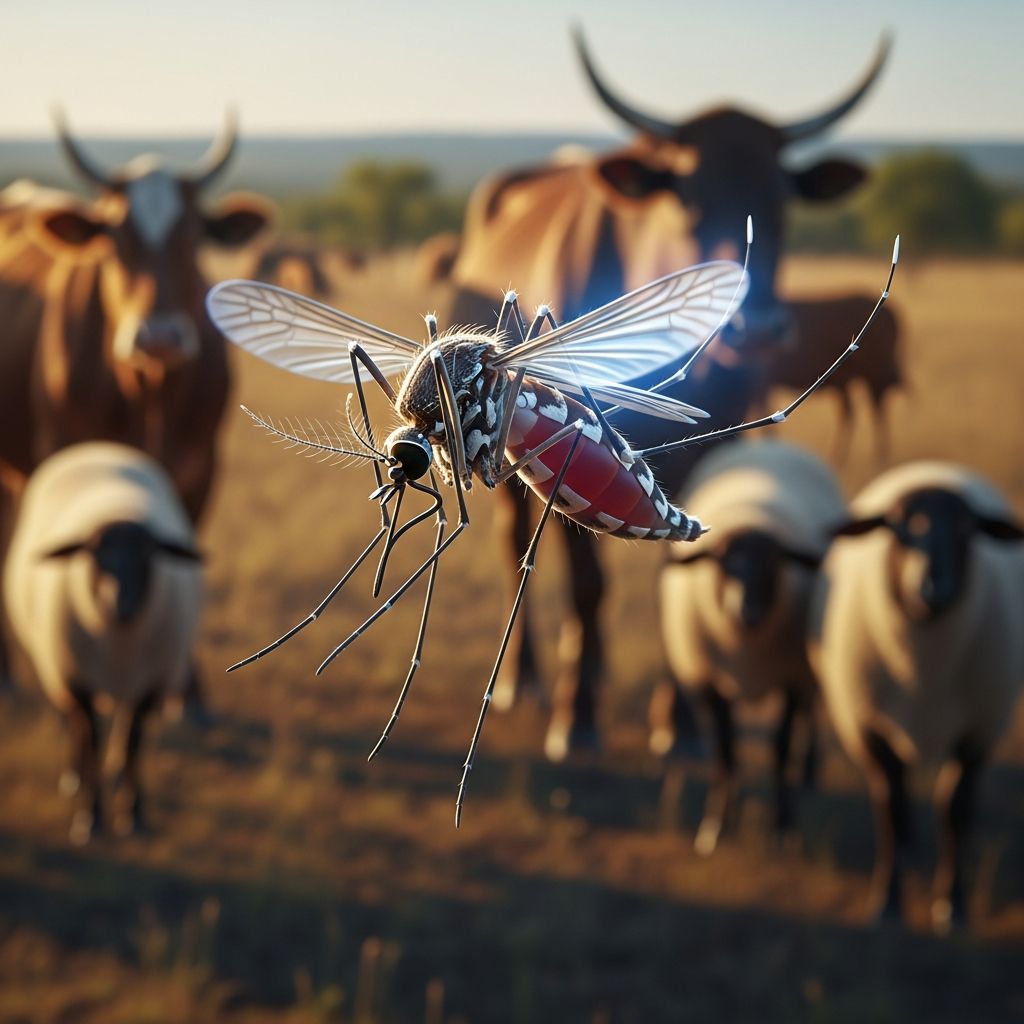
This mosquito-transmitted flavivirus primarily affects ruminants like sheep, goats, and cattle across sub-Saharan Africa, leading to significant losses through neonatal fatalities and reproductive failures during rainy seasons.
Understanding the Viral Agent and Its Spread
Wesselsbron disease stems from a flavivirus known as Wesselsbron virus (WSLV), part of the Flaviviridae family. This enveloped RNA virus thrives in environments with abundant rainfall and flooding, which boost mosquito populations—its primary transmission vectors. Aedes species dominate as carriers, though isolates have been found in Culex, Anopheles, and Mansonia mosquitoes as well.
The virus circulates year-round in warmer, humid coastal regions of southern and eastern Africa, where high antibody prevalence in domestic herbivores indicates their role in sustaining the pathogen. Outbreaks spike post-rainfall, affecting sheep flocks most severely, but subclinical infections in adults maintain the cycle. Zoonotic potential exists, with rare human cases reported, urging caution during handling of infected tissues.
- Key transmission factors: Heavy rains create breeding sites for vectors.
- Host range: Primarily sheep, goats, cattle; occasional horses, dogs, birds.
- Geographic focus: Sub-Saharan Africa, with spillover risks.
Clinical Manifestations Across Age Groups
Young lambs and goat kids face the highest risk, showing symptoms after a 1-3 day incubation. Initial signs include fever, loss of appetite, lethargy, weakness, and rapid breathing, often culminating in death within 72 hours. Adults typically experience mild or unnoticed infections, though pregnant females may abort or deliver malformed offspring.
In cattle, calves mirror lamb responses but with lower lethality. Horses occasionally exhibit neurological issues, and a single dog fatality has been noted. The disease mimics Rift Valley fever (RVF) but proves less severe, with reduced abortion rates and milder liver damage.
| Age/Species | Common Signs | Mortality Risk |
|---|---|---|
| Newborn lambs/kids | Fever, anorexia, weakness, tachypnea | High (up to 72 hours) |
| Adult ruminants | Subclinical fever, jaundice | Low |
| Pregnant ewes | Abortion, fetal defects | Moderate (fetal) |
| Horses/Dogs | Neurologic signs | Variable |
Pathological Changes in Affected Animals
Post-mortem exams reveal striking liver alterations, especially in neonates: enlarged, yellowish-orange organs with icterus and friability. Petechiae and ecchymoses mark abomasal mucosa, with chocolate-brown contents from hemorrhage. Histologically, massive hepatic necrosis dominates, featuring hepatocyte loss, stromal collapse, karyorrhectic debris, fibrin, and edema. Intranuclear/cytoplasmic inclusions confirm flaviviral involvement.
Adults show subtler changes, like mild necrosis. Fetuses exhibit CNS malformations, arthrogryposis, and polyhydramnios due to the virus’s neurotropism. Splenomegaly and lymph node edema may accompany acute cases. Differential pathology distinguishes it from aflatoxicosis (megalocytosis) or copper toxicity (periacinar necrosis).
- Neonatal liver: Panlobular necrosis, inclusions.
- GI tract: Hemorrhages, digested blood.
- Fetal impacts: Brain defects, limb rigidity.
Diagnostic Approaches and Challenges
Suspect Wesselsbron based on epidemiology (rainfall-linked outbreaks), high lamb mortality, and clinical signs. Virus isolation from organs via intracerebral mouse inoculation works best; weaned mice differentiate it from RVF (WSLV non-lethal IP). Serology includes virus neutralization, ELISA, hemagglutination inhibition (HI), complement fixation, and RT-PCR, though HI cross-reacts with other flaviviruses.
Recent advances feature real-time PCR assays for rapid African detection. Gross/clinical overlap with RVF demands confirmatory tests. No direct animal-to-animal spread occurs; vectors drive transmission.
Management and Preventive Strategies
No specific antiviral treatment exists; focus on supportive care like fluids and monitoring. Prevention hinges on vaccination: a live attenuated vaccine provides lifelong immunity but only for non-pregnant animals, as ewes vaccinated during gestation risk abortion and malformations.
Vector control yields limited success due to multiple species, but practical steps include night-time stabling and avoiding flood-prone pastures. Report suspected cases per local guidelines. Early warning systems tied to rainfall forecasts aid outbreak mitigation.
Epidemiological Patterns and Risk Factors
Outbreaks correlate with El Niño-induced floods, amplifying vector density. Seroprevalence exceeds clinical cases, suggesting underreporting. Domestic ruminants amplify the virus; wild birds may serve as reservoirs. Co-occurrence with RVF complicates surveillance.
Zoonotic risks are low but real—handle carcasses carefully. Economic toll includes lamb losses and abortion storms, devastating pastoral economies.
Comparing Wesselsbron to Similar Arboviral Diseases
| Feature | Wesselsbron | Rift Valley Fever | Border Disease |
|---|---|---|---|
| Family | Flaviviridae | Bunyaviridae | Flaviviridae (Pestivirus) |
| Mortality in lambs | Moderate | High (near 100% abortion) | Low |
| Liver lesions | Massive necrosis, milder | Severe, destructive | Variable |
| Fetal effects | CNS/arthrogryposis | High abortion | Hypomyelination |
Recent Research Insights on Pathology and Transmission
Studies highlight clade-specific hepatitis: machine learning analysis of ovine livers showed multifocal random necrotizing lesions, more pronounced in certain strains. Hepatocytes are prime targets. Novel milk-associated transmission bypasses mosquitoes, posing new risks in dairy settings.
FAQs on Wesselsbron Disease
What animals are most at risk?
Newborn sheep and goats suffer highest mortality; adults often subclinical.
How is it transmitted?
Primarily via Aedes mosquitoes post-rainfall; no direct contact spread.
Can it affect humans?
Yes, zoonotic with mild flu-like cases; avoid infected fluids.
Is there a vaccine?
Live attenuated for non-pregnant stock; use cautiously.
How to differentiate from Rift Valley fever?
Mouse inoculation and PCR; Wesselsbron milder.
References
- Wesselsbron Disease in Animals — Merck Veterinary Manual. 2023. https://www.merckvetmanual.com/generalized-conditions/wesselsbron-disease/wesselsbron-disease-in-animals
- D-V29, Wesselsbron disease, liver, sheep — AskJPC. 2023. https://www.askjpc.org/vspo/show_page.php?id=cXQ3SWlGRWJ0Qk4xeHR5QTRFMVMvZz09
- Wesselsbron Disease Factsheet — CFSPH, Iowa State University. 2022. https://www.cfsph.iastate.edu/Factsheets/pdfs/wesselsbron.pdf
- Wesselsbron Virus‐Induced Hepatitis in Ewes and Lambs — PMC/NCBI. 2023-10-15. https://pmc.ncbi.nlm.nih.gov/articles/PMC12894784/
- Mosquito-independent milk-associated transmission of zoonotic Wesselsbron virus — PLOS Pathogens. 2024. https://journals.plos.org/plospathogens/article?id=10.1371/journal.ppat.1012751
Similar Articles








Read full bio of Sneha Tete


