Well-Behaved Dogs: Training, Play & Socialization
Master dog training, play, and socialization to raise a well-behaved companion.
Raising a well-behaved dog requires a comprehensive approach that combines effective training techniques, appropriate play opportunities, and consistent socialization. Whether you’re a first-time dog owner or an experienced handler, understanding the fundamentals of training, play, and socialization is essential for developing a confident, obedient, and socially adjusted companion. This guide covers the key strategies and techniques that help transform puppies and adult dogs into well-mannered members of your family.
Understanding the Foundation of Dog Training
Successful dog training begins with understanding how dogs learn and what motivates them. Dogs respond best to clear communication, consistency, and positive reinforcement. The foundation of any training program should be built on trust between you and your dog, establishing yourself as a calm and confident leader who sets clear expectations.
The first step in any training journey is to recognize that dogs thrive on routine and predictability. Establishing a consistent daily schedule for feeding, exercise, training, and rest helps your dog understand what to expect and builds confidence. Training sessions should be short, typically 5-15 minutes, to maintain your dog’s focus and prevent frustration for both you and your pet.
Essential Training Techniques and Methods
Clicker Training: A Proven Approach
Clicker training is one of the most effective and humane training methods available for dogs. This technique uses a small clicking device to mark the exact moment your dog performs a desired behavior, followed immediately by a reward. The click serves as a bridge between the behavior and the reward, helping your dog clearly understand what action earned the positive reinforcement.
To begin clicker training, first charge the clicker by repeatedly clicking and immediately offering treats, so your dog learns that the click sound predicts something good. Once your dog associates the click with rewards, you can use it to mark desired behaviors. This method works exceptionally well for teaching new commands and strengthening existing behaviors.
Crate Training for Comfort and Security
Crate training is an invaluable tool for house-training, creating a safe space for your dog, and managing behavior when you cannot supervise. When introduced properly, a crate becomes your dog’s den—a place of comfort and security rather than punishment. Dogs naturally prefer enclosed spaces where they can retreat and feel safe.
Start by making the crate appealing with treats, toys, and comfortable bedding. Leave the door open initially and reward your dog for showing interest in entering the crate. Gradually increase the time your dog spends in the crate with the door closed, always ensuring positive associations. Never use the crate as punishment, as this will create negative associations and undermine training efforts.
Teaching Your Dog to Go to Place
Teaching a dog to go to a designated place is incredibly useful for managing behavior during meal times, when visitors arrive, or when you need your dog to settle down. This command teaches impulse control and provides your dog with a clear directive during potentially chaotic situations.
Begin by placing a mat or bed in a designated area. Lure your dog to the spot using treats and reward generously when all four paws are on the mat. Gradually add the verbal cue ”go to your place” or ”place” as your dog consistently performs the behavior. With practice, your dog will quickly move to their designated spot on command.
Name Recognition and Response
Teaching your dog to recognize and respond to their name is one of the first and most important training goals. A dog who responds reliably to their name is safer and easier to manage in any situation. This foundation skill enables you to redirect your dog’s attention and establish better communication overall.
Practice saying your dog’s name in a happy, upbeat tone and reward with treats and praise when your dog looks at you. Practice in low-distraction environments first, then gradually introduce mild distractions. Use your dog’s name before giving commands, and always reward prompt responses to reinforce this critical skill.
Managing Excitement and Preventing Problem Behaviors
Teaching Calm Responses to Triggers
One of the most valuable skills you can teach your dog is to remain calm when encountering exciting or potentially scary stimuli. This includes other dogs, people, vehicles, or unfamiliar objects. Teaching a ”look at that” command helps your dog maintain focus on you rather than reacting impulsively to environmental triggers.
Practice by identifying mild triggers in your dog’s environment. When your dog notices the trigger but hasn’t reacted yet, mark the behavior with ”yes” or a clicker and reward. Gradually work with more challenging triggers while maintaining your dog’s ability to keep their focus on you rather than on the stimulus itself.
Preventing Jumping on People
Jumping is a natural dog behavior used to greet and interact, but it’s often unwanted in human homes. Dogs jump because they’ve learned this behavior gets attention. To eliminate jumping, ignore this behavior completely and only reward calm, four-on-the-floor greetings with attention and treats.
Teach an alternative behavior like sitting to greet people. Reward sits generously and only give attention when your dog is in a calm state. Consistency across all family members and visitors is crucial for successfully eliminating jumping behavior.
Door Manners and Impulse Control
Many dogs bolt through open doors, creating safety hazards. Teaching your dog to wait at doorways demonstrates impulse control and keeps them safe. Begin by asking your dog to sit before opening any door. If your dog attempts to move through the open door, close it immediately and try again.
Only open the door fully once your dog maintains their sit position. Gradually increase the duration your dog waits as you open the door wider. This training extends to car doors, gates, and any threshold where safe passage is important.
The Critical Role of Play in Dog Development
Physical Exercise and Mental Stimulation
Play is not merely recreational—it’s essential for your dog’s physical health, mental development, and behavioral well-being. Regular play sessions provide the exercise dogs need to maintain healthy weight and strong cardiovascular health. Beyond physical benefits, play offers crucial mental stimulation that prevents boredom and associated behavioral problems.
The amount of play and exercise your dog needs depends on their age, breed, size, and energy level. High-energy breeds may require 60-90 minutes of vigorous activity daily, while lower-energy dogs might be satisfied with 20-30 minutes. Varying the types of play keeps your dog engaged and develops different skill sets.
Types of Play Activities
Interactive play with your dog strengthens your bond while providing exercise and mental engagement. Fetch games, tug-of-war, and chase games all provide excellent physical outlets. Puzzle toys and food-dispensing toys engage your dog’s problem-solving abilities and keep them mentally sharp.
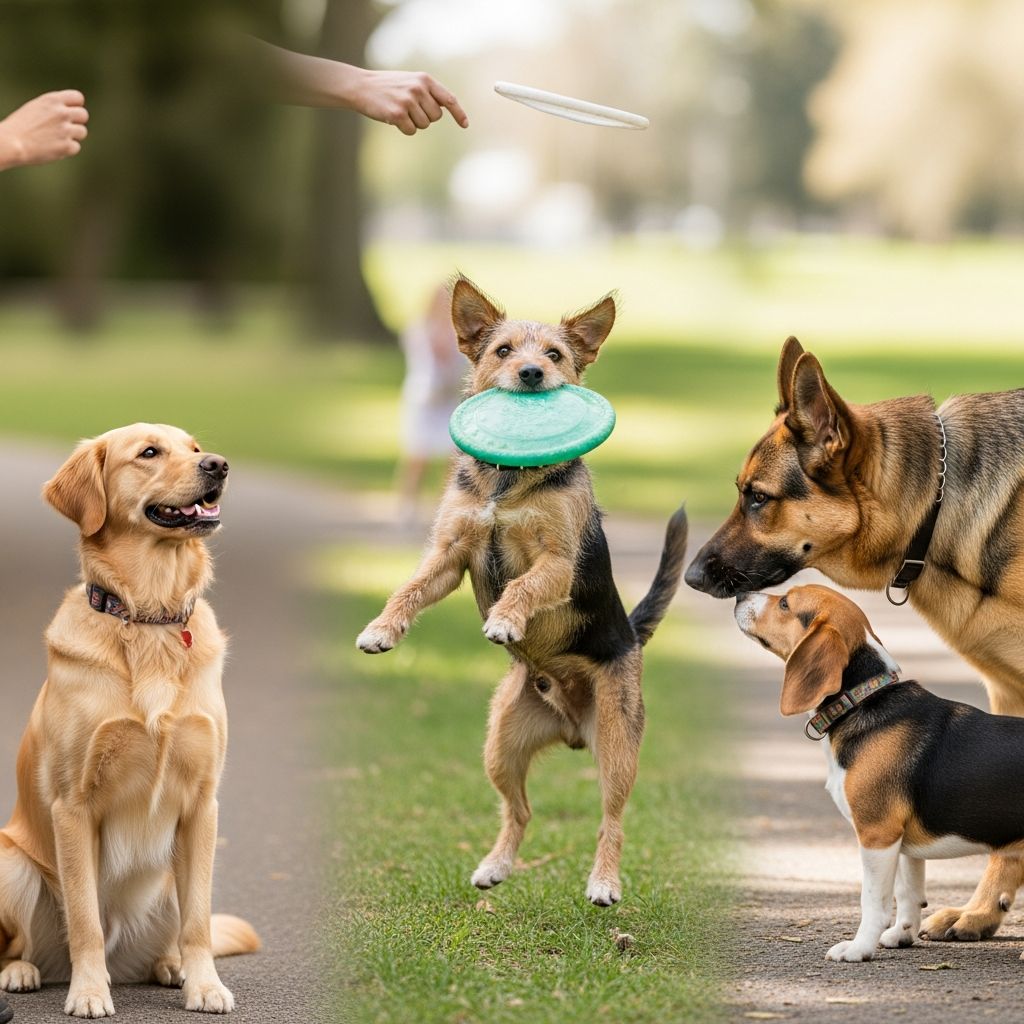
Organized play groups with other dogs offer additional benefits. In controlled environments with proper supervision, dogs learn social skills, appropriate interaction styles, and how to interpret canine communication signals. Playing with other dogs is often a more accurate measure of social compatibility than leash interactions alone.
Play as Training Opportunity
Playtime can be seamlessly integrated with training. Practice commands during play sessions, use play as a reward for completing training exercises, and teach rules like ”wait” before releasing to fetch. This approach makes training feel like play rather than work, increasing your dog’s enthusiasm and engagement.
Socialization: Building Confidence and Preventing Fear
The Critical Socialization Window
Socialization is the process of exposing your dog to different people, animals, environments, and experiences in a positive manner. The most critical socialization period occurs between 3-14 weeks of age, though socialization remains important throughout life. During this window, puppies are naturally curious and less likely to be frightened by new experiences.
Dogs who miss early socialization opportunities are at higher risk for developing fear, anxiety, and aggression. However, older dogs can still be socialized with patience and careful management, though it requires more time and deliberate effort than early puppy socialization.
Early Exposure to People
Expose your puppy to people of various ages, ethnicities, abilities, and appearances. Include people wearing hats, sunglasses, uniforms, or using mobility aids. The goal is for your dog to feel comfortable and confident around all types of people. Invite friends and family to participate in positive interactions where visitors offer treats and gentle play.
Ensure all interactions are positive and never force your puppy to interact if showing fear. Allow puppies to approach people at their own pace, and always advocate for your puppy if someone becomes too rough or overwhelming. Building positive associations early creates confident, friendly adult dogs.
Animal Socialization
If you want your dog to be comfortable around other dogs, cats, or other animals, early positive exposure is critical. Puppy kindergarten classes provide controlled environments where puppies can interact with other puppies under supervision. These classes teach appropriate play, bite inhibition, and social communication skills.
Introduce your puppy to adult dogs who are known to be friendly and patient. Adult dogs can teach puppies appropriate boundaries and social etiquette through natural interactions. Supervise all interactions and prevent negative experiences that could create lasting fear or aggression.
Environmental Socialization
Expose your puppy to various environments including parks, beaches, hiking trails, urban settings, and different weather conditions. Visit pet-friendly stores, outdoor markets, and other public places where your puppy can experience different sights, sounds, and smells. Each new environment builds confidence and prevents phobias from developing.
Include exposure to common sounds like traffic, sirens, vacuum cleaners, thunderstorms, and fireworks. If your puppy shows fear, keep the sound volume low initially and pair it with positive experiences like treats and play. Gradually increase exposure as your puppy becomes more comfortable.
Creating a Training Schedule and Routine
Daily Training Structure
Consistency is paramount in dog training. Establish a daily routine that includes designated training time, play sessions, exercise, socialization opportunities, and rest periods. Dogs thrive with predictable schedules that help them understand expectations and reduce anxiety.
Conduct training sessions at times when your dog is alert and motivated. Early morning or early evening often works well. Keep sessions brief and end on a positive note. Multiple short sessions throughout the day are more effective than one long session.
Progressive Training Goals
Establish clear, measurable training goals and break them into smaller, achievable steps. Start with simple behaviors and gradually increase difficulty. Master foundation skills like name recognition, sit, and leave it before progressing to more complex commands. This progressive approach builds your dog’s confidence and prevents frustration.
Common Training Challenges and Solutions
Distraction and Focus Issues
Dogs are naturally curious and may struggle to focus during training in distracting environments. Start training in quiet, controlled spaces and gradually introduce mild distractions as your dog becomes proficient. Use higher-value rewards in more distracting environments to maintain motivation and focus.
Regression and Inconsistency
Dogs may occasionally regress in their training, especially if consistency breaks down or if major life changes occur. All family members must use the same commands, rules, and reward systems. Inconsistency teaches dogs that rules are negotiable, which undermines training efforts.
Frequently Asked Questions
Q: At what age should I start training my dog?
A: You can start basic training and socialization as soon as you bring your puppy home, typically around 8 weeks of age. The earlier you begin, the more receptive your puppy will be to learning.
Q: How long does it take to housetrain a dog?
A: Housetraining typically takes 4-6 months, though some dogs learn faster and others need more time. Consistency with crate training, regular bathroom breaks, and immediate rewards for appropriate elimination are key factors.
Q: Can older dogs be trained?
A: Absolutely. Dogs of all ages can learn new behaviors. The saying ”you can’t teach an old dog new tricks” is a myth. While older dogs may take slightly longer, they often learn very effectively with patience and consistency.
Q: What should I do if my dog has fear or anxiety?
A: Work with a certified professional dog trainer or veterinary behaviorist. Never force your dog to face fears, as this typically worsens anxiety. Use counterconditioning and desensitization techniques to help your dog build confidence gradually.
Q: How much daily exercise does my dog need?
A: Exercise needs vary by breed, age, and individual energy level. Most adult dogs benefit from at least 30-60 minutes of physical activity daily, split into multiple sessions. High-energy breeds may need 90+ minutes daily.
Q: Is punishment-based training effective?
A: Research shows positive reinforcement training is more effective and humane than punishment-based methods. Punishment can damage your relationship with your dog and may increase anxiety and aggression. Focus on rewarding desired behaviors instead.
References
- Training for Shelter Dogs — Best Friends Animal Society. https://bestfriends.org/network/resources-tools/training-shelter-dogs
- Proven Lifesaving Strategies for Big Dogs Training Playbook — Best Friends Animal Society. https://bestfriends.org/network/resources-tools/proven-lifesaving-strategies-big-dogs-training-playbook
- Dog Behavior and Handling Webinar — Best Friends Animal Society. https://bestfriends.org/network/webinars-videos/dog-behavior-and-handling-webinar
- Basic Training & Socialization — Best Friends Animal Society. https://bestfriends.org/pet-care-resources/issues/basic-training-socialization
- The Effects of Positive Reinforcement Based Training and Handling in Relation to Dog Behaviour and Welfare — Journal of Veterinary Behavior. Applied Animal Behavior Science Research. https://www.sciencedirect.com/science/article/pii/S0168159117300029
Similar Articles





Read full bio of medha deb