Welcoming a New Cat to Your Feline Family
Master the art of gradual introductions to ensure your resident cats and new arrival form a lasting bond without stress or conflict.
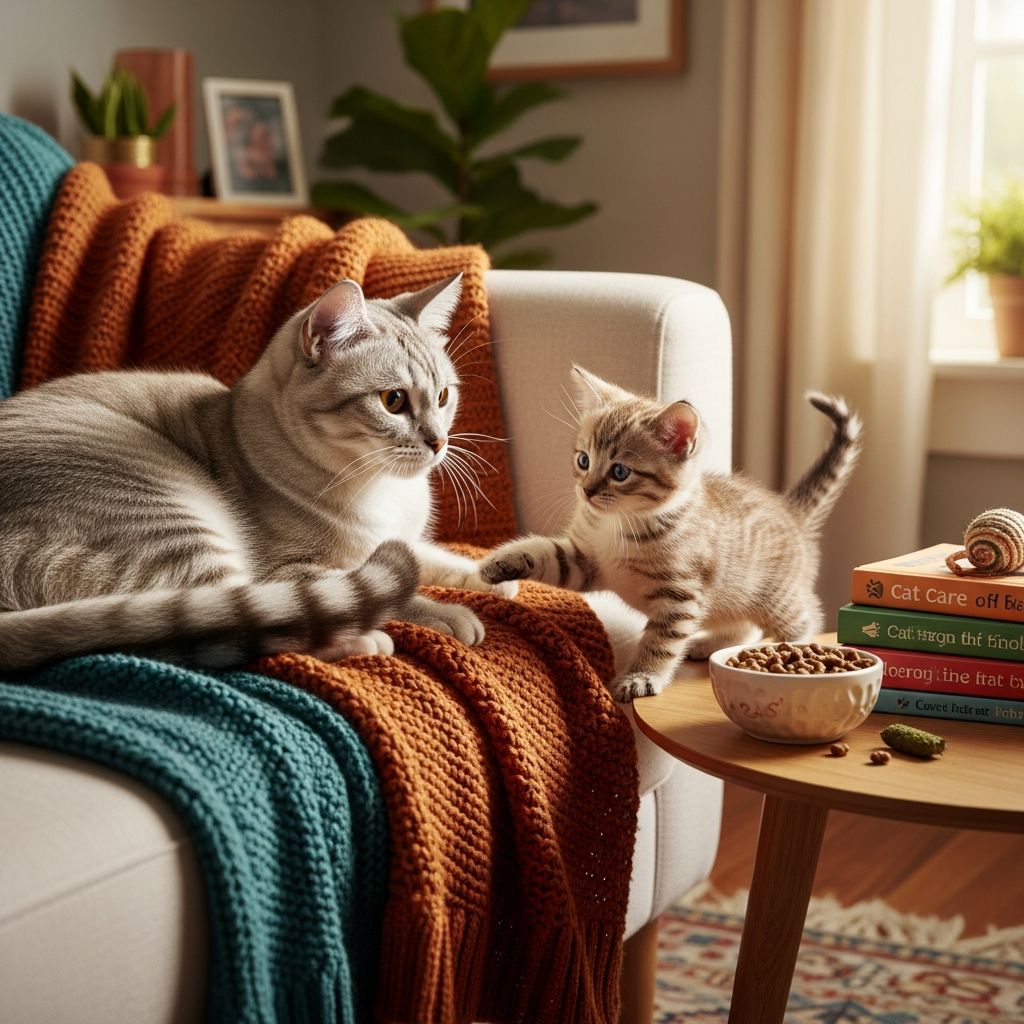
Bringing a new cat into a home already occupied by resident felines requires careful planning to prevent territorial disputes and foster positive relationships. Rushed introductions often lead to prolonged stress, hissing, or aggression, but a structured approach minimizes these risks and promotes peaceful coexistence.
Why Patience Matters in Multi-Cat Introductions
Cats are inherently territorial animals, relying heavily on scent, sight, and sound to assess newcomers. Sudden encounters can trigger defensive behaviors like swatting or avoidance, potentially damaging their future interactions. Veterinary and humane society experts emphasize gradual exposure, allowing each cat time to adjust psychologically before physical meetings. This method, supported by organizations like the BC SPCA and San Diego Humane Society, typically spans days to weeks, varying by individual personalities—kittens often adapt faster than adults.
Essential Preparations Before Bringing Your New Cat Home
Preparation sets the foundation for success. Designate a quiet, secure room as the new cat’s initial sanctuary, equipped with essentials to reduce relocation stress.
- Comfort zone setup: Include a soft bed, litter box (uncovered, unscented), food and water stations, scratching post, and toys. Place the carrier as a familiar hiding spot.
- Stress reduction aids: Install Feliway diffusers in the new room and common areas; these synthetic pheromones mimic calming facial scents.
- Health checks: Ensure all cats receive veterinary exams, vaccinations, and parasite treatments beforehand to avoid disease transmission.
Stock extra resources like multiple litter boxes (one per cat plus one extra) and separate feeding areas to prevent competition later.
Phase 1: Scent Familiarization Techniques
Begin with olfactory exchanges, as cats communicate primarily through smell. This non-threatening step builds positive associations without visual stress.
- Collect a cloth or bedding from the new cat and place it near the resident cat’s resting or eating spots. Reward calm investigation with treats.
- Conversely, introduce resident cat-scented items to the new cat’s room, monitoring for relaxed responses.
- Exchange food bowls after meals (consult a vet for dietary restrictions), linking the rival scent to mealtime pleasure.
Progress only when both cats show tolerance—no hissing, avoidance, or inappropriate elimination. This phase may last hours for sociable pairs or months for wary adults.
Phase 2: Site Swapping for Territory Neutralization
Once scents are accepted, allow each cat to explore the other’s space unsupervised, blending territories and scents.
- Confine the new cat safely (e.g., in a bathroom), then release the resident into the sanctuary room. Observe from afar.
- Swap positions, letting the newcomer roam the house while securing the resident.
- Repeat daily, ensuring ample vertical spaces like cat trees for security.
This mirrors natural feline exploration, reducing fear of unknown areas and promoting scent overlap on key items like furniture.
Phase 3: Establishing Visual Barriers
Introduce sight gradually using physical separators to prevent physical clashes.
| Barrier Type | Benefits | Tips for Success |
|---|---|---|
| Baby gate or screen door | Allows sniffing and play without contact | Position at eye level; use two stacked for escape artists |
| Cracked door | Controlled peeking | Hold door to prevent bolting; one person per side |
| Exercise pen (ex-pen) | Flexible containment | Scatter treats to associate views with rewards |
During sessions, offer high-value treats or interactive toys (avoid catnip, which heightens arousal). Sessions should last 5-10 minutes, ending positively before tension builds—look for relaxed ears, slow blinks, or play bows. Halted progress signals a return to prior steps.
Phase 4: Supervised Direct Interactions
When visual sessions show mutual comfort (no growling or staring), transition to open-door meetings in neutral, spacious areas.
- Scatter hiding spots and escape routes; have towels ready for gentle intervention.
- Stay neutral—clap hands or use noise makers to interrupt skirmishes without yelling.
- Separate at first signs of distress; never force proximity or punish.
Feed meals on opposite sides of closed doors, gradually reducing distance. Equal attention prevents jealousy.
Common Challenges and Solutions
Integration isn’t always linear. Persistent aggression or litter avoidance warrants professional input.
- Resource guarding: Provide duplicates of beds, bowls, and boxes; elevate some for the resident cat’s status.
- Stress indicators: Excessive grooming, hiding, or vocalizing—revert steps and add enrichment like puzzle feeders.
- Age mismatches: Kittens integrate quicker; match energy levels when possible.
Monitor for 2-4 weeks post-full access, adjusting as needed.
Maintaining Long-Term Harmony in Multi-Cat Homes
Post-introduction, sustain peace through routine and enrichment.
- Daily play sessions for each cat individually to burn energy.
- Scheduled feeding in separate zones initially.
- Regular vet check-ups to catch health issues mimicking behavior problems.
- Pheromone diffusers ongoing for subtle calming.
Observe body language: tail-up greetings signal friendship; swishing tails warn of tension. Over time, shared grooming indicates bonded success.
Frequently Asked Questions (FAQs)
How long does cat introduction take?
Typically 1-4 weeks, but up to months for adults. Patience yields better outcomes.
What if my cats fight during meetings?
Separate calmly, shorten sessions, and regress to scent swapping. Consult a behaviorist if ongoing.
Do cats need separate litter boxes?
Yes—one per cat plus one extra—to avoid conflicts.
Can I speed up the process?
No; rushing risks lifelong enmity. Follow gradual protocols.
Is Feliway effective?
Many report reduced stress; vet-recommended.
Expert Tips from Veterinary Guidelines
UC Davis and AAFP stress health-first approaches and scent primacy. Jackson Galaxy advocates strict no-peek rules initially. These align with humane societies’ stepwise models.
References
- How do I introduce my new cat to my old cat? — BC SPCA. Accessed 2026. https://spca.bc.ca/faqs/how-introduce-new-cat-old-cat/
- Introducing Cats — San Diego Humane Society. Accessed 2026. https://sdhumane.org/resources/introducing-cats/
- How To Introduce Cats To One Another — YouTube (Jackson Galaxy). Accessed 2026. https://www.youtube.com/watch?v=ukO8Qm9ltVA
- Step-by-Step Guide: How to Introduce a New Cat to Other Cats in Your Home — American Association of Feline Practitioners (via catvets.com). 2024-07. https://catvets.com/wp-content/uploads/2024/07/Step-by-Step-Guide-How-to-Introduce-a-New-Cat-to-Other-Cats-in-Your-Home.pdf
- How To Introduce Cats the Right Way — PetMD. Accessed 2026. https://www.petmd.com/cat/behavior/how-to-introduce-cats
- The Do’s and Don’ts of Introducing Cats — Jackson Galaxy. Accessed 2026. https://www.jacksongalaxy.com/blogs/news/the-dos-and-donts-of-introducing-cats
- Introducing Your New Cat to Your Other Household Cats — UC Davis School of Veterinary Medicine. Accessed 2026. https://www.vetmed.ucdavis.edu/sites/g/files/dgvnsk491/files/inline-files/Introducing_a_new_cat.pdf
Similar Articles








Read full bio of medha deb