

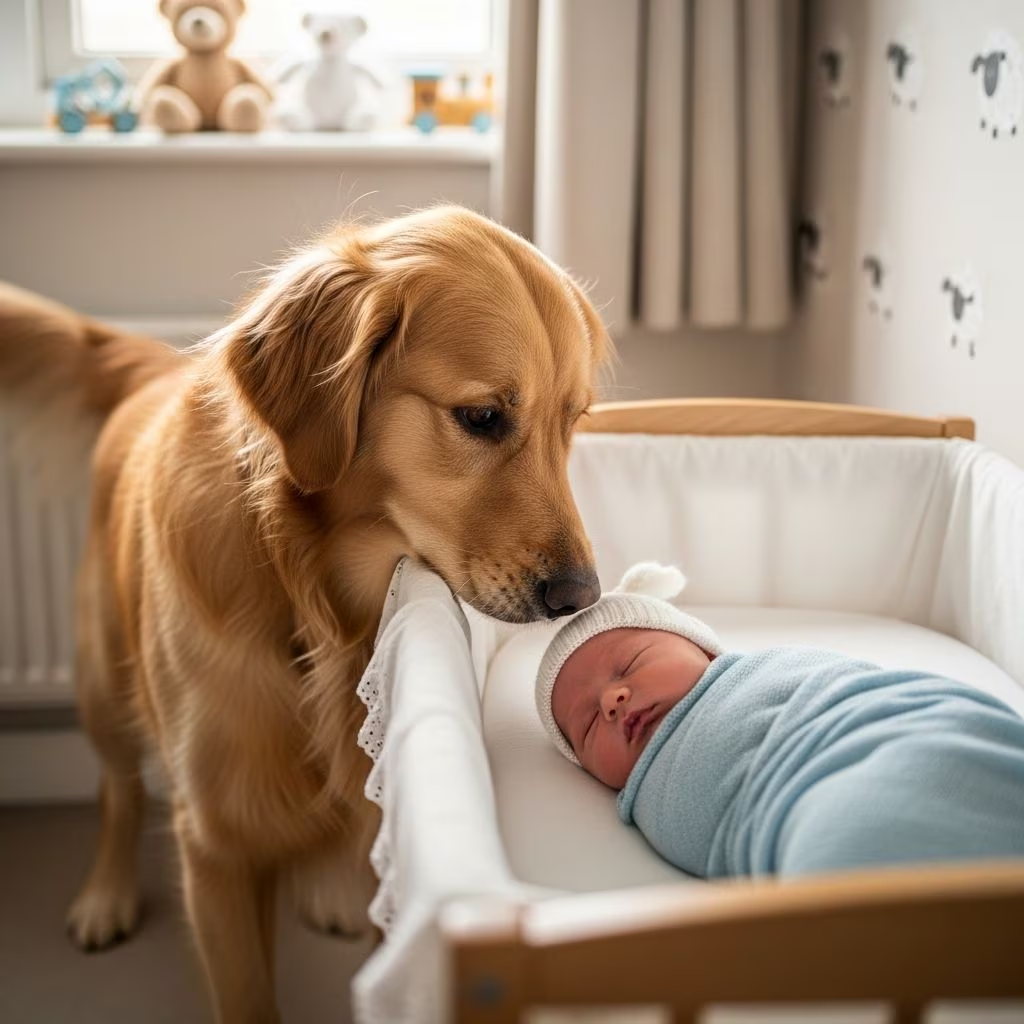
Bringing a newborn into a home with a dog requires careful planning to ensure both the infant’s safety and the pet’s comfort. Start preparations months in advance by reinforcing obedience commands and gradually exposing your dog to baby-related changes, creating a smooth transition for everyone.
Building a Strong Foundation Through Training
Before the baby arrives, prioritize comprehensive training to establish control and calm behavior in your dog. Focus on essential commands like sit, down, stay, and leave it, practicing them in varied, distracting environments to mimic future household dynamics. Enroll in obedience classes or consult a certified trainer if your dog exhibits jumping, barking, or resource guarding tendencies, addressing these early to prevent issues.
Implement daily sessions where you simulate baby care routines: push an empty stroller, rock a doll while issuing commands, or play recordings of infant cries at low volumes, rewarding calm responses with praise or treats. This desensitization helps your dog associate new sounds and movements with positive outcomes rather than stress.
- Practice commands amid distractions like vacuum noise or doorbell rings.
- Use high-value rewards initially, then fade them to build reliability.
- Train for gentle handling by poking, pulling fur, or simulating grabs to prepare for accidental baby touches.
Acclimating Your Dog to Baby Scents and Items
Begin scent introduction weeks before birth by bringing home baby blankets, lotions, or clothing from the hospital. Allow your dog to sniff these items under supervision, pairing the experience with treats to create positive associations. Unpack and set up gear like cribs, highchairs, swings, and carriers gradually, letting your dog investigate while redirecting to their own toys if they show interest in baby possessions.
Expose your dog to baby movements by carrying a doll in a carrier or practicing stroller walks without attachment. This prevents startled reactions later. For auditory preparation, play baby sounds apps during playtime, increasing volume slowly while maintaining a relaxed atmosphere.
| Baby Item | Introduction Method | Goal |
|---|---|---|
| Blanket/Clothing | Sniff with treats | Scent familiarity |
| Stroller/Car Seat | Practice walks/rocking | Movement desensitization |
| Cries/Sounds | Gradual audio playback | Auditory tolerance |
Planning the Household Layout for Safety
Redesign your home to prioritize separation when needed. Install baby gates to block access to the nursery, creating dog-free zones without isolating your pet emotionally. Designate a ‘safe spot’ like a mat or bed where your dog retreats on cue for rewards, teaching them to self-soothe during overwhelming moments.
Decide on sleeping arrangements early: crate train or gate off your dog from the baby’s room overnight, practicing this routine postpartum to avoid disruptions. Schedule vet checkups for vaccinations, parasite prevention, and nail trims to ensure your dog’s health doesn’t complicate family life.
Mastering the First Meeting
Time the initial encounter when both baby and dog are calm—infant sleeping or quiet, dog exercised and relaxed. Have at least two adults present: one holding the elevated baby (in arms, car seat, or bouncer), the other leashing the dog loosely. Choose a spacious room, not a narrow hallway, to reduce tension.
- Confine dog initially, allowing visual access from afar.
- Bring dog closer on leash; reward calm sniffing of baby’s feet.
- Maintain control: short, positive sessions ending on a high note.
If your dog appears nervous, use a ‘touch’ cue for brief nose-to-feet contact, rewarding heavily before retreating. Never force proximity; progress at the dog’s pace.
Post-Introduction Management and Bonding
Supervision is non-negotiable: never leave dog and awake baby alone, using leashes or gates as barriers. Integrate baby into dog routines positively—feed treats during baby feeds, walk with baby in carrier, play when infant is present—to teach your dog that baby equals good things.
Monitor body language: relaxed ears/tail indicate comfort; stiff posture or avoidance signals stress requiring space. Gradually increase interaction time under watch, praising gentle behavior.
Common Challenges and Solutions
Nervous or Avoidant Dogs: Build confidence with short, rewarding exposures; use safe zones for breaks.
Resource Guarders: Practice trading toys for treats pre-baby; feed separately.
High-Energy Breeds: Amp up exercise—multiple walks, puzzle toys—to curb excitement.
Fostering Lifelong Harmony
Over months, teach older infants gentle petting under supervision. Maintain training consistency, providing your dog undivided attention daily to prevent resentment. Professional help from behaviorists is vital if aggression histories exist. With patience, many families enjoy joyful dog-baby bonds.
Frequently Asked Questions
What if my dog shows aggression?
Consult a veterinary behaviorist immediately; use permanent barriers and never unsupervised access.
How long does adjustment take?
Weeks to months; consistency speeds it up.
Can I use punishment?
No—focus on rewards for desired behaviors to avoid fear.
Is crate training necessary?
Highly recommended for safe sleep separation.
What about multiple dogs?
Introduce sequentially, maintaining individual control.
References
- Children and Pets – Infants and Dogs — VCA Animal Hospitals. Accessed 2026. https://vcahospitals.com/know-your-pet/children-and-pets—infants-and-dogs
- Dog Meets Baby Founder’s Tips for Introducing a Dog to a Newborn — Dog Meets Baby. Accessed 2026. https://www.dogmeetsbaby.expert/post/dog-meets-baby-founders-tips-for-introducing-a-dog-to-a-newborn
- How to Prepare Your Dog for a New Baby — Momwell. Accessed 2026. https://momwell.com/blog/how-to-prepare-your-dog-for-a-new-baby-planning-introducing-and-keeping-everyone-safe
- Dogs and Babies — ASPCA. Accessed 2026. https://www.aspca.org/pet-care/dog-care/dogs-and-babies
- When Dog Meets Baby: 10 Tips for a Smooth Introduction — KinderCare. 2016-12. https://www.kindercare.com/content-hub/articles/2016/december/when-dog-meets-baby-10-tips-for-a-smooth-introduction
- Introducing Your Dog to Your Baby: 10 Tips — Blue Buffalo. Accessed 2026. https://www.bluebuffalo.com/articles/dog/introducing-dog-to-baby/
- Introducing Your Dog to Your New Baby — Indoor Pet Initiative, OSU. Accessed 2026. https://indoorpet.osu.edu/dogs/new_additions_dogs/new-baby



