

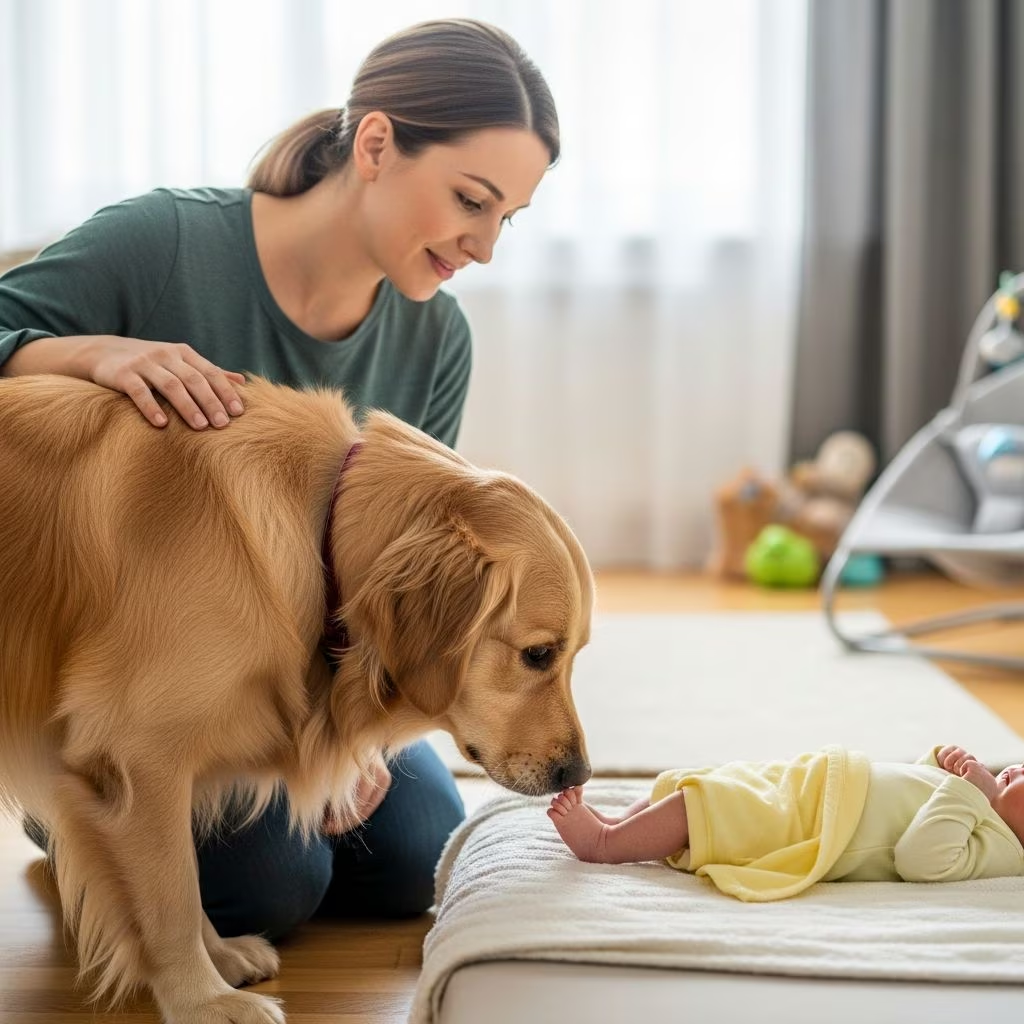
Bringing a newborn home while sharing your life with a dog requires thoughtful planning to create a secure environment for everyone. This guide outlines comprehensive strategies drawn from veterinary and behavioral experts to facilitate smooth transitions, emphasizing prevention of incidents through proactive measures.
Pre-Arrival Preparation: Building a Strong Foundation
Start adjustments well before the due date to minimize stress for your dog. Begin by consulting your veterinarian to confirm your dog’s health, including up-to-date vaccinations and a thorough check-up. This ensures no underlying issues could complicate the family dynamic.
Gradually introduce changes to your dog’s routine. Set up baby gates or designate dog-free zones, such as the nursery, allowing your dog to acclimate to restricted access. Practice varied feeding schedules, crating times, and exercise routines to mimic the unpredictability of baby life.
- Accustom your dog to baby sounds using recordings of cries, coos, and lullabies at low volumes, gradually increasing intensity while rewarding calm behavior.
- Simulate daily activities: Walk your dog with a stroller, play baby-related noises during mealtime, and practice commands amid distractions.
- Introduce scents by sending home a baby blanket or clothing item from the hospital for your dog to sniff in a positive context.
Enhance obedience training focusing on sit, stay, down, and leave-it commands in varied environments. Use positive reinforcement to associate these with treats and praise, building reliability when the baby arrives.
Conditioning Your Dog for Baby Interactions
Desensitize your dog to baby-specific stimuli through structured exercises. Gently poke, tug ears, or pat paws while saying “That’s nice!” in a cheerful tone, followed by treats to teach tolerance of accidental grabs.
Practice “baby moves” like rocking a doll in your arms or using a stroller. Reward your dog for remaining calm nearby. Teach a retreat cue, such as “place” or “bed,” directing your dog to a mat for downtime.
| Exercise | Purpose | Steps |
|---|---|---|
| Touch Desensitization | Tolerate handling | Touch paw > treat; progress to gentle pinches. |
| Sound Habituation | Ignore cries | Play audio > reward calm; increase volume over days. |
| Retreat Training | Self-soothe | Cue “place” > stay > treat; extend duration. |
Prevent resource guarding by feeding meals from a high counter and practicing hand-feeding kibble during play. This fosters positive associations with shared spaces.
Mastering the First Encounter
Timing is crucial: Choose a moment when your dog is exercised and calm, ideally with the baby asleep or quiet. Have at least two adults present—one managing the dog on a loose leash, the other holding the baby in a carrier or arms.
Enter the home calmly. Confine the dog initially, allowing visual access from a distance. Speak softly, praising relaxed behavior. Gradually permit closer approaches while keeping the leash slack—avoid tight restraint or aversive collars.
- Position dog in sit/stay 3-5 feet away; reward focus on you.
- Slowly close distance if dog remains composed.
- Allow brief foot sniffs (2-3 seconds), then cue sit and interrupt positively.
- Repeat sessions multiple times daily, never forcing proximity.
For C-section recoveries, greet the dog outside first to prevent jumping. Use carriers or cribs as barriers during introductions. Never allow face-to-face contact or licking initially.
Ongoing Household Safety Protocols
Supervision is non-negotiable: Never leave dog and baby alone, even asleep. Install baby gates, tethers, or use leashes for management.
Position yourself as a buffer between dog and baby. Teach your dog to follow you away from the baby using a cue like “with me.” Ban dogs from furniture or stairs when carrying the baby.
- Exercise daily: 30-60 minutes to reduce arousal.
- Daily one-on-one training: 10-15 minutes reinforcing basics.
- Quality time: Dedicated play without baby distractions.
- Use calming aids like pheromone diffusers for high-traffic visitor days.
Secure baby gear: Avoid swings or carriers near dogs unsupervised, as motion can trigger excitement.
Recognizing and Addressing Behavioral Signals
Monitor body language closely. Positive signs include relaxed ears, soft eyes, and loose tail wags. Warning signals: stiff posture, lip licking, yawning, averted gaze, or prey-like fixation (crouching, intense stare).
If nervous, allow voluntary sniffs on cue, keeping sessions short. For avoidance, use treats to encourage gentle nose touches from a distance. Rambunctious dogs need separation until settled—no scolding, as it links negativity to the baby.
Seek professionals for aggression, fear, or guarding: Certified trainers using positive methods only.
Long-Term Harmony Strategies
Maintain balance with routine check-ins. Rotate exercise partners if needed. Update vet visits regularly. Consider gear like hands-free leashes or window films to curb barking.
Foster positive links: Pair baby presence with treats or toys. Gradually increase supervised interactions as trust builds.
Frequently Asked Questions
Can my dog ever be alone with the baby?
No. Constant supervision prevents accidents; use gates or crates as defaults.
What if my dog shows jealousy?
Ignore attention bids; reward calm retreats. Increase individual attention.
How long until normalcy returns?
Weeks to months; consistency speeds adjustment.
Is crate training essential?
Highly recommended for safe retreats with chews.
What about multiple dogs?
Introduce sequentially; manage individually.
References
- Children and Pets – Infants and Dogs — VCA Animal Hospitals. 2023. https://vcahospitals.com/know-your-pet/children-and-pets—infants-and-dogs
- Babies and Dogs PDF — UC Davis Veterinary Medicine. 2022. https://www.vetmed.ucdavis.edu/sites/g/files/dgvnsk491/files/inline-files/Babies_and_dogs.pdf
- Dogs and Babies — ASPCA. 2024. https://www.aspca.org/pet-care/dog-care/dogs-and-babies
- Baby Safety Around Dogs — Pet Professional Guild. 2023. https://www.petprofessionalguild.com/resource/baby-safety-around-dogs/
- Introducing Your Dog to Your New Baby — Indoor Pet Initiative, OSU. 2022. https://indoorpet.osu.edu/dogs/new_additions_dogs/new-baby



