

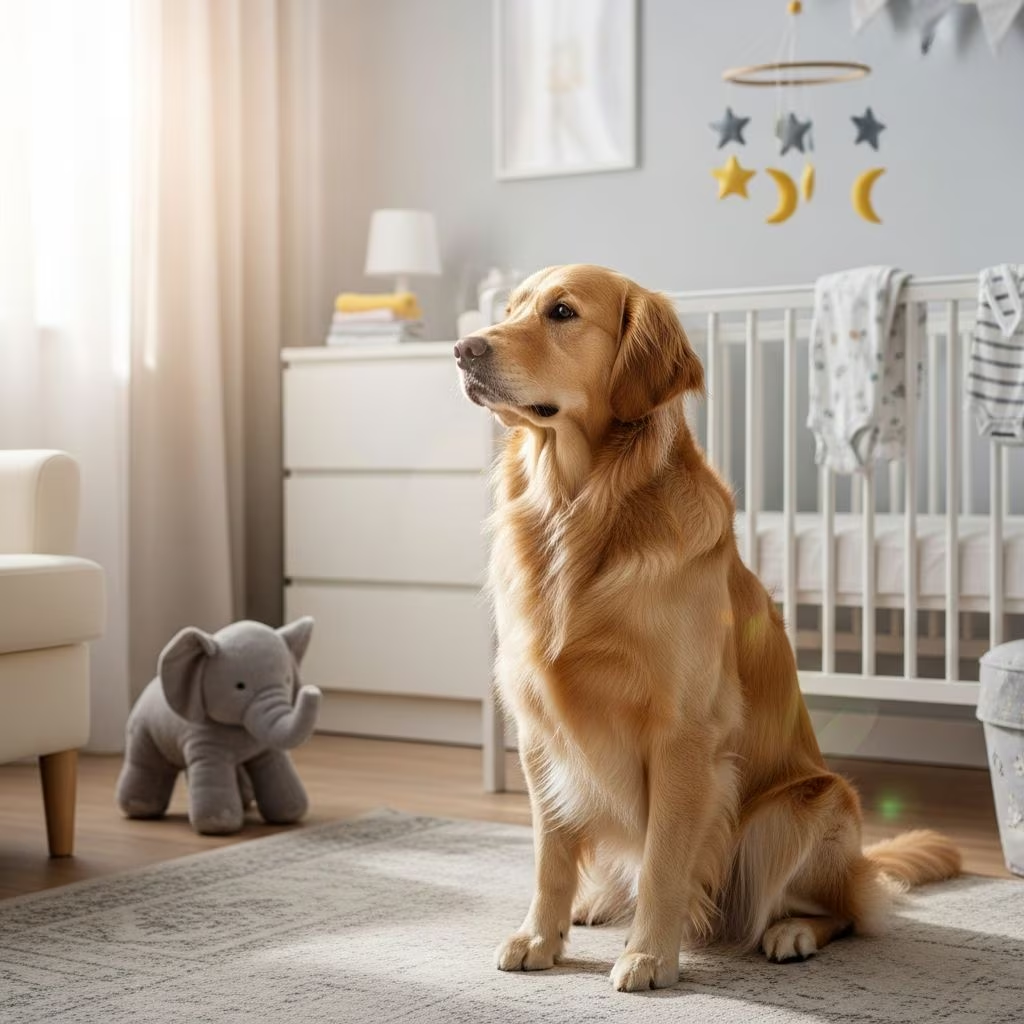
Integrating a newborn into a home with a dog requires thoughtful planning to maintain safety and strengthen family bonds. Dogs often exhibit temporary behavioral shifts due to disrupted routines and new stimuli, but proactive measures can ease this transition effectively.
Understanding Your Dog’s Response to Family Changes
Dogs perceive the arrival of a baby as a major disruption, leading to varied reactions rooted in their sensitivity to routine alterations. Common responses include heightened curiosity, increased neediness, avoidance, or mild anxiety, which typically subside as the infant becomes part of daily life. These behaviors stem from reduced attention, novel sounds like crying, and shifts in household dynamics rather than deliberate jealousy.
Statistics highlight prevalence: around 40% of dogs show protectiveness, 38% become clingier, and 36% display jealousy-like actions post-baby arrival. High-energy dogs or those lacking personal space awareness pose greater risks, such as accidental jumping or sitting on the infant. Recognizing these patterns early allows for targeted interventions.
Recognizing Normal versus Concerning Behaviors
Distinguishing adaptive responses from red flags is crucial for safety. Normal adjustments include sniffing baby items, following family members, or seeking extra comfort, all signs of processing change. Mild excitability, like whining at cries or pacing, often improves with time.
However, escalation warrants attention:
- Excessive barking or whining: Persistent noise beyond initial days signals ongoing stress.
- Appetite changes: Refusal to eat or overeating reflects anxiety.
- Restlessness or pacing: Constant movement indicates discomfort.
- Growling or snapping: Direct threats near the baby require immediate professional help.
- Over-licking or chewing: Self-soothing that intensifies under pressure.
Avoidance, such as retreating during cries, is benign and gives the dog needed space. Clinginess may frustrate sleep-deprived parents but responds to reassurance via puzzle toys.
Pre-Baby Training Essentials
Start preparations months ahead to condition your dog positively. Key areas include:
- Alone time practice: Gradually increase independent periods to mimic divided attention.
- Boundary enforcement: Use baby gates for designated zones, rewarding calm stays.
- Impulse control: Teach ‘place’ or mat stays, ignoring demands like jumping.
- Sensory acclimation: Expose to baby cries via recordings, rewarding relaxation.
Table of Pre-Baby Training Timeline:
| Week Before Due Date | Focus Activity | Goal |
|---|---|---|
| 8-12 Weeks | Daily alone time sessions | Build independence |
| 4-8 Weeks | Baby sound recordings | Desensitize to noises |
| 1-4 Weeks | Gate and crate training | Respect new boundaries |
| Final Days | Scent introduction (blankets) | Familiarize with baby smell |
These steps prevent post-arrival acting out by preempting stress triggers.
Bringing Baby Home: First Interactions
Upon returning, prioritize calm. Have a helper hold the baby while you greet the dog first with subdued affection to avoid overexcitement. Keep initial meetings leashed and distant, progressing only if the dog remains zen-like. Mimic wild canine behavior: mother dogs isolate pups initially, so enforce space early.
Daily management tips:
- Supervise all interactions; never leave unsupervised.
- Reward calm behavior away from baby, like settling on a bed.
- Maintain exercise routines to curb excess energy.
- Use crates or gates for breaks when overwhelmed.
Maintaining Your Dog’s Routine Amid Chaos
New parents face erratic schedules, which unsettle dogs thriving on predictability. Counter this by:
Exercise Consistency: Enlist help for walks; tired dogs adapt better.
Feeding and Play: Stick to times using auto-feeders or toys if needed.
Attention Balance: Short, quality sessions when baby naps, avoiding baby-proximate petting to prevent pushy habits.
Hormonal shifts in parents (e.g., breastfeeding scents, post-surgery odors) can further confuse dogs, amplifying avoidance or anxiety. Patience yields normalization.
Safe Spaces and Long-Term Harmony
Equip your dog with retreats: crates, beds, or rooms stocked with toys for self-entertainment. Praise voluntary calm proximity to baby once settled, but force nothing.
Monitor for depression signs like lethargy from routine loss. If persistent, consult vets to rule out health issues exacerbated by stress.
Addressing High-Risk Scenarios
For energetic or resource-guarding dogs, extra vigilance applies. Redirect jumping with commands; muzzle train if aggression emerges, seeking certified trainers. Professional intervention prevents incidents, especially with unaware pups.
Common Challenges and Solutions
| Challenge | Solution | Expected Outcome |
|---|---|---|
| Clingy demanding | Puzzle toys, scheduled play | Self-sufficient calm |
| Protective growling | Professional trainer | Safe boundaries |
| Avoidance | Positive exposures, space | Gradual acceptance |
| House soiling | Crate, frequent outs | Restored habits |
Frequently Asked Questions (FAQs)
Is it normal for my dog to ignore me after the baby arrives?
Yes, temporary withdrawal from routine and scent changes is common and often resolves.
Should I get rid of my dog if behaviors worsen?
No, training and management typically suffice; rehoming is last resort post-professionals.
How long until my dog adjusts?
Weeks to months, depending on preparation; consistency accelerates it.
Can I still give my dog attention with baby present?
Yes, but reward distant calm behavior to set healthy patterns.
What if my dog shows teeth near baby?
Separate immediately and contact a behaviorist; do not risk it.
Building a Lasting Family Dynamic
With diligence, dogs integrate beautifully, offering protection and companionship. Consistent leadership fosters security, turning potential chaos into joyful coexistence. Invest time now for lifelong benefits.
References
- Normal Dog Behavior with a New Baby (and Red Flags) — Scallywags Dog Training. 2025-11-10. https://scallywagsdogtraining.com/2025/11/10/normal-dog-behavior-with-a-new-baby-and-red-flags/
- My Normally Well-Behaved Dog Is Suddenly Acting Out After Bringing Home My Newborn — Dog Meets Baby. N/A. https://www.dogmeetsbaby.expert/post/my-normally-well-behaved-dog-is-suddenly-acting-out-after-bringing-home-my-newborn
- Can’t Stand Your Dog After Having a Baby? You’re Not Alone — ManyPets. N/A. https://manypets.com/us/blog/dogs-and-babies/
- How Can I Tell If My Dog Is Stressed Around My New Baby? — Petworks. N/A. https://www.petworks.com/articles/dog-is-stressed-around-my-new-baby/
- Bringing a New Baby Home? Do This First With Your Dog — YouTube (Dog Psychology Video). N/A. https://www.youtube.com/watch?v=Ikh6Rds3178
- Bringing Home Baby: Step-by-Step Guide — UC Davis Veterinary Medicine. N/A. https://healthtopics.vetmed.ucdavis.edu/health-topics/canine/bringing-home-baby-step-step-guide-congratulations-your-newest-edition-your-family
- Is Your Dog Depressed After a Baby Came Home? Here’s Why — PetPlace. N/A. https://www.petplace.com/article/dogs/pet-behavior-training/dog-behavior-training/is-your-dog-depressed-after-a-baby-came-home-heres-why



