

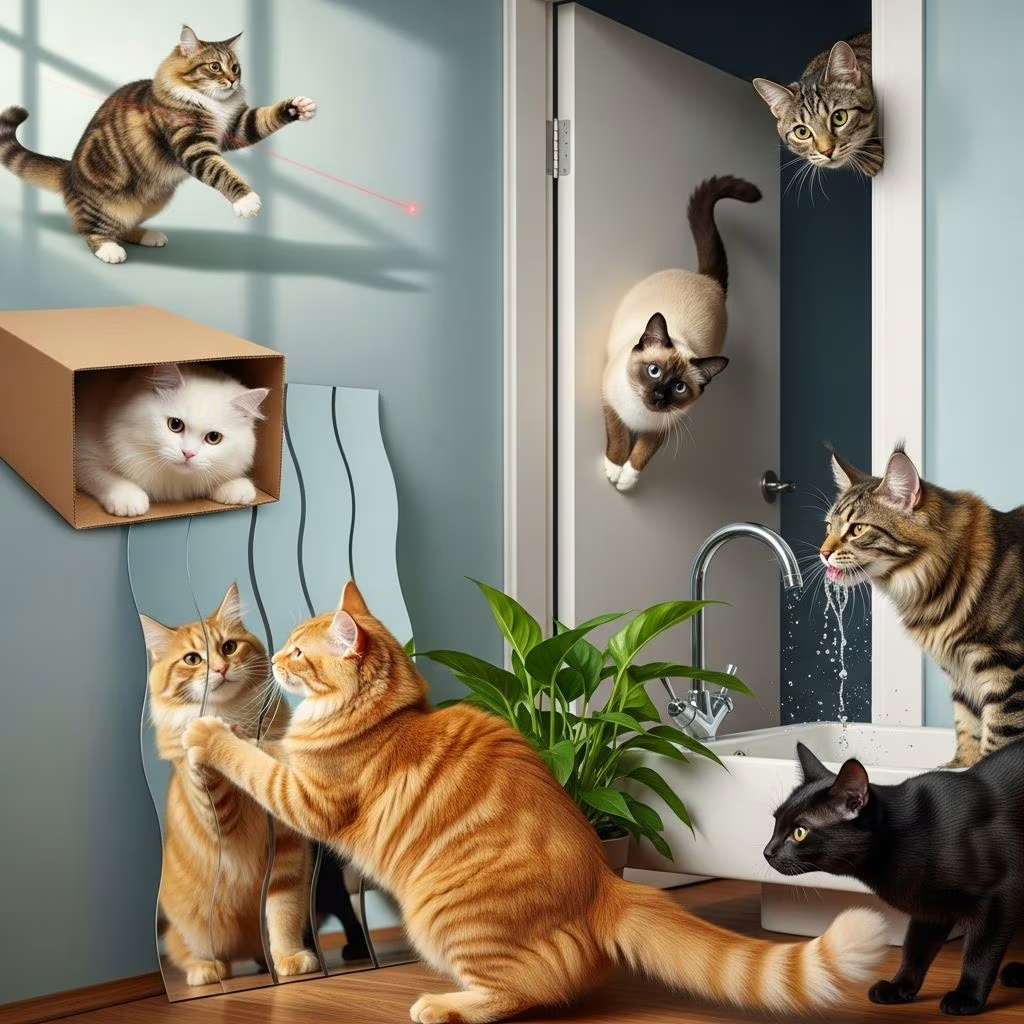
Cats captivate us with their grace and mystery, but their odd habits often leave owners scratching their heads. From presenting gruesome gifts to peculiar vocalizations, these behaviors stem from deep-seated instincts honed over thousands of years as predators and survivors. Understanding them helps bridge the communication gap between humans and felines, fostering stronger bonds and healthier homes. This guide breaks down 15 common yet baffling cat behaviors, drawing on veterinary insights and ethological research to explain why cats act this way.
The 15 Weird Cat Behaviors that Stump Kitty Parents
1. Gifting Dead Animals
One of the most shocking surprises for cat owners is discovering a lifeless mouse, bird, or insect left on the doorstep, bed, or doorstep mat. Far from malice, this is your cat’s way of sharing the bounty of their hunt. In the wild, mother cats bring killed prey to their kittens to teach hunting skills and provide sustenance. Domestic cats view their humans as part of the family—often as inept kittens who can’t hunt for themselves. By gifting these trophies, they’re teaching and provisioning in the only way they know.
This instinct persists even in well-fed indoor cats because it’s hardwired. A study from the University of Georgia notes that 44% of outdoor cats bring prey home regularly, with females more likely to do so due to maternal drives. If your cat is an indoor hunter of bugs or toys, the same logic applies. To discourage this, keep your cat indoors or provide interactive toys that simulate hunting, reducing real prey pursuits.
2. Kneading
Witnessing your cat rhythmically pushing their paws into a blanket or your lap evokes smiles, but what’s behind this blissful trance? Known as ‘making biscuits,’ kneading originates from kittenhood when nursing kittens press paws on their mother’s belly to stimulate milk flow. Adult cats knead soft surfaces to mark territory with scent glands in their paw pads and to self-soothe, evoking comfort and security.
Veterinarians observe that spayed or neutered cats knead less aggressively, suggesting hormonal influences. If excessive, it might signal stress; enrich their environment with scratching posts or cat trees. Embrace it as a sign of trust—your cat associates you with safety and maternal warmth.
3. Knocking Objects Over
Vases crashing, glasses toppling—cats seem engineered for chaos. This isn’t clumsiness; their agility ensures precision. Cats knock items to explore physics: how objects move, sound, or fall. It mimics hunting, where pawing prey tests reactions. Boredom or attention-seeking amplifies it; when ignored, a flying pen guarantees your focus.
Prevent destruction by offering stable playthings like battery-operated toys or puzzle feeders. Observe patterns: nighttime antics signal insufficient daytime stimulation. Research from the Journal of Feline Medicine and Surgery links such behaviors to under-enrichment in indoor cats.
4. Chattering
That rapid teeth-clicking chatter when your cat spots a bird through the window? It’s a mix of excitement, frustration, and instinct. Chattering mimics the death bite cats use on prey, practicing the kill on tantalizing but unreachable targets. Some ethologists propose it’s an atavistic bird call imitation to lure victims closer.
Overstimulation can lead to stress; provide window perches with bird feeders just out of reach for safe observation. Indoor cats benefit from feather wands to channel this predatory energy.
5. Walking on Keyboard
Productivity halts as your cat plants themselves squarely on your laptop keys. Theories abound: warmth from the device attracts them, keys bear your scent for communal marking, or it’s blatant attention-grabbing by blocking your view. Territorial instincts may drive them to claim the ‘hunting ground’ where you focus intensely.
A designated cat bed nearby with a heating pad often redirects them. Consistency is key—gently relocate without reaction to avoid reinforcing the behavior.
6. Grimacing (“Stink Face”)
The comical ‘stink face’—lips curled back, mouth agape, teeth exposed—looks like disgust but serves a sensory purpose. Cats use this Flehmen response to fully analyze pheromones via the vomeronasal organ in their mouth roof. Encountering another cat’s scent mark or unfamiliar odor triggers it, allowing chemical communication intake.
It’s harmless and insightful; note contexts like new pets or visitors to gauge social dynamics.
7. Head Bumping (Bunting)
When your cat rubs their head against you, it’s not just affection—it’s scent-marking with facial glands. This ‘bunting’ claims you as family and spreads their signature scent, creating a shared colony aroma for comfort and identification.
Reciprocate gently to strengthen bonds. Excessive bumping might indicate stress; ensure multi-cat homes have ample resources.
8. Marking (“Spraying”)
Spraying urine on walls or furniture differs from litter box issues—it’s vertical, small amounts, often by intact males but also stressed females. It communicates reproductive status, territory, or anxiety from changes like new pets. Clean with enzymatic cleaners to erase scents; spay/neuter reduces incidence by 90%, per ASPCA data.
Address stressors: more litter boxes, pheromone diffusers help.
9. Eating Litter or Non-Food Items (Pica)
Chowing on litter, plants, or plastic signals pica, often from nutritional gaps, boredom, or medical issues like anemia. Kittens explore orally; adults need vet checks for deficiencies.
Switch to larger-grit litter; provide safe chew toys. Monitor for wool-sucking in Persians, linked to genetics.
10. Covering Their Food
Pawing over uneaten kibble with paper or cloth mimics wild burial to hide food from scavengers and mask scents. Overfeeding prompts this; measure portions to match needs. It prevents attracting rivals in multi-cat homes.
11. Staring
Cats’ unblinking stares convey curiosity, dominance, or affection. Slow blinks signal trust (‘love blinks’). Prolonged staring at you might solicit play or food; at others, assert territory. Context matters—pair with ears back for aggression.
12. Presenting Their Butt
That rear-end flash during greetings? It’s olfactory hello—anal sacs share identity scents. Wild cats sniff genitals for health info; domestics trust you enough to expose vulnerability.
Don’t punish; a casual pet elsewhere acknowledges without offense.
13. Rolling Over
Belly-up rolls signal contentment and play invitations in safe spaces. Scent glands on flanks mark surroundings. Avoid unsolicited belly rubs—many cats swat from sensitivity.
14. Licking Itself Excessively
Grooming occupies 30-50% of waking hours for hygiene and cooling. Overgrooming signals allergies, pain, or anxiety; bald patches warrant vet visits for infections or psychogenic alopecia.
15. Suckling or Nursing on Blankets
Adult suckling on fabrics or skin stems from weaning trauma or comfort-seeking. Common in Orientals; wean gradually and offer alternatives like fleece toys.
Frequently Asked Questions (FAQs)
Why do cats bring dead animals inside?
Cats gift prey to teach hunting or share food, viewing owners as family needing provision.
Is cat kneading a sign of happiness?
Yes, it recalls nursing comfort and shows trust in their environment.
How to stop my cat from knocking things over?
Increase playtime, provide tall shelves for ‘hunting,’ and ignore attention bids.
What causes spraying in cats?
Stress, intact status, or territory claims; spay/neuter and reduce triggers.
Is excessive licking normal?
Moderate grooming is; excess suggests medical or stress issues—consult a vet.
References
- Association of American Feed Control Officials (AAFCO) Cat Food Nutrient Profiles — AAFCO. 2024-01-15. https://www.aafco.org/
- Feline Behavior Guidelines — American Association of Feline Practitioners (AAFP). 2023-06-01. https://catvets.com/resources/feline-behavior-guidelines
- Prey Bringing in Cats — Journal of Veterinary Behavior (via PubMed). 2022-03-10. https://pubmed.ncbi.nlm.nih.gov/35221000/
- Urine Spraying in Cats — Cornell University College of Veterinary Medicine. 2025-01-05. https://www.vet.cornell.edu/departments-centers-and-institutes/cornell-feline-health-center/health-information/feline-health-topics/urine-spraying-cats
- Grooming Behaviors in Domestic Cats — International Cat Care. 2024-11-20. https://icatcare.org/advice/grooming-in-cats/



