
Waterfowl Nutrition Guide: Essential Feeding Targets
Comprehensive guide to optimizing diets for ducks, geese, and wild waterfowl in captivity and the wild for health, growth, and reproduction.
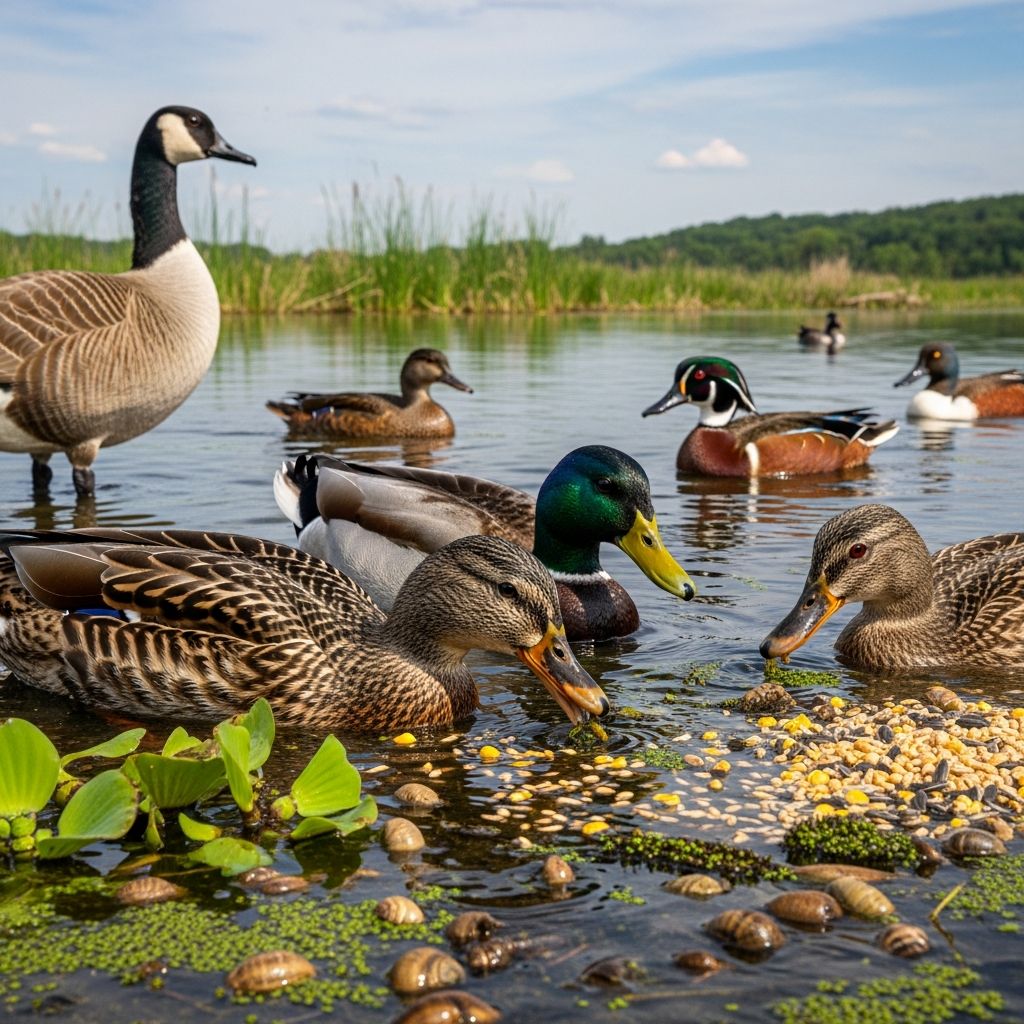
Waterfowl, encompassing ducks and geese, demand precise dietary formulations to support growth, reproduction, and overall vitality. Their nutritional profiles differ from other poultry due to unique physiological needs, such as higher protein demands during early development and specialized vitamin requirements for bone health.
Core Dietary Components for Optimal Health
The foundation of a waterfowl diet rests on three pillars: proteins derived from amino acids, energy from carbohydrates, and structural support from minerals. Amino acids build tissues like muscles and feathers, while carbohydrates fuel daily activities and migration. Minerals, particularly calcium and phosphorus, are critical for skeletal integrity and eggshell formation.
Wild waterfowl adapt their intake seasonally; for instance, during winter molting, females ramp up invertebrate consumption to meet elevated protein needs, which can exceed normal levels by 30-100%. In managed settings, feeds must replicate this balance to prevent deficiencies.
Protein and Amino Acid Essentials
Protein levels vary by life stage. Starter feeds for ducklings and goslings require 20-22% crude protein to fuel rapid growth, surpassing chicken needs of 18%. Key amino acids include lysine, methionine, and threonine, with specific minima outlined in feeding standards.
- Vital for muscle development; 1.1-1.3% in starters.
- Methionine + Cystine: Supports feather growth; around 0.9% minimum.
- Arginine: Essential for egg production in breeders at 19.6% total protein.
Deficiencies lead to poor feathering and reduced weight gain, emphasizing balanced formulations.
Energy Sources and Carbohydrate Roles
Metabolizable energy targets 1,450-1,550 kcal/lb in starter diets, shifting lower for growers. Carbohydrates from grains provide this, but over-reliance on agricultural sources like corn necessitates supplements for missing amino acids and minerals. Foraging contributes 10-30% of needs, enhancing diet diversity near water sources.
Vital Minerals for Bone and Egg Production
Calcium and available phosphorus ratios are pivotal. Ducklings need 0.8-1.0% calcium and 0.4-0.5% phosphorus in early weeks, optimizing weight gain and feed efficiency. Breeding females require higher calcium for eggshells.
| Life Stage | Calcium (%) | Available Phosphorus (%) |
|---|---|---|
| Starter (0-3 weeks) | 0.80-1.00 | 0.40-0.50 |
| Grower (3-6 weeks) | 0.70-0.90 | 0.35-0.40 |
| Laying | 2.50-3.50 | 0.30-0.40 |
Other minerals like sodium (0.15-0.20%), potassium (0.30%), and trace elements such as zinc (100 mg/kg) prevent issues like perosis. Iron at 52-127 mg/kg enhances yolk color and blood health in layers.
Critical Vitamins: Focus on B-Complex
Waterfowl exhibit poor conversion of tryptophan to niacin, necessitating 70-100 ppm in early feeds, far above chicken levels. This B3 vitamin supports leg bone development and energy metabolism.
- Riboflavin (B2): 2.5-5 mg/kg for growth; sex and diet base affect needs.
- Choline: 778-1,182 mg/kg prevents leg deformities.
- Folic Acid: 1 mg/kg boosts eggshell quality.
- Vitamin E: 50 IU/kg aids antioxidants, especially pre-processing.
Fat-soluble vitamins A, D3, and E maintain immunity and reproduction.
Life Stage Feeding Strategies
Newborn to Juvenile Phases
From hatch to 2 weeks, use 1/8-inch crumbles or pellets with 22%+ protein. Extend to 4 weeks if needed. Niacin supplementation is non-negotiable. Goslings mirror ducks but scale for size.
Growth and Maintenance
Weeks 3-8 demand 16-18% protein, transitioning to pellets. Free-choice feeding with forage access optimizes intake.
Breeding and Egg Production
Layer diets hit 16-18% protein with 2.5-4% calcium. Selenium at 0.18-0.38 mg/kg supports peak laying. Mallards need balanced amino acids for hatchability.
Meat Birds and Finishing
Pre-slaughter boosts in zinc methionine and vitamins minimize bruising.
Foraging and Wild Nutrition Insights
Wild ducks derive proteins from invertebrates and mussels (high in dry matter basis protein), fats from seeds, and minerals from wetlands. Captive setups should include ponds for 10-30% natural foraging. Seasonal shifts—high carbs in fall, proteins in winter—guide supplemental feeding.
Common Deficiencies and Prevention
Niacin shortfall causes bowed legs; remedy with brewer’s yeast. Calcium imbalance leads to soft shells. Regular monitoring via bloodwork or performance metrics ensures balance. Avoid overfeeding grains alone, as they lack key micros.
Feed Formulation Table
| Nutrient | Starter (0-2wks) | Grower (3-7wks) | Layer |
|---|---|---|---|
| Crude Protein (%) | 20-22 | 16-18 | 16-18 |
| Met Energy (kcal/kg) | 3000-3100 | 2900-3000 | 2800-2900 |
| Niacin (mg/kg) | 70-100 | 50-70 | 30-50 |
| Calcium (%) | 0.8-1.0 | 0.7-0.9 | 2.5-3.5 |
Practical Management Tips
- Provide insoluble grit for digestion.
- Ensure constant water access, but separate from feed to prevent spoilage.
- Commercial feeds like those from Kalmbach meet niacin specs.
- For zoos, mimic wild diets with invertebrates and greens.
Frequently Asked Questions (FAQs)
What is the top nutrient priority for young ducks?
High crude protein (20-22%) and niacin (70+ mg/kg) for growth and leg health.
Can chickens and ducks share feed?
Limited; ducks need more niacin and protein early on.
How much foraging is ideal?
10-30% of diet from pasture or ponds boosts welfare.
What minerals prevent leg issues?
Manganese, choline, and balanced Ca:P ratios.
Do geese have different needs than ducks?
Similar, but scale protein and energy for larger body size.
This guide synthesizes veterinary standards for thriving waterfowl. Tailor diets to breed and environment for peak performance.
References
- Understanding Waterfowl: Balanced Diets — Ducks Unlimited. 2023. https://www.ducks.org/conservation/waterfowl-research-science/understanding-waterfowl-balanced-diets-
- Nutritional Requirements For Ducks and Geese — Metzer Farms. 2024. https://www.metzerfarms.com/nutritional-requirements.html
- Nutritional Needs of Ducks and Geese — Tri County Feed Service. 2023. https://tri-countyfeed.com/blogs/learn-more-about-ducks/nutritional-needs-of-ducks-and-geese
- Nutritional requirements of meat-type and egg-type ducks — PMC – NIH. 2017-12-19. https://pmc.ncbi.nlm.nih.gov/articles/PMC5769293/
- Feeding Ducks — NC State University Poultry Extension. 2024. https://poultry.ces.ncsu.edu/backyard-flocks-eggs/other-fowl/feeding-ducks/
- Waterfowl Nutrition — Wild Waterfowl. 2016-02. https://www.wildwaterfowl.org/wp-content/uploads/2020/04/Waterfowl-Nutrition-Feb-2016.pdf
- Duck Nutrition — Cornell University College of Veterinary Medicine. 2024. https://www.vet.cornell.edu/animal-health-diagnostic-center/programs/duck-research-laboratory/duck-nutrition
Similar Articles








Read full bio of Sneha Tete


