

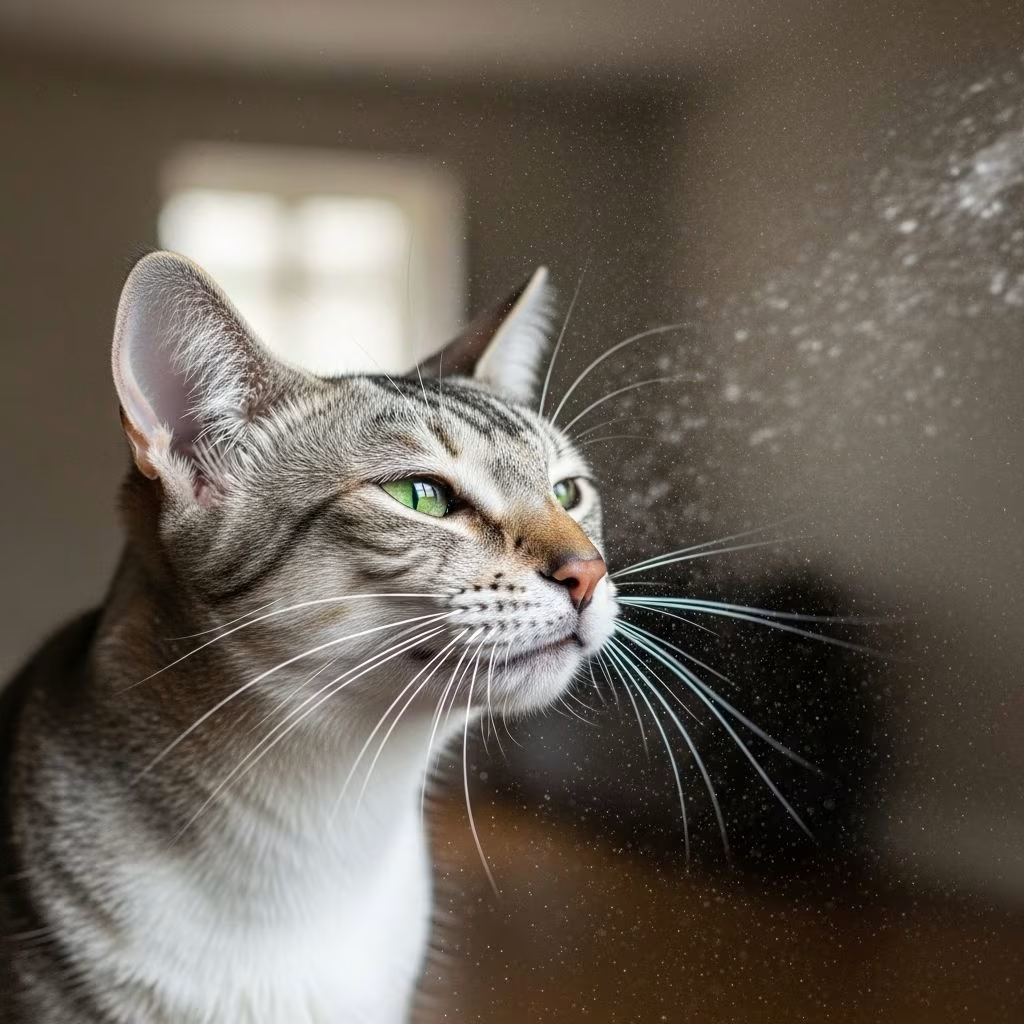
Understanding the Appeal of Water Spray as a Training Method
Many pet owners turn to spray bottles as a quick fix for unwanted cat behaviors, from counter jumping to furniture scratching. The logic seems straightforward: cats dislike water, so a sudden spray should discourage the behavior. However, this traditional approach overlooks fundamental principles of animal learning and feline psychology. The method appears to work because it temporarily interrupts a behavior, but this momentary pause does not translate into lasting behavioral change or meaningful training.
The appeal of spray bottles lies partly in their accessibility and low cost. They require no special equipment or training to use, and they produce an immediate visible reaction from the cat. Yet immediate visible reactions often deceive us about what is actually being learned.
What Actually Happens When You Spray Your Cat
When a cat receives a spray of water, the immediate physical response—jumping down from a counter or retreating from furniture—can create the illusion of successful training. However, behavioral science reveals that something quite different is occurring in the cat’s mind.
The Association Problem
Cats do not connect the spray of water with their specific action the way owners intend. Instead, cats develop an association between the water and the person holding the bottle. This means your cat learns to fear or avoid you when you are holding a spray bottle, not to avoid the counter or the sofa. The cat might refrain from jumping on the counter when you are present with the bottle, but will likely resume the behavior when you leave the room.
Teaching Avoidance, Not Understanding
A cat sprayed repeatedly for counter-surfing learns one primary lesson: “When my owner picks up that bottle, I need to flee.” This represents a basic avoidance response, not an understanding of appropriate behavior boundaries. Compare this to what you actually want to teach—that certain surfaces are off-limits while appropriate alternatives exist elsewhere. The spray bottle addresses neither the underlying motivation for the behavior nor provides any positive direction.
Why Spray Bottles Fail as Training Tools
Inconsistency Undermines Learning
Effective punishment requires absolute consistency—every single occurrence of the behavior must result in the negative consequence. Most households cannot achieve this standard. Your cat may scratch the couch successfully dozens of times when you sleep, work, or leave the house, and only occasionally receive a spray. This inconsistency teaches the cat that the behavior is sometimes permissible, which actually strengthens the behavior rather than eliminating it.
Stress Amplification
Cats are sensitive animals that respond strongly to environmental stressors. A sudden, unexpected spray of water registers as a threat or startling event that elevates the cat’s overall stress levels. When stress increases, cats often display more of the problematic behavior, not less. A stressed cat may scratch furniture more frequently, knock objects off counters more often, or engage in new destructive behaviors as an outlet for anxiety.
No Alternative Behavior Offered
Punishment only tells a cat what not to do. It provides no guidance about what the cat should do instead. A cat jumping on counters may do so seeking elevated vantage points, cooler surfaces, or simply exploring environmental features. Spraying addresses none of these underlying needs. The cat’s motivation to jump remains fully intact even if temporarily suppressed by fear.
The Hidden Costs of Water-Based Punishment
Relationship Deterioration
Cats form associations between their experiences and the people involved. Repeated unpredictable punishment creates fear and distrust toward the owner. Your cat may become hesitant to approach you, avoid eye contact, or display signs of anxiety in your presence. These relationship changes persist far beyond the specific training situation and affect your daily interactions with your pet.
Behavioral Escalation
Some cats, particularly those with anxious or aggressive temperaments, respond to punishment by escalating their behavior or developing new problematic behaviors. A cat already prone to aggression may become more hostile. A cat experiencing anxiety may develop additional stress-related behaviors like excessive grooming, elimination outside the litter box, or destructive activities.
Real-World Complications
Many cats require genuine medical or grooming applications of spray or water. A cat who has been repeatedly punished with water spray may develop fear responses that complicate necessary veterinary care, medication administration, or bathing. You may actually create future problems requiring professional intervention.
Comparing Training Approaches: Punishment Versus Positive Reinforcement
| Training Approach | Mechanism | Effectiveness | Relationship Impact |
|---|---|---|---|
| Positive Punishment (Spray Bottle) | Introduces unpleasant stimulus to discourage behavior | Temporary behavior suppression only; inconsistently applied | Damages trust and increases fear |
| Positive Reinforcement | Rewards desired behaviors with rewards cat values | Lasting behavior change; consistently applicable | Strengthens bond and builds trust |
| Environmental Management | Modifies environment to prevent unwanted behavior | Eliminates opportunity for behavior; no training needed | Neutral to positive; no punishment involved |
Effective Alternatives to Water Spraying
Environmental Modification
Rather than punishing behaviors, restructure the environment to prevent them. If counter-jumping is the issue, remove tempting items from counters and provide appropriate elevated spaces elsewhere in your home. If furniture scratching concerns you, place scratching posts near the targeted furniture and make those posts more attractive than the furniture itself through placement, texture variety, and catnip.
Redirection with Rewards
When you observe your cat beginning an unwanted behavior, gently redirect them to an appropriate alternative and reward them when they engage with it. If your cat heads toward the counter, lead them to an approved climbing structure and reward with treats, play, or affection. This teaches the specific alternative you prefer while building positive associations with your guidance.
Enrichment and Play
Many behavioral problems stem from insufficient environmental enrichment or exercise. A bored cat seeks stimulation through destructive behaviors. Implement regular interactive play sessions, puzzle feeders, window perches for bird watching, and varied toys. Mental and physical stimulation often eliminates the underlying motivation for problematic behaviors.
Clear Communication Through Body Language
Cats communicate through body language and respond to human body signals. A firm “no” combined with turning away or leaving the room communicates disapproval without introducing fear or punishment. Over time, cats learn to read your body language and adjust their behavior accordingly without stress or anxiety.
The Science Behind Learning and Behavior Change
Modern animal behavior science, including operant conditioning research, demonstrates that behaviors maintained through positive reinforcement show greater persistence and reliability than those suppressed through punishment. When cats learn that specific behaviors produce desirable outcomes—like treats, play, or access to preferred locations—they actively choose those behaviors. When behaviors are only suppressed through fear, they typically resume when the threat is removed.
Additionally, research shows that punishment-based training increases stress hormones in animals, which can contribute to health problems and behavioral issues beyond the targeted behavior. Positive reinforcement approaches activate reward pathways in the brain, creating lasting neural changes that support sustained behavioral modification.
Common Questions About Cat Training and Water Spray
What should I do if water spray seems to work immediately?
Immediate behavior cessation reflects startle response and fear, not learning. The cat stops temporarily to escape the unpleasant stimulus but has not learned why the behavior is undesirable. Once fear diminishes through habituation, the behavior typically returns, often when you are absent.
Is water spray ever acceptable?
Using water spray on houseplants to deter cats from knocking them over is sometimes suggested as a humane alternative to other deterrents. Even in this application, it may create fear associations if the cat learns to connect you with the spray. Physical barriers or relocation of plants remains preferable.
How long does positive reinforcement training take?
Positive reinforcement requires patience and consistency. However, it typically produces lasting behavior change more efficiently than punishment methods, which often require repeated applications without producing true learning. The timeline depends on the specific behavior, the cat’s age and personality, and consistency of application.
Will my cat understand why I am rewarding them?
Cats readily learn associations between behaviors and outcomes. When you reward a behavior immediately after it occurs, cats learn the connection. You do not need your cat to understand the reasoning—only to associate the behavior with a positive outcome they value.
Building a Stronger Relationship Through Better Training
The choice between water spray and positive reinforcement methods ultimately reflects your relationship goals with your cat. Do you want a pet who obeys out of fear and retreats when you approach, or one who actively seeks your company and responds to your guidance out of trust and expectation of good things?
Effective cat training strengthens your bond by positioning you as a source of good things—treats, play, access to desired locations—rather than a source of unpredictable threat. This shift fundamentally transforms your daily interactions and creates a household where both you and your cat experience less stress and greater satisfaction.
Moving beyond water spray requires accepting that cat training differs from dog training and that cats respond better to environmental management and positive incentives than to correction or punishment. This approach aligns with how cats naturally learn, respects their independent nature, and produces more reliable, lasting behavioral change while preserving the trust that forms the foundation of a healthy human-cat relationship.
References
- Is It Bad to Spray Your Cat with Water? Exploring the Pros and Cons — UAH Pet. 2024. https://www.uahpet.com/blogs/post/is-it-bad-to-spray-your-cat-with-water-exploring-the-pros-and-cons
- Squelch The Squirt: Why Spraying Water Doesn’t Work To Train Your Cat — Fear Free Happy Homes. 2024. https://www.fearfreehappyhomes.com/squelch-the-squirt-why-spraying-water-doesnt-work-to-train-your-cat/
- Should I use a spray bottle to train my cat? — Cat in the Box LLC. 2024. https://thecatisinthebox.com/blogs/kitty-contemplations/should-i-use-a-spray-bottle-to-train-my-cat
- It’s Time to Stop Spraying Cats with Water! — Feline Behavior Solutions. 2024. https://felinebehaviorsolutions.com/stop-spraying-cats-with-water/
- Why a Squirt Bottle isn’t a Good Tool for Training Cats — Cat Behavior Associates. 2024. https://catbehaviorassociates.com/why-a-squirt-bottle-isnt-a-good-tool-for-training-cats/



