

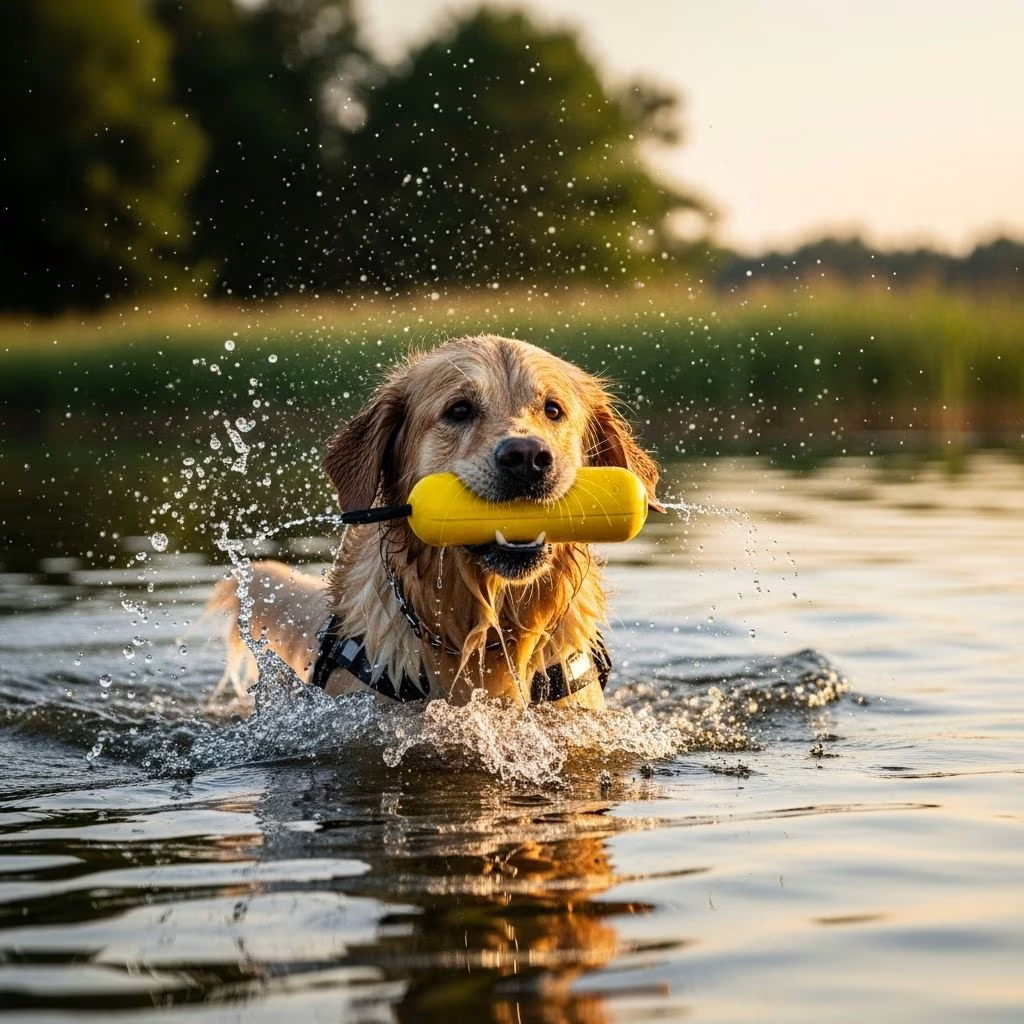
Service dogs equipped with water proficiency open new avenues for assistance, particularly in rescue scenarios, therapeutic settings, and daily support for handlers with mobility challenges. These specialized skills leverage breeds’ natural affinities for water, transforming play into purposeful tasks that strengthen the human-canine partnership.
Why Aquatic Training Matters for Service Work
Aquatic abilities expand a service dog’s utility beyond land-based tasks. For individuals with disabilities involving water exposure—such as boating accidents, floods, or poolside living—these dogs provide critical support. Training emphasizes retrieving objects, towing handlers to safety, and maintaining composure in dynamic water conditions, directly mitigating risks associated with disabilities.
Breeds like the Portuguese Water Dog and Newfoundland excel due to historical breeding for maritime roles, including retrieving gear for fishermen and lifesaving. Modern service applications adapt these instincts, ensuring dogs perform reliably under stress.
Selecting the Ideal Canine Partner for Water Tasks
Choose dogs with inherent water enthusiasm and physical stamina. Key traits include:
- Water drive: Natural eagerness to enter and stay in water without coercion.
- Athletic build: Strong swimmers with webbed feet, water-resistant coats, and endurance for prolonged activity.
- Temperament: Calm focus amid distractions, quick learning, and handler bonding.
Service candidates must also meet baseline standards: at least 18 months old, with 120+ hours of training over six months, including 30 hours in public. Avoid starting formal water work before six months; prioritize socialization first.
| Breed | Water Strengths | Service Suitability |
|---|---|---|
| Portuguese Water Dog | Retrieves from boats, strong swimmer | High; allergy-friendly coat |
| Newfoundland | Lifesaving pulls, calm in currents | Excellent for heavy-duty rescue |
| Labrador Retriever | Versatile fetch, public access ready | Most common service breed |
Foundational Commands Before Hitting the Water
Mastery of core obedience is non-negotiable. Off-leash reliability in “sit,” “stay,” “come,” “down,” and “heel” forms the bedrock. Add “take,” “hold,” and “give” for object manipulation—essential for water retrieves.
Incorporate dropped leash recalls in distracting environments. The AKC Canine Good Citizen program benchmarks these skills, with advanced tests like Community Canine ensuring urban readiness. For service dogs, add task-specific drills: focus amid novel stimuli, no barking, and elimination on command.
Step-by-Step Water Training Progression
Begin on dry land, transitioning gradually to water. Structure sessions in levels mirroring competitive water trials but tailored for service roles.
Level 1: Building Water Confidence
Introduce shallow, calm water. Reward voluntary entry with toys. Teach basic swims: dog paddles 10-20 feet, returns on command. Use life jackets initially for safety.
- Practice “take” with floating toys.
- Handler in water demonstrates teamwork.
Level 2: Object Retrieval and Delivery
Advance to fetching paddles, ropes, or life rings from 20-50 feet. Dog swims out, holds firmly, returns to handler or boat platform. Off-leash control is critical.
Drill variations: retrieve from moving boats or swimmers. Minimum 30-minute sessions, 3x weekly, tracking progress in a log.
Level 3: Rescue Simulations
Simulate emergencies: dog tows floating handler via harness or pulls unconscious “victim” (mannequin) to shore. Incorporate currents or waves for realism. High physical demand requires conditioning—swim intervals building to 5+ minutes.
Public access integration: train in varied settings, ensuring dog ignores distractions like other swimmers.
Equipment Essentials for Safe Training
Invest in durable gear:
- Boat platform: Stable rowing vessel for advanced retrieves.
- Life vests: Custom-fitted for dog and handler.
- Retrieve tools: Waterproof dummies, lines (20-50 ft).
- Harnesses: Tow-rated for rescue pulls.
Secure training venues: private lakes or dog-friendly beaches. Coastal areas face restrictions; scout inland reservoirs.
Legal and Certification Guidelines
Under ADA, no formal certification exists—focus on task performance and control. Staff may inquire: “Is this a service animal for a disability? What task does it perform?” No documentation required.
For credibility, pursue voluntary standards like IAADP’s 120-hour minimum or AKC CGC Plus, which includes service task demos. Veterans may access VA-accredited programs.
Overcoming Common Training Hurdles
Water aversion: Use high-value rewards, gradual exposure. Pair with play.
Fatigue: Monitor for hypothermia; limit sessions in cold water.
Access issues: Network with clubs for shared venues. Virtual communities offer tips.
Physical vet checks ensure joint health for demanding swims.
Real-World Applications in Service Roles
Aquatic service dogs assist with:
- Mobility aid: Towing wheelchair users from pools.
- PTSD support: Calming during water therapy sessions.
- Disaster response: Flood rescues for handlers.
Case example: A Labrador trained to fetch dropped medications from pools prevents handler drownings. Therapy programs leverage water work for emotional bonding.
Advanced Competition and Cross-Training
Enter water trials for benchmarking: beginner levels test interest, advanced demand precision boat jumps and multi-retrieves. Cross-train with dock diving or freestyle swimming for fitness.
Benefits: Builds confidence, uncovers talents, and qualifies for service registries.
Frequently Asked Questions
Can any dog become a water service dog?
No—select for drive and health. Labs and Water Dogs predominate.
How many hours for water proficiency?
Build on 120-hour service baseline; add 50-100 water-specific hours.
Is professional training mandatory?
No, ADA permits owner-training.
What if my area lacks water access?
Use pools, travel to lakes, or hydro-treadmills.
Age for starting water work?
Post-6 months, after basics.
Maintenance and Lifelong Conditioning
Weekly swims prevent skill fade. Annual vet aquatic exams monitor health. Retire dogs at 8-10 years, transitioning to therapy roles.
This regimen fosters elite partnerships, where dogs not only assist but excel in life’s fluid challenges.
References
- Canine Water Sports for Aquatic Service Dogs — Whole Dog Journal. 2019-02-07. https://www.whole-dog-journal.com/training/tricks_games_sports/canine-water-sports-for-aquatic-service-dogs/
- IAADP Minimum Training Standards for Public Access — International Association of Assistance Dog Partners. N/A. https://iaadp.org/membership/iaadp-minimum-training-standards-for-public-access/
- The Requirements for a Dog to Become a Service Dog — Service Dog Certifications. N/A. https://www.servicedogcertifications.org/service-dog-requirements/
- Service Dog 101: Everything You Need to Know — American Kennel Club. N/A. https://www.akc.org/expert-advice/training/service-dog-training-101/
- ADA Requirements: Service Animals — U.S. Department of Justice. 2010. https://www.ada.gov/resources/service-animals-2010-requirements/



