

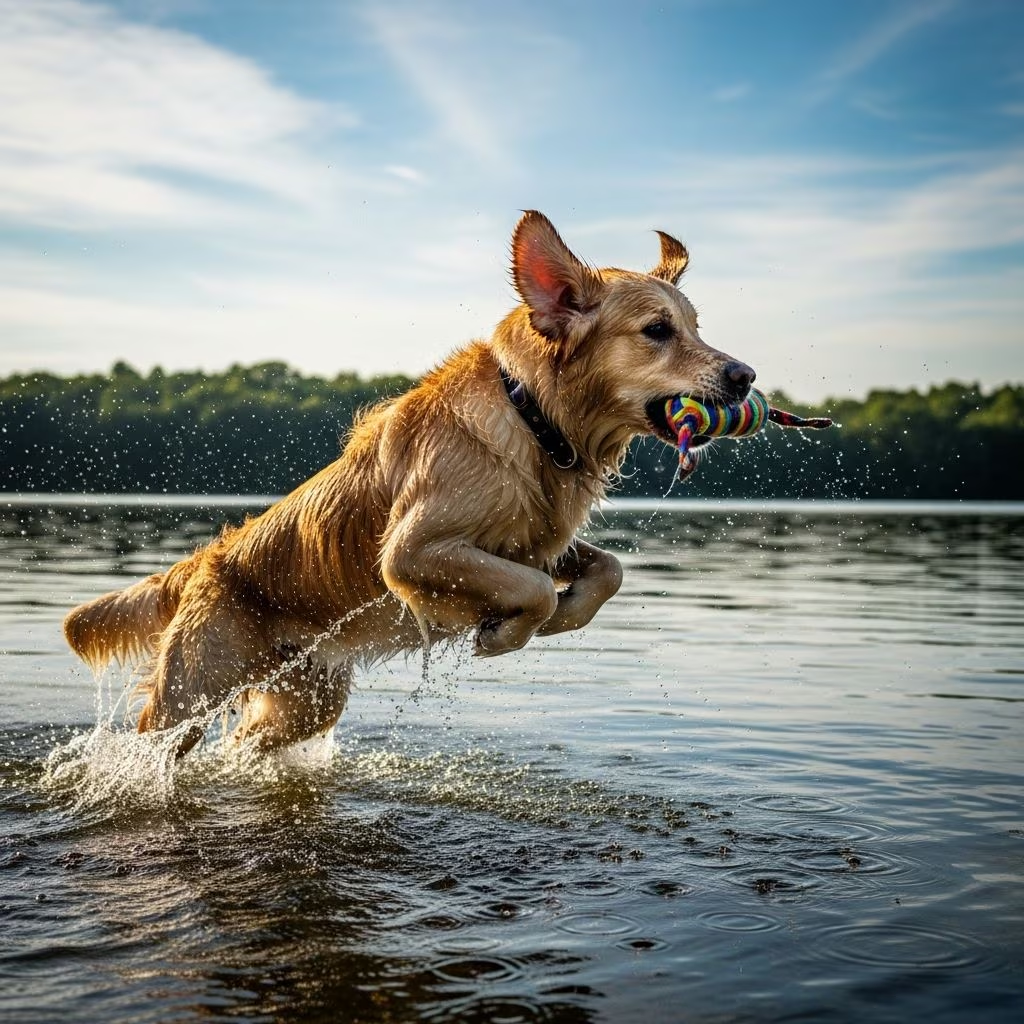
Water activities offer remarkable benefits for dogs, from improved cardiovascular fitness to enhanced mental stimulation and stronger bonds with their owners. However, the excitement of water environments creates unique challenges for dog handlers. The most critical skill for safe water play is not a swimming technique or a special waterproof collar—it’s a dependable recall command that your dog will follow instantly, even when distracted by the sights, sounds, and sensations of aquatic play.
While many dog owners focus on teaching their pets to swim or introducing them to new water environments, few recognize that obedience fundamentals become exponentially more important near water. A dog who ignores a recall command on dry land poses manageable risks; the same dog ignoring you at a lake’s edge could face life-threatening situations within seconds. This article explores why recall training should be your foundation before any water activities begin and provides practical strategies for developing this critical skill.
Why Water Play Intensifies Training Challenges
Dogs experience water environments differently than terrestrial settings. The sensory overload—splashing sounds, moving reflections, temperature changes, and prey drive triggers from floating objects or waterfowl—creates competing motivations that challenge even well-trained dogs. What makes this particularly dangerous is that water amplifies the consequences of disobedience.
When a dog bolts across a park, you have seconds to intervene. When a dog ignores recall near water, those same seconds could result in:
- Uncontrolled entry into water too deep for their swimming ability
- Panic responses that lead to dangerous situations
- Distance from the owner making rescue impossible
- Swallowing contaminated water from lakes or ponds
- Hypothermia in cold water environments
This reality means that dogs brought to water environments without solid recall training aren’t just mildly disobedient—they’re genuinely at risk. The water setting transforms a behavioral issue into a safety emergency.
Understanding How Dogs Process Recall Commands in High-Distraction Settings
Most dogs understand “come” as a command. The challenge emerges when competing motivations override that understanding. A dog watching ducks scatter across a pond isn’t being deliberately disobedient when they ignore your call—their prey drive has literally consumed their attention.
Dogs don’t evaluate options and choose rebellion. Instead, they respond to whatever stimulus presents the strongest motivation in that moment. At a park, that might be another dog. Near water, that could be waterfowl, floating debris, or simply the novel experience of being wet.
The solution requires building recall through progressive desensitization to increasingly powerful distractions. A dog with perfect recall in your living room may fail completely in a novel water environment because the distraction levels aren’t comparable. Effective training means systematically introducing distractions before exposing your dog to water play.
Building Foundation Recall Before Water Exposure
The most common training mistake is introducing new environments and activities (like water) before the foundational behaviors are reliable. This approach practically guarantees failure and can condition your dog to ignore commands they’ve previously learned.
Start in controlled indoor environments: Begin recall training indoors where distractions are minimal and you control all variables. Use high-value rewards—treats your dog receives only during training—to build strong positive associations with the “come” command. Sessions should remain brief, typically five to ten minutes, and always end positively.
Introduce your dog to the recall cue on their terms: Rather than always calling your dog away from activities, reverse the training dynamic. Reward your dog for approaching you voluntarily, then associate this movement with your recall word. This builds the understanding that coming to you leads to good things, not the end of fun.
Progress through controllable variables: Once indoor recall is reliable, move outdoors to low-distraction environments like your backyard with gates closed. Gradually increase distance using a long leash while maintaining success rates above 90 percent before moving to new locations.
Progressively Building Distraction Tolerance
Real-world recall training requires systematic exposure to increasingly challenging distractions. The progression should follow a logical sequence that builds confidence and reliability:
| Training Stage | Environment | Distraction Level | Equipment |
|---|---|---|---|
| Foundation | Home indoors | Minimal | None required |
| Early outdoor | Backyard (enclosed) | Low | Optional long line |
| Expanding environment | Quiet park areas | Moderate | Long line (20+ feet) |
| High distraction | Busy parks | High | Long line for safety |
| Advanced application | Water environments | Very high | Consider life jacket |
Each stage should demonstrate reliability before advancing. If your dog’s recall success drops below 80 percent in a new environment, you’ve progressed too quickly and should return to the previous stage.
Transforming Recall Into a Game Rather Than a Command
Dogs who perceive “come” as ending their fun will naturally avoid returning to you. This psychological reality makes recall training fundamentally about marketing—you need your dog to see returning to you as more exciting than whatever they were doing.
One effective approach is hide-and-seek training. Rather than calling your dog away from activities, occasionally hide and let your dog discover you, then reward enthusiastically. This reverses the dynamic: instead of you summoning them away from fun, they’re excited to find you, and being with you becomes the rewarding experience.
Vary your rewards beyond treats. A favorite toy, enthusiastic play, or access to a preferred activity can all serve as motivators. The key is unpredictability—if your dog knows exactly what reward to expect, the motivation diminishes. Sometimes provide food rewards, sometimes engage in play, and sometimes simply allow them to resume their activity after returning briefly.
Never abuse recall by consistently using it to end playtime. If every time your dog returns to you means their fun ends, they’ll quickly learn to avoid you. Instead, practice calling them back multiple times during a session, rewarding, and immediately releasing them to play again.
Preparing for Water-Specific Recall Challenges
Water introduces novel elements that demand specific preparation. Before exposing your dog to actual water play, address these water-specific factors:
- Desensitize to water sounds: Play recordings of splashing and flowing water during regular training sessions with low volume, gradually increasing as your dog becomes comfortable.
- Practice recall while your dog is wet: A dog’s behavior changes when wet. Train recall indoors after bathing so your dog understands commands apply to their wet-state self.
- Introduce moving water targets: Use toys that float or move unpredictably to simulate waterfowl or fish. Train recall reliability around these moving distractions.
- Build confidence around water gradually: Introduce your dog to water in progression—hose play, kiddie pools, shallow water—with recall practice at each stage before advancing.
This preparation ensures that when your dog encounters actual water, the recall command isn’t competing with entirely novel sensations and distractions simultaneously.
The Critical Role of Consistency and Timing
Recall training fails when training approaches become inconsistent. If some family members enforce commands while others ignore them, or if you practice consistently for weeks then abandon training, your dog’s reliability will plateau or decline.
Additionally, timing of rewards is crucial. Your dog’s brain connects the reward to whatever behavior occurred in the two seconds immediately before receiving it. If you call your dog and they come after three seconds, but you delay the reward by ten seconds, your dog may associate the reward with standing still rather than returning to you.
The most effective approach rewards your dog the instant they reach you, creating a clear neurological connection between the behavior (returning quickly) and the positive outcome.
Practical Water Safety Beyond Recall
While recall is foundational, comprehensive water safety requires additional measures. Always supervise water activities without distraction—your full attention matters more than recall training alone. A life jacket provides security for inexperienced swimmers or in unfamiliar water environments.
Ensure fresh drinking water is available to prevent your dog from consuming lake, pool, or ocean water, which can cause gastrointestinal upset or dangerous electrolyte imbalances. After water play, rinse your dog thoroughly to remove chlorine, salt, or other contaminants from their fur.
Frequently Asked Questions
At what age should I start recall training?
Puppies can begin recall training as early as eight weeks old. Starting young builds strong foundations and positive associations with the command before competing motivations become powerful. However, adult dogs can learn reliable recall at any age—age alone is never a barrier to training success.
How long does it take to develop reliable water-specific recall?
Timeline varies based on your dog’s age, prior training, and individual temperament. Foundation recall typically requires 6-12 weeks of consistent practice. Building water-specific reliability requires additional 4-8 weeks of progressive water exposure with integrated recall training. Consistency matters more than duration.
What if my dog has poor recall despite previous training?
This typically indicates that previous training didn’t progress through enough distraction levels or wasn’t rewarded consistently. Return to foundation stages in controlled environments. Many dogs require retraining when transitioning to new environments or adding new distractions like water.
Can certain dog breeds learn water recall more easily?
Breeds with strong water instincts like Labradors and Retrievers may enter water more readily, but this doesn’t mean their recall will be automatically better. All dogs require systematic recall training regardless of breed; water-loving breeds sometimes develop stronger prey drive around waterfowl, creating unique training challenges.
Establishing Your Water Safety Foundation
The most important insight for dog owners is recognizing that water play safety begins long before your dog’s paws touch water. It begins with the fundamental understanding that your dog will return to you instantly, regardless of competing distractions.
Investing time in reliable recall training before water exposure isn’t excessive caution—it’s responsible ownership that enables genuine freedom. A dog with strong recall can safely explore water environments off-leash, swim in novel locations, and enjoy genuine autonomy because you maintain the ability to intervene instantly if needed.
The rewards of this investment extend far beyond water safety. A dog with reliable recall experiences more freedom, receives more outdoor time, and develops deeper confidence in their relationship with their owner. Water play simply makes this commitment to training especially critical, since the consequences of failure are far more severe than in terrestrial environments.
References
- The Joys and Benefits of Water Play for Dogs — Playful Pups Retreat. Accessed 2026. https://www.playfulpupsretreat.com/blog/the-joys-and-benefits-of-water-play-for-dogs/
- Teaching a Dog to Come When Called While They’re Swimming — Doggone Problems. Accessed 2026. https://www.doggoneproblems.com/pearl-come-when-called-when-swimming/
- Splish Splash! The Benefits of Water Play for Dogs in the Summer — Sea Paws Dog Resort. Accessed 2026. https://seapawsdogresort.com/splish-splash-the-benefits-of-water-play-for-dogs-in-the-summer
- The Importance of Recall Training for Dogs — Pooches At Play. Accessed 2026. https://poochesatplay.com/training-behaviour/importance-recall-training/
- Why Recall Is One of the Most Important Skills to Teach Your Dog — A Walk in the Park of Toledo. Accessed 2026. https://awalkintheparkoftoledo.com/news/why-recall-is-one-of-the-most-important-skills-to-teach-your-dog
- Why Dogs Love Water Play & How to Make it Safe and Fun — Bully Billows. Accessed 2026. https://www.bullybillows.eu/blogs/news/why-dogs-love-water-play-how-to-make-it-safe-and-fun
- Recall Training Guide: Teaching a Dog to Come When Called — CareCredit. Accessed 2026. https://www.carecredit.com/well-u/pet-care/recall-training-dog-guide/



