

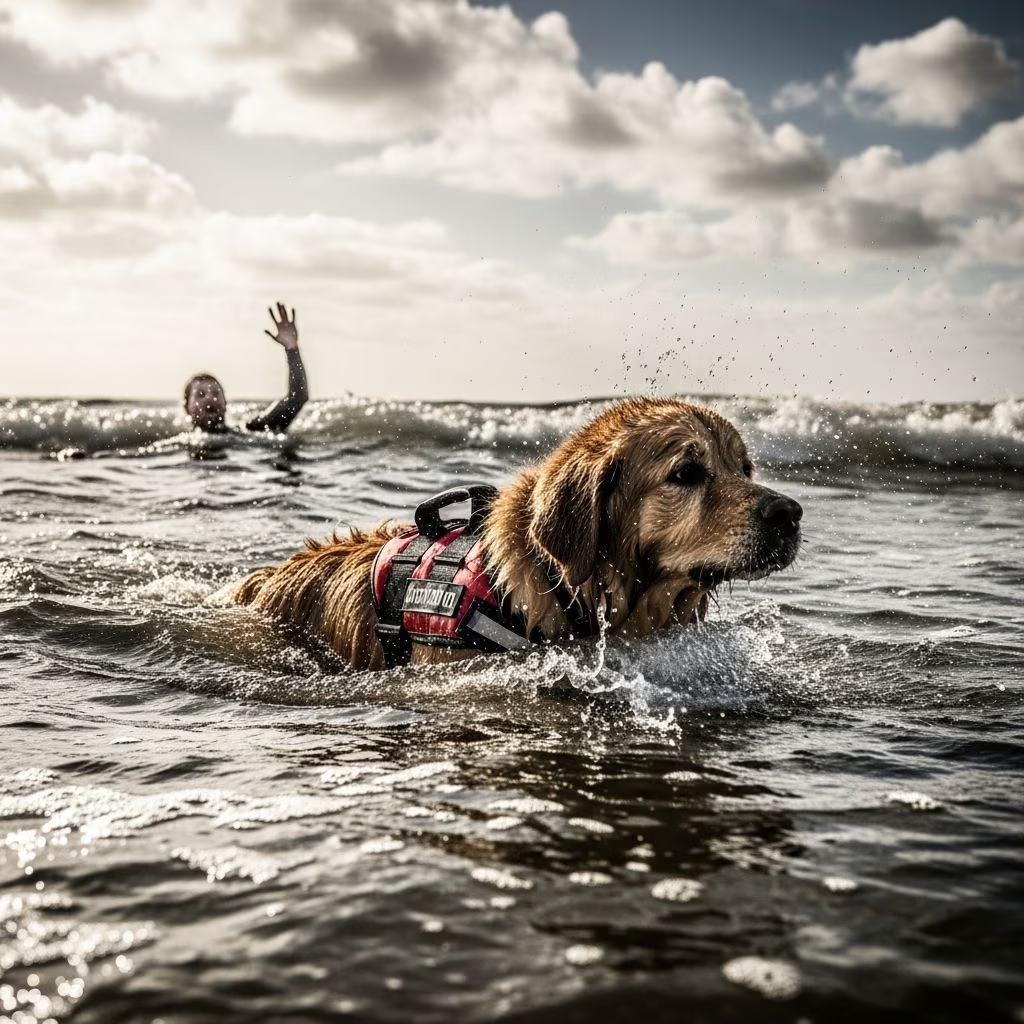
Water rescue dogs are highly trained canines specialized in performing daring aquatic rescues, often saving human lives during boating accidents, drownings, or floods. These dogs, primarily large breeds with natural swimming prowess, undergo rigorous programs to master skills like towing people to safety and retrieving vital equipment from choppy waters.
The Vital Role of Canine Lifeguards in Modern Emergencies
In regions prone to water-related incidents, such as coastal areas or lakesides, water rescue dogs serve as invaluable first responders. They complement human lifeguards by reaching distressed swimmers faster than boats or people can. Their ability to navigate rough waters and carry lifelines makes them indispensable in scenarios where time is critical.
Organizations worldwide certify these dogs through structured tests that simulate real-world dangers, ensuring reliability under pressure. Handlers, often the dogs’ owners, form deep bonds that enhance performance during high-stakes operations.
Top Breeds Excel in Aquatic Rescue Work
Certain breeds stand out due to their physical attributes: massive chests for buoyancy, webbed feet for propulsion, and thick fur for insulation in cold waters. The **Newfoundland** leads as the premier water rescue breed, renowned for its gentle temperament and strength.
- Newfoundland: Originating from Newfoundland, Canada, these giants can weigh over 150 pounds and swim for miles without fatigue.
- Leonberger: A German breed similar to Newfoundlands, with a lion-like mane and exceptional endurance.
- Portuguese Water Dog: Agile and versatile, historically used by fishermen for retrieving gear.
- Labrador Retriever: Athletic swimmers with retrieving instincts, adaptable to various rescue tasks.
These breeds instinctively love water, but selective breeding has honed their lifesaving potential over centuries.
Building a Strong Foundation: Early Puppy Training
Training begins around four months of age, focusing on socialization and basic obedience to prepare puppies for intense water work. Puppies learn commands like “sit,” “stay,” “come,” and “heel” on land first, using positive reinforcement such as treats and praise.
Introduction to water is gradual. Handlers play fetch with floating toys in shallow areas to build confidence. Daily exposure through swims and shoreline walks desensitizes pups to waves and currents, preventing fear-based resistance later.
| Training Phase | Key Focus | Duration |
|---|---|---|
| Basic Obedience | Commands, socialization | 4-6 months |
| Water Introduction | Play, shallow swims | Ongoing, 1-2 months |
| Retrieving Basics | Floating toys, ropes | 2-4 months |
Intermediate Skills: From Swims to Simulated Rescues
Once comfortable, dogs advance to longer swims, building stamina for extended rescues. Handlers swim ahead, encouraging the dog to follow and retrieve items like ropes tossed into deeper water. Praise and rewards reinforce success.
Leaping from boats is a pivotal skill. Starting close to shore, dogs learn to jump on command toward a handler in the water. Progress involves helpers on boats offering toys to create positive associations, gradually phasing out treats for voice cues alone.
Boat towing drills teach dogs to grasp lines and pull vessels to safety. In choppy conditions, sessions mimic real emergencies, with life jackets mandatory for all involved.
Advanced Maneuvers for Certified Rescue Dogs
Elite training includes complex sequences: jumping from boats, retrieving buoys, swimming precise distances, and dropping markers on command. Dogs must tow unconscious dummies or live actors to shore, demonstrating calm under duress.
- Underwater retrieves for submerged objects.
- Delivering life rings to victims 75 feet away.
- Handling multiple commands in sequence without handler guidance.
Professional e-collars, waterproof models from brands like Garmin or Dogtra, aid in teaching distance commands like “out,” ensuring dogs maintain safe positioning. Licensed trainers oversee these phases, often requiring 50 correct repetitions per skill for reliability.
Professional Programs and Certification Standards
Institutions like the American Academy of Canine Water Rescue offer workshops and one-on-one instruction. Programs cover shore rescues, boat leaps, and victim towing, culminating in certification tests.
Trials demand precision: dogs follow handler signals to marker buoys, swim beyond boundaries, and return flawlessly. Land-based pre-training for “take,” “hold,” and “give” transfers seamlessly to water.
Northern Newfoundland Club manuals emphasize group sessions, with each dog working 30 minutes per outing for optimal progress over a year.
Equipment Essentials for Safe Water Training
Key gear includes floating leashes, record cards for progress tracking, verbal command lists, and small boats for leap drills. Life vests with handles allow victim grabs, while knotted ropes simulate lifelines.
- Floating retrieval toys and buoys.
- Waterproof e-collars for advanced control.
- Harness with towing straps.
Safety protocols mandate supervision, calm waters initially, and weather monitoring.
Real-World Impact: Stories of Canine Valor
Water rescue dogs have saved countless lives. In one demonstration, a Newfoundland leaped from a boat, retrieved a line, and towed a mock victim through waves, showcasing split-second decision-making. Patrol dogs scan beaches, alerting to swimmers in peril.
Handlers report unbreakable trust; dogs detect panic in voices and scents, prioritizing the most vulnerable.
Challenges and Commitment in Water Rescue Training
Success demands consistency—frequent sessions prevent regression. Puppies may hesitate, requiring patience. Weather, dog health, and handler fitness pose hurdles, but bonds forged yield lifelong partners.
Owners commit to yearly maintenance drills post-certification, ensuring readiness.
FAQs
What age should water rescue training start?
Around 4 months, with basic obedience preceding water exposure.
Can any dog become a water rescuer?
No, water-loving breeds with size and stamina, like Newfoundlands, are ideal.
How long does full certification take?
Up to a year, with daily practice accelerating progress.
Are life jackets required for training?
Yes, especially in advanced or rough water sessions for safety.
Where can I find training programs?
Academies like American Academy of Canine Water Rescue offer certified courses.
References
- How to Train a Newfoundland for Water Rescue — Wagwalking. 2018-02-20 (edited 2021-01-08). https://wagwalking.com/training/train-a-newfoundland-for-water-rescue
- Canine Water Sports for Aquatic Service Dogs — Whole Dog Journal. N/A. https://www.whole-dog-journal.com/training/tricks_games_sports/canine-water-sports-for-aquatic-service-dogs/
- Water Training Manual — Northern Newfoundland Club. 2007-06-29. https://northernnewfoundlandclub.org.uk/docs/Water_training_manual.pdf
- Programs – American Academy of Canine Water Rescue — K9 Lifeguards. N/A. https://k9lifeguards.org/our-programs/
- Training Dogs to Rescue People From the Ocean or Lake — YouTube (Maria Gray, American Academy of Canine Water Rescue). N/A. https://www.youtube.com/watch?v=Pqrz2qtRjh4



