

Want a Purebred Dog? How to Avoid Supporting Puppy Mills
For many dog lovers, the desire to bring home a purebred dog with specific traits, appearance, or temperament is understandable. However, the path to obtaining a purebred dog is fraught with ethical concerns, particularly regarding puppy mills — large-scale commercial breeding operations that prioritize profit over animal welfare. Understanding how to source a purebred dog responsibly is crucial not only for the welfare of individual dogs but also for combating an industry built on exploitation and suffering.
Understanding Puppy Mills and Their Impact
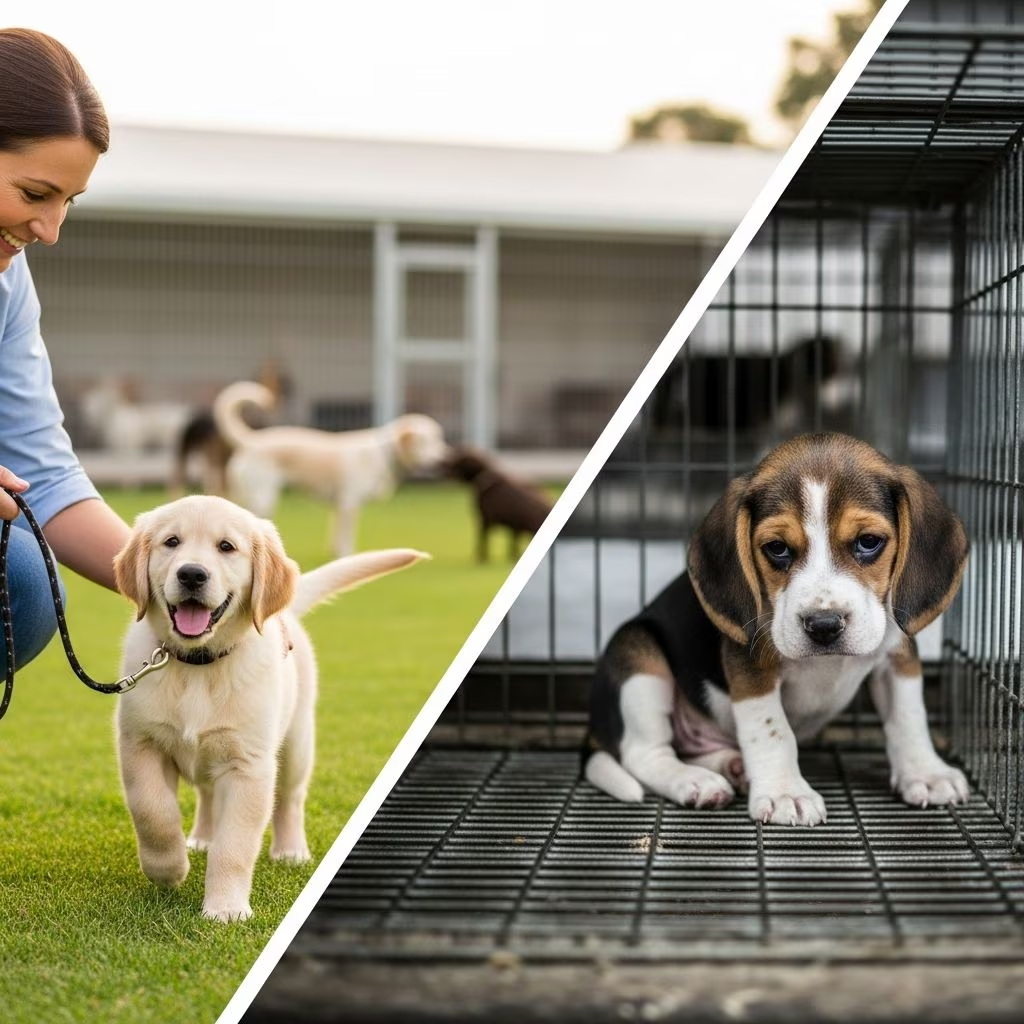
Puppy mills are factory farms for dogs where profit takes priority over the health, comfort, and welfare of animals. These large-scale commercial dog-breeding operations confine dogs to small enclosures for their entire reproductive lives with little to no exercise or positive human contact. The sole purpose of such facilities is to mass-produce puppies to sell them for profit through retail pet stores and via the internet.
The conditions within puppy mills are deliberately designed to maximize output rather than ensure quality of life. Dogs are housed in very small enclosures, live in unsanitary living quarters, are fed inferior-quality food, are denied decent medical care, and are severely deprived of positive human social contact. Federal regulations, while present, impose only minimal standards on breeders. For example, it is legal for licensed breeders to own 1,000 or more dogs, to deprive them of socialization and exercise, and to confine them to wire cages for their entire lives without ever being taken out for walks or standing on solid ground.
The Psychological and Behavioral Toll on Puppy Mill Dogs
Research has revealed the devastating impact that puppy mill conditions have on dogs’ mental and emotional well-being. Studies conducted by Best Friends Animal Society demonstrate that dogs kept in large-scale breeding facilities suffer not only while they are confined there but carry emotional scars for years, even when placed in loving homes.
The psychological consequences are profound and often permanent. Dogs rescued from puppy mills exhibit a broad range of abnormal behavioral and psychological characteristics, including:
– Significantly elevated levels of fears and phobias- Pronounced compulsive and repetitive behaviors, such as spinning in tight circles and pacing- House soiling issues- Heightened sensitivity to being touched and picked up- Difficulty adapting to normal home environments
The psychological harm demonstrated in these dogs is severe and long-lasting. Much of the harm is irreparable and will remain a continued source of suffering for years after the dogs leave the breeding facility — in some cases for the entire lifetime of the dog. Consumers purchasing puppies from pet stores are unknowingly assuming a risk of difficult and serious behavior problems in their dogs, including dog behavior that can endanger their own safety.
How to Identify Ethical Breeders
If you have decided that you want a purebred dog, the most responsible approach is to seek out an ethical, reputable breeder. Here are key characteristics to look for when evaluating a potential breeder:
Transparency and Communication
Ethical breeders are open about their practices and welcome questions about their breeding program. They will provide references from previous customers and may allow you to visit their facilities. They can explain their breeding choices, health testing protocols, and how they ensure the welfare of their dogs.
Health Testing and Certifications
Responsible breeders conduct genetic and health testing on their breeding dogs to minimize the risk of hereditary health problems. They should be able to provide documentation of health screenings such as hip and elbow evaluations, eye certifications, and breed-specific genetic tests.
Limited Breeding
Ethical breeders typically produce litters infrequently and keep detailed records of their dogs. They are not running a puppy factory but rather carefully planning each breeding to improve the breed while maintaining individual dog welfare.
Breed Knowledge and Standards
Reputable breeders are deeply knowledgeable about their breed. They understand breed standards, temperament traits, and the specific needs of their dogs. They are passionate about the breed and are motivated by something other than profit alone.
Lifetime Responsibility
Ethical breeders consider themselves responsible for every dog they bring into the world. Many will include contract clauses requiring that if you can no longer care for the dog, it must be returned to the breeder rather than surrendered to a shelter.
Red Flags to Avoid
Knowing what to avoid is equally important as knowing what to seek. Watch out for these warning signs that indicate a breeder may be operating a puppy mill or unethical breeding operation:
| Red Flag | What It Indicates |
|---|---|
| Availability of multiple breeds at all times | Suggests a puppy mill rather than a specialized breeder |
| No health testing documentation | Indicates lack of concern for genetic health issues |
| Pressure to purchase quickly | A sign the breeder prioritizes sales over careful placement |
| Unwillingness to discuss breeding practices | Suggests the breeder has something to hide |
| Sales through pet stores or classified ads | Pet stores and online marketplaces are common puppy mill distribution channels |
| Inability or unwillingness to provide references | Indicates lack of transparency and accountability |
| Prices significantly lower than breed standard | May indicate corner-cutting on health and welfare |
| Lack of written contract or guarantees | Suggests the breeder takes no responsibility for their dogs |
Where Puppy Mills Sell Their Dogs
Understanding the distribution channels for puppy mill dogs helps you avoid unknowingly supporting these operations. There are still roughly 600 pet stores in the U.S. selling puppy mill dogs, including Petland, the largest national chain procuring puppies from commercial breeders. Many stores market themselves as having puppies available year-round with no waiting period — a clear indicator of puppy mill sourcing.
Beyond traditional pet stores, puppy mills have adapted their business models to reach consumers through:
– Online classified advertisements and social media platforms- Roadside sales and flea market vendors- “Backyard” breeders operating without regulation- Online marketplaces that are difficult to regulate
As legislation has restricted some traditional sales channels, the industry has simply shifted to new distribution methods. Best Friends Animal Society volunteers have flagged over 1.9 million prohibited puppy and kitten sales ads since 2019, demonstrating the scale of the problem.
Better Alternatives to Consider
Before settling on obtaining a purebred dog from a breeder, consider these alternatives that support animal welfare:
Breed-Specific Rescues
Many purebred dogs end up in rescue organizations dedicated to specific breeds. These rescues can connect you with purebred dogs needing homes while supporting ethical animal welfare work.
General Animal Shelters and Rescues
Shelters often have dogs that are purebred or purebred mixes. Adopting from a shelter saves a life and provides resources to communities working to end shelter killing.
Adoption Events and Networks
Many communities have adoption networks and events where rescue organizations connect available dogs with potential homes. These events allow you to meet dogs in person and learn about their backgrounds.
Supporting Legislative Change
Individual consumer choices matter tremendously, but systemic change requires legislative action. More than 440 cities, counties, and states have enacted humane pet sales laws across North America. These laws prohibit retail pet stores from selling puppies bred in commercial facilities and instead encourage stores to adopt a humane model in which they partner with shelters and rescue groups.
If you want to help end puppy mills, you can support organizations working to pass similar legislation in your area. You can also report puppy mill puppies being sold illegally on platforms like Craigslist to help remove prohibited content.
Making an Informed Decision
The journey to obtaining a purebred dog requires careful consideration and due diligence. The time you invest in research, asking questions, and evaluating breeders is time well spent. By choosing to support ethical breeders and avoiding puppy mills, you contribute to a market that rewards responsible breeding practices and punishes exploitation.
Your choice to purchase from an ethical breeder rather than a puppy mill sends a powerful message about what consumers value. It demonstrates that animal welfare matters and that you are willing to take extra steps to ensure that the dog you bring into your home was raised in humane conditions by someone who genuinely cares about the breed and the individual animals in their care.
Frequently Asked Questions
Q: How can I tell if a breeder is legitimate?
A: Legitimate breeders are transparent about their practices, provide health testing documentation, have references available, limit their breeding, and maintain long-term responsibility for their dogs. They should welcome your questions and facility visits.
Q: Are puppy mill puppies always unhealthy?
A: While not every puppy mill dog is physically ill, research shows they carry significant psychological and behavioral scars from their early experiences. They are also at higher risk for genetic health problems due to lack of health testing.
Q: What should I do if I already have a puppy mill dog?
A: Rescued puppy mill dogs need patience, consistency, and often professional help with behavioral issues. Many can eventually adapt to home life, though some psychological damage may be permanent. Consider working with a behavioral specialist experienced with rescue dogs.
Q: Are there breed-specific rescues for all dog breeds?
A: Most popular breeds have rescue organizations dedicated to them. Even for less common breeds, general rescues may have dogs of that breed available. Searching online for “[breed name] rescue” in your area is a good starting point.
Q: What can I do to help stop puppy mills?
A: You can support organizations working on puppy mill legislation, report illegal puppy sales online, educate others about the issue, and most importantly, refuse to purchase from puppy mills or pet stores that sell mill-bred puppies.
Q: Why do puppy mills still exist if they are so harmful?
A: Puppy mills continue because current federal regulations impose only minimal standards that don’t adequately protect dogs. Additionally, consumer demand for affordable puppies and lack of awareness about puppy mills fuel the industry.
Q: Can I purchase a purebred dog responsibly?
A: Yes, by finding an ethical breeder who prioritizes dog welfare, conducts health testing, is transparent about practices, and limits breeding. It requires more time and effort than purchasing from a pet store, but it supports responsible breeding.
References
- Puppy Mills—USA Today Reports on Breakthrough Study by Best Friends Animal Society — Best Friends Animal Society. https://bestfriends.org/stories/julie-castle-blog/puppy-mills-usa-today-reports-breakthrough-study-best-friends-animal
- What to Expect When Rescuing a Puppy Mill Dog — Best Friends Animal Society. https://bestfriends.org/pet-care-resources/what-expect-when-rescuing-puppy-mill-dog
- Stopping Puppy Mills — Best Friends Animal Society. https://bestfriends.org/stories/best-friends-magazine/stopping-puppy-mills
- Studies of Dogs From Puppy Mills — Best Friends Animal Society. https://bestfriends.org/pet-care-resources/studies-dogs-puppy-mills
- What Are Puppy Mills and Why Are They Bad? — Best Friends Animal Society. https://bestfriends.org/pet-care-resources/what-are-puppy-mills-and-why-are-they-bad
- The Simple Way to Stop Puppy Mills — Best Friends Animal Society. https://bestfriends.org/stories/best-friends-magazine/simple-way-stop-puppy-mills



