

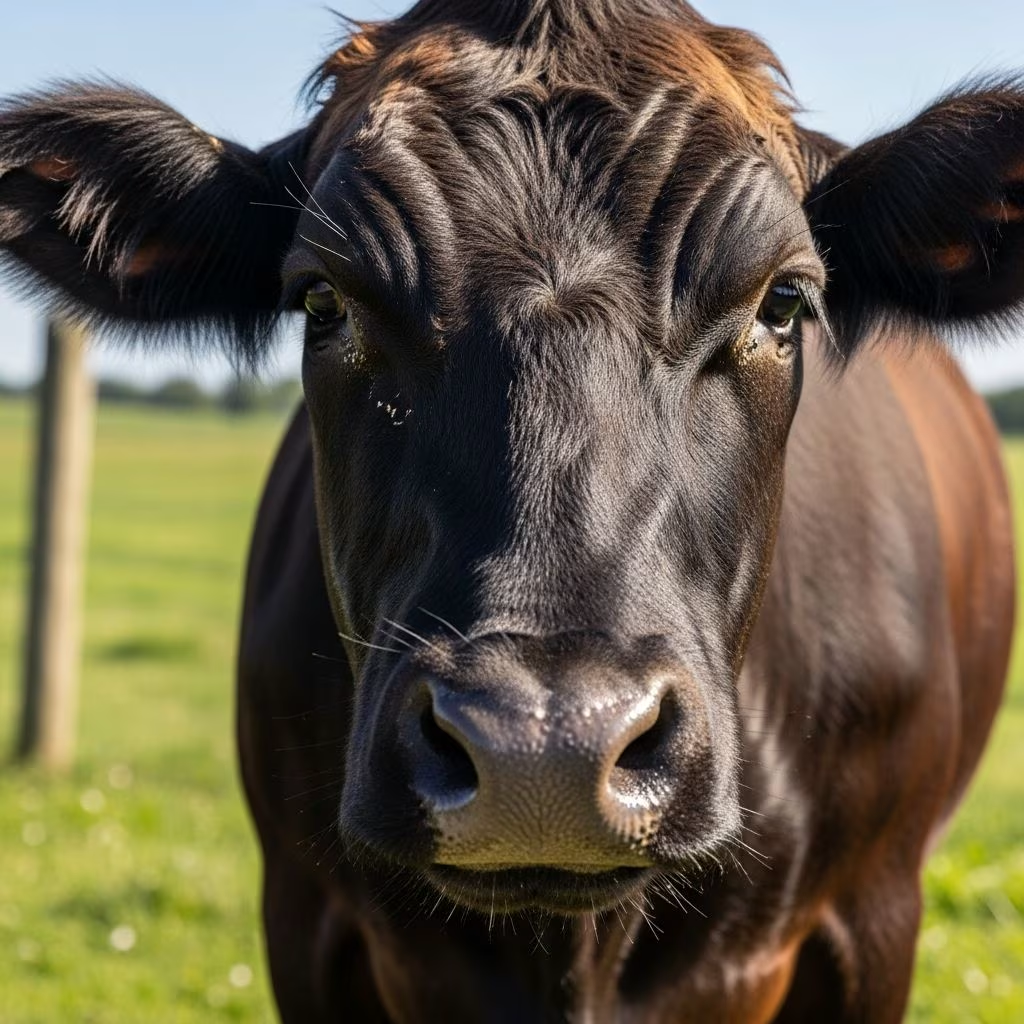
Vitamin D3 toxicity arises when cattle receive excessive amounts of cholecalciferol, disrupting calcium balance and causing severe physiological damage. This condition, often linked to nutritional mismanagement, manifests through hypercalcemia, tissue mineralization, and multi-organ failure if not addressed promptly.
Mechanisms Behind Vitamin D3 Overload
Cholecalciferol, the primary form of vitamin D3, regulates calcium and phosphorus homeostasis by enhancing intestinal absorption, renal reabsorption, and bone mobilization. In toxicity cases, elevated levels overwhelm these systems, leading to hypercalcemia and hyperphosphatemia within 24-72 hours post-exposure. The liver converts cholecalciferol to 25-hydroxycholecalciferol, and kidneys to active 1,25-dihydroxycholecalciferol (calcitriol), amplifying effects on target tissues.
In cattle, this process accelerates soft tissue calcification, particularly in kidneys, heart, and blood vessels. The calcium-phosphorus product exceeds critical thresholds (often >60), precipitating minerals in vital organs and impairing function. Unlike deficiency states, excess vitamin D3 persists due to its long half-life, prolonging recovery even after source removal.
Common Sources of Toxicity in Bovine Herds
Farmers inadvertently expose cattle to toxic doses through contaminated feeds or supplements. Over-supplementation during housing periods, when natural sunlight synthesis is limited, poses high risk. Injections or feed additives exceeding 10,000 IU/kg dry matter can trigger acute onset.
- Feed contamination: Premixes with mislabeled vitamin D3 levels, often from manufacturing errors.
- Injection overdoses: Routine prophylactic doses mistakenly repeated or calculated incorrectly for body weight.
- Mineral mixes: High-potency blocks or licks containing cholecalciferol variants.
Large-scale outbreaks occur in confined feeding operations where uniform dosing affects entire groups. Rodenticide baits, though less common in cattle, represent secondary exposure risks via pasture contamination.
Recognizing Early Clinical Indicators
Symptoms emerge 12-48 hours post-ingestion, starting subtly before escalating. Initial signs include reduced feed intake, lethargy, and increased thirst/urination (polyuria/polydipsia), reflecting early hypercalcemia.
| Stage | Symptoms | Duration Post-Exposure |
|---|---|---|
| Early (12-24 hrs) | Anorexia, depression, polydipsia | Initial hypercalcemia onset |
| Moderate (24-72 hrs) | Vomiting, diarrhea, weakness, ataxia | Peak serum calcium levels |
| Severe (>72 hrs) | Recumbency, tremors, renal failure signs | Mineralization and organ damage |
Advanced cases show muscle rigidity, cardiac arrhythmias, and respiratory distress. Cattle may exhibit grinding teeth (bruxism) from abdominal pain and dehydration from diuresis. Without intervention, mortality reaches 50-90% within days.
Diagnostic Approaches for Confirmation
Veterinary assessment begins with history of recent feed changes or supplements. Blood analysis reveals hallmark elevations: serum calcium >12 mg/dL, phosphorus >8 mg/dL, alongside azotemia (elevated BUN/creatinine) indicating renal compromise. Hypokalemia and metabolic acidosis often accompany.
- Biochemistry panel: Quantifies Ca:P ratio and renal markers.
- Urinalysis: Detects hematuria, casts, and low specific gravity.
- Imaging: Ultrasonography shows renal nephrocalcinosis; radiographs reveal vascular calcifications.
- Histopathology: Post-mortem confirms medullary mineralization in kidneys and gastric mucosa.
Differential diagnoses include hypocalcemia (milk fever), uremic syndromes, or plant toxicities (e.g., Solanum spp.). Serial monitoring tracks response to therapy.
Therapeutic Strategies and Management
No specific antidote exists, so treatment focuses on calciuresis, diuresis, and supportive care. Aggressive IV saline (0.9% NaCl at 200-300 mL/kg/day) promotes calcium excretion via kidneys. Furosemide (1-2 mg/kg IV q12h) enhances this after hydration.
Pamidronate (0.5-1.5 mg/kg IV single dose) or zoledronate bisphosphonates inhibit bone resorption, rapidly lowering calcium. Prednisolone (1-2 mg/kg/day) counters vitamin D effects. Monitor electrolytes closely to avoid hypokalemia.
- Initiate fluid therapy immediately upon suspicion.
- Administer bisphosphonates within 24-48 hours of onset.
- Provide renal support; dialysis rarely feasible in cattle.
- Nutritional correction: low-calcium diet post-stabilization.
Prognosis improves with early detection; survival exceeds 70% if calcium normalizes within 5 days. Chronic cases risk permanent renal scarring.
Preventive Measures for Cattle Operations
Prevention hinges on precise nutrition. Analyze all premixes for vitamin D3 content and adhere to NRC guidelines (110 IU/kg dry matter maintenance; up to 300 IU/kg lactation). Segregate high-risk supplements and train staff on dosing.
- Regular feed audits and lab testing for contaminants.
- Body condition scoring to tailor supplementation.
- Pasture rotation avoiding rodenticides near grazing areas.
- Record-keeping of injection schedules to prevent overlaps.
Educating producers on toxicity risks during winter housing reduces incidence. Biosecurity protocols limit accidental exposures.
Pathophysiological Impacts on Production
Beyond acute mortality, survivors face reduced milk yield (20-50% drop), infertility, and culling rates up 30%. Mineralized tissues impair rumen function, exacerbating weight loss. Economic losses compound from treatment costs ($500-2000/head) and lost productivity.
Long-term, herds show heightened susceptibility to secondary infections due to immunosuppression from hypercalcemia. Breeding programs must exclude affected animals to maintain genetic health.
Research Insights and Emerging Trends
Recent studies emphasize genetic variability in vitamin D metabolism among breeds, with Holsteins more resilient than Jerseys. Novel therapies like calcitonin analogs show promise in experimental models. FDA monitoring of pet foods underscores feed safety parallels for livestock.
Climate-driven housing increases supplementation needs, heightening toxicity vigilance. Integrated herd management software aids dosage tracking.
Frequently Asked Questions (FAQs)
What is the lethal dose of vitamin D3 for cattle?
Toxicity starts at 0.5-1 mg/kg body weight; lethal doses exceed 2-10 mg/kg depending on chronicity.
How quickly do symptoms appear in affected cattle?
Clinical signs begin 12-36 hours post-ingestion, peaking at 48-96 hours with calcitriol surge.
Can vitamin D3 toxicity be reversed?
Yes, with prompt fluid therapy and bisphosphonates; full recovery takes 2-4 weeks.
Is toxicity transmissible between cattle?
No, but shared contaminated feed affects groups simultaneously.
What lab values confirm diagnosis?
Hypercalcemia (>12 mg/dL), hyperphosphatemia, elevated BUN/creatinine.
Case Studies: Lessons from Field Outbreaks
In a 2023 Midwest dairy, 40 cows received 5x vitamin premix, yielding 15% mortality. Saline/furosemide stabilized survivors, but milk production lagged 3 months. Analysis revealed labeling error. Another case involved injectable overdose in beef calves, managed successfully with pamidronate, averting losses.
These underscore history-taking’s role in rapid intervention.
References
- Vitamin D supplements – toxic risks to our pets from the sunshine vitamin — Animal PoisonLine. 2017-11-23. https://www.animalpoisonline.co.uk/blogs/2017/11/23/vitamin-d-supplements-toxic-risks-to-our-pets-from-the-sunshine-vitamin/
- Vitamin D Toxicosis — Iowa Veterinary Specialties. N/A. https://www.iowaveterinaryspecialties.com/student-scholars/vitamin-d-toxicosis
- Cholecalciferol (Vitamin D3) Poisoning in Animals — Merck Veterinary Manual. N/A. https://www.merckvetmanual.com/toxicology/rodenticide-poisoning/cholecalciferol-vitamin-d3-poisoning-in-animals
- Clinicopathological Studies on Vitamin D3 Toxicity and Therapeutic Evaluation of Aloe vera in Rats — PMC (PubMed Central). 2011-02-08. https://pmc.ncbi.nlm.nih.gov/articles/PMC3052582/
- Vitamin D Poisoning in Cats — VCA Animal Hospitals. N/A. https://vcahospitals.com/know-your-pet/vitamin-d-poisoning-in-cats
- Vitamin D Toxicity in Dogs — U.S. Food and Drug Administration (FDA). N/A. https://www.fda.gov/animal-veterinary/animal-health-literacy/vitamin-d-toxicity-dogs



