

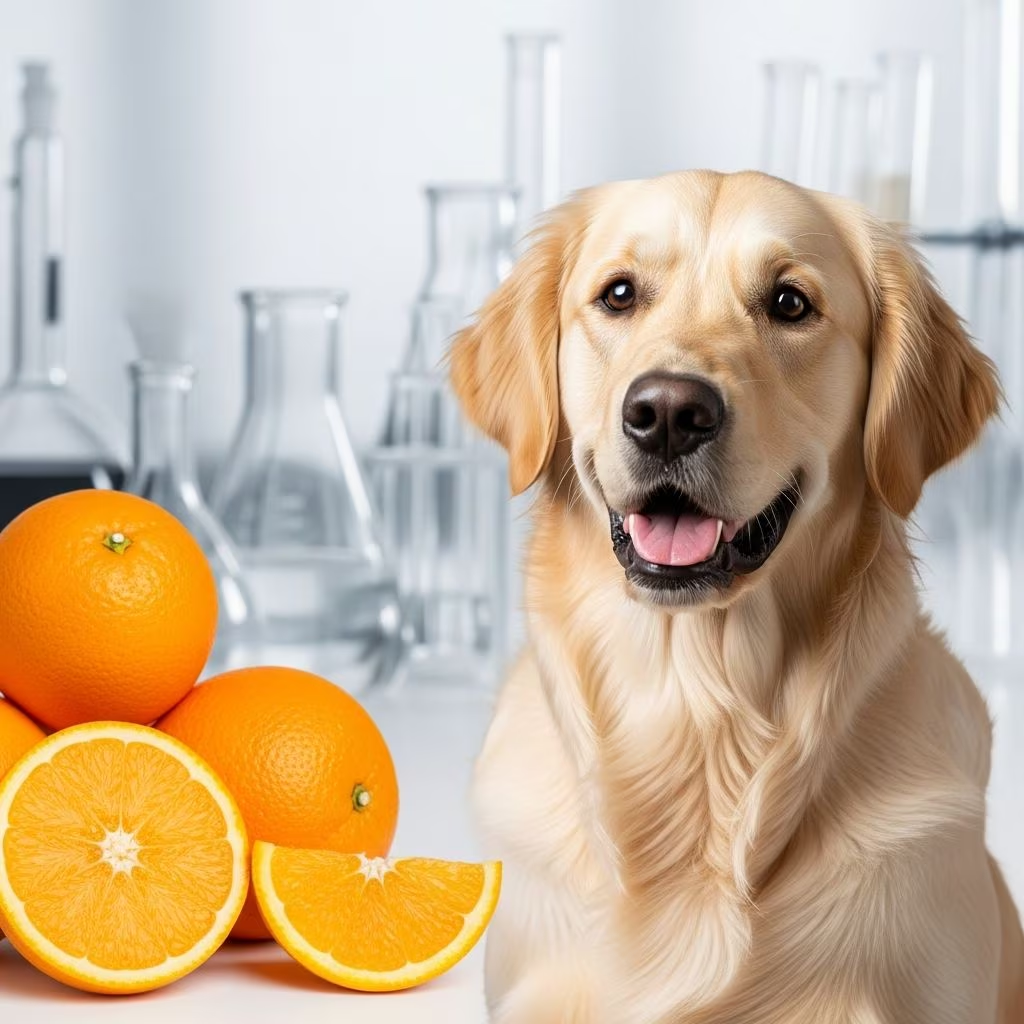
High-dose intravenous vitamin C has emerged as a promising supportive treatment for dogs battling cancer, selectively targeting malignant cells while sparing healthy ones and enhancing overall well-being.
The Science Behind High-Dose Vitamin C in Cancer Treatment
Vitamin C, or ascorbic acid, functions differently at pharmacological doses compared to nutritional levels. When delivered intravenously, it achieves blood concentrations that shift its role from antioxidant to pro-oxidant, generating hydrogen peroxide that damages cancer cell DNA and mitochondria, disrupting their energy production and leading to selective cell death. This mechanism exploits cancer cells’ vulnerability due to their high metabolic rates and poor antioxidant defenses, unlike normal cells which manage the peroxide effectively.
Research demonstrates significant tumor reduction: studies report 41-53% shrinkage in aggressive cancers like lung, brain, colon, breast, pancreatic, and ovarian types in animal models. A peer-reviewed study confirmed pharmacological ascorbate’s preferential cytotoxicity against canine cancer cells, including osteosarcoma, with safe administration in healthy dogs.
Advantages Over Traditional Chemotherapy
Unlike chemotherapy, which often causes nausea, hair loss, and immune suppression, high-dose IV vitamin C is well-tolerated, with minimal side effects. It relieves pain, protects normal cells from radiation and chemo damage, and improves quality of life by reducing fatigue and nausea. When combined with conventional therapies, it sensitizes cancer cells to drugs and radiation while shielding healthy tissues, potentially enhancing efficacy by 40-60% and curbing metastasis by 50-90%.
- Selective Toxicity: Kills cancer cells without harming healthy ones.
- Immune Boost: Strengthens defenses against tumor growth.
- Synergistic Effects: Amplifies chemo and radiation outcomes.
- Quality of Life: Lessens treatment side effects for better daily comfort.
Suitable Cancer Types in Dogs
This therapy benefits a broad spectrum of canine cancers, particularly in early stages or when standard treatments falter. Key responsive types include:
| Cancer Type | Reported Benefits |
|---|---|
| Lymphoma | Promotes remission, reduces side effects |
| Mast Cell Tumors | Inhibits growth, eases symptoms |
| Osteosarcoma | Cytotoxic in vitro, safe combo with chemo |
| Bladder Cancer | Supports immune response |
| Lymphocytic Leukemia | Enhances conventional therapy tolerance |
Data from veterinary clinics and studies highlight its utility across these, with ongoing trials for bone cancer combining it with chemotherapy.
Administration Protocols and Dosing
Treatment is tailored to each dog’s cancer type, stage, overall health, and concurrent therapies. Sessions occur via IV in a front or rear leg, starting with small doses that escalate gradually. Frequency varies: weekly for aggressive cases, bi-weekly for maintenance.
- Initial dose: Low to assess tolerance.
- Therapeutic range: High enough for pro-oxidant effects (blood levels >1 mM).
- Duration: 30-90 minutes per infusion.
- Monitoring: Kidney function, hydration status.
Vets adjust based on response; it’s safe alongside chemo/radiation, often given before/after to mitigate damage.
Safety Profile and Potential Risks
High-dose IV vitamin C is generally safe for dogs, with studies on lab beagles showing no adverse effects at cytotoxic levels. Common mild issues include temporary lethargy or vein irritation, resolved by slowing infusion. Avoid in dogs with calcium oxalate stones due to oxalate risk, or severe kidney disease.
Pharmacokinetic data confirm achievable cytotoxic plasma levels without toxicity in healthy canines, supporting its adjuvant role.
Integrating with Holistic and Conventional Care
Beyond cancer, it aids pets with weakened immunity, autoimmune issues, or inflammation. Pair with acupuncture, herbal remedies, and nutrition for comprehensive care. It bolsters immunity post-surgery, curbing metastasis.
In integrative oncology, it complements arsenic trioxide or other agents, promoting holistic recovery where pets “feel great” despite disease.
Real-World Outcomes and Veterinary Insights
Clinicians report slower tumor progression, better chemo tolerance, and improved well-being. A 2019 study noted effects on osteosarcoma cell lines, paving way for trials. Human parallels show quality-of-life gains, applicable to dogs.
Current Research and Future Directions
Ongoing trials test combinations for osteosarcoma and others, hypothesizing survival benefits. Veterinary oncology eyes it as standard adjuvant, with in vitro/in vivo data urging expanded studies.
Frequently Asked Questions (FAQs)
Is IV vitamin C a cure for dog cancer?
No, it’s a supportive therapy that enhances conventional treatments and improves life quality, not a standalone cure.
How often do dogs need treatments?
Typically 1-2 times weekly initially, then maintenance; customized by your vet.
Can it replace chemotherapy?
Not usually, but serves as primary when chemo is unsuitable due to side effects or patient weakness.
Are there side effects?
Rare and mild; monitor for kidney issues or stones.
How much does it cost?
Varies by clinic/dose; consult your vet for estimates.
Consulting Your Veterinarian
Discuss with an integrative oncology specialist to assess suitability. Review latest literature for informed decisions.
References
- High Dose Vitamin C Therapy For Pets — Bhatt Veterinary Specialty. 2023. https://www.bhattvetspecialty.com/high-dose-vitamin-c
- Intravenous (IV) Vitamin C Therapy for Cancer — Franklin TN Vet. 2013. https://franklintnvet.com/wp-content/uploads/2013/03/Intravenous-IV-Vitamin-C-Therapy-for-Cancer.pdf
- Pets Vitamin C Therapy — Mountain View Animal Hospital. 2023. https://mtnviewvet.net/holistic-services/vitamin-c-therapy/
- Vitamin C and Dog Cancer Update — Dog Cancer Blog. 2023. https://www.dogcancerblog.com/articles/full-spectrum-cancer-care/dog-cancer-diet/vitamin-c-and-dog-cancer-update/
- In vitro Cytotoxicity and Pharmacokinetic Evaluation of Pharmacological Ascorbate in Dogs — PMC/NIH. 2019-11-01. https://pmc.ncbi.nlm.nih.gov/articles/PMC6854015/
- Intravenous Vitamin C for Pets — Florida Wild Vet Hospital. 2023. https://www.floridawildvethospital.com/service/intravenous-vitamin-c/
- Vitamin C for Dogs with Cancer Dr. Nancy Reese Q&A — YouTube. 2023. https://www.youtube.com/watch?v=u5tfCI_vfYQ



