

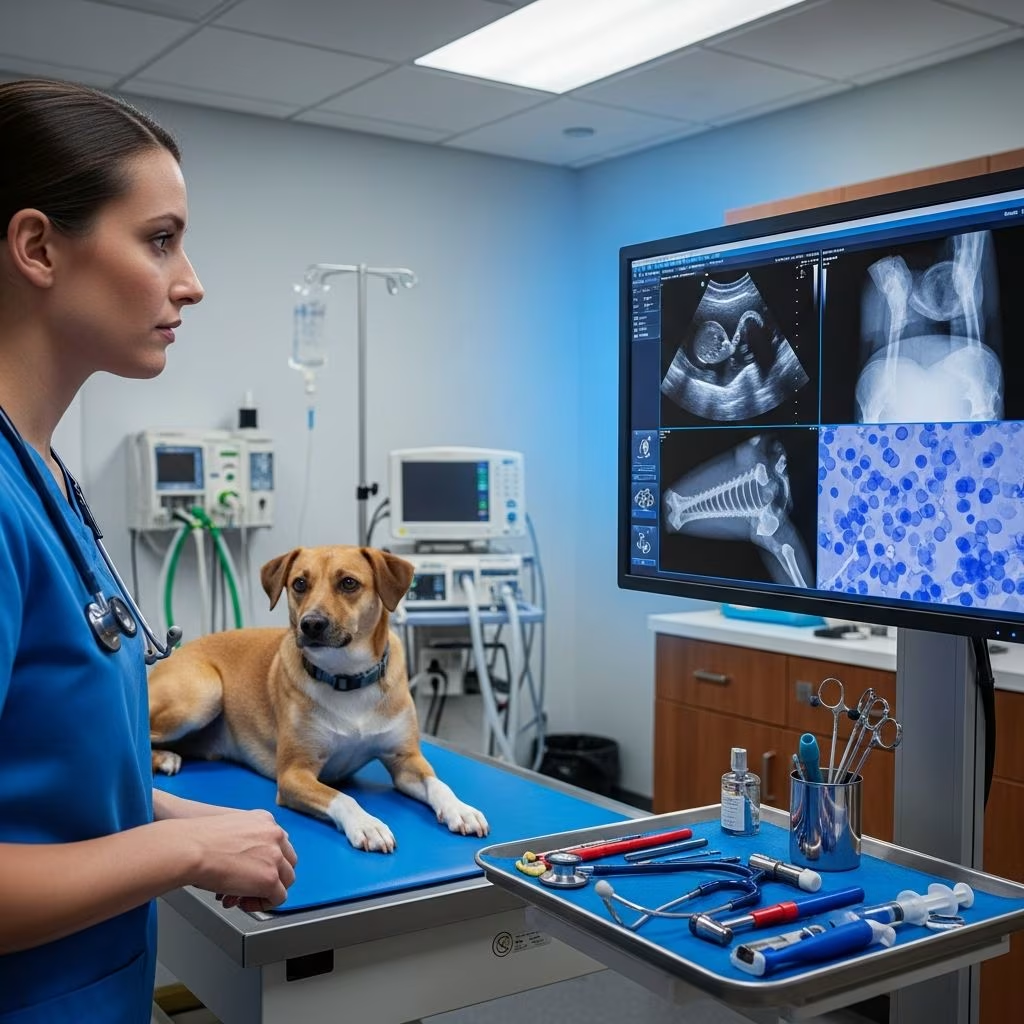
Introduction to Imaging in Animal Healthcare
The ability to visualize internal structures without invasive procedures represents one of the most significant advances in veterinary medicine. Diagnostic imaging encompasses a range of technologies that create detailed visual representations of an animal’s internal anatomy, enabling veterinarians to identify diseases, injuries, and abnormalities that would otherwise remain hidden. These imaging modalities serve as critical diagnostic tools that inform treatment decisions, guide surgical planning, and improve overall patient outcomes across all animal species.
Modern veterinary practice relies heavily on imaging technologies to supplement clinical examination and laboratory diagnostics. The advancement from film-based systems to digital imaging has revolutionized how veterinarians acquire, store, and analyze diagnostic images. This technological evolution has made imaging more accessible, cost-effective, and efficient, allowing practitioners to deliver more precise diagnoses and targeted therapeutic interventions.
Foundational Imaging: Radiography and Its Evolution
Radiography, commonly known as X-ray imaging, remains the cornerstone of veterinary diagnostic imaging. This technique uses ionizing radiation to penetrate body tissues and create two-dimensional images on specially treated plates or digital sensors. The fundamental principle involves directing an X-ray beam through a specific anatomical region, with the resulting image capturing differential absorption of radiation by various tissue types.
The transition from traditional film-based radiography to digital radiographic systems has fundamentally transformed clinical practice. Digital radiography offers numerous advantages over its predecessor, including immediate image availability, the ability to manipulate image contrast and brightness post-acquisition, reduced radiation exposure due to improved detector sensitivity, and seamless integration with digital medical records systems. These advancements have made radiography more efficient and practical in busy veterinary environments.
Clinical Applications of Radiography
- Musculoskeletal assessment: Evaluating fractures, joint diseases, bone infections, and degenerative conditions in limbs and spine
- Thoracic evaluation: Assessing lung fields, cardiac silhouette, and mediastinal structures for pneumonia, tumors, and cardiac abnormalities
- Abdominal imaging: Identifying foreign bodies, organ enlargement, free fluid, and abnormal gas patterns
- Contrast studies: Performing gastrointestinal and urinary tract investigations using administered contrast media to enhance visualization of hollow organs and ducts
- Skeletal surveys: Screening for developmental abnormalities, metabolic bone diseases, and neoplastic processes
Ultrasound Imaging: Real-Time Soft Tissue Visualization
Ultrasound represents a fundamentally different imaging approach compared to radiography. Rather than using ionizing radiation, ultrasound employs high-frequency sound waves that reflect off tissue interfaces to create real-time images. This non-ionizing imaging modality provides exceptional detail of soft tissue structures and fluid-filled organs, making it invaluable for assessing parenchymal diseases and organ-specific pathology.
The dynamic nature of ultrasound imaging allows veterinarians to visualize tissue motion and perform real-time guided procedures. Blood flow assessment through Doppler capabilities provides functional information about vascular perfusion and cardiac hemodynamics. The portability of modern ultrasound equipment enables bedside imaging, making it accessible for emergency cases and critically ill patients who may not tolerate transportation for other imaging modalities.
Organs and Systems Evaluated by Ultrasound
- Cardiac structure and function: Assessing chamber dimensions, wall thickness, valve function, and blood flow patterns for congenital and acquired heart disease
- Hepatic pathology: Evaluating liver parenchyma, detecting masses, assessing vasculature, and identifying cirrhotic changes
- Renal assessment: Examining kidney structure, detecting hydronephrosis, identifying stones and masses, and evaluating renal perfusion
- Gastrointestinal evaluation: Assessing wall thickness, detecting foreign bodies, identifying masses, and evaluating motility patterns
- Reproductive organs: Monitoring pregnancy, assessing ovarian and testicular pathology, and guiding reproductive procedures
- Soft tissue masses: Characterizing tumors and guiding biopsy procedures through real-time visualization
Advanced Cross-Sectional Imaging Modalities
Computed Tomography (CT)
Computed tomography generates detailed cross-sectional images by combining multiple X-ray projections acquired as the radiation source rotates around the patient. A computer reconstructs these projections into axial “slices” that can be individually reviewed or combined to create three-dimensional representations of anatomical structures. The exceptional spatial resolution of CT allows visualization of both bone and soft tissue with unprecedented clarity.
Modern CT systems offer significant advancements in image acquisition speed and quality. Multidetector CT technology enables rapid scanning of large anatomical regions while maintaining superior image resolution regardless of patient size. Recent developments in quantitative CT analysis have expanded diagnostic capabilities beyond simple anatomical assessment, allowing evaluation of tissue density changes and pathophysiological processes that cannot be detected through traditional radiography.
Cone beam CT represents a specialized variant particularly suited for dental and exotic animal imaging, providing enhanced spatial resolution with lower radiation doses compared to conventional multidetector systems. This adaptation has made advanced imaging more accessible for specialized veterinary disciplines.
Magnetic Resonance Imaging (MRI)
Magnetic resonance imaging operates on entirely different physical principles than radiography or CT. Rather than ionizing radiation, MRI uses a powerful magnetic field and radiofrequency pulses to align hydrogen nuclei in tissue, then detects the resulting electromagnetic signals to construct detailed images. This non-ionizing technique provides unparalleled soft tissue contrast resolution, making it the gold standard for neurological and spinal cord imaging.
The superior soft tissue differentiation of MRI allows visualization of tissue characteristics and pathological changes that remain indistinct on other imaging modalities. While traditional MRI requires the patient to remain motionless within a cylindrical bore, technological innovations have introduced standing MRI systems for equine patients, eliminating general anesthesia requirements and improving accessibility for large animal medicine.
Emerging Technologies and Future Directions
Positron Emission Tomography Combined with CT
Positron emission tomography-CT represents a sophisticated imaging approach that integrates anatomical information from CT with functional metabolic data from PET imaging. This technique involves administering radiopharmaceuticals that accumulate in tissues based on metabolic activity, allowing detection of cancerous lesions and inflammatory processes. The combination of anatomical and functional imaging provides diagnostic capabilities superior to either modality alone, particularly for tumor characterization and metastatic disease detection.
While cost considerations have limited widespread adoption in certain regions, PET-CT utilization continues expanding in veterinary research and clinical practice, particularly in the United States. Ongoing developments include tracking inflammatory markers through imaging, improving early disease detection, and predicting treatment response based on metabolic characteristics.
Artificial Intelligence Applications in Diagnostic Imaging
Artificial intelligence is increasingly transforming veterinary diagnostic imaging through multiple mechanisms. AI algorithms can enhance image quality by reducing noise and artifacts, improve diagnostic accuracy through automated abnormality detection and triage systems, and facilitate comparison across imaging modalities. While veterinary radiology currently has limited AI tool availability compared to human medical imaging, this represents a rapidly expanding field with substantial development potential.
Research initiatives are exploring image mapping technologies that correlate imaging findings across species and imaging modalities. These applications hold promise for improving diagnostic accessibility and reducing reliance on advanced imaging procedures through enhanced analytical capabilities.
Clinical Significance and Diagnostic Value
Non-Invasive Assessment Advantages
Diagnostic imaging provides veterinarians with non-invasive methods to evaluate internal structures without subjecting animals to surgical procedures or excessive stress. This approach enables thorough assessment of pathological processes while minimizing patient risk and discomfort. The ability to obtain detailed anatomical information through imaging supports more accurate diagnoses and more precise treatment planning.
Early Disease Detection and Prevention
Imaging modalities enable identification of diseases and abnormalities at earlier stages than clinical signs might suggest. Early detection facilitates timely intervention, potentially preventing disease progression and improving treatment outcomes. This proactive diagnostic approach proves particularly valuable for conditions requiring prompt therapeutic action, such as foreign body obstructions or acute traumatic injuries.
Specialized Applications Across Veterinary Disciplines
Emergency and trauma medicine: Imaging rapidly identifies life-threatening conditions including internal hemorrhage, pneumothorax, and organ rupture, enabling immediate stabilization and surgical intervention.
Oncology: Diagnostic imaging characterizes tumor margins, identifies metastatic disease, and monitors treatment response, supporting optimal cancer management strategies.
Orthopedics: Cross-sectional imaging reveals complex fracture patterns and ligamentous injuries that influence surgical planning and prognostic assessments.
Cardiology: Ultrasound and advanced imaging assess cardiac structure and function, diagnose congenital defects, and evaluate valvular disease severity.
Neurology: MRI provides definitive evaluation of brain and spinal cord pathology, detecting subtle abnormalities including demyelination and neoplastic infiltration.
Exotic medicine: Specialized imaging techniques accommodate unique anatomical features of non-traditional pets, enabling diagnostic assessment in species previously limited to clinical evaluation alone.
Practical Considerations and Accessibility
Factors Influencing Imaging Selection
Veterinarians must consider multiple factors when recommending specific imaging modalities for individual patients. Diagnostic question specificity determines which imaging technique provides optimal information for clinical decision-making. Patient stability and ability to tolerate positioning or anesthesia influence modality selection, as some techniques require prolonged restraint or sedation. Equipment availability varies substantially among practices based on geographic location and facility resources. Cost considerations affect client acceptance and may necessitate stepwise diagnostic approaches beginning with more accessible, affordable modalities before progressing to advanced imaging.
Species-Specific Limitations
Imaging accessibility varies considerably across animal species. Small animal practices frequently have ready access to radiography and ultrasound, with CT increasingly available in referral centers. Equine medicine has benefited substantially from standing cross-sectional imaging technologies that eliminate anesthesia requirements. Large exotic animal imaging remains challenging in many regions due to equipment size limitations and specialized handling requirements.
Frequently Asked Questions
Q: What is the primary advantage of digital radiography over traditional film radiography?
Digital radiography provides immediate image availability without chemical processing, enables post-acquisition image manipulation for optimal visualization, reduces radiation exposure through improved detector sensitivity, and facilitates seamless integration with digital medical records and teleradiology systems.
Q: Why is MRI considered superior to CT for neurological imaging?
MRI provides exceptional soft tissue contrast resolution without ionizing radiation, allowing visualization of subtle neural tissue changes and pathological processes that remain indistinct on CT. This superior tissue differentiation makes MRI the gold standard for brain and spinal cord imaging in veterinary medicine.
Q: When should ultrasound be chosen over radiography?
Ultrasound is preferred for detailed soft tissue organ evaluation, real-time assessment of tissue motion and blood flow, guided procedure performance, and cases where non-ionizing imaging is advantageous such as pregnancy evaluation and monitoring of critically ill patients.
Q: What role does CT play in trauma evaluation?
CT provides rapid comprehensive assessment of multiple body regions simultaneously, identifying subtle injuries involving complex anatomy, characterizing the full extent of injury, and detecting complications that may not be apparent on radiographs, guiding emergency surgical decisions.
Q: How do standing MRI systems benefit equine practice?
Standing MRI eliminates general anesthesia requirements, reduces anesthetic risk, enables outpatient imaging procedures, and facilitates detailed evaluation of complex limb structures critical for accurate lameness diagnosis and treatment planning in horses.
References
- Image is everything: new developments in diagnostic imaging — Vet Times. 2025. Accessed February 2026. https://www.vettimes.com/news/business/practice-developments/image-is-everything-new-developments-in-diagnostic-imaging
- 6 Ways Veterinary Diagnostic Imaging Is Essential for Animal Care — Asteris. Accessed February 2026. https://www.asteris.com/blog/veterinary-diagnostic-imaging-essential-for-animal-care/
- Diagnostic Imaging Techniques — Oregon State University College of Veterinary Medicine. Accessed February 2026. https://vetmed.oregonstate.edu/hospital/diagnostic-imaging-techniques
- Understanding Veterinary Diagnostics: Imaging — Open Sanctuary. Accessed February 2026. https://opensanctuary.org/understanding-veterinary-diagnostics-imaging/
- Imaging techniques in Veterinary Medicine. Part I: Radiography and Advanced Modalities — PubMed Central. 2022. https://pmc.ncbi.nlm.nih.gov/articles/PMC8529508/



