

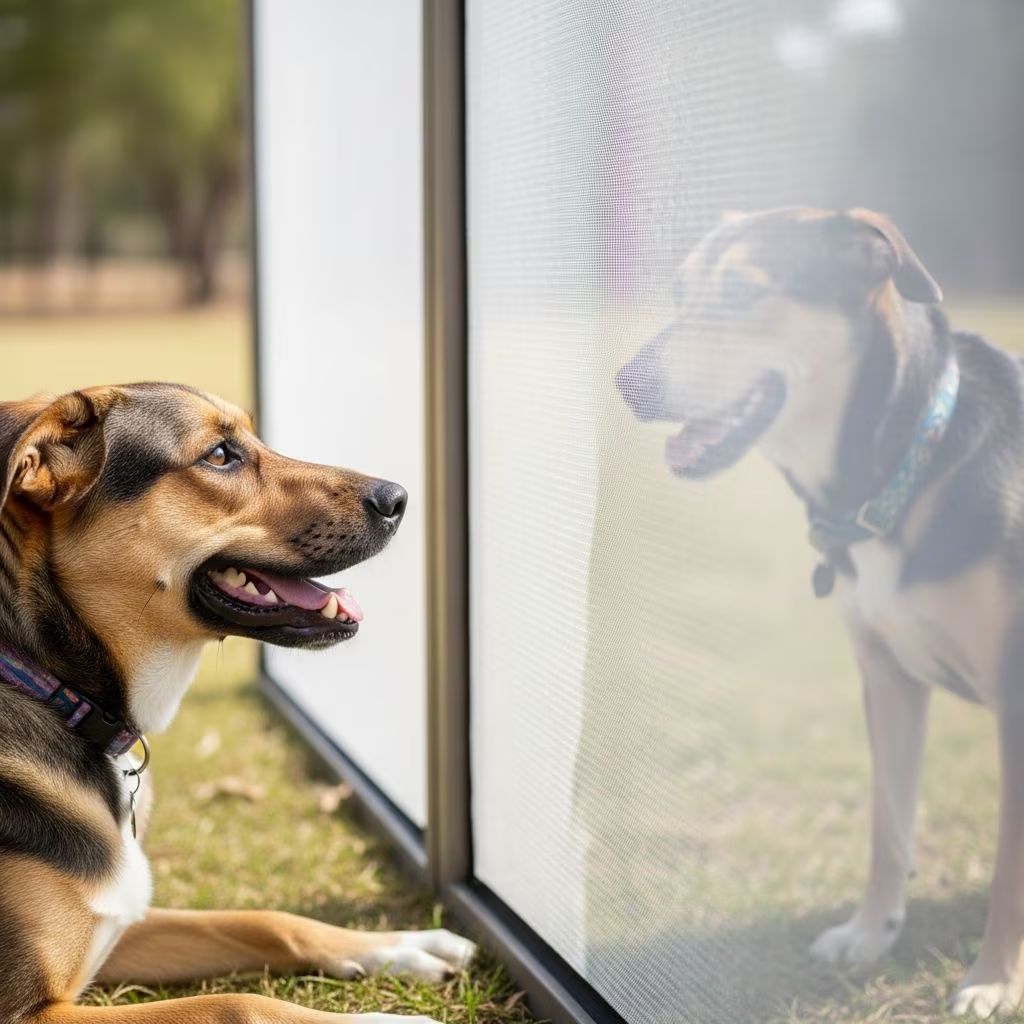
Understanding Visual Barriers and Dog Reactivity
Dogs are visual creatures, and what they see directly impacts their behavior and emotional state. For dogs prone to reactivity or aggression, visual triggers can spark an immediate physiological response that sets the stage for problematic behaviors. Whether your dog barks frantically at passersby from a window, lunges at other dogs on walks, or runs the fence line in an attempt to confront outdoor stimuli, visual barriers offer a practical and humane management solution.
Visual barriers work by interrupting the cycle of reactivity before it begins. When a dog cannot see a trigger, their brain doesn’t receive the visual stimulus that initiates the fight-or-flight response. This simple yet effective approach can transform your dog’s daily experience, reducing stress levels for both pet and owner.
How Visual Triggers Activate Reactivity
Understanding why visual barriers work requires examining how reactive behavior develops. Dogs navigate their world through multiple senses, but sight often triggers the most immediate and intense reactions. When a reactive dog catches a glimpse of a perceived threat—whether it’s a passing jogger, another dog, or even a squirrel—a cascade of physiological changes occurs almost instantaneously.
The moment a dog’s eyes lock on a trigger, adrenaline spikes, heart rate increases, and muscles tense in preparation for either confrontation or escape. This heightened arousal state creates the perfect conditions for barking, lunging, growling, or fence-running behavior. What makes this cycle particularly problematic is that repetition strengthens the behavior. Each time your dog sees the trigger and goes through the same chain of events, the reaction becomes more ingrained and intense.
When a dog is frustrated by a barrier—such as a fence they cannot breach or a leash restraining them—this frustration amplifies their reaction. The combination of visual stimulation and physical containment can intensify problematic behaviors, making the situation worse rather than better if not properly managed.
The Benefits of Limiting Visual Exposure
Implementing visual barriers offers benefits that extend far beyond simply reducing nuisance barking. By strategically blocking certain views, you provide your dog with a fundamentally calmer daily experience and help them avoid the intense adrenaline spikes that drive reactivity.
Stress Reduction and Behavioral Improvements
When your dog no longer has constant visual access to triggers, their stress levels drop noticeably. This reduced stress creates a ripple effect throughout your daily life together. Instead of fixating on every passerby, vehicle, or neighborhood cat, your dog can remain in a more neutral state. Over time, with consistent visual barrier implementation combined with positive reinforcement training, the habit of frantic barking can be replaced by calmer responses or no response at all.
The practical benefits of this approach are substantial. Training sessions become easier when your dog isn’t being visually prompted into “guard mode” constantly. Your own stress levels decrease as well, creating a more harmonious household dynamic. Most importantly, your dog experiences fewer panic episodes and aggressive outbursts, leading to better overall well-being.
Breaking the Reactivity Cycle
One of the most powerful advantages of visual barriers is their ability to interrupt the pattern that drives continued reactivity. By proactively limiting what your dog can see, you often prevent the behavior before it takes hold. This preventive approach is far more effective than trying to interrupt a dog mid-reaction.
Identifying Trigger Points and Vulnerable Areas
Before implementing visual barriers, identify where your dog’s reactivity most frequently occurs. Common problem areas include:
– Front windows where your dog can see street activity- Fence lines with gaps allowing views of neighboring properties- Glass doors leading to patios or yards- Elevated areas of your home providing views into neighbors’ yards- Locations along regular walking routes
Take time to observe your dog’s behavior patterns. When does your dog react most intensely? What specific triggers prompt the strongest responses? Are certain times of day more problematic? Understanding your dog’s unique trigger landscape allows you to implement targeted solutions.
Selecting Materials and Methods for Visual Barriers
Window Solutions
If your dog barks at window activity, several effective options exist. Closing curtains or blinds is the simplest approach, though it may limit your own view. Frosted window decals or film obscure the lower portion of windows where dogs typically focus their attention while allowing you to maintain visibility. Some pet owners use privacy curtains designed specifically for pets, combining aesthetics with functionality.
Fence Modifications
Chain-link and other see-through fences present particular challenges for reactive dogs. Solid fencing is the ideal solution, as it completely blocks visual access to outdoor stimuli that might trigger fence-running or barrier frustration. However, solid fencing may not be feasible due to cost, local regulations, or community restrictions.
If installing a solid fence isn’t possible, consider fence slats that can be inserted into chain-link fencing to create partial visual barriers. These slats work well for mild reactivity cases, though they may not fully deter determined fence-runners who can still see through gaps between slats.
Yard and Patio Barriers
For areas like raised decks or patios that provide views into neighbors’ yards, temporary barriers such as decorative screens, privacy panels, or shade cloths can effectively block sightlines. Portable barriers offer flexibility, allowing you to remove them when needed while maintaining the visual block during vulnerable times.
Step-by-Step Implementation Guide
Step 1: Assess Your Situation
Identify the primary locations where your dog displays reactive behaviors. Determine which triggers are most problematic and which areas of your home or yard need barriers. Consider both indoor and outdoor environments.
Step 2: Choose Appropriate Materials
Select barrier materials appropriate for each location. For windows, decide between curtains, decals, or film. For fences, evaluate whether slats, privacy panels, or solid fencing upgrades are feasible. Ensure materials are safe and won’t harm your dog.
Step 3: Install Barriers Strategically
Install barriers to block the most problematic sightlines first. Focus on areas where reactivity is most intense or most frequently occurs. Ensure installations are secure and won’t be easily removed by your dog.
Step 4: Combine with Training
Visual barriers work best when combined with positive reinforcement training. As your dog’s reactivity decreases due to reduced visual triggers, implement training protocols that teach alternative, calm behaviors.
Step 5: Monitor and Adjust
Observe your dog’s behavior after implementing barriers. Most dogs show stress reduction within days to weeks. Adjust barrier placement or materials as needed based on your dog’s response.
Managing Fence Reactivity and Fence-Running
Understanding Barrier Frustration
Fence reactivity and fence-running behavior often stem from barrier frustration—a condition where dogs become increasingly agitated by their inability to access perceived threats or interesting stimuli despite seeing them. This frustration can escalate over time, making the behavior more intense and potentially dangerous.
Preventing Escalation
If your dog is just beginning to display barrier frustration, take immediate steps to eliminate opportunities for practicing the behavior. The more opportunities a dog has to rehearse fence-running or barrier aggression, the more ingrained these behaviors become. Early intervention through visual barriers can prevent the development of serious fence reactivity problems.
Managing Unsupervised Yard Time
Reduce or eliminate unsupervised yard time for reactive dogs. When you cannot monitor your dog’s behavior, they’re free to practice reactivity repeatedly, strengthening the problematic behavior patterns. Supervise all outdoor time and intervene when triggers appear, or use visual barriers to prevent access to triggers altogether.
Training Integration with Visual Barriers
Foundation Skills Before Road Work
Before taking your dog on walks or into public spaces, establish solid foundation skills in your home environment with visual barriers in place. Your dog should reliably respond to commands to leave or disengage from whatever they react to, especially when visual barriers have been implemented. This foundation prevents your dog from fixating on external stimuli even when barriers cannot be employed.
Distance and Proximity Management
When walking your dog, manage proximity to triggers carefully. If your dog struggles with seeing dogs or people while on walks, they’ll have difficulty maintaining composure at close distances. Cross the street, turn around, or veer far off the sidewalk when you see potential triggers approaching. Return to your original path once the distraction has passed.
Your dog’s ability to focus on you is directly proportional to their distance from the stimulus. At greater distances, dogs can more easily redirect attention to their owners. Gradually decrease this distance through training as your dog’s behavior improves.
Special Considerations and Troubleshooting
When Barriers Alone Aren’t Enough
While visual barriers are powerful tools, some dogs require additional management strategies. Dogs with severe reactivity or deeply ingrained behaviors may need comprehensive behavior modification plans that combine visual barriers, training, distance management, and possibly professional guidance.
Preventing Unintended Consequences
Full visual barriers in some situations, particularly in shelter or group housing environments, may teach dogs to jump over barriers or develop other escape behaviors. Monitor your dog’s response to barriers and adjust barrier height or design if jumping becomes an issue. Consider combining visual barriers with other management strategies rather than relying solely on them.
Working with Professional Trainers
If your dog’s reactivity persists despite visual barrier implementation, consult with a qualified dog trainer or behaviorist. They can develop customized training plans that work in conjunction with your barrier setup to achieve lasting behavioral improvements.
Creating a Comprehensive Management Plan
Combining Multiple Strategies
The most effective approach combines visual barriers with several complementary strategies:
– Distance management during walks and outings- Positive reinforcement training- Reduced unsupervised outdoor time- Environmental management- Consistent routine and schedule
Long-Term Behavioral Goals
Visual barriers provide immediate stress reduction and help break reactivity cycles. However, the goal should ultimately be teaching your dog calmer responses to triggers through training. Use the reduced-stress environment created by visual barriers to facilitate learning and behavior modification.
Comparing Visual Barrier Options
| Barrier Type | Best For | Pros | Cons | Cost |
|---|---|---|---|---|
| Window Curtains/Blinds | Window reactivity | Simple, affordable, easy to adjust | Blocks your view, may affect lighting | $ |
| Window Film/Decals | Window reactivity | Maintains some visibility, aesthetic options | Permanent installation, higher cost | $$ |
| Fence Slats | Chain-link fence modification | Affordable, partial visual blocking | Gaps still allow some visibility, temporary | $ |
| Privacy Screens/Panels | Deck, patio, yard areas | Portable, flexible, various designs | May blow in wind, requires maintenance | $$ |
| Solid Fence Installation | Severe fence reactivity | Complete visual blocking, durable, long-term solution | Expensive, may violate local regulations | $$$ |
Frequently Asked Questions About Visual Barriers
Q: Will visual barriers teach my dog to accept triggers without learning to manage them?
A: Visual barriers alone won’t teach your dog coping skills, but combined with positive reinforcement training, they create an ideal learning environment. The reduced stress allows your dog’s brain to be more receptive to training. Gradually, with training, you can reintroduce controlled exposure to triggers with proper management.
Q: How long before I see behavioral improvements after installing visual barriers?
A: Many dogs show noticeable stress reduction within days to weeks of implementing visual barriers. The intensity of reactivity often decreases quickly because the dog isn’t constantly being visually triggered into arousal states.
Q: Are visual barriers appropriate for all types of dog reactivity?
A: Visual barriers are most effective for reactivity driven by visual triggers. They work well for fence-running, window barking, and leash reactivity triggered by sights. However, reactivity driven primarily by sound or smell may require different management strategies.
Q: Can I use visual barriers as a permanent solution without training?
A: While visual barriers reduce immediate reactivity, they work best as part of a comprehensive plan that includes training. Using barriers alone without addressing the underlying behavior through training means your dog’s reactivity remains present—it’s just not being triggered by visual stimuli.
Q: What if my dog reacts to the barrier installation process?
A: Some dogs may initially react to new barriers. Introduce them gradually, reward calm behavior near barriers with treats and praise, and give your dog time to adjust. If reactivity to the barrier itself becomes problematic, consult a professional trainer.
Q: Can visual barriers be used indoors and outdoors?
A: Yes, visual barriers are effective in both environments. Window solutions work indoors, while fence modifications and privacy screens work in outdoor spaces. Tailor your approach to address your dog’s specific trigger locations.
References
- Limiting Visual Triggers for Reactive and Aggressive Dogs — Phoenix Dog Training. Accessed November 28, 2025. https://phoenixdogtraining.com/limiting-visual-triggers-reactive-aggressive-dogs/
- Barrier Reactivity Resource — Humane Society of Western Montana. Accessed November 28, 2025. https://myhswm.org/barrier-reactivity-resource/
- Dog Leash Aggression: Causes and Effective Training Strategies — Pet Dog Trainer. Accessed November 28, 2025. https://www.petdogtrainer.com/blog/leash-reactivity
- Solve Fence Aggression with a Better Dog Fence — Whole Dog Journal. Accessed November 28, 2025. https://www.whole-dog-journal.com/behavior/leash-barrier-reactivity/solve-fence-aggression-with-a-better-dog-fence/
- Preventing Dog Reactivity with a Barrier — Pet Professional Guild. Accessed November 28, 2025. https://www.petprofessionalguild.com/barks/barks-magazine-blog/preventing-dog-reactivity-with-a-barrier/
- Housing Considerations for Dog-Reactive Dogs — Shelter Medicine. Accessed November 28, 2025. https://www.sheltermedicine.com/library/resources/housing-considerations-for-dog-reactive-dogs



