

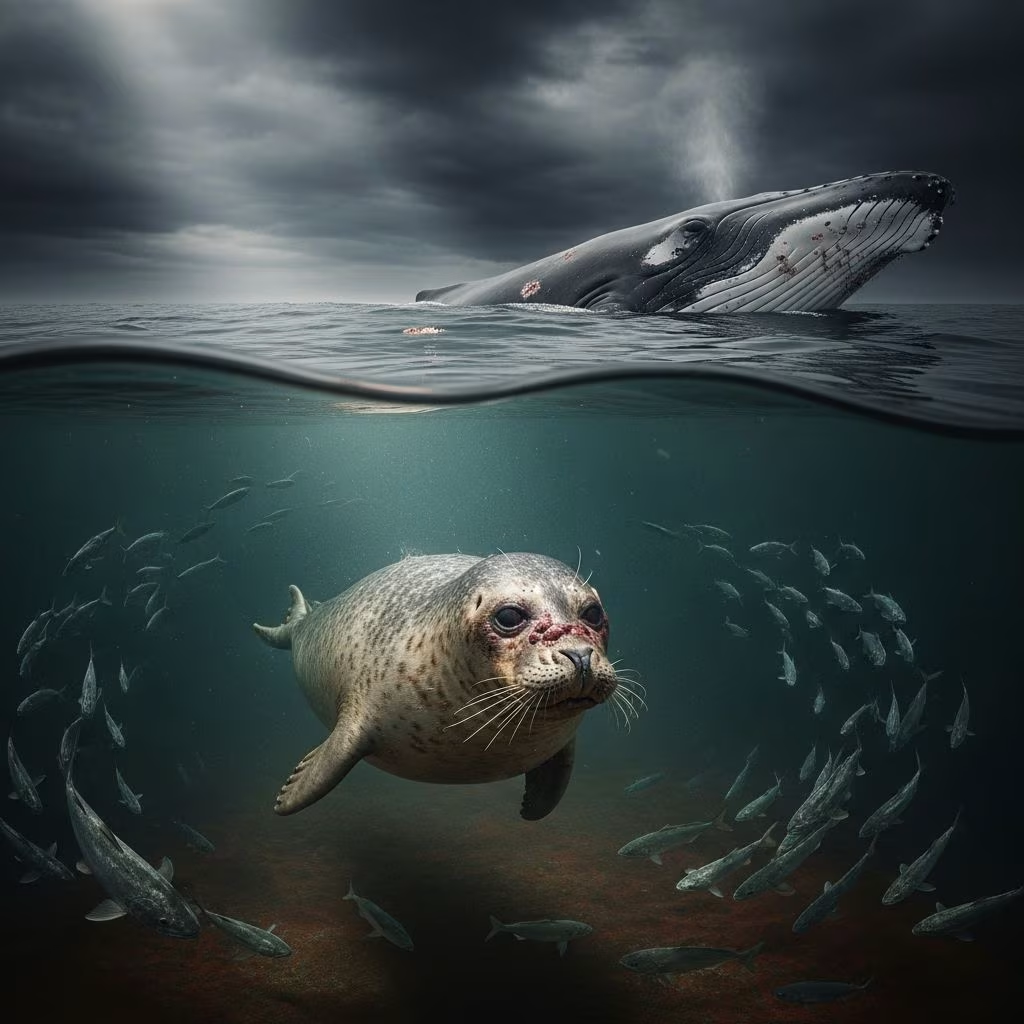
Marine mammals face a spectrum of viral pathogens that trigger severe illnesses, mass mortality events, and population declines. These ocean giants, including seals, whales, dolphins, and sea lions, encounter viruses adapted to aquatic environments, often amplified by human activities, climate shifts, and habitat stress. Understanding these threats is crucial for conservation and veterinary intervention.
The Scope of Viral Infections in Oceanic Species
Viral diseases strike across pinnipeds (seals and sea lions), cetaceans (whales and dolphins), and sirenians (manatees), with some crossing species barriers or even zoonotic lines. Factors like dense populations during breeding seasons, pollution, and warming waters exacerbate outbreaks. Recent surveillance reveals heightened risks from avian influenza spillovers and persistent endemic viruses.
DNA Viruses: Silent Invaders of Cells
DNA-based viruses integrate into host genomes or persist latently, leading to chronic issues or acute flares under stress.
Adenovirus Challenges
Adenoviruses provoke respiratory distress, hepatitis, and enteritis in young cetaceans and pinnipeds. In dolphins and porpoises, infections manifest as pneumonia with lung consolidation and lymphoid depletion. Diagnosis relies on PCR detection in tissues, as clinical signs mimic bacterial pneumonias.
Herpesvirus Diversity and Pathology
- Phocine Herpesvirus-1 (PhHV-1): Rampant in harbor seals, causing mucosal ulcers, pneumonia, and adrenal necrosis. Atlantic strains lead to rapid fatalities in pups, while Pacific variants target eyes and liver.
- Cetacean Herpesviruses: Linked to genital, skin, and lung lesions in dolphins and whales. Gammaherpesviruses lurk in lymphocytes, emerging during immunosuppression.
Transmission occurs via direct contact or aerosols; mortality spikes in rehabilitation settings.
Poxvirus Skin Assaults
Poxviruses create ring lesions on flippers, tails, and heads, impairing swimming and thermoregulation. Tanacetum pox in sea otters and sealpox in phocids are common, with outbreaks in crowded rookeries. Lesions heal but leave scars; no vaccines exist.
Other DNA Pathogens
- Papillomaviruses: Cause wart-like growths on cetacean skin and genitals, self-resolving in most cases.
- Circoviruses: Detected in 50% of Pacific beaked whales, with uneven tissue distribution requiring multiple samples for PCR confirmation.
- Hepadnaviruses: Rare hepatitis B-like agents in dolphins, tied to captivity stress.
RNA Viruses: Rapid Mutators and Epidemic Drivers
RNA viruses evolve swiftly, fueling pandemics like those seen in distemper relatives.
Caliciviruses: Vesicle and GI Disruptors
San Miguel sea lion virus (SMSV), akin to swine vesicular exanthema, induces oral blisters, flipper erosions, and abortions in pinnipeds. Fish like opaleye perch vector it along California coasts. Seroprevalence nears 100% in sea lion pups by four months.
Influenza Spillovers: Avian Origins
Influenza A strains, including highly pathogenic H5N1, ravage harbor seals with hemorrhagic pneumonia, nasal discharge, and 50% mortality. Pilot whales show enlarged lymph nodes. Habitat overlap with seabirds drives transmission; recent global epizootics threaten strandings.
| Species | Strain | Symptoms | Mortality Rate |
|---|---|---|---|
| Harbor Seal | H3N8, H5N1 | Bronchopneumonia, fever | Up to 50% |
| Pilot Whale | H13 | Hemorrhagic lungs | High in calves |
| Common Dolphin | H1N1 | Neurologic signs | Variable |
Morbilliviruses: The Mass Die-Off Architects
These paramyxoviruses dominate mortality stats at 62% globally, hitting harbor seals hardest. Phocine distemper virus (PDV) and canine distemper virus (CDV) cause pneumonia, encephalitis, and skin crusts in seals; cetacean morbillivirus (CeMV) felled dolphins across Atlantic and Mediterranean.
- North Sea PDV outbreaks killed thousands of seals.
- CeMV strains in striped dolphins and porpoises feature short 3-day incubations.
- Exposure noted in sea otters, polar bears, manatees.
Emerging and Less Common Viral Risks
Coronaviruses in Captivity and Wild
Gammacoronaviruses in belugas link to lung failure; alphacoronaviruses in seals cause enteric issues.
Retroviruses and Endogenous Elements
Spumaviruses from sea lion lesions; gamma retroviruses embedded in dolphin genomes, potential oncogen risks.
Zoonotic Crossovers
Caliciviruses jumped to swine; parapoxviruses cause ‘seal finger’ in handlers.
Diagnostic Approaches and Challenges
PCR, immunohistochemistry (IHC, used in 27% of studies), and serology confirm infections. Necropsies reveal pathognomonic lesions like inclusion bodies in morbillivirus cases. Multi-tissue sampling combats uneven viral loads.
Epidemiology: Hotspots and Trends
USA leads mortality reports, followed by Spain, Italy. Harbor seals suffer 92% of events. Warming boosts virulence; HPAI epizootics loom large.

Management and Prevention Tactics
- Stranding Response: Quarantine, supportive care, antiviral trials.
- Monitoring: NOAA and partners track via health and strandings program.
- Vaccination Research: Experimental distemper vaccines for seals.
- Habitat Protection: Reduce stressors to bolster immunity.
FAQs
Can marine mammal viruses infect humans?
Rarely; caliciviruses and poxviruses pose low zoonotic risk via contact.
What causes mass die-offs in seals?
Primarily morbilliviruses and influenza A, amplified by density and temperature.
How do we diagnose these viruses?
PCR on tissues, IHC, virus isolation; fresh samples essential.
Are vaccines available?
Not commercially; research ongoing for key pathogens like PDV.
Is climate change worsening outbreaks?
Yes, via range shifts and stress on immune systems.
Future Outlook
Genomic surveillance and One Health approaches will curb threats. Collaborative efforts between vets, ecologists, and policymakers are vital to safeguard these sentinel species.
References
- Viral Diseases of Marine Mammals — Merck Veterinary Manual. 2023. https://www.merckvetmanual.com/exotic-and-laboratory-animals/marine-mammals/viral-diseases-of-marine-mammals
- Diseases of Stranded Pacific Island Marine Mammals — Navy Marine Species Monitoring. 2022-10-01. https://www.navymarinespeciesmonitoring.us/index.php/download_file/view/3094/
- Marine Mammal Viruses — PMC/NIH. 2020-03-15. https://pmc.ncbi.nlm.nih.gov/articles/PMC7152425/
- A systematic review on global zoonotic virus-associated mortality — PMC/NIH. 2024-09-01. https://pmc.ncbi.nlm.nih.gov/articles/PMC11357810/
- Emerging Viruses in Marine Mammals — Marine Mammal Center. 2023. https://www.marinemammalcenter.org/publications/emerging-viruses-in-marine-mammals
- Marine Mammal Health and Strandings — NOAA Fisheries. 2025-01-15. https://www.mmc.gov/priority-topics/marine-mammal-health-and-strandings/
- Influenza in Marine Mammals: An Important Interface — CEIRR Network. 2024. https://www.ceirr-network.org/news/influenza-in-marine-mammals-an-important-interface



