

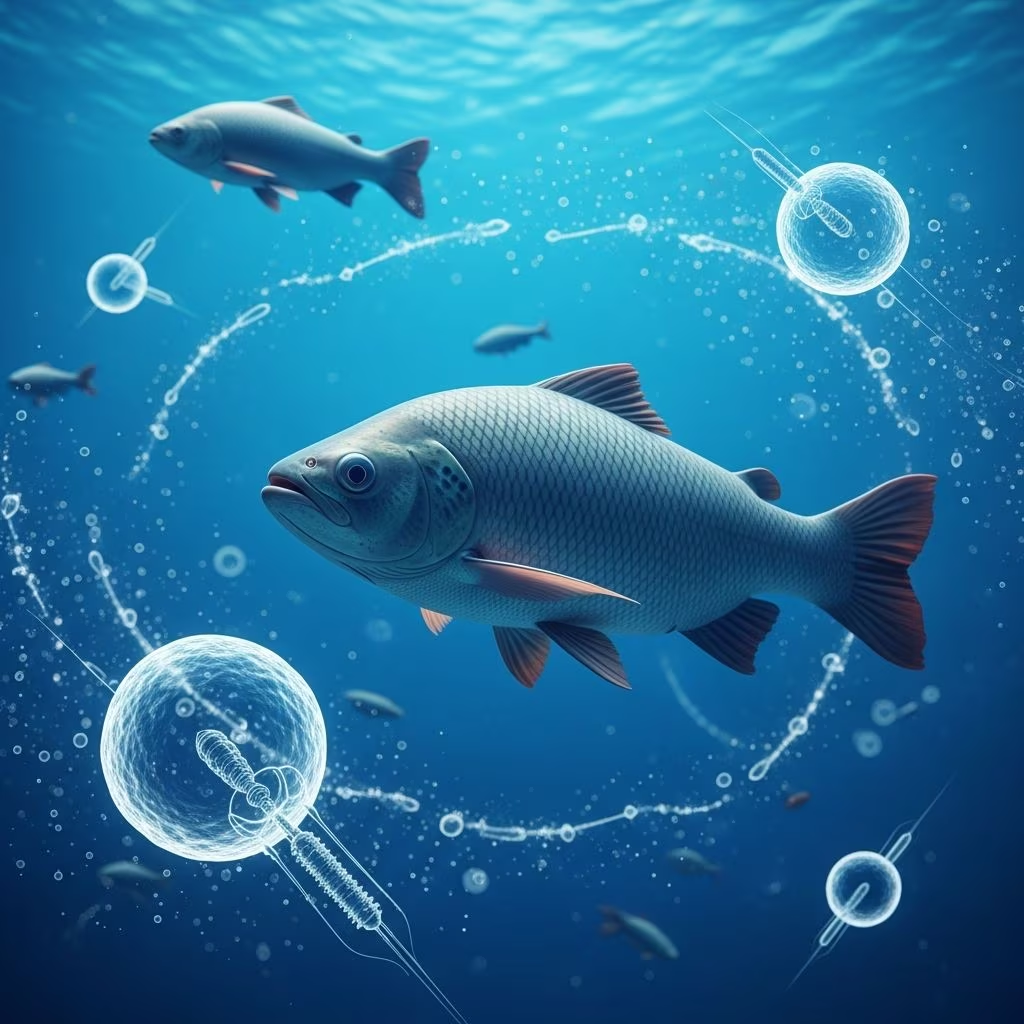
Aquaculture stands as a cornerstone of global food security, supplying a significant portion of seafood consumed worldwide. However, viral diseases pose severe risks to this industry, leading to massive economic losses and challenging sustainable production efforts. These pathogens target both finfish and crustaceans like shrimp, exploiting intensive farming conditions to spread rapidly. Understanding their biology, transmission, and control is vital for farmers and researchers alike.
The Growing Challenge of Viral Pathogens in Farmed Species
Viral infections have surged alongside the expansion of aquaculture, particularly in high-density systems where stress and poor water quality facilitate outbreaks. Fish viruses often belong to families like Rhabdoviridae and Iridoviridae, while shrimp are plagued by unique agents from Nimaviridae and Parvoviridae. These diseases not only cause direct mortality but also trigger trade restrictions and farm closures.
Key factors driving emergence include global trade of live animals, wastewater discharge, and escapes from farms into wild populations. For instance, novel strains have jumped from marine to freshwater environments, broadening their host range. Preventive measures focus on biosecurity, though vaccines and treatments remain limited.
Critical Viral Diseases in Finfish Aquaculture
Finfish farming, dominated by species like salmon, trout, and tilapia, faces diverse viral threats. Below, we outline major ones, their clinical signs, and management approaches.
Rhabdovirus Infections: VHS and IHN
Viral Hemorrhagic Septicemia (VHS), caused by a novirhabdovirus, devastates coldwater fish such as salmonids, perch, and bass. Symptoms include hemorrhaging in skin, muscles, and organs, exophthalmia, and ascites, with mortality up to 90% in juveniles. Genotype IVa predominates in U.S. aquaculture, while IVb affects wild Great Lakes species like muskellunge and crappie.
- Transmission: Waterborne, via feces, urine, or gametes; highly contagious.
- Susceptible Hosts: Over 50 species, including Pacific salmon, turbot, and cod.
- Control: Strict biosecurity, depopulation of infected stocks, and disinfection; no vaccines widely available.
Infectious Hematopoietic Necrosis (IHN), another rhabdovirus, targets young salmon and trout, causing anemia, hemorrhages, and ‘humpback’ deformity. It thrives at 10-15°C and spreads similarly to VHS.
Iridovirus-Associated Syndromes
Iridoviruses cause systemic infections with enlarged cells (megalocytosis) and necrosis. Viral Erythrocytic Necrosis (VEN) affects marine fish like herring and salmon, leading to pale gills and anemia due to red blood cell rupture.
Epizootic Hematopoietic Necrosis (EHN), a ranavirus, struck Australian redfin perch in 1985, causing splenic and pancreatic necrosis. Rainbow trout show milder signs. It’s notifiable by OIE.
Megalocytiviruses, including Infectious Spleen and Kidney Necrosis Virus (ISKNV), impact ornamental and food fish like grouper, seabass, and cichlids. Outbreaks feature lethargy, gill pallor, and mortality rates of 50-100% at 25-30°C.
| Virus | Family/Group | Main Hosts | Mortality Rate | Geographic Range |
|---|---|---|---|---|
| VEN | Iridoviridae | Herring, salmonids | 20-50% | Pacific, Atlantic |
| EHN | Ranavirus | Redfin perch, trout | Up to 80% | Australia, Europe |
| Megalocytivirus | Megalocytivirus | Grouper, angelfish | 50-100% | Asia-Pacific, global |
Nervous System Pathogens: Betanodaviruses
Viral Nervous Necrosis (VNN), or Viral Encephalopathy and Retinopathy, is induced by betanodaviruses affecting over 40 marine species including groupers, seabass, and turbot. Larvae and juveniles suffer abnormal swimming, darkening, and high mortality (up to 100%) at 20-30°C. Four genotypes exist, with vertical transmission from broodstock common.
Diagnosis relies on histopathology showing vacuolating neurons and retina, confirmed by PCR.
Other Notable Finfish Viruses
Infectious Salmon Anemia (ISA) hits Atlantic salmon, causing gill anemia and heart lesions. Salmonid Alphaviruses lead to pancreas disease, reducing growth. Channel Catfish Virus causes hemorrhagic disease in fry.
Viral Pathogens Targeting Shrimp Farming
Shrimp aquaculture, led by Pacific white shrimp (Penaeus vannamei) and black tiger shrimp (P. monodon), generates billions but suffers repeated viral epidemics. Since the 1980s, new viruses have caused crashes, with 75% of production vulnerable.
DNA Viruses: WSSV and Parvoviruses
White Spot Syndrome Virus (WSSV), a nimavirus, is the most devastating, spreading globally since 1992. It causes white carapace spots, reddening, and 100% mortality within days. Listed by OIE, it infects all penaeid shrimp.
Infectious Hypodermal and Hematopoietic Necrosis Virus (IHHNV), a densovirus, stunts growth in P. vannamei, also OIE-listed. Hepatopancreatic Parvovirus (HPV) impairs larval development.
RNA Viruses in Shrimp
Yellow Head Virus (YHV), an okavirus, leads to yellow gills and mass mortality in P. monodon. Taura Syndrome Virus (TSV), a dicistrovirus, causes soft shells and reddish tails in P. vannamei. Emerging threats like Infectious Myonecrosis Virus (IMNV) feature white muscle tails in Brazil and Asia.
Nodaviruses like Macrobrachium rosenbergii Nodavirus (MrNV) affect freshwater prawns, causing white muscle opacity.
| Virus | Abbrev. | Genome | Year Emerged | OIE Listed |
|---|---|---|---|---|
| White Spot Syndrome | WSSV | dsDNA | 1992 | Yes |
| IHHNV | IHHNV | ssDNA | 1981 | Yes |
| Yellow Head | YHV | (+)ssRNA | 1990 | Yes |
| Taura Syndrome | TSV | (+)ssRNA | 1992 | Yes |
| IMNV | IMNV | (+)ssRNA | 2002 | Yes |
Diagnosis, Prevention, and Control Strategies
Early detection via PCR, histopathology, and ELISA is crucial. Biosecurity protocols include quarantine, water treatment (UV, ozone), and SPF (Specific Pathogen-Free) stocks.
- Vaccination: Emerging for some fish viruses; trials for shrimp RNA interference.
- Temperature Management: Many viruses are temperature-sensitive, e.g., VNN inhibited below 15°C.
- Regulations: OIE notifiable diseases require reporting; U.S. APHIS monitors VHS.
Challenges persist: no antivirals approved, resistance breeding underway, and climate change may expand ranges.
Economic and Global Impacts
Viral outbreaks cost billions annually; shrimp industry losses from WSSV alone exceeded $15 billion by 2000. Finfish sectors face similar hits, with VHS prompting U.S. import bans. Sustainable practices like polyculture and probiotics offer hope.
Frequently Asked Questions (FAQs)
What is the most dangerous virus in shrimp aquaculture?
WSSV causes rapid, near-total mortality and spreads easily via water and vectors.
Can viral diseases be treated in fish farms?
No effective treatments exist; focus is on prevention and removal of infected stock.
How do viruses spread between farms?
Primarily waterborne, but also via birds, equipment, and trade of live animals.
Are vaccines available for aquaculture viruses?
Limited; in development for IHN and ISA, with promising trials for others.
What role does temperature play in outbreaks?
Many viruses replicate optimally at specific ranges, e.g., megalocytiviruses at 28°C.
References
- Emerging viral diseases of fish and shrimp — PMC (National Library of Medicine). 2010-05-14. https://pmc.ncbi.nlm.nih.gov/articles/PMC2878170/
- Viral Diseases in Aquaculture — Merck Veterinary Manual. 2023 (accessed 2026). https://www.merckvetmanual.com/exotic-and-laboratory-animals/aquaculture/viral-diseases-in-aquaculture
- Aquaculture Fish Health — NOAA Fisheries (.gov). 2024. https://www.fisheries.noaa.gov/national/aquaculture/aquaculture-fish-health
- Aquaculture Health — USDA APHIS (.gov). 2025. https://www.aphis.usda.gov/livestock-poultry-disease/aquaculture
- Challenges and Solutions to Viral Diseases of Finfish in Marine Aquaculture — PMC (National Library of Medicine). 2021-07-08. https://pmc.ncbi.nlm.nih.gov/articles/PMC8227678/



