Viral Disease Testing in Cats: Complete Guide
Essential guide to feline viral testing for FeLV, FIV, and coronavirus screening.
Viral Disease Testing in Cats: A Comprehensive Guide
Viral disease testing is a fundamental component of feline preventive healthcare and vaccination protocols. When cats are brought in for wellness examinations or pre-vaccination assessments, veterinarians commonly recommend screening for several serious infectious viruses. Understanding these tests, their purpose, and their importance can help cat owners make informed decisions about their pet’s health and well-being.
The most common feline viral tests performed prior to vaccinations screen for three primary infectious agents: Feline Leukemia Virus (FeLV), Feline Immunodeficiency Virus (FIV), and Feline Coronavirus. Each of these viruses poses significant health risks to cats, and early detection through proper testing is essential for effective disease management and preventing transmission to other cats.
Common Viruses Tested in Feline Screening
Feline viral disease testing typically encompasses screening for multiple serious pathogens that can significantly impact a cat’s health and longevity. These screening protocols are designed to identify infections before vaccinations are administered and to establish a baseline for your cat’s health status.
Feline Leukemia Virus (FeLV)
Feline Leukemia Virus represents one of the most serious infectious viruses affecting cats today. FeLV is highly contagious and is transmitted through body fluids, including saliva, blood, and urine. The virus can also be transmitted across the placenta in pregnant cats, making it a concern for kittens born to infected mothers. FeLV is responsible for numerous diseases in cats, including leukemia itself, lymphoma, and immune-mediated conditions that compromise the cat’s ability to fight off secondary infections.
Feline Immunodeficiency Virus (FIV)
FIV is transmitted primarily through fight wounds, making outdoor cats and those with access to outdoor environments at higher risk. Recently infected cats may display subtle symptoms such as fever and lymphadenopathy. While some chronically infected cats may live long and happy lives, they remain capable of spreading the virus to other cats throughout their lives. FIV produces a persistent infection from which cats do not recover, making prevention and early detection critical.
Feline Coronavirus
Feline Coronavirus is another important pathogen included in comprehensive viral screening panels. This virus can cause various clinical signs ranging from mild respiratory symptoms to more severe manifestations, depending on the individual cat’s immune response and the virus strain involved.
Why Pre-Vaccination Testing Is Critical
Testing for the presence of FeLV and FIV prior to vaccination for these diseases serves several important purposes that directly impact vaccine effectiveness and treatment planning. Understanding these reasons helps explain why veterinarians recommend pre-vaccination testing as a standard of care.
Determining FeLV Viral Status
Determination of your cat’s FeLV viral status is important for several key reasons. First and foremost, vaccination of an already infected cat with an FeLV vaccine will not have any beneficial impact on, or alter the natural course of disease progression. If a cat is already infected with FeLV, administering the vaccine is ineffective and represents an unnecessary expense without providing any protective benefit.
Additionally, identifying FeLV status before vaccination allows veterinarians to establish appropriate medical management protocols and discuss realistic expectations with cat owners regarding their pet’s prognosis and treatment options.
FIV Considerations in Vaccination
Similarly, knowing a cat’s FIV status before vaccination is essential for proper healthcare planning. A positive FIV result fundamentally changes how a veterinarian approaches vaccination decisions and health management. Cats with FIV may have compromised immune responses, which can affect vaccine efficacy and the development of appropriate immune protection.
Testing Methods for Feline Leukemia Virus
Multiple testing approaches are available to detect FeLV infections, each with different advantages and appropriate clinical applications. Understanding these methods helps explain why your veterinarian may recommend specific tests or follow-up testing protocols.
Screening Tests and Antigen Detection
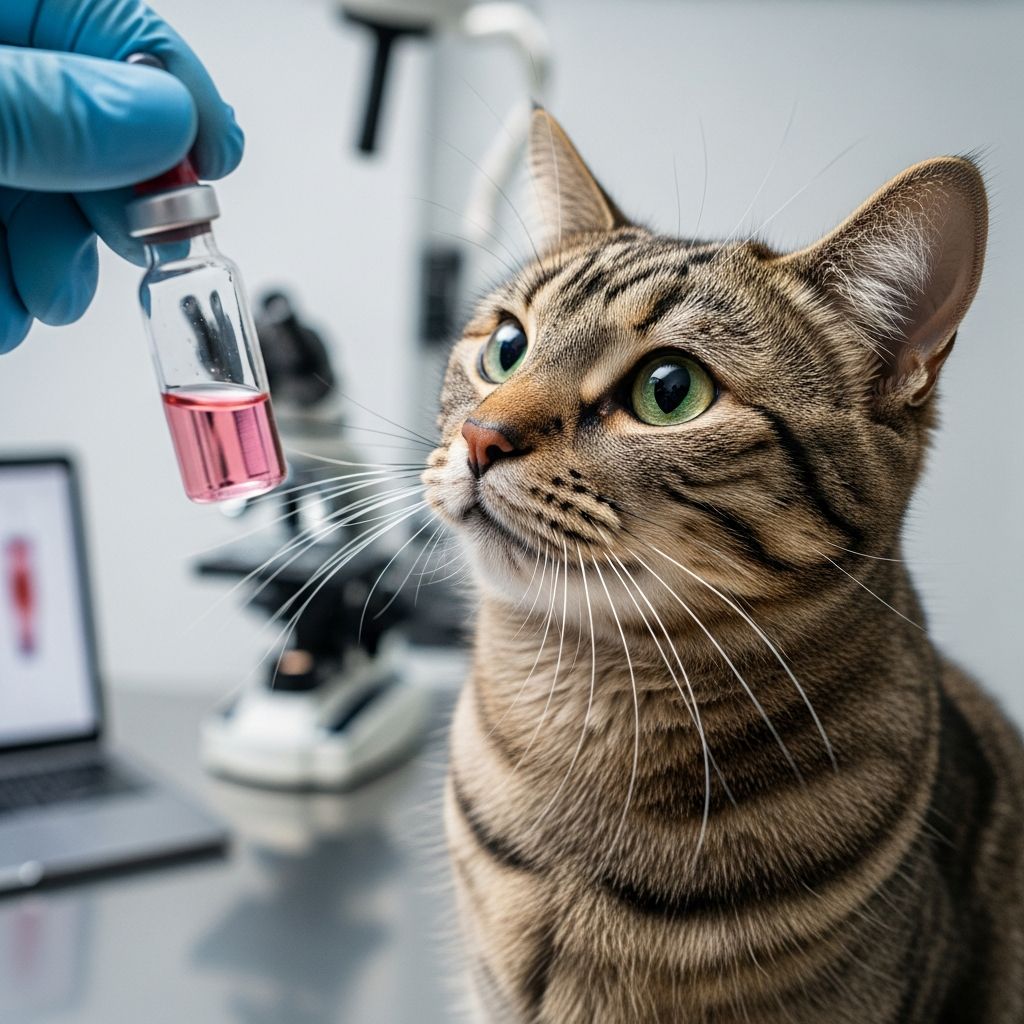
FeLV screening tests look for the presence of the viral antigen (viral protein) in a blood sample. Screening tests for FeLV can be performed in the clinic setting using special test kits. The test kit uses a color indicator so that a color change occurs when the viral protein is detected in the blood. These point-of-care (POC) tests provide rapid results, often within minutes, making them convenient for initial screening.
A positive screening test result is indicative of the presence of virus particles. However, it is important to note that some cats are able to subsequently mount an appropriate immune response and eliminate the virus from their bodies. This temporary presence of virus in the blood, known as viremia, may not be permanent in all cases.
Confirmation Testing
Because no test is reliable all of the time, and because of the possibility of temporary viremia, it is important to confirm a positive test result, especially in a clinically healthy animal. Confirmatory testing is usually done at a veterinary referral laboratory. A positive confirmatory test indicates the presence of virus and that the cat is not likely to eliminate the FeLV virus from his or her body.
An alternative to the referral laboratory test is to repeat the in-clinic test in one month, thus allowing the cat time to mount an appropriate immune response and potentially eliminate the FeLV virus. This approach recognizes that some cats infected with FeLV may clear the infection naturally.
PCR Testing for FeLV
Newer DNA tests called polymerase chain reaction (PCR) have been developed to confirm FeLV infections. These PCR-based tests detect viral genetic material and can identify if the virus has been incorporated into the cat’s genome, even if the virus is not currently replicating. However, PCR tests do not seem to have much advantage over the screening tests when used to evaluate blood samples for the presence of virus.
Testing Methods for Feline Immunodeficiency Virus
FIV testing employs different diagnostic approaches than FeLV testing, reflecting the distinct biological characteristics of this retrovirus. Understanding these methods helps explain the testing recommendations and results your veterinarian may discuss with you.
Serology and Antibody Detection
FIV infection is most commonly diagnosed through detection of FIV-specific antibodies using point-of-care tests performed on whole blood, serum or plasma. Infected cats usually develop high concentrations of FIV-specific antibodies, and FIV produces a persistent infection from which cats do not recover. Thus, detection of antibodies is generally indicative of FIV infection.
In veterinary practice, antibodies are usually identified using either ELISAs (enzyme-linked immunosorbent assays) or RIM assays (rapid immunochromatographic assays), which detect antibodies to various viral antigens. Most cats produce antibodies within 60 days of infection. Routinely, FIV infection is diagnosed by detecting these antibodies using ELISA and immunochromatography methods.
Western Blotting
Western blotting is considered the “gold standard” for FIV serology and is used to confirm questionable results. This confirmatory test is particularly valuable when POC test results are uncertain or when clinical signs suggest FIV infection despite negative POC test results.
Polymerase Chain Reaction (PCR)
PCR testing can detect FIV genetic material directly in the blood, providing another diagnostic approach. This method can be particularly useful in certain clinical scenarios where antibody-based testing may produce false results.
Saliva Testing for FIV
Researchers have demonstrated that certain POC test kits can accurately identify FIV infection using saliva samples, regardless of FIV vaccination history. Testing saliva could be useful in areas where FIV vaccination is available and when venipuncture without skilled restraint or sedation is not possible, such as in situations where large numbers of cats must be screened for FIV infection quickly and easily.
Special Considerations for Kittens
Testing young kittens for retroviral infections requires special attention and interpretation, as maternal antibodies can complicate test results. Serological tests cannot be used to reliably identify infected kittens under 6 months of age. A positive result does not confirm that the kitten is infected, and this positive result is not an indication for euthanasia.
In this situation, PCR may be considered, although it has potential limitations. Kittens who test positive for FIV antibodies before six months of age should be tested again after the six-month mark to determine if they are truly infected or if they are simply carrying maternal antibodies.
When Additional Testing Is Recommended
While initial viral disease screening is important, additional testing circumstances warrant retroviral screening throughout a cat’s lifetime. Any cat presented for an unwell examination could have retroviral testing as part of the unwell screening. Special consideration should be given to testing cats who develop stomatitis and gingivitis (inflammation of the mouth), cats with unknown fever or anemia, as well as cats who have been diagnosed with lymphoma or other neoplasia.
Knowing the retroviral status when these diagnoses are made will help with creating expectations for the response to treatment and may help guide treatment decisions.
Interpreting Test Results
Understanding what test results mean is crucial for informed decision-making about your cat’s care. Different results carry different implications for your cat’s health and for the health of other cats in your household or neighborhood.
Understanding FeLV Test Results
A positive FeLV screening test indicates that viral antigen is present in the blood. However, this result alone does not definitively indicate a permanent infection, particularly in clinically healthy cats. Follow-up confirmatory testing is recommended to determine whether the cat has a progressive infection or has mounted an immune response that will clear the virus.
Understanding FIV Test Results
Throughout the asymptomatic phase of infection, FIV-specific antibodies are readily detected in the blood of most cats. However, some cats entering the terminal phase of infection might test antibody negative because of high viral loads sequestering antibodies in antigen-antibody complexes. Additionally, false-negative results are possible with any test.
If a cat at high risk of FIV infection with typical clinical signs is antibody negative on a POC test, follow-up testing should be performed with another method, such as PCR or Western blot. It is important to note that the majority of cats who test positive for FIV show no illness at all, but they will still be able to spread the virus to other cats.
The Importance of Regular Testing
Regular retroviral and heartworm testing allows veterinarians to make informed decisions about preventive care, treatment planning, and disease management. Early detection of any disease is key to successful treatment and management, and regular testing of FeLV, FIV, and other feline pathogens is a mainstay of any feline wellness program.
Having knowledge of a cat’s retroviral status also allows veterinarians to consider all possible reasons a patient may be having ill-defined symptoms or may not be responding to treatment as expected. This information guides appropriate treatment selection and helps establish realistic prognoses for affected cats.
Impact on Multi-Cat Households
Testing assumes particular importance in multi-cat households where infectious disease transmission is a significant concern. Knowing the retroviral status of all cats in a household allows for appropriate management decisions to prevent disease spread among household companions. We owe it to the other cats in the household and in the neighborhood to prevent further spread of infectious disease through responsible testing and management protocols.
Frequently Asked Questions
Q: Why should my kitten be tested for FeLV and FIV before vaccination?
A: Pre-vaccination testing is essential because vaccines are ineffective in already-infected cats. Vaccination of an infected cat will not alter disease progression or provide any protective benefit. Testing also helps establish appropriate health management plans and realistic treatment expectations.
Q: What does a positive FeLV screening test mean?
A: A positive FeLV screening test indicates the presence of viral antigen in the blood. However, confirmatory testing is recommended because some cats can clear the infection. A follow-up test should be performed to determine if the infection is permanent or if the cat mounted an appropriate immune response.
Q: Can a cat test negative for FIV and still be infected?
A: Yes, in rare cases. Some cats in the terminal phase of infection might test antibody negative due to high viral loads sequestering antibodies. Additionally, false-negative results are possible with any test. If clinical signs suggest FIV infection, follow-up testing with PCR or Western blot is recommended.
Q: How long after infection will my cat test positive for FIV?
A: Most cats produce FIV-specific antibodies within 60 days of infection. However, kittens under six months of age may have maternal antibodies that produce false-positive results, so retesting after six months is recommended.
Q: What is the difference between FeLV and FIV testing methods?
A: FeLV testing typically detects viral antigen in the blood using screening tests or confirmatory laboratory tests. FIV testing primarily detects antibodies to the virus rather than the virus itself. Both viruses may be confirmed using PCR to detect viral genetic material.
Q: Should indoor-only cats be tested for FeLV and FIV?
A: Yes, even indoor-only cats should be tested. FeLV can be transmitted through saliva and urine, and an indoor cat’s status may be unknown at adoption. FIV risk is lower for strictly indoor cats, but testing is still recommended as part of comprehensive preventive health screening.
References
- Guideline for Feline Immunodeficiency Virus — ABCD Cats & Vets. 2024. https://www.abcdcatsvets.org/guideline-for-feline-immunodeficiency-virus/
- Viral Disease Testing in Cats – Prevaccination — VCA Animal Hospitals. 2024. https://vcahospitals.com/know-your-pet/viral-disease-testing-in-cats—prevaccination
- 2020 AAFP Feline Retrovirus Testing and Management Guidelines — American Association of Feline Practitioners. 2020. https://pmc.ncbi.nlm.nih.gov/articles/PMC11135720/
- Why It’s Important to Test Cats for Feline Leukemia Virus, Feline Immunodeficiency Virus, and Feline Heartworm — The Vetiverse. 2024. https://www.thevetiverse.com/en/latest/why-it-s-important-to-test-cats-for-feline-leukemia-virus-feline-immunodeficiency-virus-and-feline-heartworm/
- Feline Leukemia Virus — Cornell University College of Veterinary Medicine. 2024. https://www.vet.cornell.edu/departments/cornell-feline-health-center/health-information/feline-health-topics/feline-leukemia-virus
Similar Articles







Read full bio of Sneha Tete