

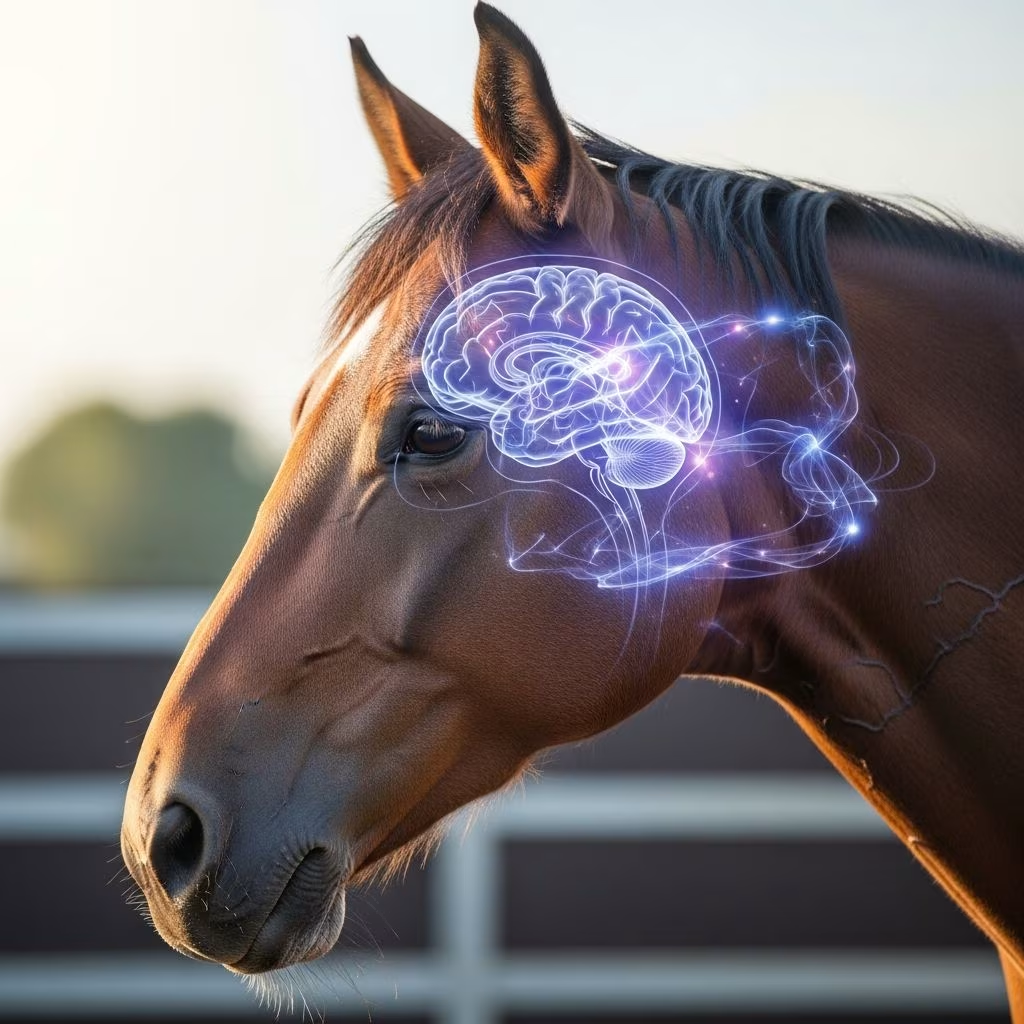
Viral inflammation affecting the equine brain and spinal cord represents one of the most serious neurological threats to horse health worldwide. These conditions, collectively known as encephalomyelitis when both brain and spinal cord tissues are involved, can develop rapidly and often prove fatal if left untreated. Horse owners, veterinarians, and equine care professionals must understand the nature of these diseases, recognize early warning signs, and implement appropriate preventive and therapeutic measures to protect animals in their care.
Understanding the Nature of Equine Encephalomyelitis
Viral encephalomyelitis in horses involves inflammation of the brain and spinal cord tissues triggered by specific viral pathogens. The disease primarily results from infection with arthropod-borne viruses, commonly referred to as arboviruses, which are transmitted to horses through insect vectors, particularly mosquitoes. These viruses belong primarily to two viral families: the Togaviridae family (containing the Alphavirus genus) and the Flaviviridae family (containing the Flavivirus genus).
The significance of this condition extends beyond individual animals, as affected horses can serve as amplification hosts during disease outbreaks. When viral mutations occur and mosquito vector populations shift, horses become critical participants in perpetuating epidemiological cycles, effectively serving as the most important mammalian hosts for ongoing vector transmission.
Major Viral Pathogens Causing Brain Inflammation
Several distinct viruses cause encephalomyelitis in equine populations, each with characteristic epidemiological patterns and clinical presentations:
- Eastern Equine Encephalitis (EEE): Represents one of the most severe forms of viral encephalitis, characterized by high mortality rates and rapid disease progression. Passerine birds serve as principal reservoir hosts.
- Western Equine Encephalitis (WEE): Generally causes less severe neurological manifestations compared to the eastern form, though still capable of causing serious disease.
- Venezuelan Equine Encephalitis (VEE): Involves complex transmission cycles centered around sylvatic rodents, including spiny and cotton rats that develop high-titer viremia, with opossums, bats, and shorebirds facilitating viral dispersal.
- West Nile Virus (WNV): Exhibits variable clinical presentations with distinctive patterns of neurological involvement, particularly affecting spinal cord function in the majority of cases.
Additional pathogens capable of causing equine encephalitis include rabies virus, parasitic organisms such as Sarcocystis neurona and Neospora hughesi, equine herpesviruses, and certain bacterial and nematode species.
Temporal Patterns and Initial Disease Manifestations
Understanding the timeline of disease development helps horse owners identify potentially affected animals early. The incubation period—the interval between initial viral exposure and appearance of clinical symptoms—typically ranges from 5 to 14 days. Following this latent phase, initial clinical signs generally emerge 9 to 11 days after infection.
The earliest manifestations of encephalomyelitis are typically nonspecific and resemble other equine illnesses:
- Elevated body temperature lasting several days
- Complete loss of appetite (anorexia)
- Pronounced lethargy and depression
- General weakness and muscular stiffness
- Weight loss and deterioration of body condition
During this initial phase, affected horses often appear quiet and somnolent, showing reduced responsiveness to environmental stimuli. This early period provides a critical window for veterinary intervention before neurological involvement becomes severe.
Neurological Signs and Progressive Disease Manifestations
As viral infection progresses beyond the systemic phase, characteristic neurological dysfunction emerges. The nature and severity of these signs vary depending on which virus is responsible for infection, though several manifestations appear across multiple etiologies:
Mental Status Changes: Horses develop altered mentation ranging from mild behavioral abnormalities to severe depression. Some animals display head pressing, aimless wandering, or compulsive circling behaviors. Blindness or severely impaired vision occurs in many cases. Hyperexcitability represents another common behavioral manifestation, with affected horses exhibiting heightened responsiveness to auditory, visual, and tactile stimuli.
Muscular and Neuromuscular Signs: Tremors affecting facial and neck musculature appear in a significant proportion of infected animals. Fine trembling of facial muscles and coarser tremors of the neck characterize this presentation. Some horses experience periods of cataplexy or narcolepsy that may temporarily or permanently render them recumbent. Involuntary muscle twitching and skin contractions occur in many cases.
Coordination and Movement Impairment: Ataxia, characterized by incoordination and loss of balance, develops as the virus damages spinal cord tissue. Spinal ataxia often manifests symmetrically across all four limbs, progressing rapidly to quadriparesis (weakness of all four legs). Affected horses may stand with an abnormally wide stance or stagger when attempting to walk. Severe cases progress to complete recumbency—inability to rise—within 12 to 18 hours of neurological symptom onset.
Cranial Nerve Dysfunction: All arboviral encephalitis infections can produce cranial nerve deficits, with facial and lingual (tongue) weakness being most frequent. Horses with facial and tongue paresis develop dysphagia (inability to swallow), potentially leading to quidding (dropping food from the mouth) or esophageal choke. Severe obtundation combined with facial paralysis often results in marked facial swelling as horses hold their heads low. Occasional head tilt may be observed.
Seizure Activity and Loss of Consciousness: Convulsions represent severe manifestations of brain inflammation. Some animals display teeth grinding and excessive sweating. Progressive disease leads to severe mental depression and eventual coma.
West Nile Virus Specific Patterns: West Nile virus encephalomyelitis demonstrates particularly variable clinical presentations. Research indicates that over 90 percent of affected horses develop some form of spinal cord clinical signs, whereas 40 to 60 percent display behavioral changes characterized by periods of hyperesthesia ranging from mild apprehension to frank hyperexcitability. Fine and coarse tremors of facial and neck muscles appear in 60 to 90 percent of cases.
Disease Progression and Mortality Patterns
The progression from initial clinical signs to severe disease occurs remarkably rapidly in many cases. Most deaths associated with encephalomyelitis occur within 2 to 3 days after onset of neurological abnormalities. This compressed timeline underscores the urgency of early recognition and veterinary intervention.
Mortality rates vary substantially depending on the causative virus, with Eastern Equine Encephalitis typically associated with the highest fatality rates. Even in cases where horses survive acute infection, long-term neurological sequelae may persist, potentially rendering animals permanently unable to perform their intended functions.
Microscopic Pathological Changes
Understanding tissue-level damage helps explain the severity of clinical signs. In milder cases and West Nile virus infections, histological examination reveals non-necrotizing lymphohistiocytic encephalitis predominantly affecting gray matter. More severe Eastern Equine Encephalitis cases demonstrate extravasation of fluid and red blood cells from damaged blood vessels. The most severe gliosis (scarring) and perivascular cuffing typically occurs in the midbrain and hindbrain structures (pons and medulla), often extending into the cerebellum.
Diagnostic Approaches and Confirmation Strategies
In endemic areas where viral encephalitis is commonly encountered, veterinarians may develop presumptive diagnoses based on vaccination history, clinical presentation, and disease progression patterns. However, definitive diagnosis requires serologic testing (blood antibody detection) or necropsy (post-mortem examination).
Early diagnostic testing should be pursued whenever encephalomyelitis is suspected, as confirmatory identification of the specific viral pathogen allows for targeted public health interventions and helps guide management decisions for remaining at-risk animals in the facility.
Risk Factors and Susceptibility Considerations
Unvaccinated horses represent a particularly vulnerable population, as they lack protective antibodies against common equine encephalitis viruses. Geographic location significantly influences risk, with disease prevalence varying substantially based on regional vector populations and viral circulation patterns. Seasonal factors correlate with mosquito abundance, typically creating elevated risk periods during warm months when vector populations peak.
Comparative Disease Patterns Across Viral Types
| Virus Type | Typical Severity | Predominant Clinical Signs | Mortality Risk |
|---|---|---|---|
| Eastern Equine Encephalitis | Very High | Severe neurological signs, rapid progression | Very High |
| Western Equine Encephalitis | Moderate to High | Variable neurological involvement | Moderate |
| Venezuelan Equine Encephalitis | Moderate to High | Altered mentation, neurological signs | Moderate to High |
| West Nile Virus | Highly Variable | Spinal cord signs predominate, behavioral changes | Variable |
Frequently Asked Questions
Can horses recover from viral encephalomyelitis?
While some animals recover from infection, many develop permanent neurological complications even if they survive acute disease. Recovery likelihood varies substantially depending on the causative virus, disease severity at presentation, and timeliness of veterinary care. Eastern Equine Encephalitis typically carries the poorest prognosis.
How is viral encephalomyelitis transmitted between horses?
Transmission occurs through infected mosquito vectors that acquire virus while feeding on infected animals and subsequently transmit infection to horses and other hosts. Direct horse-to-horse transmission does not occur; mosquito vectors are essential for disease spread.
What vaccination options exist for protection?
Multiple vaccines targeting EEE, WEE, VEE, and West Nile virus are available through veterinarians. Vaccination status influences disease likelihood and severity, making immunization a critical preventive strategy for unvaccinated horses.
How quickly should a veterinarian be contacted after suspecting encephalomyelitis?
Immediate veterinary consultation is essential. The rapid progression of disease—with many horses deteriorating severely within 12 to 18 hours of neurological sign onset—creates a narrow window for diagnostic confirmation and supportive care initiation.
References
- Equine Arboviral Encephalomyelitis — MSD Veterinary Manual (by Robert J. MacKay, BVSc, PhD, DACVIM). Accessed 2026. https://www.msdvetmanual.com/nervous-system/equine-arboviral-encephalomyelitis/equine-arboviral-encephalomyelitis
- Equine Viral Encephalomyelitis — Department of Agriculture, Environment and Rural Affairs (DAERA). 2024. https://www.daera-ni.gov.uk/articles/equine-viral-encephalomyelitis
- Vector-Borne Equine Encephalitides: Disease Alert — USDA APHIS. 2024. https://www.aphis.usda.gov/livestock-poultry-disease/equine/encephalitides
- Eastern Equine Encephalitis in Horses: Clinical Signs — New Mexico State University College of Agriculture and Consumer Sciences. 2024. https://pubs.nmsu.edu/_b/B718/index.html
- Equine encephalomyelitis (Eastern) — World Organisation for Animal Health (WOAH). 2024. https://www.woah.org/en/disease/equine-encephalomyelitis-eastern/
- Symptoms, Diagnosis, and Treatment: Eastern Equine Encephalitis — Centers for Disease Control and Prevention (CDC). 2024. https://www.cdc.gov/eastern-equine-encephalitis/symptoms-diagnosis-treatment/index.html
- Encephalitis in Horses: Causes, Symptoms, and Treatment — PetMD. 2024. https://www.petmd.com/horse/conditions/systemic/encephalitis-horses



