

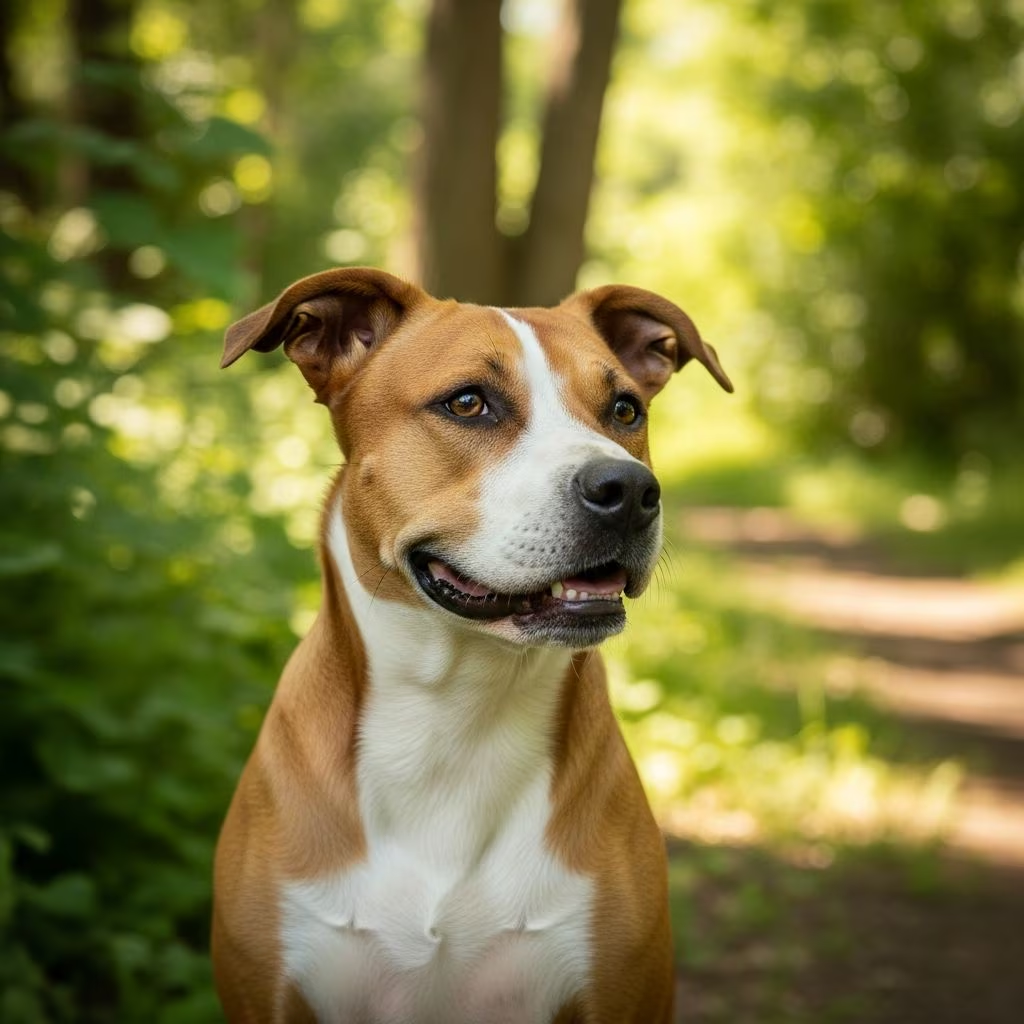
Vicktory Dogs: Triumph Over Tragedy at Best Friends Animal Sanctuary
On January 2, 2008, a transformative moment arrived for 22 remarkable dogs when they stepped through the gates of Best Friends Animal Society’s Utah sanctuary. Known as the Vicktory dogs, these survivors had endured unimaginable suffering and abuse at the hands of one of the most infamous dog fighting operations in American history. From that pivotal day forward, their lives changed forever as they embarked on a journey of healing, recovery, and ultimately, triumph. The name “Vicktory” perfectly encapsulates their courage, resilience, and strong spirits—a fitting tribute to dogs who refused to be defined by their traumatic pasts.
The Rescue and Initial Arrival
When law enforcement shut down Michael Vick’s illegal dog fighting operation in 2007, a total of 51 dogs were rescued from the property. However, of these survivors, the 22 most traumatized animals required specialized care and resources that Best Friends Animal Society was uniquely positioned to provide. These particular dogs had suffered the worst possible abuse and faced the most significant behavioral and physical challenges. Unlike many of the other rescued dogs who could transition more quickly to adoptive homes, these 22 individuals needed intensive rehabilitation, medical treatment, behavioral therapy, and emotional healing to have any chance at a normal life.
Best Friends Animal Society, the nation’s largest no-kill sanctuary for companion animals, stepped up to provide exactly what these dogs needed. Founded in 1984, the organization has long championed the forgotten and the overlooked, operating on the belief that no dog is inherently vicious, no matter their breed or background. The arrival of the 22 Vicktory dogs represented a pivotal moment in the organization’s history and a powerful statement about second chances and redemption.
Life at the Sanctuary: Healing and Recovery
Upon arrival at Best Friends, each Vicktory dog received comprehensive veterinary care, professional training, compassionate handling, and the emotional support necessary for recovery. The sanctuary’s team of caregivers, veterinarians, and behaviorists worked tirelessly to help these traumatized animals rediscover trust, safety, and joy. Many of the dogs had never experienced basic kindness, gentle touch, or the simple pleasures that most dogs take for granted—like being rocked like a baby, running freely, enjoying treats, or playing with other dogs.
The sanctuary environment provided an ideal setting for this long-term rehabilitation work. Located among Utah’s stunning red rock canyons, the facility offers peaceful surroundings where dogs can heal both physically and emotionally. On any given day, approximately 1,700 homeless pets with special needs find refuge at the sanctuary, creating a community of healing and hope. The Vicktory dogs were not alone in their recovery journey; they were surrounded by other animals and caregivers committed to their wellbeing.
Outcomes: Where the Vicktory Dogs Are Today
Nearly two decades after their arrival, the outcomes for the Vicktory dogs reflect both the possibilities of rehabilitation and the inevitable passage of time. Here’s the breakdown of their current status:
- 13 dogs adopted into loving homes — These fortunate individuals successfully completed behavioral assessments and rehabilitation programs, transitioning to families who welcomed them with open arms and unconditional love.
- 10 dogs have passed away — Since the dogs were at least one to two years old upon arrival, time has naturally taken its toll. Many experienced age-related health issues.
- 4 dogs remain at the sanctuary — These individuals continue to call Best Friends home, receiving ongoing care and companionship.
Individual Stories of Hope and Healing
Little Red: A Journey of Transformation
Little Red’s nine-year journey at Best Friends showcases the profound changes possible through consistent care and love. From her earliest days at the sanctuary, caregivers worked patiently to help her discover that gentle touch felt wonderful, that she could run and play without fear, that treats were marvelous surprises, and that other dogs could bring tremendous joy. Most importantly, Little Red learned that she was safe and loved—a fundamental truth that many abuse survivors struggle to accept. Her transformation from a fearful, traumatized animal to a dog capable of receiving and giving affection demonstrates the power of patient, compassionate rehabilitation.
Cherry: From Rescue to Ambassador
Cherry’s story represents one of the Vicktory dogs’ greatest successes. Adopted in 2009 into the family of Paul and Melissa Fiaccone, Cherry became the “heartbeat” of their growing household. Today, his family includes two young children, a canine best buddy, and two cats. Despite his past, Cherry thrives in this loving environment and has become far more than a family pet—he’s an ambassador for change. Cherry loves being around children and actively participates in community outreach programs, sharing his inspiring story with young people. His presence challenges stereotypes and changes hearts and minds wherever he goes, proving that rescue dogs can become beloved family members and powerful advocates for their own species.
Handsome Dan: Inspiration and Legacy
Another remarkable Vicktory success story involves a dog whose impact extends far beyond his own life. Handsome Dan was adopted into a family where he formed an inseparable bond with his human sister, Josephine, and quickly made a dog best friend named Minnie. His presence and progress so moved his adopter, Heather Gutshall, that she made a life-changing decision. Inspired by Dan’s resilience and potential, Gutshall devoted herself to dog training and pit bull rescue. She eventually became a professional dog trainer and behavior consultant, and co-founded Handsome Dan’s Rescue for Pit Bull Type Dogs. Today, Dan proudly serves as the rescue group’s CCO (Chief Canine Officer) and has helped save countless at-risk dogs. His legacy extends through every animal that Gutshall and her organization rescue, rehabilitate, and rehome.
Mya and Curly: Home at the Sanctuary
Now 10 and 11 years old respectively, Mya and Curly represent the dogs for whom the sanctuary provides permanent home rather than a temporary refuge. Both dogs remain shy and carry lingering fears from their past experiences. Although dedicated care teams worked tirelessly with them, they have not yet successfully completed the behavioral assessment legally required for all Vicktory dogs to be eligible for adoption. Rather than viewing this as failure, Best Friends recognizes that the sanctuary itself is their appropriate and beloved home. Mya and Curly live together, providing companionship to one another, and spend most days in the Dogtown offices where they’re surrounded by caring staff members who have become their family.
Meryl: Contentment at the Sanctuary
Meryl’s situation is unique among the Vicktory dogs. A court order requires her to spend the remainder of her life at Best Friends Animal Sanctuary—a decision that has proven to be exactly right for her wellbeing. Rather than viewing this as a limitation, the sanctuary has become Meryl’s happy place and true home. For nearly seven years, Meryl has lived with her best friend, Hurricane Katrina survivor Buddy Arnold. When weather permits, she enjoys sunbathing on a special platform in her yard, a simple pleasure that brings her contentment. Meryl’s story illustrates how the sanctuary provides not just care, but genuine happiness and meaningful relationships for dogs who need a permanent home.
Denzel: Fighting His Way to Happiness
Ten-year-old Denzel was a fighter throughout his life, but not in the way his abusers intended. Instead of fighting in rings, Denzel fought against the trauma of his past to find happiness and genuine friendship at Best Friends. He also courageously battled serious health issues that repeatedly threatened to overwhelm him. With steadfast support from Best Friends veterinarians and his tight-knit circle of devoted friends, Denzel continued fighting right until the end. On January 10, 2017, after his health had declined significantly, Denzel took his last breath surrounded by the Best Friends caregivers and veterinarians who had loved and fought for him throughout his years at the sanctuary. His legacy remains one of extraordinary courage and resilience.
Willie: Comfort in Routine and Companionship
Like Denzel, Willie prefers a small circle of familiar friends and has remained at the sanctuary where his specific needs can be met. Willie thrives on consistent daily routines that reduce his stress and help him feel his best. While he cannot live with other dogs due to his particular behavioral needs, Willie enjoys companionable walks alongside certain other dogs at a safe distance. These carefully managed social interactions, combined with his dedicated caregivers, have become the foundation of Willie’s contentment at Best Friends.
The Broader Impact: Changing Hearts and Minds
The Vicktory dogs’ recovery and success have done far more than help 22 individual animals. Their stories have fundamentally changed public perception about pit bull terriers and dog fighting survivors. Best Friends Animal Society has used the Vicktory dogs’ journey to advocate for stronger protections for the breed and to work toward eliminating breed bans and other forms of discriminatory legislation. By sharing statistics and individual stories that illustrate the true nature of these loving animals, the organization has helped shift narratives about pit bulls from one of danger to one of resilience and hope.
The Vicktory dogs have demonstrated a powerful truth: there is no such thing as “too damaged” or “beyond hope.” No dog is inherently vicious regardless of breed or background. This message resonates across the animal welfare community and has contributed to meaningful policy changes and increased funding for dog rescue and rehabilitation efforts.
Best Friends Animal Sanctuary: A Beacon of Hope
Best Friends Animal Society’s commitment to the Vicktory dogs reflects the organization’s broader mission. Over the past 30 years, Best Friends has helped reduce the number of animals killed in shelters nationwide from 17 million per year to approximately 4 million. Despite this remarkable progress, the organization notes that over 9,000 dogs and cats are still killed in shelters each day. Best Friends operates under the motto “Save Them All,” driving their ongoing efforts to eliminate unnecessary animal deaths and provide sanctuary for animals with special needs.
The organization partners with advocacy groups throughout the country to save homeless pets’ lives and continues to work in particular toward the protection and rescue of pit bull terriers. Among the 1,700 or so homeless pets who take refuge at the sanctuary on any given day, many are pit bulls who, like the original Vicktory dogs, deserve second chances and compassionate care.
Frequently Asked Questions About the Vicktory Dogs
Q: How many Vicktory dogs were rescued total?
A: While 51 dogs were rescued from Michael Vick’s property in July 2007, 22 of the most traumatized animals came to Best Friends Animal Sanctuary in January 2008. These 22 became known as the Vicktory dogs.
Q: What is the current status of the Vicktory dogs?
A: Of the 22 Vicktory dogs, 13 have been successfully adopted into loving homes, 10 have passed away due to age-related health issues, and 4 continue to live at Best Friends Animal Sanctuary.
Q: Can dog fighting survivors be rehabilitated and adopted?
A: Yes, as the Vicktory dogs demonstrate, many dog fighting survivors can be successfully rehabilitated and adopted into families. However, the process requires professional expertise, patience, and often several years of dedicated care and training.
Q: Are all Vicktory dogs pit bulls?
A: The Vicktory dogs include various pit bull type dogs. Best Friends uses these dogs’ stories to advocate for pit bull protection and to help eliminate breed discrimination and breed bans.
Q: Why do some Vicktory dogs remain at the sanctuary instead of being adopted?
A: Some Vicktory dogs, like Mya and Curly, have not been able to successfully complete required behavioral assessments. Others, like Meryl, are court-ordered to remain at the sanctuary. For these dogs, Best Friends provides a permanent, loving home where they thrive.
Q: How has Best Friends’ work with the Vicktory dogs impacted animal welfare policy?
A: The Vicktory dogs’ successful recovery and adoption stories have demonstrated that pit bulls are not inherently dangerous and have contributed to advocacy efforts to eliminate breed bans and other discriminatory legislation against the breed.
References
- The Vicktory dogs: Nine years later — Best Friends Animal Society. 2017-01-02. https://bestfriends.org/stories/features/vicktory-dogs-nine-years-later
- Best Friends Animal Society — The Champions Documentary. https://www.championsdocumentary.com/best-friends-animal-society
- From Vick to Vicktory: How the Michael Vick dogs got sanctuary — Best Friends Animal Society. https://bestfriends.org/stories/features/vick-vicktory-how-michael-vick-dogs-got-sanctuary
- The last surviving ‘Vicktory dog’ — Best Friends Animal Society. https://bestfriends.org/stories/julie-castle-blog/last-surviving-vicktory-dog



