

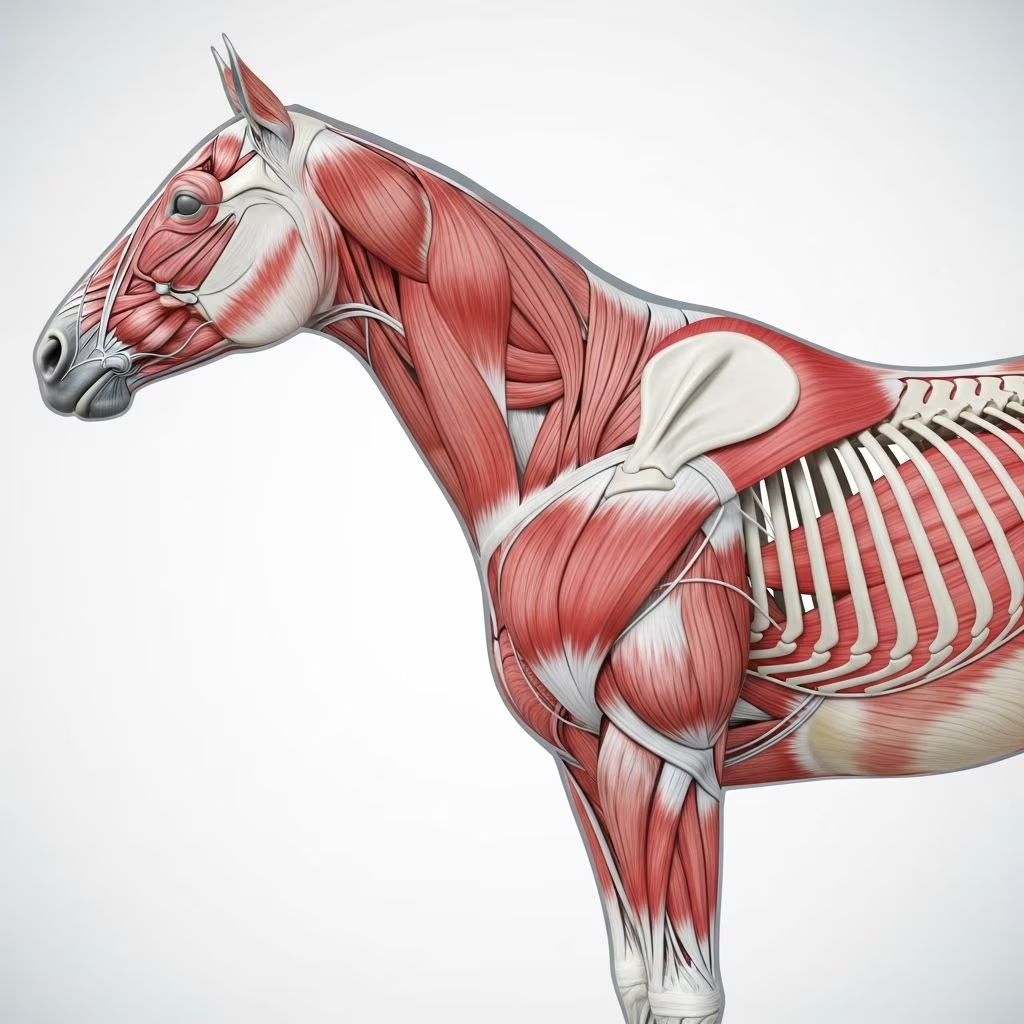
Skeletal muscle relaxants play a crucial role in veterinary medicine by helping manage muscle spasms, rigidity, and related conditions in animals. These drugs target either the central nervous system or the muscle fibers directly, providing relief during anesthesia, trauma, or neurological disorders. This guide details their classifications, mechanisms, species-specific uses, and practical considerations for safe administration.
Understanding Muscle Spasms in Animals
Muscle spasms in veterinary patients often stem from trauma, inflammation, tetanus, poisoning, or neurological issues. These conditions disrupt normal muscle function, causing pain and impaired mobility. Relaxants work by interrupting the neural signals or calcium release that trigger contractions, restoring comfort and function.
- Common causes include injuries, infections like tetanus, and toxicities such as strychnine.
- Symptoms range from localized stiffness to generalized rigidity affecting respiration and movement.
- Early intervention with appropriate relaxants prevents complications like rhabdomyolysis or permanent damage.
Classification of Skeletal Muscle Relaxants
Veterinary skeletal muscle relaxants fall into three main categories: centrally acting agents, direct-acting muscle relaxants, and neuromuscular blocking agents (NMBAs). Each type targets different parts of the muscle control pathway.
| Category | Examples | Primary Mechanism | Common Uses |
|---|---|---|---|
| Centrally Acting | Methocarbamol, Diazepam, Baclofen | Block spinal interneurons or supraspinal reflexes | Spasms, tetanus, anxiety-related tension |
| Direct-Acting | Dantrolene, Guaifenesin | Interfere with excitation-contraction coupling | Malignant hyperthermia, rhabdomyolysis |
| Neuromuscular Blockers | Rocuronium, Atracurium, Succinylcholine | Block acetylcholine at neuromuscular junction | Anesthesia, intubation, surgery |
Centrally Acting Muscle Relaxants
These drugs primarily influence the central nervous system to reduce muscle tone without directly affecting the muscle or nerve endings. They are ideal for conditions involving hyperexcitability in the spinal cord or brain.
Methocarbamol: A Versatile Option
Methocarbamol stands out as a go-to centrally acting relaxant related to guaifenesin. Though its precise mechanism remains unclear, it depresses spinal polysynaptic reflexes and offers mild sedation. In dogs and cats, it’s used for inflammatory muscle conditions, trauma, and severe cases like tetanus or strychnine poisoning. Horses benefit from it in exertional rhabdomyolysis.
- Dogs/Cats: IV: 44 mg/kg (up to 330 mg/kg/day for poisoning); PO: 66 66 6132 mg/kg/day divided 2 63 times.
- Horses: IV: 2.2 655.5 mg/kg; PO: 5 g twice daily.
Overdoses may cause respiratory issues, nystagmus, or hypotension, managed supportively.
Benzodiazepines like Diazepam
Diazepam modulates GABA receptors, suppressing supraspinal reflexes and presynaptic acetylcholine release. It’s valuable as an anesthetic adjunct, for tetanus signs, and urethral sphincter relaxation in cats with obstruction.
- Cats: IV: 0.5 mg/kg; PO: 2 65 mg, 3 times daily for urethral issues.
Its sedative properties aid anxious patients but require caution in those with liver impairment.
Baclofen: Limited Veterinary Application
Structurally akin to GABA, baclofen activates GABA-B receptors to curb excitatory neurotransmitter release. While effective for human spasticity, its narrow therapeutic window limits veterinary use. Rare applications include canine tetanus or urinary retention, but doses above 1.3 mg/kg risk vomiting and depression.
Direct-Acting Relaxants
These agents bypass neural pathways, acting straight on muscle cells to prevent contraction.
Dantrolene for Hypermetabolic States
Dantrolene uniquely inhibits calcium release from the sarcoplasmic reticulum, decoupling excitation from contraction. It treats malignant hyperthermia across species, porcine stress syndrome, equine myositis, and exertional rhabdomyolysis without major cardiac or respiratory impact. Sedation and dizziness are possible side effects; equine regulations apply due to doping concerns.
- Horses: IV: 15 625 mg/kg slowly, 4 times daily; PO: 2 mg/kg/day preventively.
- Swine: IV: 3.5 mg/kg.
Guaifenesin in Anesthesia
Guaifenesin provides balanced muscle relaxation during IV anesthesia, especially in horses and ruminants. It lacks direct striated muscle effects but enhances sedation.
- Dogs: IV: 33 688 mg/kg.
- Horses/Ruminants: IV: 66 6132 mg/kg.
Neuromuscular Blocking Agents (NMBAs)
NMBAs are critical for surgical paralysis, divided into depolarizing and nondepolarizing types. They bind nicotinic receptors at the neuromuscular junction.
Nondepolarizing NMBAs
These compete with acetylcholine; examples include rocuronium (rapid onset, hemodynamic stability), vecuronium (intermediate duration, liver-dependent), and atracurium derivatives like cisatracurium (minimal histamine release).
| Agent | Onset/Duration | Species Dosage (IV, mg/kg) |
|---|---|---|
| Rocuronium | 1-2 min / 13-25 min | Dogs/Cats: 0.18; Horses: 0.2 60.6 |
| Vecuronium | 2 min / 25 min | Dogs/Cats: 0.1 |
| Mivacurium | Rapid / Short | Dogs/Cats: 0.01 60.05 |
Depolarizing NMBAs: Succinylcholine
Succinylcholine mimics acetylcholine, causing initial depolarization followed by blockade. It’s short-acting but risks hyperkalemia; used sparingly for intubation.
Reversal Agents and Monitoring
Nondepolarizing blocks reverse with cholinesterase inhibitors like neostigmine (0.04 mg/kg IV) or edrophonium (0.1-0.2 mg/kg IV, with atropine).
- Monitor with train-of-four stimulation to assess blockade depth.
- Patient factors: Liver/renal disease prolongs agents like vecuronium.
Species-Specific Considerations
Dogs and Cats
Small animals tolerate methocarbamol well for spasms; diazepam aids urethral issues in cats. NMBAs require ventilation support.
Horses and Ruminants
Large animals favor guaifenesin and dantrolene for myopathies; rocuronium suits anesthesia.
Swine and Exotic Species
Dantrolene manages stress syndromes; data is limited for exotics.
Safety, Side Effects, and Overdose Management
Side effects include sedation, hypotension, and respiratory depression. Overdoses demand supportive care: ventilation, fluids, and monitoring.
- Avoid baclofen routinely due to toxicity.
- Respect withdrawal times in performance animals.
Clinical Applications and Case Examples
In tetanus-afflicted dogs, methocarbamol combines with supportive care. Equine rhabdomyolysis responds to dantrolene IV. Surgical NMBAs ensure immobility during orthopedics.
FAQs
What is the first-line relaxant for canine muscle trauma?
Methocarbamol at 44 mg/kg IV, followed by oral dosing.
Can diazepam treat urethral obstruction in cats?
Yes, 0.5 mg/kg IV or 2 65 mg PO TID relaxes the sphincter.
How do you reverse rocuronium?
Neostigmine 0.04 mg/kg IV, often with glycopyrrolate.
Is dantrolene safe for pregnant animals?
Use cautiously; consult species-specific data.
What monitors neuromuscular blockade?
Peripheral nerve stimulator for train-of-four response.
References
- Skeletal Muscle Relaxants — Merck Veterinary Manual. 2023. https://www.merckvetmanual.com/multimedia/table/skeletal-muscle-relaxants
- Muscle Relaxants — Veterian Key. 2016-10-26. https://veteriankey.com/muscle-relaxants/
- Skeletal Muscle Relaxants for Animals — Merck Veterinary Manual. 2023. https://www.merckvetmanual.com/pharmacology/systemic-pharmacotherapeutics-of-the-muscular-system/skeletal-muscle-relaxants-for-animals
- Neuromuscular Blocking Agents for Animals — MSD Veterinary Manual. 2023. https://www.msdvetmanual.com/pharmacology/systemic-pharmacotherapeutics-of-the-muscular-system/neuromuscular-blocking-agents-for-animals
- Neuromuscular Blocking Agents — StatPearls, NCBI Bookshelf. 2023-08-08. https://www.ncbi.nlm.nih.gov/books/NBK537168/



